A New Pope and the Call to Unity
A first American Pope forces the global Church to reckon with history: can repentance and humility turn centuries of division into a bridge toward unity?
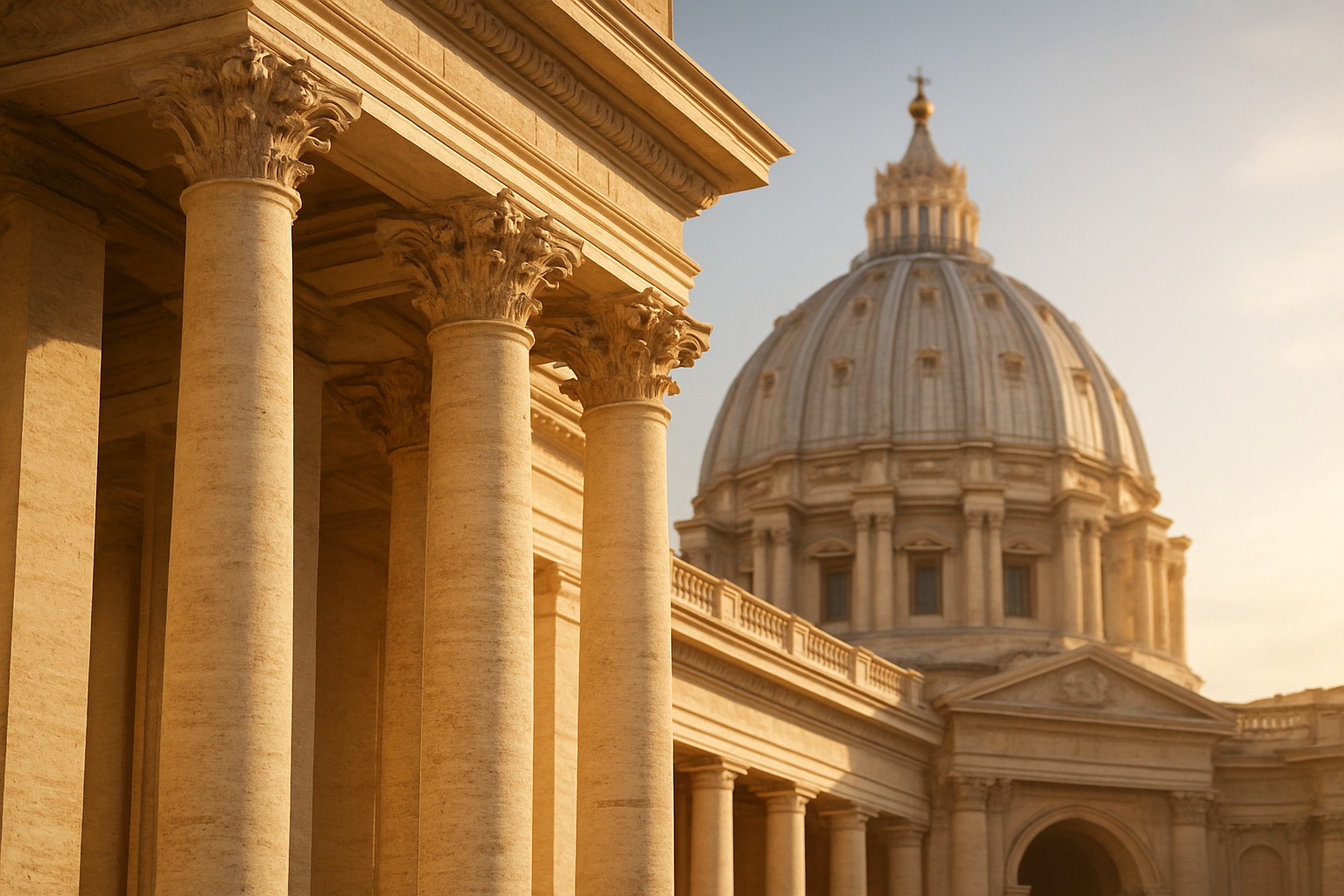
Why does the First American Pope matter for the global Church?
The selection of a first American Pope is more than trivia for observers. It signals to a global Church that leadership can carry cultural bridges and fresh expectations. When someone who has walked mission fields and has international fluency steps into symbolic ecclesial prominence, practical questions follow: how will history and culture shape his leadership, and how will other branches of the Body of Christ respond?
This moment forces us to reckon with an ancient truth: the papacy has always been both spiritual office and public institution. That dual reality means the Pope’s gestures carry theological meaning and social consequence. When we say, "you are Peter," we recall Jesus’ renaming of Simon and the foundational impulse to build unity. The phrase lands as both promise and responsibility—one that historically has been used to bless and to wound.
The Heart of It: Our leaders embody both the call to follow Jesus and the legacy of their institutions.
Behind the Words: Leadership matters because it forms pastoral patterns that shape how churches act in crisis and in mercy.
Try This: Watch what a leader blesses, and weigh it against the Bible’s call to humility and service. Notice the habits formed by a life spent serving the poor and sick in remote places. That life of service matters because it forms pastoral habits—habits we should encourage, not dismiss. But one person’s heart cannot erase a whole institutional past overnight. Our posture matters as much as our critique. We can greet a new leader with discernment while praying that the gestures offered will lead toward genuine repentance and reconciliation.
We can say with hopeful clarity—"one new man"—because the biblical vision refuses to settle for perpetual sectarianism. This phrase is not a slogan; it is a summons. We are being asked: will we live into it?
What does the historical significance of the papacy teach Christians today?
The papacy has been one of the most consequential religious offices in history. That history includes glorious acts of charity and tragic episodes of corruption, complicity, and violence. We cannot read that ledger with a tabula rasa attitude. Learning from it means refusing both a whitewash and a caricature.
Consider how institutions shape behavior. When an office accumulates power, accountability structures can weaken unless intentionally renewed. The papacy’s symbolic authority has inspired missionary zeal—sending clergy and lay workers to the farthest jungles, hospitals, and schools. Yet the same authority, when unchecked, has allowed failures to remain hidden or unaddressed.
Behind the Words: The apostles and early leaders in Acts navigated emerging structures while trying to keep the gospel central; that context shows leadership tested by rapid expansion and cultural pressure.
"And they devoted themselves to the apostles' teaching and the fellowship, to the breaking of bread and the prayers." — Acts 2:42
This verse describes the early church’s disciplines—teaching, fellowship, worship—that tethered authority to the worshiping life of the people. Those practices disciplined power by keeping public ministry accountable to a shared spiritual rhythm.
The Heart of It: Spiritual authority must be tethered to accountability and to the worshiping life of the people.
Try This: Picture your local church council meeting. Imagine every decision must answer one question: How does this bless specific people who are vulnerable? If that standard guided larger structures, would history read differently?
A second lesson from papal history is that symbolism matters. When the Church kneels to confess wrongs, the public receives a counter-narrative to the ways religion can be used to justify violence or prejudice. We have seen centuries when anti-Semitism and other sins were clothed in theological language; when Christian leaders repent visibly, the social ripples can heal nations.
At the same time, beware of simplistic triumphalism. A new national milestone—the first American Pope—doesn’t mean we leap into uncritical celebration. It invites vigilance: will this moment produce a renaissance of justice, mercy, and humility, or will it simply repackage old entitlements in a different accent?
How does the role of history shape church relationships today?
History can be a bridge or a barrier. When communities use historical memory to craft empathy, confession, and mutual learning, wounds can be healed. When memory becomes blame and identity hardens into grievance, history calcifies and becomes a weapon.
A hard saying we must face: when your opinion means more than the will of God, you are indeed dealing with pride. That line stings because it names a familiar temptation: we often prefer our narrative to God’s reconciling work. Our opinions about who is inside and who is outside can become idols.
The Heart of It: Repentance transforms historical memory from accusation into a pathway.
Behind the Words: Begin public conversations with confession where appropriate, and invite shared lament before launching into debate. This process needs gestures of listening and concrete acts: collaborative service projects, joint study of Scriptures such as Ephesians 2, and shared prayers that place Jesus at the center. When we practice these things, the theological phrase "one new man" starts to look less like nice language and more like an operational reality.
Picture a leader who once stood in the remote jungles of Peru and later carried that missionary posture into broader public ministry. That biography matters because language learned in fields and hospitals shapes how a leader sees the poor, the stranger, and the penitent.
Notice also the pastoral plea not to miss the heart of God in the moment. It asks us to put the gospel’s health above our partisan instincts.
Behind the Words: John 17 is Jesus’ prayer for unity among his followers. He prays for protection and for oneness as a testimony to the world; that context shows unity is not merely organizational but missional.
"That they may all be one, just as you, Father, are in me, and I in you, that they also may be in us..." — John 17:21
Jesus prays that unity would be a witness—a visible reality reflecting the Father–Son relationship. Unity among believers witnesses to God’s reconciling power and is indispensable for effective mission.
The Heart of It: Unity among believers witnesses to God’s reconciling power and is indispensable for effective mission.
Try This: Imagine your neighborhood outreach staffed by Christians from different traditions—Catholic, Protestant, Orthodox. Visualize them listening to each other’s stories over coffee, confessing old wounds, and praying together for one beneficiary. What if that shared ministry shamed the culture’s division and revealed a common love for Jesus?
Can repentance and humility make history a bridge instead of a barrier?
Yes—but it demands disciplines. Repentance is not an utterance alone; it is an about-face. The Hebrew concept of tishuvah—turning—calls for more than regret. Humility must accompany confession. That is why the biblical calls to "repent, submit, humble yourself" remain operative for us.
A vivid, pastoral scene helps: a congregation meets in a neutral hall. Leaders from different traditions sit in a circle. One by one they confess complicity in past harms—racial prejudice, doctrinal arrogance, silence in the face of injustice. The gestures are awkward and earnest: an elder lifts hands, a younger leader offers an apology, a small group commits resources to a joint shelter. This is the slow work of reweaving relationships.
We are often tempted to reduce repentance to a private prayer. That mistake robs the world of visible healing. Repentance lived publicly—restoration conversations, restitution where possible, shared acts of service—creates new memory banks that future generations will inherit.
We must ask ourselves honestly whether we are using the current moment to follow Jesus—or to shore up our narratives. The command to follow Jesus is simple but costly. It asks for posture more than policy.
Try This: Practical next steps for a local expression:
- Invite representatives from neighboring denominations to a joint service of confession and appropriate shared communion or worship.
- Begin a year-long study of Ephesians 2 that includes testimonies from Jewish, Catholic, and Protestant friends.
- Start a joint mercy project—feeding, sheltering, tutoring—that forces cooperative rhythms and builds trust.
These are not quick fixes. They are the slow proof that history has become a bridge, not a barricade.
We are watching history and scripture intersect in ways that can tempt fear or fuel faith. The appearance of a new, nationally notable leader in a global office calls us to choose: retreat into old judgments, or lean into repentance and renewed witness. If we opt for the latter, history may remember this season not as another page of friction but as a turning point toward the unity Jesus prayed for.
Let us pray for leaders who will follow Jesus, and let us, with equal courage, examine our own hearts so we can humbly walk toward one another. Don’t let your opinion outpace your obedience. Instead, be a people who confess, who serve, and who together say, with the early church, "we will devote ourselves to the apostles' teaching and the fellowship," so the world might see the reconciled love of Christ.
Key Takeaways
- The importance of unity among all Christians.
- Repentance is necessary for healing and unity.
- Recognizing the historical context of church relations is vital.
- Active engagement in faith can lead to societal change.
- A commitment to the teachings of Jesus should guide all actions.
Notable Quotes
"It's a powerful moment not just for Catholics but for all who follow Christ."
"The one new man concept is vital to understanding our roles in the body of Christ."
"We can't forget who the first pope was; that Jewish fisherman from Galilee."
Related Articles
- When an American Pope Calls the Church to Unity
An American in an ancient chair invites us to ask: will history harden us or humble us? A call to repentance, unity, and renewed Christian identity.
- When a Pope Becomes a Moment for Unity
A historic papal moment presses Christians to choose humility over pride: how will our history and our words deepen division or open the way for genuine unity?
- When a New Pope Opens Doors for Unity
A historic papal moment invites the church to humility, honest history, and better communication—practical steps for unity and renewed witness.
- When a New Pope Changes the Conversation
A new papal moment invites the whole church to reckon with history, culture, and unity. What if this moment called us to humble listening, repentance, and concrete repair?