When a New Pope Changes the Conversation
A new papal moment invites the whole church to reckon with history, culture, and unity. What if this moment called us to humble listening, repentance, and concrete repair?
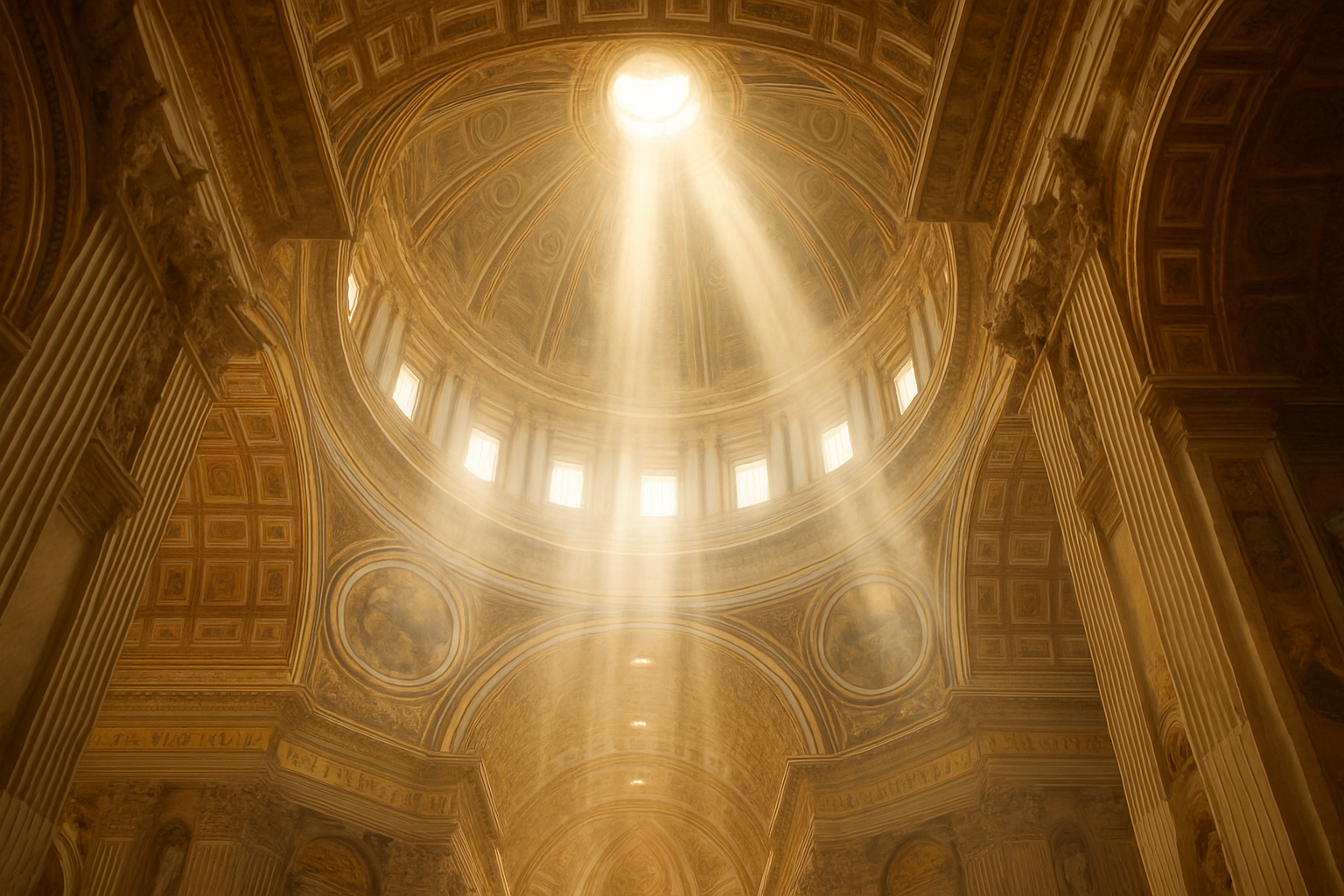
Why the First American Pope Matters for All Christians
That someone from our cultural moment now occupies an ancient office raises real questions: does that make the papacy more "American"? Does it change the global posture of Catholicism? These questions matter because our society confuses culture with gospel too often. We need to tell a truer story.
One detail helps show why: this new leader served in missions described as reaching "the ends of the earth" and ministers across a suite of languages—English, Italian, Spanish, French, Portuguese. His ministry will look different in practice, spanning contexts many of us never imagine. Global experience can soften purely nationalistic readings of faith and open doors for cross-cultural ministry. It also forces us to ask how language and posture shape reception.
We can't forget who the first pope was: the first pope was a Jewish fisherman from the Galilee. That reminder is not trivia; it re-centers the papacy in the Jewish soil of Jesus' ministry and asks Protestants and Catholics alike to remember Christian roots in the people and promises of Israel.
The Heart of It: A leader's nationality or biography changes how they speak, but not the core summons of the church: to follow Jesus.
Behind the Words: A pope from a different cultural background can invite fresh emphases—social care, global solidarity—without rewriting gospel essentials.
Try This: When you hear a leader from another context, listen first to the content of his call to Christ and repentance rather than reacting to his passport.
There is pastoral work to be done here. We all carry loyalties—some helpful, some prideful. When public moments draw our attention to an institution we have written off, what if we treated that attention as a summons to prayerful curiosity? What would it look like for your small group to pray for the city and the global church together—not to endorse an institution, but to ask God for unity where division has sown harm?
Hard saying to unpack: "When your opinion means more than the will of God, you are indeed dealing with pride." That is a sharp prod. It asks us to examine whether our first reflex is to defend an idea about the church rather than to pursue Jesus-shaped humility. This is not an invitation to blind agreement; it is an invitation to subordinate our cultural assumptions to the Lordship of Christ.
What Scripture Teaches About Unity: John 17 and the Case for Humble Listening
Jesus' prayer in John 17 is a hinge text for anyone who cares about Christian unity. He prayed for those who followed him and for those who would come to faith through their witness. The petition is radical: that we be one as the Father and Son are one. If unity is possible, it is because God’s nature is relational and reconciling.
"I ask not only on behalf of these, but also on behalf of those who will believe in me through their word, that they may all be one... so that the world may know that you have sent me." — John 17:20-21
Behind the Words: John records Jesus praying on the night before his crucifixion, at the end of a ministry already marked by division and misunderstanding—Peter’s denial, arguments over rank—yet Jesus prays for unity visible enough to point the world to the Father.
The Heart of It: Unity is not primarily organizational agreement; it is a relational witness that shows the world the reconciling character of God.
Try This: Picture your church gathering on a Sunday evening. A person from a different tradition uses different words for salvation. Instead of correcting them immediately, invite them to share a five-minute testimony about how they encountered Jesus. Let their story meet your story and pray afterward, asking God to make unity visible in that room.
One common misunderstanding: unity does not erase theological conviction. Jesus’ prayer presumes depth of belief and difference of expression; it calls us to communion on essentials, humility in disagreements, and a shared mission to a watching world.
This text reshapes how we listen to leaders from other traditions. When we hear a call to "care for the poor and the sick and the widows and the orphans," our response should be to celebrate gospel action and examine our own practice, rather than reflexively distancing ourselves because of denominational histories. Remember Mother Teresa as a public embodiment of visible mercy—the world saw God at work there, and that ought to invite partnership where possible.
How the Cultural Context of Catholicism Shapes Christian Identity
Cultural context matters. Catholic practice has been formed over centuries in monasteries, liturgical cathedrals, urban parishes, and missions among the poor. That formation produces strengths: a sacramental imagination, communal disciplines, and sustained social outreach. It also produces blind spots: institutional sin, historical errors, and times when the church failed to repent.
When you read that a leader "went to Villanova, was an altar boy, worked in Peru," you are seeing dots that connect cultural formation to ministry outcomes. Those dots explain why some Catholics emphasize visible sacraments and communal memory, while other traditions emphasize Scripture alone or the primacy of personal conversion. Recognizing those differences helps us argue without making the other our enemy.
The Heart of It: Context shapes practice; practice shapes witness.
Behind the Words: Cultural formation explains why a church approaches mission, liturgy, and social action in distinctive ways—none of which automatically disqualify the other.
Try This: Before writing off another tradition as "not biblical," learn one liturgy, one hymn, and one social ministry it holds dear.
Language is a clear example. Languages carry theological idioms, metaphors, and priorities. When a leader speaks multiple languages, he can bridge rhetorical barriers—yet the content of his message still must line up with the gospel.
How does this matter for your identity as a Christian? Identity is formed communally. When Christians of different traditions practice hospitality—inviting one another into worship, sharing meals, praying public prayers together—we begin to see identity formed around Christ instead of cultural markers. That doesn’t mean uniformity; it means our differences become the colors of a single tapestry rather than lines on a war map.
Picture your church opening its building one week to host a joint service with Christians from a nearby parish of a different tradition. They bring a hymn you’ve never sung; you bring a testimony that moves them. Afterward someone serves empanadas because volunteers came from immigrant communities. The night ends with shared prayer for the neighborhood. That simple hospitality changes suspicion into curiosity and mutual love.
A Season for Repair: The Role of History in Church Relationships
We must address history honestly if unity is to be more than sentiment. The church’s past includes profound faith and grievous sin—complicity in violence, anti-Semitism, the slave trade, and institutional abuses. History is not neutral: it frames today’s conversations and wounds real people. To move toward repair, Christians must practice confession, repentance, and concrete restitution where possible.
Repentance is not merely saying "I’m sorry"—it is an about-face, a teshubah that requires humility and submission. That Hebrew word describes a turning so thorough it changes direction. We must be willing to turn.
"For if my people who are called by my name humble themselves, and pray, and seek my face, and turn from their wicked ways, then I will hear from heaven and will forgive their sin and heal their land." — 2 Chronicles 7:14
Behind the Words: This verse sits in a covenantal context where God promises restoration to a people who return to faithful worship and right living. It names a communal process of repentance and renewal rather than a quick formula.
The Heart of It: True repair requires communal confession, not private excusing.
Try This: Convene a listening night where people tell stories of how the church either hurt or helped them. Invite a leader to confess systemic failures honestly and ask the gathered people how the church can make amends. Avoid defensive language; listen.
One common misunderstanding: repentance is not only about guilt; it is about reorientation. It changes habits, policies, and relationships so the future is different from the past.
We must also resist replacement narratives that turn prophecy into politics. Easy theologies that reduce complex biblical promises to a simple political map are dangerous. Scripture invites hopeful expectation, not gnostic certainty about geopolitical timelines. Still, the re-gathering of people and resurgences of faith should call forth praise, study, and sober discernment.
When pride puffs up and our opinion carries more weight than God’s will, unity stalls. Who among us will humble ourselves, submit, and take a step toward another person in faith? That step may be small—a phone call, a shared meal, a public prayer for a leader you disagree with—but it matters.
Picture an ecumenical table in a city hall after a natural disaster. Denominations bring different resources—one provides shelter, another counseling, another legal aid for immigrants. They pray together, share gifts, and build a joint recovery plan. That collaboration changes public perception: the church is not various silos but a single body acting with one compassion.
Moments like the selection of a major Christian leader are invitations, whether we accept them or not. We can treat them as distractions or catalysts for repentance, learning, and shared mission. If we choose the latter, three small moves matter in everyday life: listen to the story behind an office, learn at least one practice from another tradition, and practice a concrete act of reconciliation in your neighborhood.
We have a chance to embody the prayer of John 17—not by agreeing on every doctrine, but by showing a watching world that our allegiance to Jesus makes us a people who humble ourselves, confess, and love across old boundaries. That is how history gets healed and how the church becomes a clearer witness to the world.
We remember that the first pope was a Jewish fisherman from the Galilee, that mission has included difficult places like the jungles of Peru, and that the moment invites the posture of becoming "one new man." Listen, learn, and take one small step: invite someone from another tradition for coffee, ask a neighbor about a ministry you don't yet understand, and pray for leaders across the spectrum and for repentance in your own heart.
Key Takeaways
- The importance of unity among all Christians.
- Repentance is necessary for healing and unity.
- Recognizing the historical context of church relations is vital.
- Active engagement in faith can lead to societal change.
- A commitment to the teachings of Jesus should guide all actions.
Notable Quotes
"It's a powerful moment not just for Catholics but for all who follow Christ."
"The one new man concept is vital to understanding our roles in the body of Christ."
"We can't forget who the first pope was; that Jewish fisherman from Galilee."
Related Articles
- When an American Pope Calls the Church to Unity
An American in an ancient chair invites us to ask: will history harden us or humble us? A call to repentance, unity, and renewed Christian identity.
- When a Pope Becomes a Moment for Unity
A historic papal moment presses Christians to choose humility over pride: how will our history and our words deepen division or open the way for genuine unity?
- When a New Pope Opens Doors for Unity
A historic papal moment invites the church to humility, honest history, and better communication—practical steps for unity and renewed witness.
- A New Pope and the Call to Unity
A first American Pope forces the global Church to reckon with history: can repentance and humility turn centuries of division into a bridge toward unity?