Worth Beyond Wealth: Soul, Service, Salvation
When treasures fade and identity fractures, what is our soul worth? Explore how worth, combat trauma, and faith meet—and how healing looks in ordinary scenes.
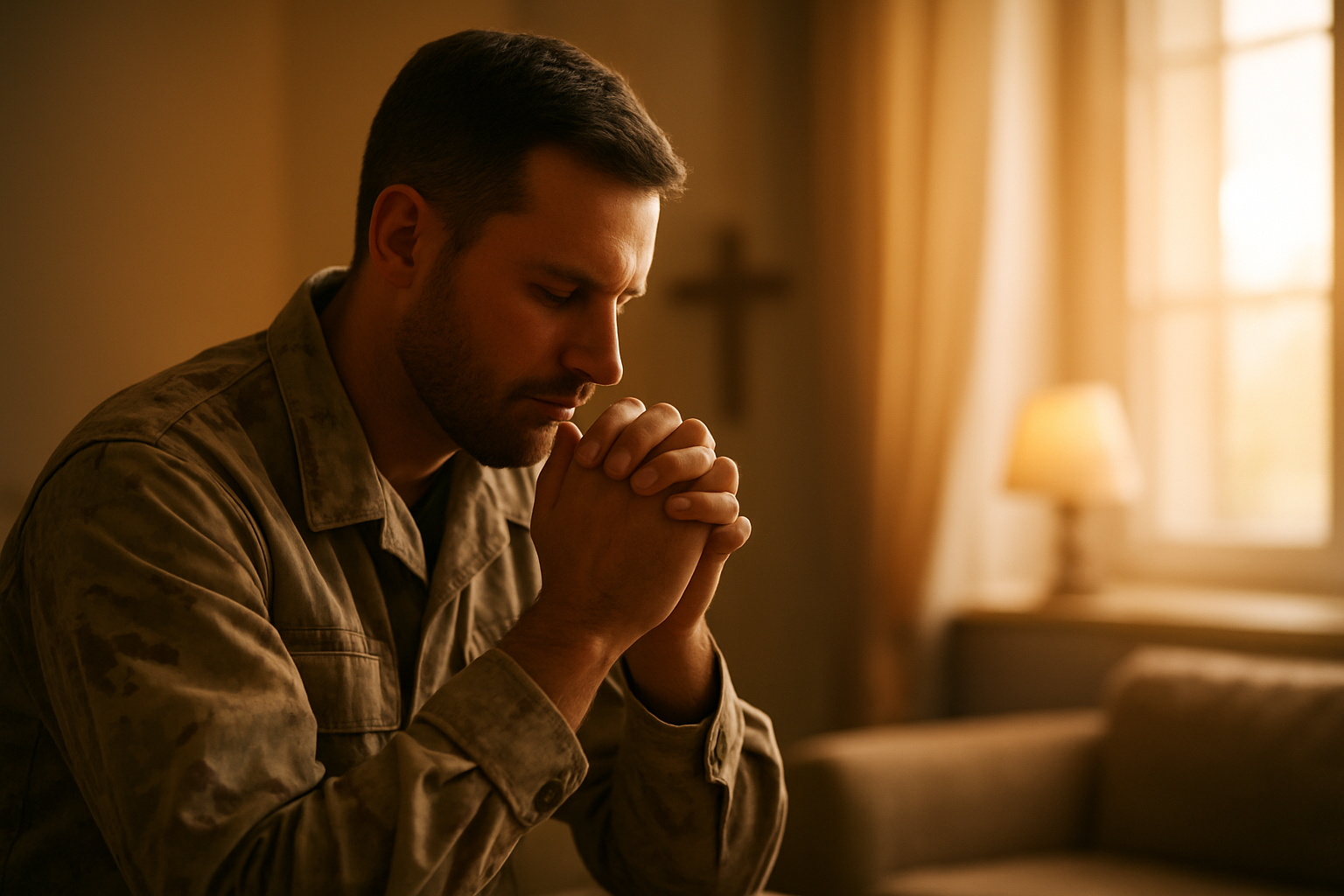
What is the central thread tying loss, status, and faith?
The unifying thread is value: how we measure it and where we place our hope. We are tempted to count worth in paychecks, pickups, promotions, and praise—but Scripture asks a sharper question about what we do with our soul when the glitter disappears.
Look back over the stories you know or your own life for a moment. Some people chase an image until they can no longer recognize themselves. Others are carved open by trauma, and still others wake up to a truth they once denied. The same God who formed us cares about the answer to that hard question.
I’ll look at three places where this tension shows up: our chase for worth in material things, the particular wounds of military service and how they unsettle identity, and the way faith can reframe loss into purpose. We’ll stop to grapple with Scripture and practical scenes so faith is not abstract but life-changing.
Why do we chase worth in wealth and status?
You can line up trophies and titles and still feel empty. Many of us have stories where money or reputation temporarily quieted the voice inside, only for the voice to return louder. The Bible’s blunt question confronts that restlessness head-on.
"For what will it profit a man if he gains the whole world and forfeits his soul?" — Matthew 16:26
That verse landed on countless listeners like a cold splash of water—uncomfortable, corrective, necessary.
The Heart of It: True worth is not the sum of what we possess; it is the condition of our soul before God.
Behind the Words: When Jesus spoke those words, people measured life by visible success—land, family, and influence. Jesus refused to let the crowd redefine value on purely temporal terms.
- When pleasure wears thin, ask whose praise you’re living for.
Some direct phrases from the stories people bring to the church make this painfully clear: "I was unstoppable, untouchable, not to be messed with type of guy." That swagger masks insecurity; its currency is eyes on us. The crash comes when the crowd moves on. The possessions get traded for bigger toys—Porsches, diamond chains—but the hunger remains. One man described it this way: $15,000 in my pocket became more than just rap; it became about drugs. The car, the watch, the nightclub—none of it healed the hollow.
Behind the Words: Genesis tells us God formed humanity from the dust and breathed life into us, making us beings with bodies and souls (Genesis 2:7). In that scene the soul is portrayed as God’s breathed life—intimate and priceless.
The Heart of It: Our value is rooted in being made and loved by God, not in achievements or acquisitions.
Try This: Picture your life as a garage-sale table. You’re holding a photo of your favorite season, a plaque you earned, a childhood toy. Imagine someone asks what you would keep if you had to leave everything behind tonight. Which item would you choose? Now imagine saying, "I keep the one that tells me I am loved." That makes the soul-shaped question practical and present.
Some misunderstand the point and think Jesus is anti-success. He isn’t. He’s anti-idolatry. Money and success are tools until they become masters.
There is a hard saying that surfaces in these moments: "What will it profit a man if he gains the whole world and loses his own soul?" It stings because it forces us to name what we’ve given ultimate status in our life. If you’re honest, you have a place where you expect rescue that isn’t God. That expectation will let you down.
When the rug is pulled out from beneath us, the rescue we finally need is not another purchase. It’s a reorientation of the heart.
How does military trauma affect identity and hope?
Military service has its own grammar of meaning: duty, brotherhood, and a willingness to lay down life. That grammar is honored—and yet combat writes scars many never expected. A routine mission can turn into a life-defining moment in an instant.
One story begins with a normal patrol. A suspicious car appears; a soldier shouts, "Get out! Get down!" He fires rounds in front of the vehicle. In the aftermath there are shrapnel wounds, surgeries, and the sense that the world as you knew it no longer exists. In another account, a parent receives a midnight call—the commander's voice sobbing, "I'm so sorry. Scotty's been hurt really bad." We later learn the person woke up in Walter Reed Army Medical Center, thousands of miles from home, and realized they would never see again. Those details are not melodrama; they are specific life-changing events.
The Heart of It: Trauma can strip away the identities we clung to, but it also opens a space where dependence upon God can grow.
Behind the Words: Soldiers are trained for control and courage; trauma teaches the limits of both. When control fails, a new kind of courage is needed—a courage to grieve, to ask for help, and to rebuild identity not around performance but around belonging.
- If you carry a wound, let someone carry it with you; community is how God often mends what combat breaks.
The military stories include sharp images: constant attacks from improvised explosive devices, snipers, and the daily fear of injury. Another detail: one person rode a motorcycle from Cabo, Mexico, seemingly trying to flee themselves. That flight is a real, human response. It is not weakness—it's exhausted survival. Many veterans and families wrestle with questions: Was my life meaningful? Am I still useful? Do I still have worth if I am broken?
"For all have sinned and fall short of the glory of God." — Romans 3:23
That verse isn’t a condemnation aimed to shame; it’s an equalizer that tells us everyone needs mercy. The soldier who once felt unstoppable and the civilian who hid behind a credit score stand in the same courtroom of need.
Prayer and presence are practical. One person who woke in a medical ward described how anger followed grief. She said she thought she had "checked every block to be a Christian, and still God had allowed me to be blinded." That sentence raises honest questions about God’s sovereignty and our feelings of abandonment.
Pastoral care here is patient. Don't rush to tidy theology over pain. Sit. Listen. Name the grief. If the wounded person whispers, "I felt worthless," don't try to cheer them out of it; hold the phrase with them, acknowledge its truth in their experience, and then point gently to a larger story that claims them.
Faith does not promise removal of all suffering. But it promises presence. It reframes the question of worth from "What can I still do?" to "Who says I am worth anything at all?" That shift matters.
When everything loses value: how faith restores purpose
There are seasons when the things that once seemed to define you simply evaporate. Marriages fail. Businesses collapse. Health declines. Regrets sit heavy. One woman described leaving behind an abortion that she later called "taking a precious gift and throwing it away." Another said, "I felt worthless," and that phrase must not be spoken past. These confessions are the kind of honest cracks through which grace often enters.
"For the wages of sin is death, but the free gift of God is eternal life in Christ Jesus our Lord." — Romans 6:23
That verse names the problem and the remedy: death as a result of sin, and life offered freely by Christ. The remedy is both legal—our sins are dealt with—and deeply relational—Jesus invites a personal restoration.
The Heart of It: Transformation through faith is not fancy religion; it is the soul’s reorientation from self-reliance to God-reliance.
Behind the Words: When Jesus said, "I am the way, the truth, and the life" (John 14:6), He was addressing people who were looking for direction, truth, and meaning. He offered Himself as the bridge between us and the Father.
- When guilt or failure defines you, begin with two sentences: "God, I am lost. Help me find my way." Then speak them aloud to someone who will pray with you.
The movement toward faith is often awkward, tear-filled, and far from theatrical. One person described inviting Jesus into their heart in a clumsy, tear-filled way—and the change was real. Another found hope after a pastor preached about a heavenly Father who loves you regardless of where you've been. That kind of love is scandalous in a world that calculates worth by performance.
Here is a simple, pastoral scene: it’s midnight, and you wake with the weight of a decision you can’t undo. You throw your stick down in anger or despair and cry out—perhaps for the first time—to God. The prayer may be simple: "Lord, save me. Forgive me. Help me." Those words have opened hearts in hospital wards, rehabilitation centers, motel rooms, and kitchens.
Behind the Words: Matthew's Gospel and the epistles are full of people who found new life after failure. The original audiences were a mix of Jews and Gentiles learning how the life, death, and resurrection of Jesus resets human identity. They heard invitations not to moral perfection but to a new allegiance.
The Heart of It: God’s offer is not to make you respectable; it’s to make you whole.
Try This: Imagine the morning after you first whisper a broken prayer. Picture waking and knowing someone else carries your failure. Picture answering your child’s question about what happened with truth and hope instead of shame. That scene is a daily resurrection.
One common misunderstanding: repentance is not merely feeling remorse. Repentance means turning—changing direction—and that requires both sorrow and a step toward something different. If you find yourself stuck in shame, remember that shame shrinks and grace enlarges.
There is a practical next step for many: find a small circle—a pastor, a recovery group, a trusted friend—who will hold you accountable to truth and grace. Healing often moves in the company of others.
Finally, don’t let theology be an excuse to avoid the hard inner work. Believing in God’s love does not automatically erase pain. But it places that pain in a story where it can be redeemed. You won’t pretend the scar isn’t there; you’ll learn to trace God’s fingerprints across it.
A renewed measure of worth
We live in a culture that offers plenty of counterfeit solutions to the hunger for worth. Wealth, performance, and avoidance can all dull the ache for a while—but they never satisfy fully. Real restoration happens when we let God define our value.
If you are carrying a secret regret, a military wound, or the hollow of "not enough," hear this: your soul is worth more than everything you can buy. The Bible says it plainly and painfully because it wants us to wake up.
A simple prayer can begin that waking: "Dear God, I'm a sinner. I'm sorry. Forgive me. I believe Jesus died and rose again." It is not a magic incantation—it's the sound of a heart returning home. And then reach out. Let someone walk with you through the next steps.
You might not get immediate answers about why the hard things happened. You might still have nights that sting. But you can know you are not alone, and you can trust a God whose love cost Him everything.
If you’d like to begin, speak the truth of your need to God. Then tell one person. Ask them to pray with you, to keep you honest, and to help you take the next steps. Faith is a journey, and you don’t have to walk it alone.
Remember the hard sentence we met earlier: some of us have "checked every block to be a Christian, and still God had allowed me to be blinded." That honesty can become the hinge of grace if we let it. When you say it aloud, bring it to God—and then watch how He begins to answer with presence, community, and purpose.
Key Takeaways
- Explore the true worth of your soul.
- Material wealth does not equate to personal value.
- Redemption is possible through faith in Christ.
- Everyone has a purpose and should seek it through God.
- Forgiveness and healing come from accepting Christ.
Notable Quotes
"What should a prophet a man if he should gain the whole world and lose his own soul?"
"Your soul is valuable because of the price paid for it with his blood."
"Jesus said, 'I've come to seek and to save that which is lost.'"