Worship That Walks: Praise, Community, Preparation
Bring worship into the street: how praise dancing, community outreach, and practical preparation turn a march into gospel witness—and how you can join in.
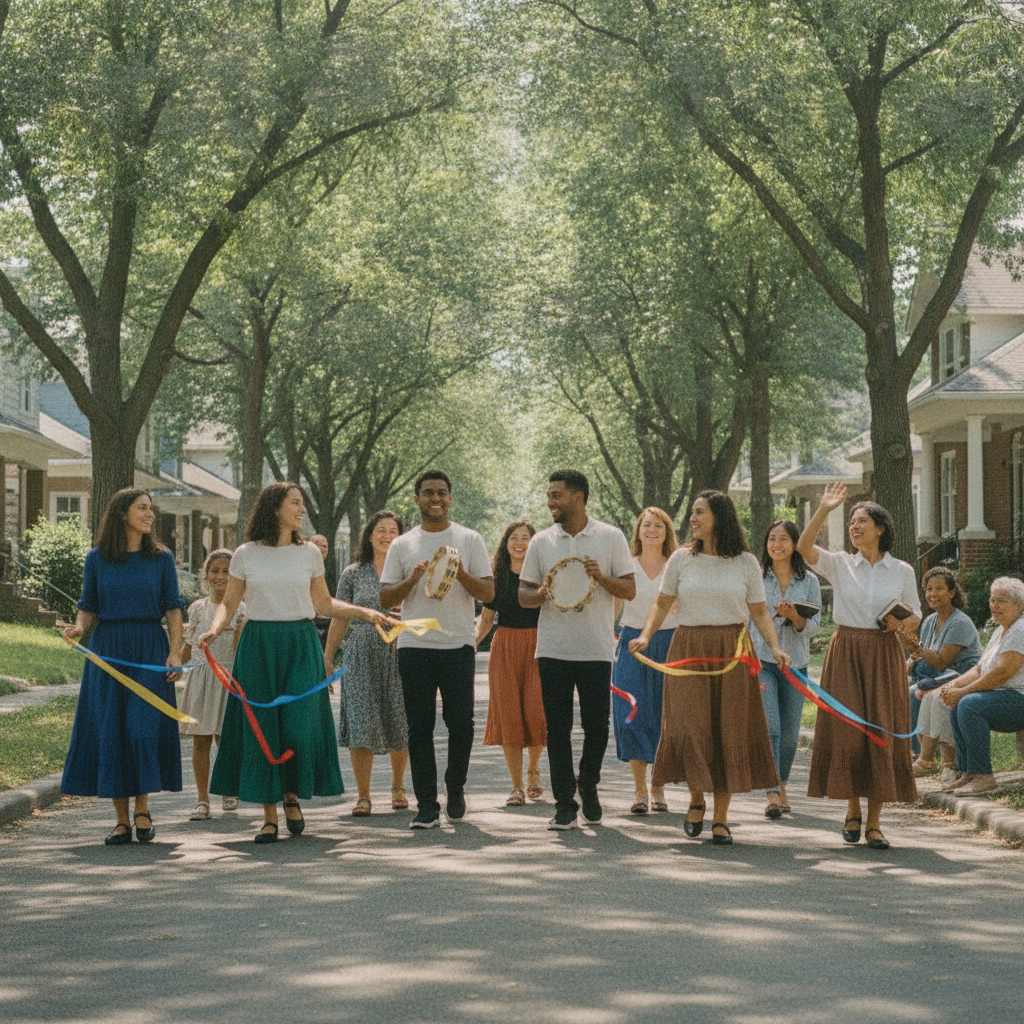
When the Streets Become a Sanctuary
Praise dancing is not performance. It’s proclamation. When a group steps out together—flags, banners, tambourines, bare feet in rhythm—they embody what worship sounds like when it refuses to be contained inside four walls. People in the crowd nod, laugh, and some even join the line. It’s like a big praise party: joy spreads like a contagion when worship is full-bodied.
"Let them praise his name with dancing. Let them sing praises to him with a tambourine and lyre."
— Psalm 149:3
Behind the Words: The psalmist calls the people to communal rejoicing—song and movement together—so that worship overflows ordinary restraint.
The Heart of It: Worship with our bodies echoes the Psalms and risks ordinary reverence for gospel-driven joy.
Try This: Invite a neighbor to stand beside you as you move; let your worship be both invitation and witness.
Praise dancing in public worship recalibrates how we think of sacred space. The pavement becomes a sanctuary; a police escort at the front keeps us safe; a parade route becomes a corridor of prayer. Those details—where we practice and where we meet—matter. They root the holy in the ordinary and tell the city: God’s presence moves among us.
Dancing at its best is communal testimony after rescue, not entertainment. Imagine an older woman on your block who keeps to herself. Meeting her as you march—offering a hand, explaining briefly why you're dancing, inviting her to a rally—turns praise into relational witness.
A practical picture: a praise dancer learns choreography for a moment and then forgets it—because the point is not choreography, but connection. You don’t need training to join. Rehearsals help and make coordination easier, but participation is open. When we lower the barrier to entry, we invite the unchurched and the hesitant to touch a kingdom reality they might otherwise only see from a distance.
We must address a common misunderstanding: some fear public praise looks theatrical. It can—if our motive is audience approval. But when our aim is to lift Christ’s name, performance falls away; what remains is honest, vulnerable adoration. People often leave these moments transformed—more hopeful, more connected. That’s why praise dancing in a city parade is both evangelism and pastoral care.
Dancing as Communal Testimony
In the Psalms, dancers and musicians gathered at the temple to celebrate deliverance and covenant. The call to dance there wasn't entertainment; it was communal testimony after rescue.
The Heart of It: Praise dancing proclaims God's nearness with our whole selves, not just our voices.
Try This: Picture meeting the older woman on your block as you march—offer a hand, a simple explanation of why you're dancing, and an invitation to a rally at City Hall. Worship becomes relational witness.
Why Community Events Become Evangelism Opportunities
How does a march turn into gospel outreach? It’s simpler than we think. We gather families, choirs, and small groups; we walk through neighborhoods; we stop at corners to sing; we pray over the city. What happens in between the steps is what matters: conversations, quick prayers for passersby, an offer to pray with someone in tears.
The Heart of It: Public worship opens doors to spiritual conversations that would never happen within church walls.
Behind the Words: When Christians praise publicly, curiosity meets compassion; the unchurched are more willing to ask questions of people who look like their neighbors.
Try This: Station a small prayer tent near the rally so people can come away from the crowd for a brief blessing or a listening ear.
The city context reshapes our language. We don’t begin with doctrine; we begin with presence. We ask, "Can we pray for you?" and we mean it. Often, people on the sidelines join in spontaneously—some to clap, some to sing along, and some to return the blessing with a horn beep and a smile. Those small human responses open gospel conversations.
At the end point—a rally at City Hall with a choir, bands, and pastors praying for the city—even those who could not walk the entire route can participate by meeting at the rally location. Accessibility converts interest into involvement.
Practical steps for community engagement are ordinary and effective:
- Put out clear meeting information and several meeting points for different abilities to increase inclusion.
- Invite non-church groups—neighbors, schools, scouts—to march with you; their presence normalizes the event as both civic and spiritual.
- Coordinate with local law enforcement. A police escort is not a statement of control; it’s stewardship of hospitality so vulnerable worship can proceed safely.
Pray publicly for weather, yes, but also for soft hearts. Ask God to meet people who aren’t looking for Him. The invitation is simple: a family stops, a teenage girl weeps, a man returns months later to a church service because the day made God less abstract for him.
Resist the fear that public worship promotes a single denomination by making unity explicit: the highest aim is to lift Christ, not any one brand of Christianity. When multiple congregations come together, we show the city what Christian unity looks like—imperfect but intentional.
How Preparation Becomes Loving Witness
Preparation matters. Logistics protect worship from chaos, and prayer steadies our hearts. Preparation is not legalism; it’s love—for worship, for one another, and for the city.
The Heart of It: Careful logistical preparation enlarges our capacity to love our neighbors well when we worship publicly.
Behind the Words: The early church planned gatherings with purpose—meeting places, leaders, songs—because order helped the message be heard clearly.
Try This: Map accessible parking near City Hall, identify meeting points for those who cannot march, and share a simple schedule with start times and rally details.
Start with the basics: rehearsals so dancers, flag teams, and musicians can coordinate. Rehearsals reduce anxiety on the day. If someone can’t march the whole route, remind them about closer parking and the option to meet at City Hall during the rally.
Be explicit about welcome. Announce that grandparents, children, Girl Scout troops, and neighborhood groups are invited. Have volunteers ready to shepherd older attendees or those with mobility needs to nearer lots. Small acts of care—water stations, shaded rest areas, a wagon for flags—signal hospitality. Flag wagons can carry spare banners and provide quick places to rest; these teams make a big difference.
"The harvest is plentiful, but the laborers are few. Ask the Lord of the harvest, therefore, to send out laborers into his harvest."
— Luke 10:2
Behind the Words: Jesus calls us to pray for workers and then to join the work. Preparation—prayer, logistics, welcome—aligns us with the mission and makes our witness effective.
The Heart of It: Prayerful preparation is part of loving our city well; readiness cultivates opportunity for gospel encounters.
Try This: Imagine your family the morning of the march: a cooler with water, a folded flyer explaining the event to hand to curious neighbors, and a plan for someone elderly who wants to come only to the rally. Pray together before you leave: "Lord, give us eyes to see who needs You today."
Finally, address the hard saying. Some will chant or proclaim exclusive claims about God that unsettle bystanders. Pastoral love asks us to hold the tension: proclaim truth with grace. Be ready to explain—not argue—what you mean: that Jesus is the one who saves, and that your gathering is an earnest invitation, not an imposition.
Logistics also include safety and partnerships. Thank your local police for their support—continued relationships with city services make future events smoother. Pick meeting landmarks that are easy to find; clear signage, a short rehearsal schedule, and assigned volunteers bring peace to a potentially chaotic day.
Walking worship is contagious. It invites us out of our pews and into public squares, into conversations and toward the faces God cares about. We can be faithful without being theatrical, vulnerable without being chaotic, and zealous without being unkind.
So ask: who will you invite? Who needs to feel the city become a sanctuary for a few hours? Pack water, bring a flag or tambourine, practice a simple chorus, and be ready to extend a hand or a prayer. Above all, go with expectancy: pray for good weather, yes, but pray also for soft hearts and an outpouring of God’s love.
When we step out together—families, musicians, dancers, church groups—we model something sacred and civic at once: unity around Jesus and care for our city. Let us lift His name in public, make room for the unchurched, offer prayer and presence, and sing until the pavement itself seems to praise.
Let’s take our praise to the streets.
Key Takeaways
- Community participation is vital for spiritual events.
- Praise dancing can be a powerful expression of faith.
- Unity among churches enhances communal worship experiences.
- Family and friends are encouraged to attend to foster a spirit of togetherness.
- Prayer and preparation are key for successful worship events.
Notable Quotes
"We want to continue to lift his name high in all the earth."
"It’s just an awesome experience."
"You can just feel the love of Christ."
Related Articles
- Why Faith Stories Still Shape Culture
Narrative shapes belief. Explore why faith-centered stories matter, how community engagement deepens formation, and how place and partnerships make historical storytelling sacred.
- What Joining Team Jesus Requires
Feel that tug on your heart? Choosing Jesus changes everything—how the world sees us, how we face our past, and how we serve our neighbors. Start small.
- Passion, Community & Local Pizza Success
How does passion, neighborhood support, and smart delivery keep a local pizza place alive? Practical, pastoral guidance for entrepreneurs and restaurateurs.
- Music, Mercy, and Community
How does music open us to God, and how do our songs move us toward the homeless and the neighborhood? Practical, pastoral steps for joining creativity and compassion.