Why the Cross Is Our Tree of Life
See the cross as the tree of life—rooted in Eden, spoken of as a 'tree' in Acts, and the source of supernatural strength for believers across cultures.
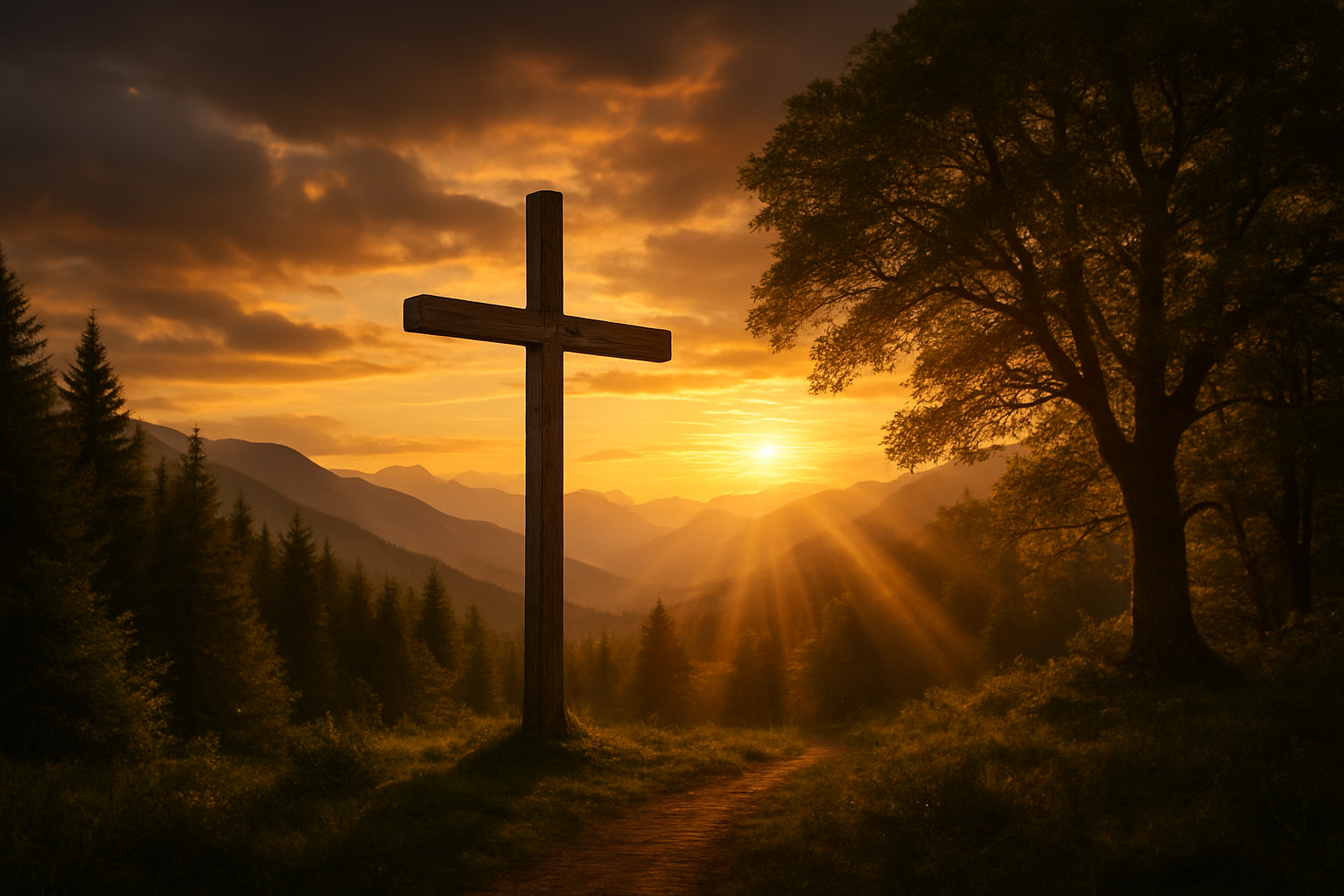
What single story ties the cross to the life God intended?
We want one simple thread: the tree. From the earliest chapters of Scripture to the first preachers in Acts, the Bible uses the image of a tree to speak of life, judgment, and restoration. That image helps us see the cross not only as sacrifice but as entrance into the life God intended for humanity.
"And out of the ground the LORD God made to spring up every tree that is pleasant to the sight and good for food. The tree of life was in the midst of the garden..." — Genesis 2:9
Behind the Words: Genesis 2:9 pictures Eden as a place with a central tree—the tree of life—meant to be the source of ongoing, flourishing existence. In its original setting, the image anchored humanity to God’s design of sustained relationship and life.
The Heart of It: The tree is a sign that God intended life to be given, shared, and guarded at the center of human existence.
Try This: Imagine standing beneath a single tree at the heart of a city square—shade above you, fruit in easy reach. Now imagine the cross as that tree moved into history: a public, visible center where life is offered.
A common misunderstanding is to treat the tree imagery as merely poetic. But Scripture repeatedly uses wooden imagery to name what happened to Jesus—so the metaphor is a theological claim, not mere ornament.
The Heart of It: The cross reclaims Eden’s gift; it is not an addendum to salvation but the way back to life.
This matters because of the language the earliest witnesses used. When the apostles spoke, they said things that sounded blunt to the world—"we preach Christ crucified"—yet that blunt language carried an invitation back into the life God intended.
"But we preach Christ crucified, a stumbling block to Jews and folly to Gentiles, 24 but to those who are called, both Jews and Greeks, Christ the power of God and the wisdom of God." — 1 Corinthians 1:23-24
Behind the Words: In Corinth Paul addresses a divided church and a skeptical culture. Calling the cross a stumbling block was honest: to some the cross looked shameful. To believers, it displayed God’s wisdom masked as weakness.
The Heart of It: What the world counts as defeat God uses to restore life.
Try This: Picture a circle of people around a wooden cross—some mock, some walk away, some lift their heads. You step forward and place your hand on the grain-worn wood and feel not shame, but the steady pulse of promised life.
A preacher quoted the apostles' blunt language—"나무에 달아 죽인 예수를"—reminding listeners that they said Jesus was hung on a tree. That plainness strips the romantic distance we often place between Eden and Calvary.
Acts continues that blunt thread. When early Christians preached, they did not soften the language. "The God of our fathers raised Jesus, whom you killed by hanging him on a tree" (Acts 5:30) connects the Edenic tree with the cross as the place where judgment and redemption meet.
"The God of our fathers raised Jesus, whom you killed by hanging him on a tree." — Acts 5:30
Behind the Words: In Acts, the words address a crowd that literally put Jesus to death. The image of hanging on a tree was accusatory and prophetic: it says judgment and redemption meet on wood.
The Heart of It: The cross-tree is where history’s fracture meets God’s repair.
Try This: Return in your imagination to the day you first felt broken—perhaps an ending that left you emptied. Now picture a wooden beam that takes that hurt rather than hides it. Approach it. Lay that memory down. That is the cross’s offer.
Why does Scripture call the cross a 'tree' rather than an engineered instrument?
We often picture Roman executions as engineered constructions—beams, nails, public spectacle. Scripture sometimes insists on a simpler word: "tree"—Hebrew and Greek words that connect the cross to living, rooted wood. Why that insistence? Because the gospel reads history through Eden’s geography.
The Hebrew word 'ets'—a simple word for tree—appears in Eden and resurfaces in New Testament language about Jesus. That linguistic thread invites us to see the cross as a re-rooting: what once stood for life became twisted by sin; God’s solution is to place life back on a tree.
The Heart of It: Where sin used a tree to expose death, God puts life on a tree to restore what was lost.
A preacher pressed this point with a striking image: perhaps the life-tree’s axis and Jerusalem’s hill are not unrelated. The point is not to make a literal map but to suggest that Eden’s promise and Calvary’s event belong to the same divine storyline.
Picture the two trees standing together: the tree that brought knowledge and the tree that offers life. Now the gospel invites us to stand between those two trees—and to choose life.
One vivid scene a preacher shared helps here: a friend, a weightlifter, stood behind a stage imagining himself lifting a 240-kilogram weight—"240킬로를 이렇게 올리는 거예요"—and discovered that imagination had already done part of the work. The preacher used this to show how vision, when aligned with God’s promise, unlocks strength. The cross is the focal point for that vision: when we imagine and then place our trust at the foot of the cross-tree, we participate in God’s lifting.
Acts repeatedly calls what was done to Jesus "hanging on a tree." That is not casual language—it is the early church's way of saying: history and Eden collide around this wooden truth.
Why does the cross give supernatural strength to ordinary people?
We long for strength that outlasts impulsive courage. The gospel says strength isn't manufactured by grit alone; it's implanted by the Spirit and accessed through union with Christ on the cross.
Note the simple, bold confession a preacher offered: "이것은 하나님의 능력입니다." That line refuses to sentimentalize power. The power we need does not come from strategy, charisma, or tribe. It comes from God—and it comes through the cross.
The Heart of It: The power of the cross is not moral therapy; it is participation in Christ’s risen life.
When Paul says Christ is "the power of God," he ties divine capability to the crucified Messiah. This means our weakest place—the place where we are nailed to shame and fear—becomes the entry point for God's strongest work.
"But to those who are called, both Jews and Greeks, Christ the power of God and the wisdom of God." — 1 Corinthians 1:24
Behind the Words: Paul wrote to churches under social and spiritual pressure. He insisted that the scandal of the cross is where God’s power shows up most startlingly—especially among those who expect human solutions.
Try This: Sit with the image of Jesus on the tree, and then bring your current burden—job loss, a relationship, the ache of doubt—to that place. Imagine placing the burden onto the wood. Imagine God lifting it. Say aloud: "I cannot do this alone; I receive Your life here." Imagination here becomes an act of faith.
A sober line from a sermon deserves pastoral unpacking: "여러분 이 모든 것은 다 태워 없어질 거예요." Our buildings, programs, reputations—these will pass. The hard edge of that saying cuts comfortable illusions. But it also gives urgency: what is eternal is the life the cross plants in us.
So what do we do with that truth? We stop investing our identity in the temporary. We invest in what will not burn: the Spirit-wrought life that the cross makes possible.
Try the spiritual imagination of the weightlifter: when you face an obstacle, imagine stepping forward as if toward a load you are called to lift. Place your hands on the cross-image and ask the Spirit for strength. Then move.
How does the cross reunite fractured humanity—east to west, every nation?
The earliest Christian hope was not private piety but global re-gathering. A preacher repeatedly returned to a striking geographical motif: Adam and Eve were driven east; the call of God’s people is to turn and go west—back to the center. The suggestion that Jerusalem functions as a symbolic axis pushes us to think in terms of restored relationship rather than geopolitical claims.
The Heart of It: The cross is the magnet that re-centers humanity around God’s life, so sinners from east and west can be called brothers and sisters.
That’s why the feeling of kinship among believers from disparate cultures is not sentimental. It is the fruit of the Spirit. The preacher said plainly, "우리는 너무나도 틀리죠... 우리가 이렇게 다르지만... 이것은 하나님의 능력입니다." When the Holy Spirit unites us, barriers fall not by politics but by grace.
We see the mission logic in Acts 1:8: the Spirit empowers witness from Jerusalem to the ends of the earth. The power that goes outward is the same power that knits us inwardly—the cross and Spirit working in tandem.
"But you will receive power when the Holy Spirit has come upon you, and you will be my witnesses in Jerusalem and in all Judea and Samaria, and to the end of the earth." — Acts 1:8
Behind the Words: Jesus promised Spirit-empowerment so the good news would go beyond a single people group. The original setting was a small band of disciples who would become carriers of a global hope.
Try This: Imagine a small group at your table: countries, accents, histories. When you pray together, let the cross be the common center. Speak the simple confession: "By this tree we are bound together." Let that line shape how you treat the stranger who becomes family.
The preacher’s openness to odd locations—suggesting Eden’s axis might line up with Jerusalem—pushes us to think big. It’s not about literal geography; it’s about trajectory. God’s plan retraces the arc from east to west, exile to home, death to life.
We have come full circle. The cross is not a remote relic. It is a tree of life planted deep into human history. It reweaves Eden’s promise into the daily fabric of our relationships and grants power to face what would otherwise crush us.
Will you let the cross be more than a memory? Will you place your burdens on the wood and receive God’s strange, foolish strength? When we do, the world sees a new family—east and west, different tongues, one Spirit—gathered around a tree that gives life.
Stand, imagine, reach. Take the bread. Take the cup. Remember that in this simple act we are reconnecting to the life God promised at the center of the garden. The invitation is urgent, because much of what we trust will pass away. But the life of the cross does not burn.
Key Takeaways
- The cross represents a source of strength for overcoming challenges.
- Believers are united through their shared faith in Christ.
- Embrace the transformative power of the cross in daily life.
- Faith in the Holy Spirit provides empowerment and direction.
- Understanding biblical symbols enhances spiritual growth.
Notable Quotes
"하나님의 능력이 성령으로 말미암아 우리에게 주어지는 것입니다."
"그 십자가는 곧 생명나무가 있는 그곳에 그 나무가 있는 거예요."
"여러분, 여러분들이 어떻게든 능력을 겪기를 원한다면, 희망을 가져야 합니다."