Why the Cross Demands Unity
Explore why the cross confronts earthly authority and how John’s prayer for unity challenges us to pray for coalitions — in politics and the church.
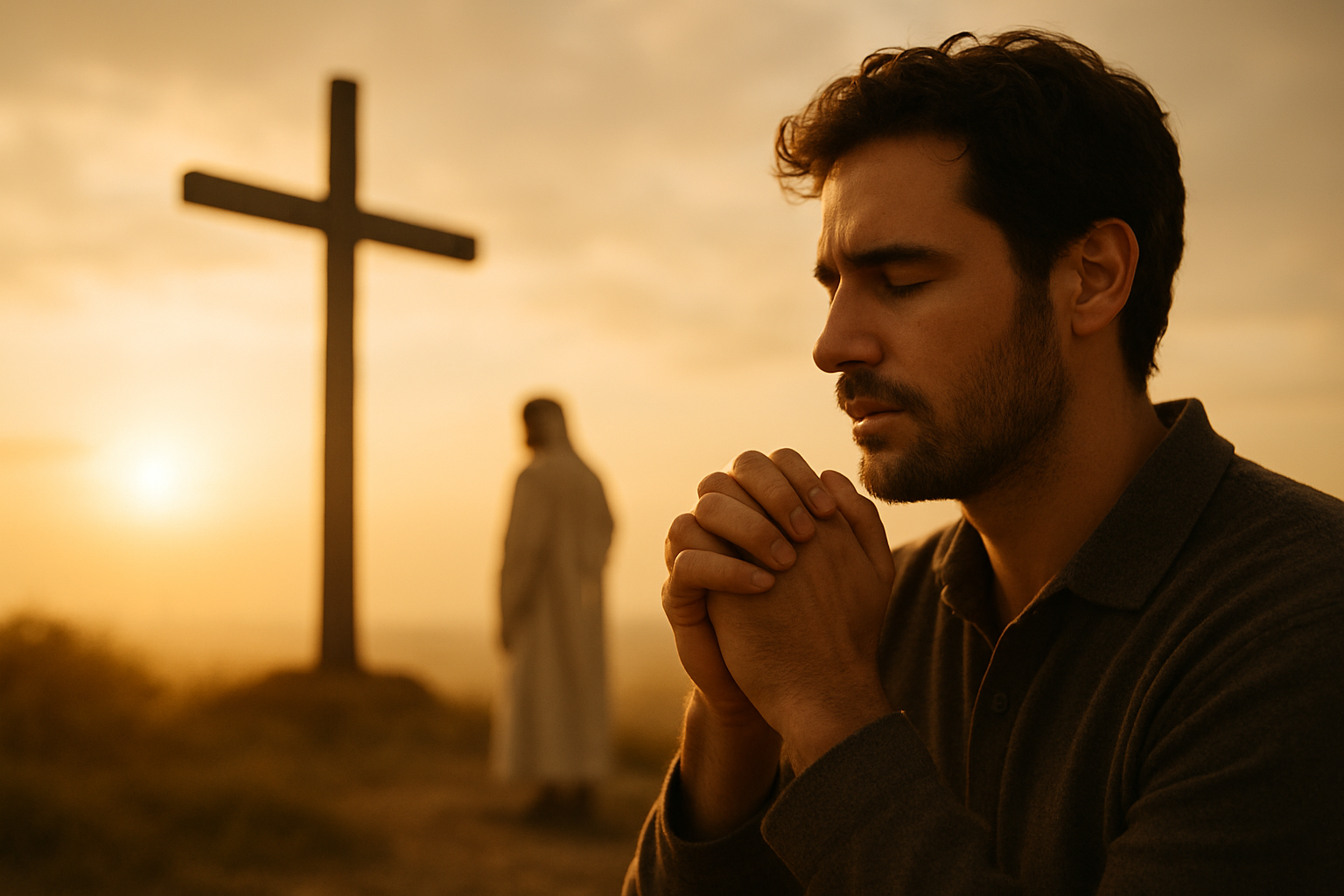
Why the Crucifixion Was First About Kingship
Read the inscription over the cross — "Jesus of Nazareth, the king of the Jews" — and the point becomes immediate. In the courtroom and on the cross the raw question for those present was not only metaphysical forgiveness but political identity. The crowd, Pilate, the soldiers — each pressed the same issue in their own way: is he our king or not? They repeated it, mocked it, and finally nailed a title to wood so all could see.
The Gospel of John circles that question like a prow around a ship. His narrative lingers on Pilate asking, "Are you the king of the Jews?" and later on the sign above the cross. This was the immediate scandal: authority and allegiance. For those who lived it, the cross was a verdict about kingdom claims.
The Heart of It: The cross first exposes rival claims to authority; Christ’s kingship is both the cause of conflict and the cure for it.
Behind the Words: Understanding the crucifixion as a political act helps us see why leaders, nations and ordinary people reacted so violently.
- When we encounter political anxiety today, we must remember that allegiance to Jesus reorders authority rather than erases it.
Think of the disciples on the slope of the Mount of Olives, watching the Temple silhouette across the Kidron Valley. They cross the small stream and enter the garden of Gethsemane — Gat Shmanim, the oil press — a name that squeezes imagery into the story: here the oil is pressed out, here a hidden pressure makes visible oil flow. The cross follows the press.
Teaching Moment 1
"Jesus of Nazareth, the king of the Jews."
Behind the Words: Pilate ordered that inscription and placed it above the crucified man so Rome could declare the verdict in a public way. In that moment the accusation and the title became one: crucifixion as public politics.
The Heart of It: The cross reveals that every throne contested on earth points ultimately to a deeper throne in heaven.
Try This: Picture yourself standing near Pilate’s judgment seat and then shift the scene to your living room as you consider the loyalties you live out each day—at work, at home, on social media. Where do you tacitly place your allegiance when choices are costly?
One common misunderstanding: we often privatize the atonement as solely about personal forgiveness. Historically and narratively, the cross first settles a public claim — the crown is contested before it convicts.
How John’s Prayer Reframes Our Call to Unity
"May they all be one, so that the world may know that you have sent me." — John 17:21
John records an extended prayer before the night tightens into arrest and accusation. It is a radical plea: that the followers would be so visibly united that the world would recognize the Sender. That wish is not sentimental. It is strategic. Unity in John is missional and visible.
John’s Gospel places this prayer at the climax of the Last Supper material. He lingers in the upper room and lists intimate commitments — servant leadership, the vine, the promise of the Spirit — all to culminate in a prayer: "may they all be one." This is not optional boilerplate for church life; it’s an essential badge of credibility.
The Heart of It: Unity is not merely internal peace; it is the church’s public testimony that authenticates the gospel.
Behind the Words: When the early followers of Jesus were unified against division and heresy, the world paid attention; the early church grew not principally because of techniques but because it embodied a countercultural togetherness.
- Try This: When we choose forgiveness over prestige, we make the Gospel intelligible to skeptics.
You remember that scene before the garden. He has washed feet, said, "I am the way, the truth, and the life," and then prayed, "may they all be one." Those words were still warm when they crossed the Kidron stream into the olive grove. There is a tragic irony: a prayer for unity followed within an hour by betrayal and the cross.
Teaching Moment 2
"I am in them and you are in me, that they might be made complete through becoming one." — John 17:23
Behind the Words: John writes this prayer with hindsight. He had watched the early church wrestle with division and saw how unity, or the lack of it, shaped the spread of the message. His context is pastoral reflection decades after the event.
The Heart of It: True unity completes and authenticates our witness; it is not homogeny but reconciled diversity under Christ’s headship.
Try This: Imagine your local church council or your small group table. See the faces of those you disagree with and name out loud one specific hurt you’ve carried. Ask God to reveal one step toward reconciliation you can take this week — not a public statement, but a small, concrete act of humility.
One common misunderstanding: unity does not mean agreement on every doctrine or policy; it means binding under the Lordship of Christ through sacrificial love.
In John’s theology the cross and the unity-prayer are partners. He insists that the same sacrificial love that wages the forgiveness of sinners also furnishes the soil for disciples to forgive one another. That is why John did not rehearse the Garden groan in his account; he felt the unity prayer bore the longer-term weight for the church.
When the Garden Meets the Council Chamber
"Lord, not my will be done, but your will be done." — Luke 22:42 (paraphrase in narrative)
Here is where the biblical story and our political moment intersect. The narrative takes us from the upper room into the olive garden, and then into public courts: arrest, trial, and a sign hammered above a condemned man. There is an uncanny parallel between the two stages of governance in Israel — election and coalition — and the two prayers in the Gospel: the unity-prayer and the Gethsemane surrender.
You cross the Kidron stream with the disciples into Gat Shmanim, the oil press. That detail matters because an oil press squeezes out what is hidden. The night squeezes out loyalties. One of them — the closest — will lean forward and offer a kiss. The narrative captures that haunting line: did you betray the son of man with a kiss? The intimacy of the betrayal only deepens the urgency of John’s prayer for unity.
The Heart of It: Leaders shape coalitions; without willing coalition-building, the throne remains empty despite the rightful king.
Behind the Words: Political leadership in any nation is more than occupying an office. The formation of a viable government requires partnerships, compromise and trust.
- Try This: Pray for those who must negotiate the chairs, and forgive leaders when ambition mars their stewardship.
We are quick to pray through elections — who will sit in the prime minister’s chair, who will win the ballot. That is important. But the harder, longer work is the coalition that follows. One stark line from the conversation is worth hearing as a hard pastoral word: "He can't come back until he's got a coalition." That is a hard saying, and it needs careful unpacking.
Pause with that sentence. Taken literally it sounds theologically dangerous. Taken as a pastoral provocation it unsettles us: if Christ’s reign is to be visibly realized on earth, the church must embody political and spiritual unity that can stand as a functioning coalition of witness and mercy. The hard edge of the saying is designed to wake us from complacency.
We are tempted to say, "I believe Christ is king; therefore nothing else matters." Faithfully confessing his kingship must lead us to coalition-building: forgiving those who hurt us, relinquishing petty claims to places of honor — the same fights John noticed as "chairology," the battle for chairs — and refusing to let ambition fracture the body.
Try This (practical scene): Imagine a small negotiation room after an election. Representatives argue over three chairs — defense, foreign, finance. Instead of sharpening tongues they lay down demands and say, "We will serve the common good and set aside one petty grievance as proof." That humble yield multiplies. It is small, but it is the beginning of a coalition.
Forgiveness is not private. The cross compels us to forgive even the neighbor who kissed us at close range with betrayal. The last word he heard was the word "kiss" — and that detail must shape how we receive those who offend. If we refuse to forgive the person closest to us — spouse, sibling, fellow elder — we cannot expect the wider body to form a coalition that enables Christ’s visible reign.
Bold Move: Learn to pray for coalitions — in your town, your denomination, and in national life — not merely for who occupies the top seat.
Behind the Words: Coalitions take time and require repeated forgiveness.
- Try This: identify one leader you will pray for daily for thirty days, not to win a fight but to find wise compromise.
When we stop at election prayers, we repeat the mistake of contemporary followers who cheered a leader and then relaxed. The Gospel asks more. It asks us to partner in forming the very structures through which peace and justice can be enacted.
The cross paid a twofold price: salvation for those outside, and the painful currency of forgiveness to bind those inside. We cannot live into the reality of Christ’s kingship while we nurse grudges over chairs and titles. The garden and the council chamber still speak to us.
So let us do three things together. First, pray not only for who sits on a throne but for who will sit beside them in humility. Second, take the cross into our closest relationships — forgive the one who hurt you at home and at church. Third, practice small acts of coalition: call a rival leader, invite disagreement to the table, and choose the common good over personal honor.
We are not naïve. Coalition-making is messy. But if Christ’s kingship is to be visible at all, it will be through our willingness to be pressed like olives, to forgive like those who watched blood poured out, and to answer the hard call: may they all be one.
Key Takeaways
- The importance of unity within the body of Christ.
- Understanding the historical context of Yeshua’s crucifixion deepens spiritual insight.
- Prayer should extend beyond elections to include coalition-building.
- Leaders must strive for unity to effectively lead.
- Forgiveness is essential for personal and collective reconciliation.
Notable Quotes
"Father, forgive them. They know not what they do."
"The cross was the price of salvation for unbelievers and unity for believers."