Why Modern Israel Matters for the Church
Modern Israel's language, institutions, and leaders are a prophetic stage. Learn how the Church should relate, prepare spiritually, and act with prophetic humility.
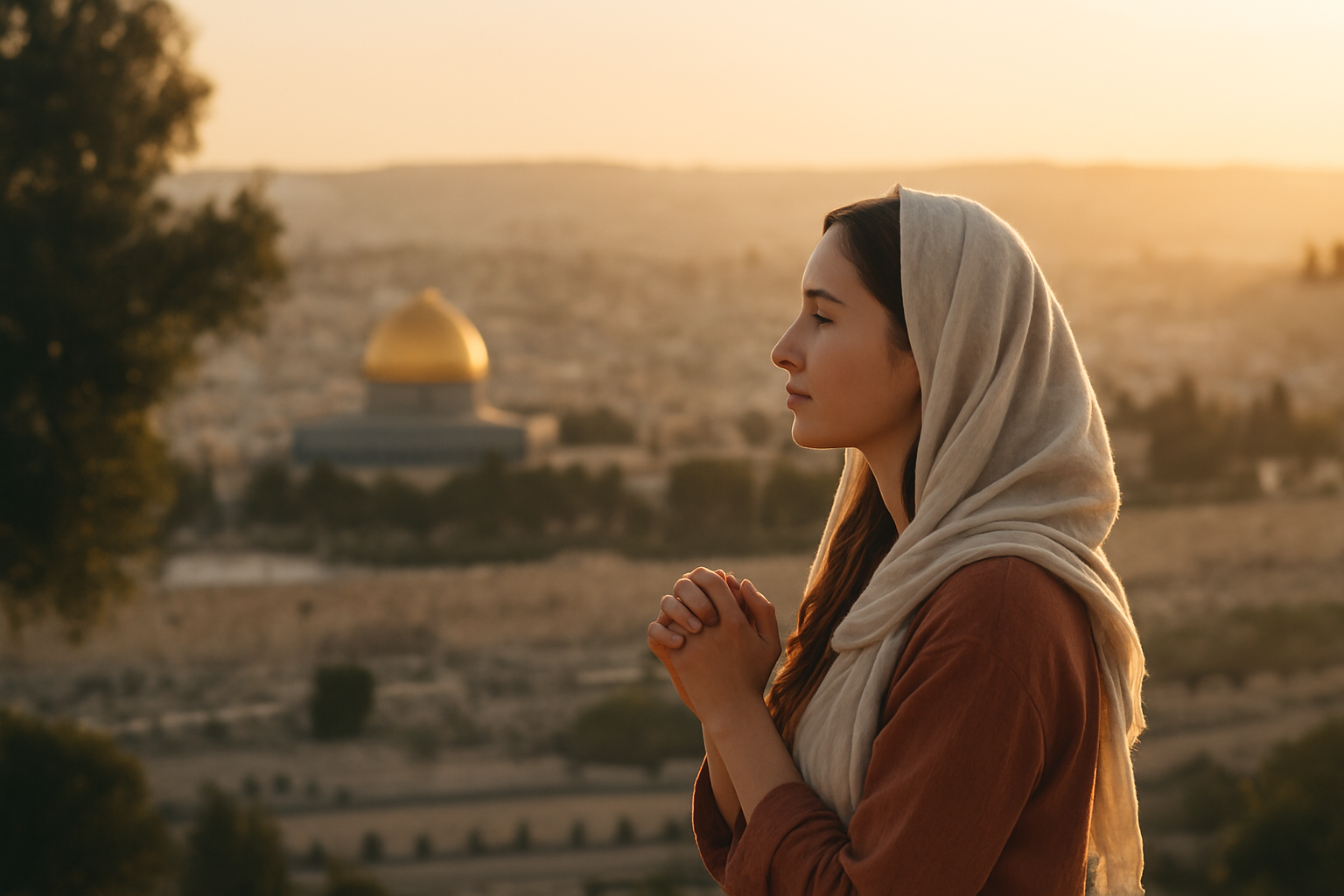
A Nation Rising Like Dawn
There are moments in history that feel like dawn breaking. The revival of a root language, the re-formation of a nation, the building of civil institutions—these are more than political developments. They are parts of a longer story in which God works through messy, human means to restore what He promised.
One striking detail: a late-19th-century scholar moved to the land to revive the mother tongue. He arrived in 1881 and persisted until his son became the first native speaker of modernized Hebrew. That story matters because language shapes identity; it becomes the skin and breath of a people re-gathering.
The Heart of It: God often works by restoring culture and institutions so that spiritual promise has a place to land.
Living where Scripture can be read in the prophets’ words and where grandparents’ forgotten prayers are spoken again anchors hope in daily reality. Try living in a place where you can read Scripture in words your grandparents once used—then pray for the people who will shape that culture.
"The Spirit of the Lord GOD is upon me...he has sent me to proclaim liberty...and to proclaim the year of the LORD's favor." — Isaiah 61:1-2
Behind the Words: Isaiah 61 was addressed to exiles returning from captivity with a promise of restoration—social, spiritual, and national. In its original context it announced renewed life for people rebuilding cities and institutions after trauma. Restoration often begins with the physical and cultural before the full spiritual flowering.
Try This: Picture an old town where wells are being cleaned and a school opens. Stand at the gate and pray: "Lord, let this be a place where children learn our story and also meet You." If you can see the buildings, you can begin to pray about the heart.
A caution: restoration is not the same as perfection. The presence of revival seeds does not mean the kingdom is complete.
Why Modern Israel Matters for Biblical Prophecy
Modern Israel matters because it provides a stage where covenantal promises take on concrete form. The return of a people to their land, the reestablishment of national structures, the revival of Hebrew—these are not merely historical curiosities. They signal that the long arc of Scripture is still moving.
Consider the deliberate institutions formed before statehood. One leader recognized that when a nation arrives suddenly, it must already know how to govern. He helped build a workers' federation that functioned like a pre-government—an organism of hospitals, education, and labor that transferred into national service. The Histadrut taught a generation how to run public systems before sovereignty arrived.
The Heart of It: Prophecy is not merely future-telling; it often unfolds through ordinary civic work and cultural restoration.
Political institutions, language revival, and cultural re-formation are the plumbing through which spiritual renewal flows. Watch a local school open where none existed before; pray for teachers and for a curriculum that forms humility and truth.
There is a temptation to treat modern Israel as either a political project or a purely theological symbol. Both mistakes distort what Scripture describes. Scripture intertwines the physical with the spiritual.
"Behold, a day of the LORD is coming...On that day his feet shall stand on the Mount of Olives..." — Zechariah 14:1-4
Behind the Words: Zechariah speaks from the experience of returning exiles who knew both violence and hope. He imagines a final confrontation with concrete geographic and political consequences.
The Heart of It: Scripture expects history to have real places, real leaders, and real conflicts in which God acts.
Try This: Walk a map mentally. Place prayer on cities, roads, and decision points. Imagine leaders at a table and name them before God—asking Him for wisdom, restraint where needed, and justice.
A common misunderstanding is to see prophecy only as allegory; that robs us of the call to pray for specific places and people.
How the Church Should Relate to Israel Today
If modern developments in Israel are part of a prophetic arc, the Church cannot remain indifferent. But "relating" is not a single posture. It should include worshipful solidarity, theological humility, and practical partnership.
There are historical bridges worth noting. Early rabbis and secular pioneers did not always get along. One influential rabbinic thinker coined a phrase meaning "joining together opposites"—an idea that invited Orthodox and secular movements to find a shared national purpose. This principle aimed at unity without erasing difference.
The Heart of It: The Church’s proper posture is to bridge, not to bulldoze; to witness, not to dominate.
A bridging posture keeps gospel credibility while honoring the complexity of Jewish history and modern identity. Try praying with an Israeli believer about what it means to worship in Hebrew and in another tongue. Let your worship be both a blessing and a learning.
Partnership looks practical. It may mean learning history well enough to argue rightly about land, citizenship, and religious freedom. It may mean standing with Jewish neighbors against violence and also speaking prophetically to any political system that violates justice.
The Church also has a role in truth-telling on the world stage. A pattern has emerged where national leaders confront global institutions with moral claims grounded in covenantal conviction. We, too, should learn to speak truth to power—without making partisan politics an idol. The prophetic call is to confront sin and call nations back to justice.
A hard saying to address: some warn that "we are moving into the greatest war in the history of mankind." That phrase is stark and frightening. It deserves pastoral unpacking. To say we face intense spiritual conflict is not to revel in fear. It is to soberly recognize that evil organizes itself and that Christians are summoned to stand in truth. Our weapons are not primarily swords and armies but prayer, the word, prophetic witness, and sacrificial service.
Behind the Words: Jesus warned that persecution and conflict would intensify before His return. His followers were told to watch, pray, and keep faithfulness in the face of opposition.
The Heart of It: Spiritual warfare calls us to preparation, not panic.
Try This: Imagine small things you can do today to be ready: memorize a verse for courage, practice a brief prophetic declaration over your city, or organize a prayer walk. Picture yourself, not hiding, but standing beside neighbors, ready to serve and speak truth.
A common misunderstanding is to equate spiritual readiness with militarization. Scripture points to courageous prayer and righteous living as primary forms of resistance.
How to Prepare Spiritually for Prophetic Conflict
Preparation is discipleship. The Scriptures call the Church an ecclesia—a governing, called-out assembly. Historically, civic preparation preceded national sovereignty. The same principle applies spiritually: we are training now for stewardship of God’s future order.
Practical spiritual readiness begins with three practices that shape character and courage:
Rootedness in Scripture. Read the prophets without turning them into slogans. Let their griefs, hopes, and demands shape your imagination.
Corporate prayer that learns to declare God’s purposes. There is a time for lament and a time for declaration. Use both.
Civic formation. Discipleship trains habits of service—administration, mercy, teaching. The early civic institutions formed before the state provide a template: learn skills now that will be indispensable later.
The Heart of It: Discipleship equips us to govern with humility when God’s kingdom expands on earth.
When the New Testament pictures the Church as a governing body, it assumes the formation of character and competence. Try apprenticing for public service: volunteer to manage a small church budget, learn to lead a team, and practice decisions that protect the weak.
Another practical lens: prophetic words in recent history were often attached to ordinary acts—learning to blow a trumpet looks less like soldiering and more like worship-fueled proclamation. Joshua’s victory began with a trumpet and a song. That image invites us to prepare liturgically as much as strategically.
Finally, spiritual preparedness includes prophetic gentleness. We will need prophetic clarity, yes—but also pastoral care. Many who will be affected by future conflict will be frightened. The Church’s witness must be balm as well as sword.
We are part of a story that stretches across centuries and speaks into our city streets and homes. Modern Israel’s revival, civic formation, and the Church’s call to bridge and prepare are not separate strands—they are woven together.
So what do we do now? Learn history. Pray specifically. Train practically. Wrestle with Scripture and then step out to serve. When the world seems to move toward greater conflict, our calling is to be a prepared, courageous, and compassionate people.
We do this together. Keep your feet on the ground, your hands in the work, and your heart before the Lord. The dawn is breaking; let us wake and work.
Key Takeaways
- The importance of understanding historical Jewish figures in light of prophecy.
- The need for unity between the Messianic community and the Church.
- Recognizing the prophetic fulfilling role of modern Israel.
Notable Quotes
"We are moving into the greatest war in the history of mankind."
"If it can't happen here in the land of Israel, it can't happen in the rest of the world."