Why Jerusalem Matters in God's End-Time Plan
Jerusalem stands at the center of God's end-time plan. Learn how Scripture frames the city's role, what prophecy means for Israel, and how our prayers matter.
Why is Jerusalem central in biblical prophecy?
Jerusalem appears again and again in the Old and New Testaments as the place where God acts decisively. Zechariah, for example, pictures the city as a focal point of both conflict and divine vindication.
"I will make Jerusalem a cup of trembling to all the surrounding peoples..." — Zechariah 12:2-3
That image is brutal and honest: a cup that spills and shatters, causing those who reach for it to be judged by their own grasping. It’s not only poetic—it’s prophetic. The text originally addresses an embattled Judah watching surrounding nations array themselves against the city. To those first hearers it meant: enemy coalitions will surround Jerusalem; the crisis will expose hearts.
Behind the Words: Zechariah was spoken into a people returning from exile, fragile but promised a future through God’s direct intervention. The immediate context is restoration and warning—the city will once more be the stage where nations’ true motives are revealed.
The Heart of It: God centers Jerusalem in prophetic history because the city is where covenant, kingship and the Temple meet—so nations react when God’s purposes are at work there.
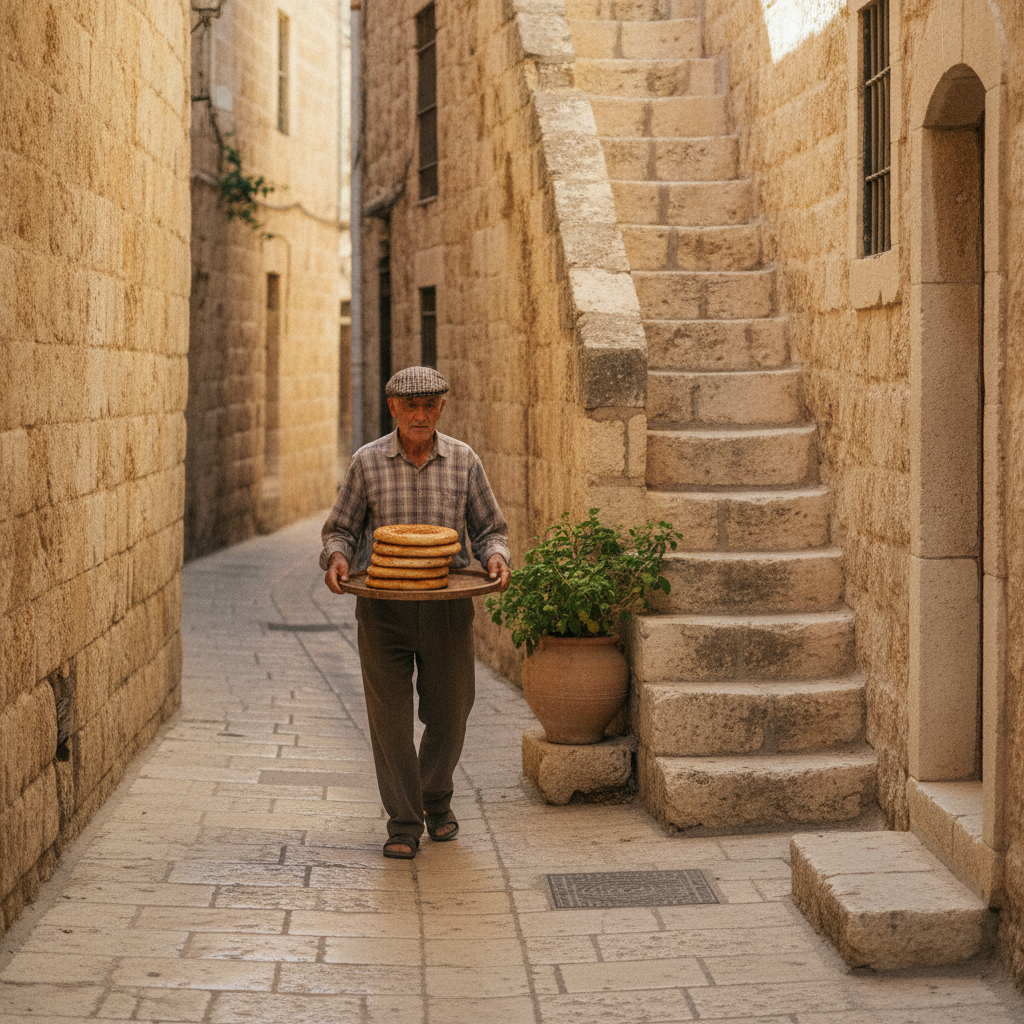
Try This: Picture a late-afternoon market in the Old City. A vendor folds his cloth as protesters gather, and you kneel in a quiet alley to ask God for the city’s peace—name a street, picture a particular house, and pray as if the future of nations depends on this small act of faith.
The prominence of Jerusalem in prophecy is not ancient trivia but a lens for interpreting current events. That line from Zechariah—"Jerusalem will be a cup of trembling to all nations"—should make us sober rather than sensational. It calls us to watch and to stand—not out of fear, but out of reverent vigilance.
Try This: Notice how the modern city is ordinary and extraordinary at once. People keep daily rhythms; yet there are also bus explosions five minutes from homes, stabbings nearby, and waves of returnees coming to the land. Pray for those specific neighborhoods and families you imagine.
What do the prophecies say about Israel in the end times?
Many biblical passages move from general prophecy to a pointed focus on Israel and Jerusalem. Jesus lamented over Jerusalem in Matthew, and Revelation sketches a cosmic conflict that ends with Satan bound and judged.
"Jerusalem, Jerusalem... how often I longed to gather your children together... But you were not willing." — Matthew 23:37
In Matthew that lamentation arises from pastoral sorrow: Jesus addresses the city that has rejected and killed the prophets sent to it. In its original setting, this verse holds both indictment and hope—a reality that repentance and recognition can change destiny.
Behind the Words: Jesus spoke to a people at the intersection of covenant promise and rejection. The words condemn because they plead—He desires reunion.
The Heart of It: The prophetic storyline ties the fate of Israel to God’s redemptive timeline; the city’s response matters to the coming of the King.
Try This: Imagine a family scene: a Jewish neighbor returns home after hearing a testimony, sits with an open Bible, and whispers the Messianic blessing—"Blessed is he who comes in the name of the Lord." Pray for that moment of recognition to multiply.
The prophecies can read as specific and unsettling. One passage says bluntly: "It shall be in that day that I will seek to destroy all the nations that come against Jerusalem." That is fierce language—God acting decisively against those who wage war on His city. Historically, such texts addressed attackers of Judah; eschatologically, they picture a final intervention when the King returns to establish justice.
We see contemporary echoes: cyber warfare aimed at crippling infrastructure, boycott campaigns, and educational efforts that foster hostility. These realities form part of the modern pressure described in prophetic language. Yet Scripture does not leave us passive. The same prophetic framework that warns of sieges also promises restoration: returnees arriving in waves from many nations are woven into the narrative of gathering.
This is not simple geopolitics repackaged; it is theological geography. Israel’s restoration and the nations’ reactions fit into God’s larger plan to bring the nations to Himself.
At the foot of the Mount of Olives
Picture the Mount of Olives facing Jerusalem at dawn. From that slope the biblical narrative imagines the King returning; from that same slope people have lived ordinary lives—children playing, markets opening, commuters catching buses.
"And his feet shall stand in that day upon the Mount of Olives..." — Zechariah 14:4
The ordinary and the eternal collide in a single place. For the first-century hearer, this was a promise that God would not remain distant; for us, it reframes newspapers and notifications as part of a much larger story.
The Heart of It: The ordinary life of Jerusalem is the stage for extraordinary divine action.
Behind the Words: When news mentions violent incidents—a bus bomb five minutes away, knife attacks near homes—those events are not merely statistics. They are signposts in a city whose soil carries covenant memory. Yet the prophetic promise is not only calamity. It includes restoration and the spread of renewed knowledge of God across the earth.
Try This: Stand mentally at the base of the Mount of Olives. Hear a distant call to prayer, smell bread from a nearby bakery, and then lift your voice for peace in the city. Let prayer be the place where ordinary life meets the extraordinary.
How can our prayers influence spiritual warfare over Israel?
Scripture and faithful experience teach that prayer is not sentimental—it is strategic. The narrative around Jerusalem is not only geopolitical; it is spiritual. The Bible names adversaries and also names the means God gives us to contend: prayer and proclamation.
"And I saw an angel coming down out of heaven, having the key to the Abyss and a great chain in his hand..." — Revelation 20:1-3
Revelation’s scene describes the binding of the accuser—an eschatological picture that reassures us Satan’s power is limited and temporary. In its original setting, Revelation comforted persecuted churches: God had the final say.
Behind the Words: Revelation speaks to communities under pressure, offering cosmic perspective. It reminds us that spiritual conflict is real but ultimately subordinate to Christ’s victory.
The Heart of It: Prayer participates in God’s work; it aligns our wills with His and presses back the darkness.
Try This: Picture a small group at dusk. They light a candle, name specific threats—cyber attacks on supply chains, boycotts aimed at livelihoods, orchestrated campaigns on campuses—and pray, asking God to expose lies and soften hardened hearts. They then commit to daily, specific intercession for neighborhoods and particular families in Jerusalem.
We must also wrestle with a hard reality that demands honesty: persistent anti-Jewish hatred across history and the spiritual logic such hatred follows.
Unpacking that hard truth: it is both accusation and alarm. It warns that hatred is not merely political; it is demonic and seeks ultimate destruction. But it also calls us to protect, to advocate, and to pray for grace—not to inflame vengeance or justify harsh rhetoric.
Try This: Imagine a believer in a small town who hears of antisemitic incidents on campus. Instead of retreating into fear, she organizes a weekly prayer walk past the college gates, brings water, listens to students’ concerns, and offers conversation. Her action opens doors for witness and softens hearts.
We are not called to triumphalism. We are called to faithful intercession, wise advocacy, and humble solidarity. The prophetic promise—"It shall be in that day that I will seek to destroy all the nations that come against Jerusalem"—is not a license for hatred of nations; it is a call to reverent dependence on God’s justice while we act with mercy in the present.
We return to the sidewalk near the bus stop five minutes from a home in Jerusalem. The ordinary and the eternal meet there. Nations rage, technology assaults, campuses debate—and yet Scripture calls us to a posture that is neither alarmist nor apathetic.
Stand with Jerusalem by praying with informed conviction, by learning the Scriptures that name its place in God’s plan, and by loving the people who live there. When we do, we participate in a story far larger than any headline.
Let us pray: for the peace of Jerusalem, for the hearts of its people to be opened, for an end to violence and for the spread of the gospel. Be people whose lives make the ancient promises tangible to neighbors—where ordinary acts of love become signs of the extraordinary kingdom that is coming.
Teaching moments
Behind the Words: Zechariah 12 addresses a people returning from exile, vulnerable yet under divine promise—God speaks to a specific historical crisis about the city as a center of judgment and rescue.
The Heart of It: Jerusalem's role is eschatological—its fate reveals the condition of nations and the timing of divine rescue.
Try This: Sit with Zechariah’s image for a moment. Picture a neighbor’s doorstep in Jerusalem and pray for protection there, naming the street, the family, and God’s restorative work.
Behind the Words: Revelation 20 comforts persecuted churches by showing the temporary confinement of the enemy and the certainty of Christ’s final victory.
The Heart of It: Spiritual warfare has an appointed limit because God will bind what opposes Him at the right time.
Try This: Gather a small group and read Revelation aloud. Afterward, write specific names of neighborhoods and leaders you will pray for during the coming month—pray them with expectancy.
Be faithful. Watchful. Prayerful. And when you speak about Jerusalem, let your words be shaped by Scripture, not panic. Remember Jesus’ longing—He desires to gather the city like a mother hen gathers her chicks. Let that longing shape our posture: urgent, compassionate, and full of hope.
Key Takeaways
- Jerusalem is central to the divine prophecies regarding the end times.
- Prayer is vital for understanding and engaging in spiritual warfare.
- Understanding scriptures can help clarify God's plan for Israel.
- Believers have a responsibility to support and intercede for Israel.
- Awareness of geopolitical conflicts can inform our faith and actions.
Notable Quotes
"Jerusalem will be a cup of trembling to all nations."
"Jesus will return to Jerusalem and set up His kingdom."