Why Christian Unity Matters Now
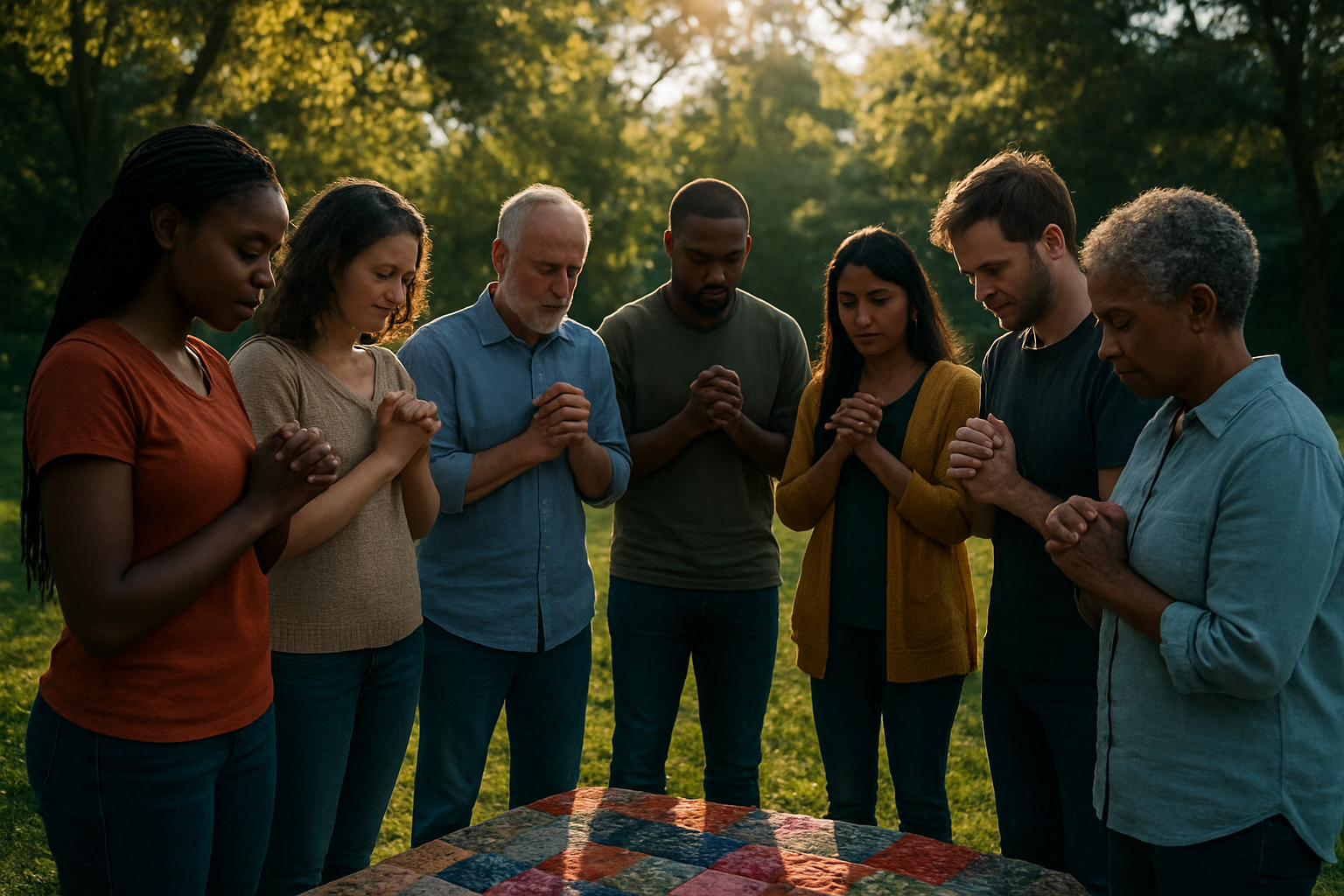
Unity is not optional. The gospel makes a new people; prayer and practical service bind divided congregations into a reconciling witness.
Why unity is a central Christian doctrine
When Paul writes about one new man, he is doing more than offering church-growth advice. He names the gospel’s visible work: reconciliation that undoes the dividing walls of hostility so the world may see God's reconciling love.
"For he himself is our peace, who has made the two groups one and has destroyed the dividing wall of hostility..." — Ephesians 2:14-15
Behind the Words: Paul wrote to Gentile and Jewish believers in contested cities where identity and ritual mattered. His readers faced real tension about who belonged, how faith looked in daily life, and whether old barriers would define the new community.
The Heart of It: Unity is not uniformity; it is the gospel creating a new family from divided peoples.
Try This: Imagine your Sunday gathering as a dinner table where several languages are spoken and different family recipes arrive. Instead of insisting on one menu, you ask someone to explain a dish and try it. Conversation follows; a child is laughed at for a minor faux pas and forgiven. That is unity practiced.
Unity is doctrinal because it is rooted in who God is and what Christ accomplished. Jesus prayed for oneness that mirrored the Father–Son relationship (John 17). Paul frames unity as a consequence of Christ making peace. Church structures, liturgies, and convictions matter—but they must be weighed against the gospel’s primary work: reconciling people into one body.
The Heart of It: Unity matters because the gospel aims to display God’s glory through a reconciled people.
Behind the Words: When unity is treated as secondary, we erode the gospel’s public witness and stunt the Spirit’s movement.
You may ask: isn't unity really worth the cost? Yes. It asks humility, time, and the willingness to bear a wrong reputation for the sake of reconciling love. Those costs are the price of being a believable witness in a polarized age.
A hard pastoral truth follows: if God is after unity, our fragmentation is not merely a scheduling problem—it is theological disobedience. Obedience here looks like prioritizing relationships that demonstrate Jesus' love, even when doctrinal differences remain.
What does Ephesians 2 teach about Jewish–Gentile unity?
Ephesians 2 gives a theological blueprint. The cross didn’t simply save individuals; it created a new social reality. The law, rituals, and boundary markers that once separated peoples were made powerless so a new family could rise.
"He came and preached peace to you who were far off and peace to those who were near. For through him we both have access in one Spirit to the Father." — Ephesians 2:17-18
Behind the Words: The original readers included Gentiles who had been outside the covenant and Jewish believers who treasured the law. Paul addresses their temptation either to demand conformity to former practices or to claim superiority. He points to the cross as the decisive act that levels the playing field.
The Heart of It: The cross removes the barriers that keep God’s people separate so we can worship as one household.
Try This: Picture a city prayer room where a Messianic congregation and a neighborhood Baptist church stand side by side to pray for the schools. One leader reads a Psalm in Hebrew; another prays in the vernacular. They share communion afterward. The struggle to translate ritual and language into mutual respect is real—yet their shared table becomes a witness.
Acts 15 gives a biblical example: early apostles wrestled with the place of Jewish law for Gentile believers and refused to erect an insurmountable fence. That decision allowed the kingdom to cross cultural lines without requiring cultural erasure.
Behind the Words: Paul’s picture does not erase distinct identities. It honors them while reorienting ultimate identity around the Messiah.
Practical local expressions follow this theology. In one city leaders began a season of corporate prayer aligned with Jewish calendar rhythms—ten days from Rosh Hashanah to Yom Kippur—where each church hosted an evening and prayed for unity, the city, and for Israel. That unusual detail shows how Ephesians 2 can become embodied liturgy rather than abstraction.
Common misunderstanding: unity does not mean abandoning truth. It means refusing to make secondary convictions into primary walls.
The Heart of It: Ephesians 2 teaches that reconciliation is corporate: the cross creates a new people from the nations.
Behind the Words: This reframes debates over practice: are we preserving truth, or are we building walls that block the gospel?
How can prayer and local action build unity in our city?
Prayer is the primary place unity becomes visible. When leaders gather to pray, they name shared hopes: the kingdom come, schools blessed, neighbors served. Prayer forms common language and common posture.
"Your kingdom come, your will be done on earth as it is in heaven." — Matthew 6:10
In practice, prayer nights succeed because they keep the focus corporate and simple. One city’s pastors' fellowship paired prayer with tangible service: they visited every public school in their county and prayed over the start of the school year. They did not hold a debate over pedagogy; they stood together before teachers and principals and offered intercession and blessing.
The Heart of It: Prayer gathers our wills under God’s will and readies us for shared action.
Try This: Picture a middle-school principal at the gate, surprised as a dozen pastors arrive. They pray together—some silently, some aloud—then hand gift cards for the nurse’s pantry and volunteer lists for reading programs. A local news clip runs the next day. People notice not the brand of each church, but the body of believers acting in practical love.
Why combine prayer with service? Prayer without feet stays private; service without prayer becomes mere charity. The two together show a reconciled people who both depend on God and act as his hands.
The Heart of It: Practical unity requires both shared prayer and shared sacrifice.
Behind the Words: Organized efforts—like citywide prayer seasons or coordinated humanitarian projects—force leaders to prioritize the kingdom over institutional gain.
Unity will not happen by accident. It takes intentionality: schedule time, agree on a few shared priorities (pray for unity, the community, and for Israel), and then do a humble, visible task together—pack meals, assist a school, visit elders, or support refugee families. Those acts create trust.
Two practical steps from local examples:
- Start with prayer teams that include diverse congregations; keep the focus on shared mission, not governance.
- Choose one community need and meet it together. When pastors and lay leaders labor shoulder-to-shoulder, walls of suspicion recede.
A hard pastoral truth: building unity costs growth in other areas. Leaders must give time and resources they could otherwise invest in their own projects. But that sacrifice often produces a stronger witness when catastrophe or revival comes. History shows revival and crisis alike accelerated unity in the early church; our preparedness to share resources and leadership matters.
When walls become bridges
We live in a fractious moment. Yet Scripture points to a people reconstituted—Jew and Gentile, old and young—who reflect God’s glory. The call is not to bland sameness but to a costly, love-driven unity that mirrors the Trinity's harmony.
Behind the Words: Romans 11 was written to a Gentile church worried that God's promises to Israel had failed. Paul warns that God’s plan is neither accidental nor replaced; there is a future restoration tied to Israel’s salvation and the nations’ fullness.
The Heart of It: God keeps his promises to Israel and the nations; reconciliation there intensifies the gospel’s global reach.
Try This: Picture two neighbors—one Jewish, one Gentile—attending a citywide commemoration of Israel’s modern history. They listen, ask questions, and later meet for coffee. Over time, their conversations and hospitality open doors for reading Scripture together and praying. This slow, relational disciple-making echoes Paul's hope: the nations' fullness and the salvation of Israel will move many hearts.
Resist simplistic political reductionism. Standing with Israel in prayer and compassion is not the same as endorsing any policy without discernment. The church’s posture should be rooted in Scripture’s promises and in Christlike compassion for all affected by conflict.
The Heart of It: Standing with God's people in prayer and service primes our witness for revival and reconciliation.
Behind the Words: When we pray for Israel and work together to serve the vulnerable, we align with Scripture’s vision and become channels of God’s reconciling power.
Be faithful where you are. Unity is built by hundreds of small decisions: refusing to badmouth another congregation, inviting someone to a service that feeds them, joining a city prayer calendar, or showing up at a school with hands to help. Those modest acts become the scaffolding of a reconciled body.
We will not erase theological differences overnight. But we can honor the cross by refusing to add walls where Christ has already torn them down. The temptation is to retreat into purity by separation. Instead, choose humility. Choose shared prayer. Choose public service. Choose the slower work of relationship.
Begin with a phone call to a pastor across the street. Ask to pray together for one common need. Show up to serve. The gospel that reconciles you also calls you to reconcile others.
May we, shaped by Scripture and prayer, become a city of witnesses whose unity—imperfect but real—points the world to Jesus.
Key Takeaways
- Engage in prayer as a community to foster unity.
- Support humanitarian initiatives within your local area.
- Recognize the importance of standing with Israel.
- Encourage open relationships between Jewish and Gentile believers.
- Focus on inclusivity and love in discussions around faith.
Notable Quotes
"Unity is what God is after."
"The church really can do something good."
"We want God to move in Gaza and in the Middle East for His glory."