Why Alma Matters for the Virgin Birth
Explore how the Hebrew word 'Alma' links Rebekah, Miriam, and Isaiah's prophecy — revealing how God chooses ordinary women and ordinary births to bring Immanuel near.
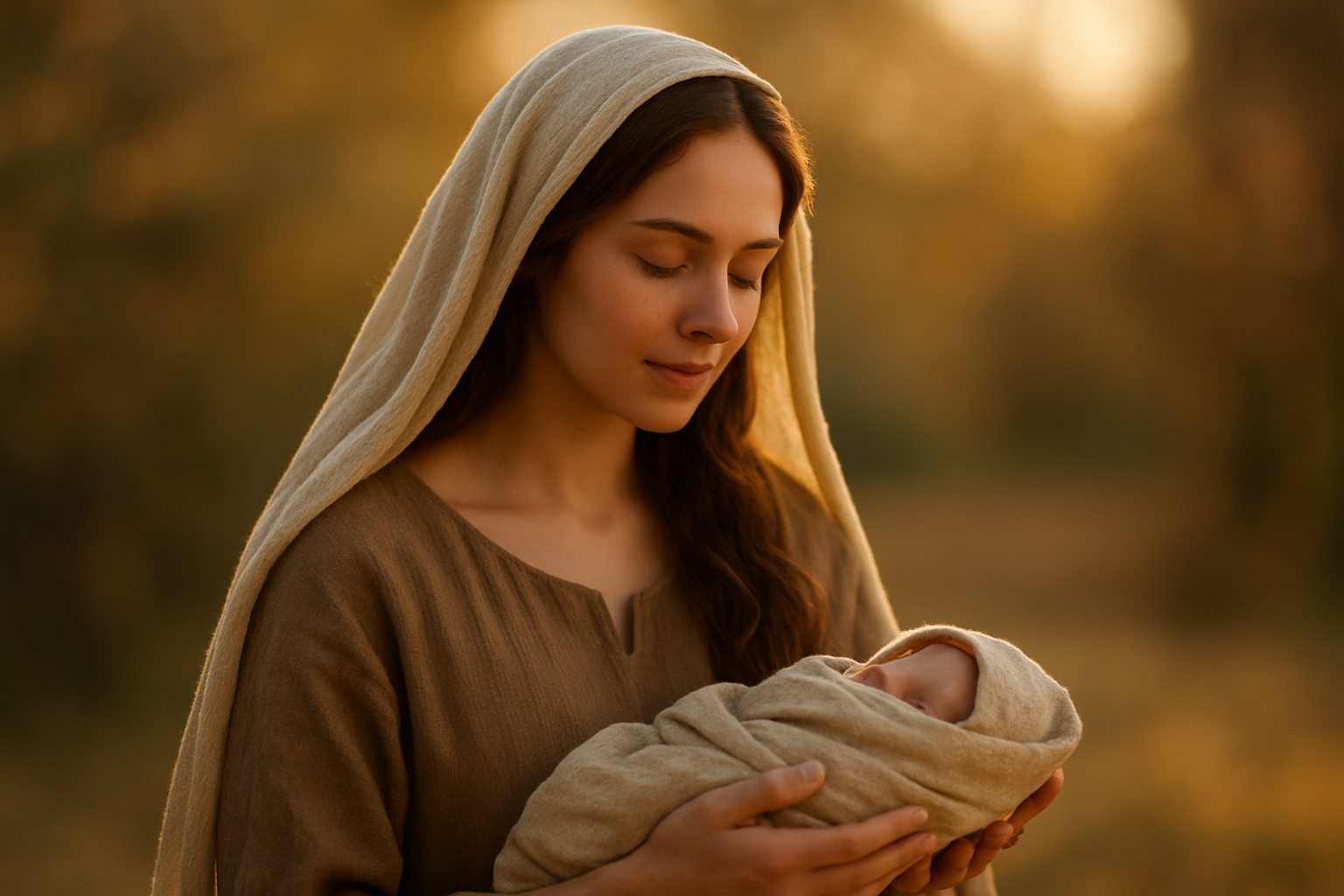
What does "alma" mean in the Hebrew Bible?
The Hebrew alma (עַלְמָה) appears only a handful of times in the Old Testament, and where it appears matters. In Genesis 24 a young woman at a well is called an alma and immediately afterward the text uses betulah — often translated "virgin." That pairing matters; it shows readers in the ancient world understood alma as referring to a young woman who had not been married.
"The young woman was very fair to look upon, a virgin; neither had any man known her." — Genesis 24:16
Behind the Words: Genesis 24 is a story of lineage and covenant continuation. The servant's prayer and the sign at the well show God’s providence for Isaac’s household in a culture where marriage secured inheritance and promises.
The Heart of It: Alma points to a young woman within covenant story, not a poetic archetype detached from human life.
Try This: Picture the tent where Abraham’s household waits for word. The servant returns with Rebekah, and the family recognizes God’s hand in a human encounter — a plain scene becoming sacred.
Plainly: the word alma can refer to a virgin; context in Genesis makes clear how the term functioned.
We also find alma in Exodus 2. The girl who watches the river to see what will happen to the Hebrew baby is identified as an alma — Miriam, Moses’ sister, who acts to save the child from Pharaoh’s decree. This is not only a lexical note; it ties the word to God’s rescue pattern: the vulnerable child, the faithful girl, the unfolding deliverance.
A later use appears in Proverbs (a different register), and then again in Isaiah 7, where the term becomes prophetic. That trajectory — family scene, deliverance story, prophetic promise — shows how a common Hebrew word can knit ordinary people to extraordinary purposes.
Why Isaiah's alma prophecy points to the Messiah
When Isaiah says, "the alma will give birth," the ancient hearer would have carried Genesis and Exodus echoes with them. The phrase is not a standalone abstraction; it is shot through with memory. The prophet’s claim forces us to reckon with God entering history through a young woman of a people under promise and under pressure.
"Therefore the Lord himself will give you a sign. Behold, the young woman shall conceive and bear a son, and shall call his name Immanuel." — Isaiah 7:14
Behind the Words: Isaiah 7 was spoken into a crisis — a kingdom threatened by surrounding powers and a king searching for signs. The prophet offers a sign not of military triumph but of God's nearness, accessible through ordinary life: a birth.
The Heart of It: God's guarantee often arrives through vulnerability rather than spectacle.
Try This: Stand with a family listening to the prophet's word while armies loom. The sign offered is domestic — a child at the hearth — and it reframes where God will be found: not in triumphal banners but in the fragile cry of a newborn.
The prophetic structure matters: Isaiah's sign uses the exact term alma that connects back to Rebekah and Miriam. That repetition invites interpretation. An ancient hearing would sense layers: covenant continuation (Rebekah), deliverance (Miriam), and now a new promise: Immanuel, "God with us." This claim ties the divine presence to a human birth in a specific social role. We must not spiritualize that away; God chooses a human mother and a communal context to dwell with us. The mystery is incarnational and communal.
A related linguistic note concerns a shared root: the Hebrew root alam (hidden) appears inside ta'aluma (mystery). There is a resonance here — the ordinary Hebrew word for a young woman shares a root with language of hiddenness and unveiling. The incarnation is at once historical and mysteriously divine.
How alma and betulah work together
Translations sometimes set alma and betulah against one another as "young woman" versus "virgin," stirring debates over ancient meaning and modern doctrine. But notice Genesis where both words appear in immediate sequence: the narrator uses alma and then clarifies by adding betulah. That editorial move tells us something important about biblical communication: when the author wanted to be precise about sexual status, betulah follows to clarify.
"And the servant called Rebekah, and said, 'Will you go with this man?' And she said, 'I will go.' And Laban and Bethuel answered, 'The matter is from the Lord.'" — Genesis 24:58 (context showing communal discernment)
Behind the Words: In ancient Near Eastern culture, words about a woman's status were socially consequential. The author’s use of both terms signals care for the social reality being narrated — marriage, covenant, and legal standing.
The Heart of It: Alma signals a young woman in relationship to covenant life; betulah sharpens the detail of sexual innocence.
Try This: Imagine the servant reporting back in the tent, the family leaning in as the woman’s identity is confirmed — not as an abstraction but in terms that affect inheritance, security, and hope.
That joint usage matters for faith because translation debates often become doctrinal debates. A pastoral posture of humility serves us well: notice how biblical writers worked with language to communicate to their original audiences. They were not trying to hide meaning; they used familiar words and supplied clarification where it mattered.
Recall the riverbank scene in Exodus 2: the alma who watches the basket and moves to secure the baby from Pharaoh's verdict is active, courageous, and tied to Israel’s deliverance story. The concrete narrative anchors the lexical debate so that our theology of incarnation remains rooted in human lives and brave choices.
The word alma teaches us to listen differently. Read Isaiah 7 with the memories of Genesis 24 and Exodus 2 beside you. Let ordinary scenes — a well, a riverbank, a humble home — reshape your image of how God comes near. Resist flattening mystery into abstraction; follow the textual thread that moves from a servant’s prayer to a sister’s courage to the birth of Immanuel.
A short pastoral challenge: keep a three-column journal this week. Column one: a brief Old Testament scene (Rebekah at the well; Miriam by the river). Column two: the word used for the woman there. Column three: what that scene teaches you about how God acts in your life. You may be surprised how language and story together deepen trust.
Key Takeaways
- Understanding the importance of the term Alma in biblical prophecy.
- Recognizing the connections between the Old and New Testament regarding the messianic narrative.
- Appreciating the Hebrew roots of Christian beliefs about the virgin birth.
Notable Quotes
"The Alma will give birth and her son will be called God with us."
"So let's just put those three verses together."
"The word Alma can refer to a virgin and does not refer to someone who's not a virgin."