When You're Done: Gospel Hope in Weariness
When the last chair of your strength gives way, the gospel meets you there. Learn how honest surrender, daily rhythms, and compassionate community restore weary souls.
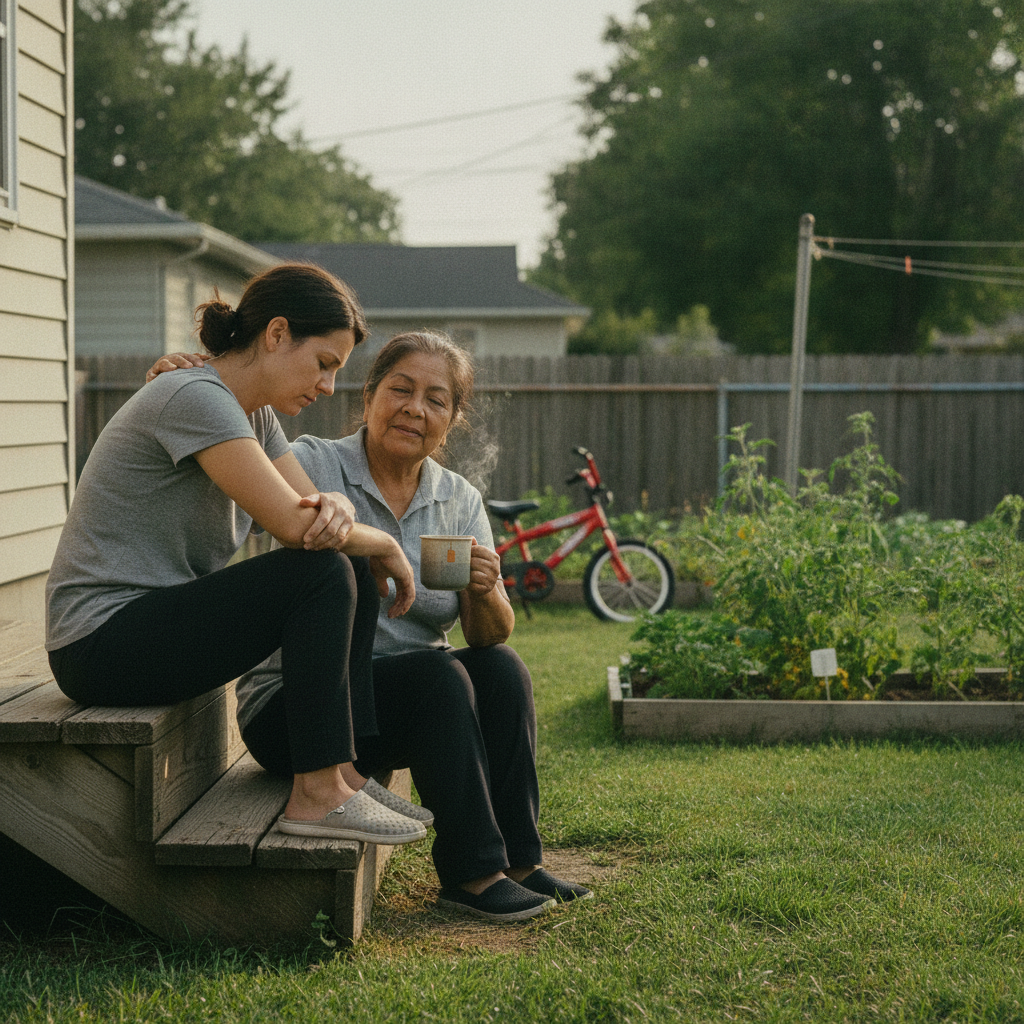
Why does spiritual exhaustion happen to devoted Christians?
We are built to serve—but not to be the source of our own life. The cruel irony: our devotion can become the very thing that drains us. We push, give, plan, and hope; then one season—sometimes sudden, sometimes slow—we find ourselves unable to rehearse faith in the old ways.
The Heart of It: You were never designed to be self-powered.
Exhaustion often feels like personal failure, when it’s actually evidence that we’ve been living on borrowed spiritual fuel.
Try This: Stop framing your tiredness as moral deficit. Treat it like an honest wound that needs care, not shame.
Be candid. Many of us keep the motions—prayer lists, Sunday attendance, volunteer shifts—long after the well is empty. A simple admission can be life-giving: “I am done. I can’t do this by myself.” It’s not dramatic weakness; it’s the first honest step back toward God’s help.
There are people in pews and kitchens who have begun to think God is far because they are spent. Picture lying in a crumpled heap—not heroic, not tidy, but real. There is dignity in that collapse because it can be the place we stop pretending and start receiving.
Vine and Branches
Behind the Words: John 15 is Jesus’ conversation with his disciples on the night before his arrest. He uses the image of vine and branches to picture dependence, fruitfulness, and the intimate union between himself and his people.
The Heart of It: Apart from Christ, we can do nothing—activity separated from him is fruitless and ultimately draining.
Try This: Sit with the sentence “apart from me you can do nothing” as a mirror rather than an accusation. Picture yourself at the kitchen sink with your hands empty and the morning light soft—what would it look like to put down the burden and whisper, “I am not the source?”
A common misunderstanding is to reduce this to passivity. Abiding is active dependence; it’s work done from the vine, not for the vine.
When exhaustion arrives, it asks for a different posture. Not more strategies at first, but surrender. Not another to-do list, but a seat at the feet of Christ. You may not be able to lead; you can still lean. That is the beginning of renewal.
How does the gospel renew us when we are done in?
The gospel is not a motivational poster. It is the good news that God entered our exhaustion and took it into his own life. That reality reframes weariness: our failure does not erase God’s commitment to us, and our smallest step toward Jesus is received as a sacred act.
"For God so loved the world that he gave his one and only Son..." — John 3:16
The Heart of It: The gospel meets us where we are, not where we think we ought to be.
Hope that depends on our performance will always collapse when we do.
Try This: When you can’t pray the big prayers, read one sentence of Scripture and trust that God is listening.
There is a hard saying that shakes our sense of control: “Apart from me, you can do nothing.” It is convicting because we like being problem-solvers. Hear it as a shelter: when we accept that we cannot manufacture faith, we create space for God to act.
A pastoral scene: imagine a woman who taught Sunday school, hosted meetings, and wrote encouraging notes until she had nothing left. One morning she sat with an old hymn and a cup of coffee, feeling empty. A single line of Scripture entered that quiet space and began to warm her heart. That single line did not fix everything, but it invited her back to dependence, and that doorway led to slow healing.
Christ’s gospel is also practical: it frees us from toxic glory-seeking. When we are tempted to make our spiritual usefulness the proof of our identity, the gospel says our worth is Christ-shaped and not task-shaped. That truth can feel small at first. But small truths repeated become muscles of faith.
Humility and Grace
Behind the Words: James 4:6 sits in a context of humility and repentance; James calls Christians away from pride and worldliness, urging submission to God and resistance to the devil.
The Heart of It: God gives grace to the humble; humility opens the door for restoration.
Try This: Remember a time you tried to carry a burden alone. Write that memory down briefly. Now say to God, “I was wrong to think I could do this alone—will you help me?” Picture letting someone else bear part of that load with you.
Humility is not self-hatred. It is honest self-knowledge that allows God’s grace to enter.
Renewal rarely arrives as dramatic conversion. It comes in small rhythms: showing up with Scripture even when you don’t feel it, practicing simple prayers, and letting the gospel reorient identity. Those repeated small returns are the pathway from collapse to steadiness.
How can community support restore a weary soul?
We are social creatures made for mutual care; the Christian life assumes we travel together. Community is not just nice—it’s necessary. When we are exhausted, others often see things we cannot. They can remind us of gospel truths and help carry practical burdens.
The Heart of It: The church is meant to be a rehabilitation center for the soul.
Individualism often frames help as weakness rather than sanctified dependence.
Try This: Let one trusted person know you’re struggling and ask for one small, concrete help this week.
Consider concrete examples of gospel-shaped community: a volunteer program that trains local women to offer steady friendship to those coming out of trafficking; a small business set up to provide safe, dignifying employment for survivors. Those are not abstract ministries—they are the gospel embodied as friendship, work, and protection.
The specific work of training Christian women to sit with residents in safe houses—offering steady presence, cups of tea, and a patient listening ear—shows how companionship is a spiritual discipline. It doesn’t always look dramatic. It looks like an extra hour of listening, an escort to a job interview, or a steady weekly text that says, “I’m thinking of you.” That steady presence helps rebuild trust with God and neighbor.
Community also gives permission to rest. When someone says, “Go—take the time you need,” it signals a gospel reality: your worth isn’t based on endless output. Practical community care might mean replacing your role for a season, opening a short-term job, or simply bringing meals. Those acts are not peripheral charity; they are gospel lifelines.
Imagine a small roastery whose owners intentionally provide safe employment to women re-entering the workforce. The machines hum, colleagues laugh about something mundane. That normalcy—the ability to earn safely and be part of a team—begins to stitch life back together for someone who thought safety was gone forever.
We need both the one-on-one friend who listens and the structural supports—employment, safe housing, medical care—that say, practically, you are not alone. As a church, we are called to both tenderness of presence and creativity in long-term support.
When compassion meets discipline: practical rhythms to restart your soul
Restoration often comes from a gentle mixture of compassion and consistent practice. Mercy without formation can become enablement; discipline without mercy becomes legalism. The gospel invites both.
The Heart of It: Small daily practices reconnect us to God over time.
When motivation falters, habits keep us tethered to grace.
Try This: Commit to one five-minute habit for thirty days—read one verse, send one encouraging text, take one short walk with a prayer.
Start small. A simple daily practice—sitting with Scripture and a cup of coffee even when you don’t feel anything—can be transformative. It’s not the performance that heals; it’s the posture of showing up and saying, “I want to hear you, Lord,” even in dullness. That discipline is not legalism; it’s an invitation to be found faithful by a faithful God.
And remember imagination: sometimes a poem, a line of Scripture, or a friend’s testimony pierces us more than a sermon. That single line may be the seed of hope that grows. Keep your spiritual toolkit simple and repeatable.
"The Lord is near to the brokenhearted and saves the crushed in spirit."
— Psalm 34:18
We’ll need each other to practice these rhythms. Invite one person into your struggle. Let them know how small a step you can take today. Then take it.
We are not ashamed of being weary. The gospel accommodates our weakness—not to excuse passivity, but to make room for God’s rescuing presence. When you find yourself in a crumpled heap, remember that honesty with God and people, simple daily disciplines, and a community willing to walk with you are the means God often uses to bring new strength.
Lay down performance and pick up presence. Ask for help and accept it. Return, day after small day, to the vine.
If you are carrying a burden right now, tell one trusted person. Sit with one verse and a cup of coffee tomorrow morning. And if an opportunity to serve emerges—by being a steady friend or supporting a safe-employment initiative—consider how gospel hope might flow through your hands into someone else’s life.
Key Takeaways
- Recognize and admit spiritual exhaustion and seek help.
- Abiding in Christ is fundamental to spiritual renewal.
- Community support plays a vital role in healing and restoration.
- Develop regular spiritual disciplines even when feeling disengaged.
Notable Quotes
"This is a book for weary pilgrims, discouraged disciples, brokenhearted believers, and faltering followers of Jesus."
"Apart from me, you can do nothing."
"God opposes the proud but gives grace to the humble."
Related Articles
- When His Work Is Finished — Why Ours Continues
If Christ's work is finished, why do we still struggle? Discover how finished salvation and ongoing sanctification fit together, with personal testimony and communal hope.
- Prepare, Gather, and Act: Faithful Steps
When systems wobble, faith asks us to prepare, gather neighbors, and pursue justice. Practical steps—water, communication, neighbor plans—turn fear into faithful action.
- When Home Burns: Faith, Neighbors & Job's Hope
When a house burns, faith and community become the tools of restoration. Practical hope from Job's witness, neighbors' hands, and short, honest prayers can rebuild the heart.
- When Music, Prayer, and Community Meet Loss
Music, prayer, and neighborly hands mend what loss has torn. Practical stories—GPS pings, songs, and the ‘blueberry budget’—show how community becomes grace.
- Why Forgiveness Frees the Wounded Heart
Unforgiveness infects our heart and community. Learn how forgiveness, prayer, and wise community practices free you from bitterness and open the way to healing.
- Healing the Hidden Wounds of the Mind
When trauma and faith collide, hope looks like honest help: name the pattern, speak Scripture, join community, and refuse to suffer in silence.