When the Street Becomes an Altar
Public worship transforms streets into altars. Join a living witness of praise—march, dance, pray, and see revival ripple through your city.
Why Marching Out Loud Matters
Public processions of faith are not theatrical stunts. They are theological statements. When we march, we declare with our bodies that God has not been privatized. Marching before the city says: Jesus is Lord of the marketplace, the crossroads, the office building, and the neighborhood park.
The Bible remembers many marches that changed destinies—the Exodus, the march into the Promised Land, and David bringing the ark with musicians and praisers. Those are not mere history lessons; they form a pattern. Sometimes God moves through movement. Sometimes the procession itself carries revelation.
The Heart of It: Physical, public acts of worship announce God’s rule in places that spiritual routine can miss.
Behind the Words: When we move together, our unity becomes a sermon in motion. Step out with others and let your presence speak.
Think with me about ordinary logistics that matter: parking, walking together, or gathering at City Hall. Those moves are spiritual invitations. They say, We belong here. We are asking God to be at the center of civic life.
We remember that marching is not new. There is power in procession. A leader asked, “Jesus will be marching. Will you be marching with him?” That cuts to the core: will our faith be private, or will we show up where people are?
We also bring stories when we march. Imagine trucks with sound systems, worship teams, dancers going before the crowd, and pastors praying at City Hall—images that summon a city to worship. When we march, we follow a biblical pattern: the people of God moving together with music and prayer before the battle is even joined. That echoes ancient moments when praise prepared the ground for deliverance.
Behind the Words:
"David danced before the LORD with all his might."
— 2 Samuel 6:14
David’s celebration happened in a specific cultural moment: the ark was coming home, a tangible sign of God's presence returning to Israel. The movement of the people and the music were tied to covenant memory and national identity.
The Heart of It: Public worship expresses that God is both intimate and civic; He wants to be central to our communal life.
Try This: Picture your small group gathering at dawn in a parking lot, raising a simple song before walking into the city with coffee cups in hand—no program, just a declaration that the Lord is among us.
One common misunderstanding is that public march replaces personal holiness. It does not. Public worship should grow from authentic devotion, not performative display.
Try This: Join a local procession or create one. When we step out together, our witness becomes tangible. A simple route through your city can be sacramental when offered with prayer and praise.
What Scripture Teaches About Dance in Worship
The Bible records people who danced before the Lord—and it does so without embarrassment. "David leaped and he danced and he praised the Lord"—these are not incidental details but spiritual language. Dance in Scripture is often linked to joy, victory, and the recognition of God’s presence.
Movement in worship communicates what words sometimes cannot. David’s dancing was not meant to attract applause; it was raw, embodied praise. The same spirit shows up when musicians and praisers lead the way. Dance declares that our bodies belong to God as much as our minds and mouths do.
The Heart of It: Worship that includes the body acknowledges that salvation and joy touch our whole life—not just our thoughts.
Behind the Words: When we allow our feet and hands to speak, we invite embodied transformation; worship becomes a rehearsal of resurrection life.
- Allow simple, respectful movement in your next worship set—lift a hand, step forward, turn with thanksgiving.
There is a pastoral shape to this freedom: decently and in order. Joyful expression must be guided by reverence. Scripture calls us both to celebrate and to do so with humility. That tension keeps exuberance anchored to holiness.
Behind the Words:
"Do not grieve, for the joy of the Lord is your strength."
— Nehemiah 8:10
Nehemiah's words came after Israel returned from exile, when the people needed encouragement to rebuild life and worship around the law. The context is restoration—joy given as fuel for the hard work ahead.
The Heart of It: Joy is not flippancy; it is a spiritual resource that fuels perseverance and witness.
Try This: Picture a tired volunteer banding together after a long week, meeting under a streetlight and dancing a simple circle of thanks before handing out food at a shelter. That brief act becomes spiritual muscle—strength for the next day.
A common misunderstanding is that dance licenses chaos. Joy can be focused and prayerful, even when it looks lively.
In practice, dance in worship can be both pastoral and evangelistic. When people watch worshipers move with genuine gratitude, curiosity rises. Movement becomes invitation. When someone who has never met Jesus sees a person shout, leap, or spin for joy, they witness holiness made human.
In planning conversations, praisers and dancers often go before the march like ancient ministers, preparing the way. Think of choreography not as performance but as invitation.
When the Street Becomes an Altar
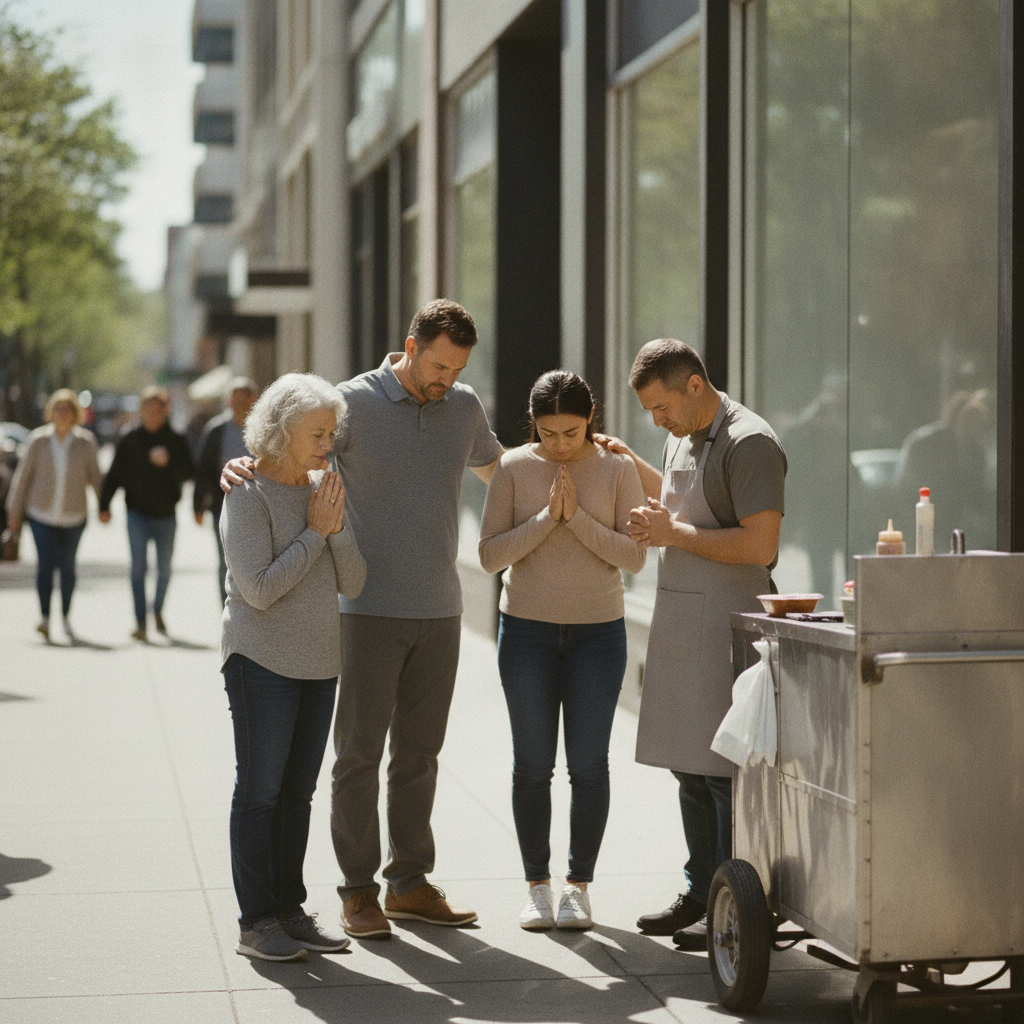
Can a street be holy? The New Testament says our bodies are temples of the Holy Spirit, and the Old Testament reminds us that God's presence made certain spaces sacred. When a city block becomes a place of worship, the ordinary is consecrated.
Public prayer and proclamation at City Hall, a rally where worshipers sing and pastors pray for the city—these acts are not political theater. They are spiritual claims. We are not imposing faith on others; we are inviting God’s mercy and blessing onto civic life. When we bring prayer into public, we remind the city that everything is held by One who is generous and sovereign.
The Heart of It: Public prayer reorients a community toward God’s purposes by making faith visible and vocal.
Behind the Words: When believers pray aloud in public, they create space for hope to be heard and for neighbors to reconsider what they think is possible.
- Organize a short, simple prayer stop on a familiar corner and invite two others to pray with you for five minutes.
Deliverance language and spiritual struggle belong in this landscape. That is not to create fear but to recognize that praise is a weapon. A service built around praise can model an integrated approach: prayer, declaration, and care for the hurting. When praise becomes our posture, we stake a claim against despair.
Specific, humble acts of outreach often follow public worship. In one account, ministry teams feed the homeless every Wednesday at noon—simple rhythms of presence that change neighborhoods one person at a time. A leader remembered stopping to acknowledge someone on the street and being invited to pray again; small gestures yield spiritual fruit.
Seasonal rhythms like a citywide march gather energy across congregations. The logistics sound mundane—but in them is a pattern of entering the public square and offering worship as compassion and intercession.
A pastoral challenge fits here: "We don't wait for the big day. We shout now. We shout the victory all the time." It calls us to continual praise, not only programmed worship.
If revival is city-wide healing, then regular, public expressions of praise and prayer are seasons of cultivation. Revival is rarely a single emotional moment. It grows where believers are consistent—where we feed the hungry, acknowledge the lonely, and declare God’s goodness across sidewalks and council chambers.
Practical picture: a regional choir waits at the gathering point; worship dancers set cadence; pastors lift brief prayers; speakers offer short testimonies. People stop. Some join. Others watch. Seeds are sown. The next week, someone from the crowd asks for prayer. That is revival’s germination: ordinary encounters becoming openings for God’s work.
Behind the Words:
"Let the children come to me; do not hinder them, for to such belongs the kingdom of God."
— Mark 10:14
Children's joy in Scripture often models faith’s trust. When God’s people celebrate with childlike abandon, they remind themselves and the watching world that God is near and kind.
The Heart of It: Presence-oriented worship draws God into public life and invites transformation through human vulnerability.
Try This: Visualize a small group saying a brief, one-sentence prayer at a busy intersection, then handing out bottled water with a simple card—"We prayed for you today." That act links prayer with service and opens conversation.
A common misunderstanding is that revival is merely more emotion. It is not. Revival is the fruit of repentance, devotion, and consistent obedience.
When the street becomes an altar, our worship must be accompanied by tangible love. Feeding the homeless, stopping to acknowledge someone’s dignity, and planting seeds of prayer are the companion works that make public worship credible and compassionate.
We are called not to private safety but to public grace. The presence of God can show up where we least expect it—on a city sidewalk, in front of City Hall, or at a middle school yard. When we march, dance, and pray together, we are not claiming a crowd for ourselves; we are inviting the city to experience the beauty of holiness.
Will you join the procession in your place? Let worship spill into your neighborhood—through a song, a short prayer, a shared meal, or a walk to a public square. The Gospel has always moved through people who are willing to be seen. So let us go, with praise as our weapon and love as our hands. We will not wait. We will shout the victory now, and keep walking until every street bears witness to God’s mercy.
Key Takeaways
- Engage actively in local community worship events.
- Promote unity among different denominations.
- Understand the significance of public expressions of faith.
- Prepare spiritually for community outreach efforts.
- Embrace joy and praise in daily life.
Notable Quotes
"We want to be right there on May the 31st."
"The joy of the Lord is our strength."
"Jesus will be marching. Will you be marching with him?"