When the Field Teaches Life Lessons
How do football, education, and culture shape a young person's future? Learn practical, faith-shaped ways to coach resilience, prioritize schooling, and parent against trends.
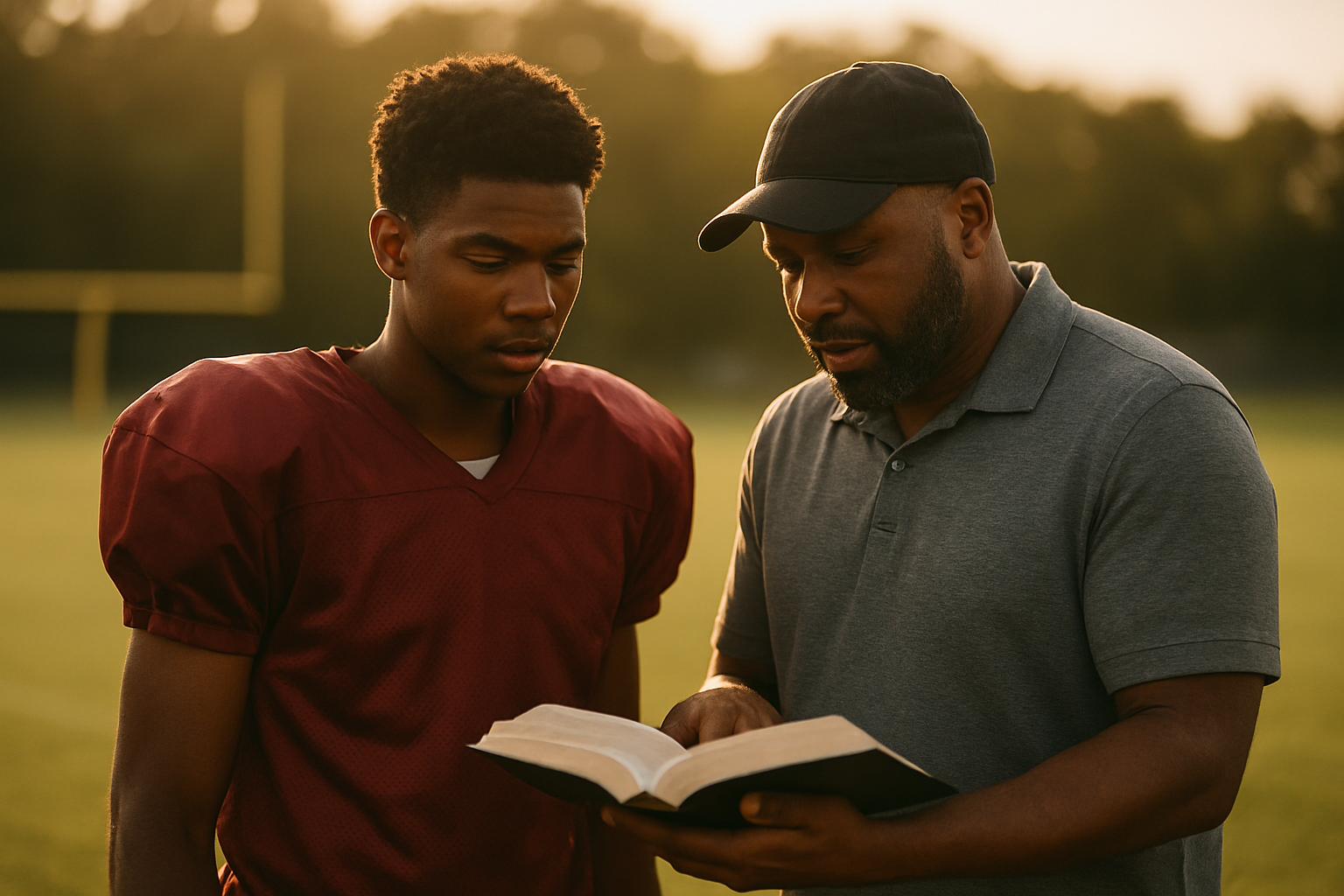
Why football teaches resilience off the field
Football is more than Xs and Os. It’s a laboratory where character gets stress-tested. The game trains habits: showing up on cold mornings, tying the laces right, tucking your shirt, repeating details until they become automatic. Those small disciplines—tuck your shirt and tie your shoe—translate to life when the stakes are invisible.
The Heart of It: Discipline in small things becomes freedom in big moments.
Behind the Words: Coaches insist on details because one untucked shirt or loose shoelace can be the difference between a first down and a turnover. The same is true off the field—small disciplines guard futures.
Try This: Choose one small routine (make your bed, tie your shoes, reply to email) and protect it daily for a month.
A player who once ran the playbook now faces a new playbook: job interviews, relationships, bills. We often romanticize the highlight, but the truth is: life isn't about things going right, but who you become when adversity strikes. Sport prepares you for both victory and defeat; you learn to recover.
Think of a young man who arrived as a preferred walk-on during COVID: he had to fight for reps while seniors kept spots, then grew into a 6'3", 210-pound athlete running a 4.3, playing every phase of special teams—and ultimately earned a scholarship through persistence. That story is football and life in miniature: missed opportunities, late development, daily grind, eventual growth.
Hard truths live here too. You don’t always get to be the quarterback; sometimes you become the blocker who clears the path. That transition—fruit to soil, as one coaching metaphor puts it—turns personal disappointment into fertile ground for others. When a player becomes the coach, or a parent becomes the mentor, the harvest is different but no less meaningful.
Resilience looks like ordinary, repeated choices: waking before dawn to treat an injury, running extra film, tutoring a younger teammate, then going to class. The cumulative effect is stamina that’s moral, intellectual, and spiritual. When layoffs or life changes come later, that stamina isn’t theoretical—it’s habit.
Coaches often say, “You don't have to like me at all, but you will learn to respect the things I'm saying.” Let that be a yardstick. Tough coaching prepares players for the world’s indifference by teaching them to be useful anyway.
What role does education play for student-athletes?
Education is the seatbelt and the compass. Without it, a great athletic career is a glorious but short road. With it, a young person gains options—work, vocation, influence. School is where a student learns to translate the discipline of the field into mental rigor.
The Heart of It: Academic formation widens the margin of hope after sports.
Behind the Words: Teams can train bodies; schools form minds. Together they prevent the post-career cliff many athletes face.
Try This: Treat one hour of study like a non-negotiable training block.
“Train up a child in the way he should go; even when he is old he will not depart from it.” — Proverbs 22:6
Behind the Words: Proverbs 22:6 comes from a culture that prized generational continuity—parents instructed children in practical wisdom so households would thrive across seasons. It wasn’t a promise of flawless outcomes, but a commitment to formative patterns.
The Heart of It: Foundational teaching shapes future choices more than any single sermon or motivational talk.
Try This: Picture a college dorm at midnight. The game’s replay ends. Your student-athlete opens a laptop, not to scroll, but to finish a tough paper. You sit beside them with a cup of coffee and ask one question about the thesis. The small presence matters more than a speech. You’re not rescuing; you’re modeling steady attention.
A note on interpretation: this verse isn’t a magic formula guaranteeing a perfect life. It’s an invitation to faithful investment.
Student-athletes must juggle practice, film, travel, and demanding coursework. Families that prioritize studies—insisting on tutoring when classes get rough, celebrating academic milestones as proudly as athletic ones—give young people a platform beyond sport. One player failed courses, restructured his schedule, re-took classes, and then graduated—education became the pivot that enabled his transition beyond football.
Institutions can help. Coaches who insist on grades, mentors who push study halls, and communities that provide tutors make a difference. But at home, the same insistence a coach has about shoes and shirts should apply to syllabi and study time.
Two realities collide: opportunity and timing. Some athletes are late bloomers on the field and in the classroom. We must not confuse late development with lack of potential. Encourage the consistent student who shows up, learns, and repays investment with progress.
How can parents coach against cultural pressure?
Culture pulls hard. If you’ve felt it, you know the tug: trending celebrities, viral challenges, the newest online identity script. Parenting in this moment looks a lot like play-calling on a noisy field. It requires discernment and stamina.
The Heart of It: Parenting is a daily contest between fleeting trends and lasting formation.
Behind the Words: The world offers brighter distractions; parenting must cultivate deeper attachments to truth and purpose.
Try This: Name one cultural pressure your child faces and replace one hour of passive exposure with an intentional family conversation.
Sometimes the fight is described bluntly: “It's a Super Bowl every single day. Parent versus culture.” That frames parenting as a strategic, sustained effort rather than occasional lecturing.
Romans 12:2, originally written to early Christians facing a dominant Greco-Roman culture, urged believers not to be shaped by prevailing values but to allow inner transformation to guide outward living: “Do not conform to the pattern of this world, but be transformed by the renewing of your mind.”
The Heart of It: Cultural conformity erodes identity; intentional renewal preserves it.
Try This: Imagine your kitchen as the film set of your family’s life. Phones off. Lay out a plain puzzle—no screens, no soundtrack. Your teenager grumbles. Resist rescuing the mood. For 20 minutes sit, shuffle pieces, and ask non-judgmental questions about school, friendships, hopes. The quiet becomes a training ground for discernment.
Parents who coach against culture learn to name trends without demonizing teenagers. They prepare audibles—alternate plans when peer pressure or bad relationships threaten—so they can say, in effect, “I see the play coming; here’s our protection.” Coaching posture means being proactive, not reactive.
You can set boundaries with love: “You don’t have to like me at all, but you will learn to respect the things I'm saying.” When consistently lived, that boundary is pastoral: it refuses to trade long-term flourishing for short-term popularity.
Practical moves: set consistent family rhythms (meals, devotions, chores), create spaces for hard conversations, and recruit community—coaches, teachers, older believers—to widen the circle of influence. The goal is not to make children clones of parents but to provide a map they can use when the path gets confusing.
When the field becomes soil: connecting sports, schooling, and community
We need a synthesis that honors the unique contributions of each domain. The field teaches grit; the classroom trains the mind; the home and community orient the heart. When a season ends—injury, graduation, deselection—those three together determine whether a life tilts toward despair or replanting.
The Heart of It: Seasons of loss can become soil for new growth when community, education, and discipline converge.
Behind the Words: Athletic success without education or communal roots risks a hollow victory; conversely, a setback can reveal unseen capacities when supported.
Try This: After any significant loss, hold a debrief ritual: a family meal, honest talk, and one concrete next step.
A coaching image helps: sometimes you are the fruit—producing—and then a season comes when you must become soil. Seed cannot grow without being buried. If we refuse the soil, we doom the seed. If we embrace it, the burial is the necessary bend that allows growth underground.
Community plays the role of both cheering section and fertilizer. A university town that fills a stadium every week is more than entertainment; it’s a network that can hold athletes when their game days end. Likewise, the friend who tutors after practice, the pastor who listens, the coach who helps with resumes—these people create a safety net.
We must see transitions as invitations, not punishments. The parent who left coaching to open a training facility and invest in young people didn’t admit weakness; he redirected purpose and became soil for others.
If you’re walking through a transition, know this: we don’t pray for easier seasons; we pray for stronger hands and clearer eyes. The disciplines learned on the field—routine, humility, rep after rep—become the habits by which the seed will push through the dirt.
We’re not spectators in this life. We coach, tutor, correct, celebrate. We choose routines that build stamina. We refuse cheap popularity and invest in durable formation. If you care for a young athlete, a student, a neighbor, decide today to be both coach and soil—insist on the small disciplines, champion the classroom, and provide a community that will stand when culture pulls hard.
Start small. Protect one hour of study. Take one family meal device-free. Name one cultural pressure and make a plan. The plays you draw today may not seem glamorous, but they prepare a person for a lifetime.
Key Takeaways
- Embrace transitions as opportunities for growth.
- Instill values in children to guide them through life’s challenges.
- Find balance between coaching and parenting.
- The importance of strong community ties.
- Lead by example to inspire others.
Notable Quotes
"Life isn't about things going right, but who do you become when adversity strikes?"
"You don't have to like me at all, but you will learn to respect the things I'm saying."
"It’s a Super Bowl every single day. Parent versus culture."