When the Church Answers the World’s Call
The Great Commission calls us beyond comfort: pray, give, go, and disciple. Learn how churches can respond to crises like those in Nigeria with presence and perseverance.
Why the Great Commission Is More Than a Mission Statement
The Great Commission is frequently read as an invitation to support missions from home. But its roots run deeper. The promise to bless all nations begins with Abraham and climaxes in the New Testament command to make disciples of every people. That arc means mission is a covenantal responsibility, not simply an optional program.
"Go therefore and make disciples of all nations, baptizing them..." — Matthew 28:19-20
Behind the Words: Matthew’s gospel collects Jesus’ final charge to His followers after the resurrection, spoken to a community poised to carry the message into a hostile, pagan world. It’s a commissioning given to an embryonic church with little political power.
The Heart of It: The Great Commission makes ordinary churches extraordinary when we treat evangelism and discipleship as central, not peripheral.
Being a covenant people means we don't outsource our global responsibility. When I hear the direct reminder from the transcript that "we have an international responsibility," it lands like a summons. That phrase is not sentimental—it is a summons to prayer, to funding, to going.
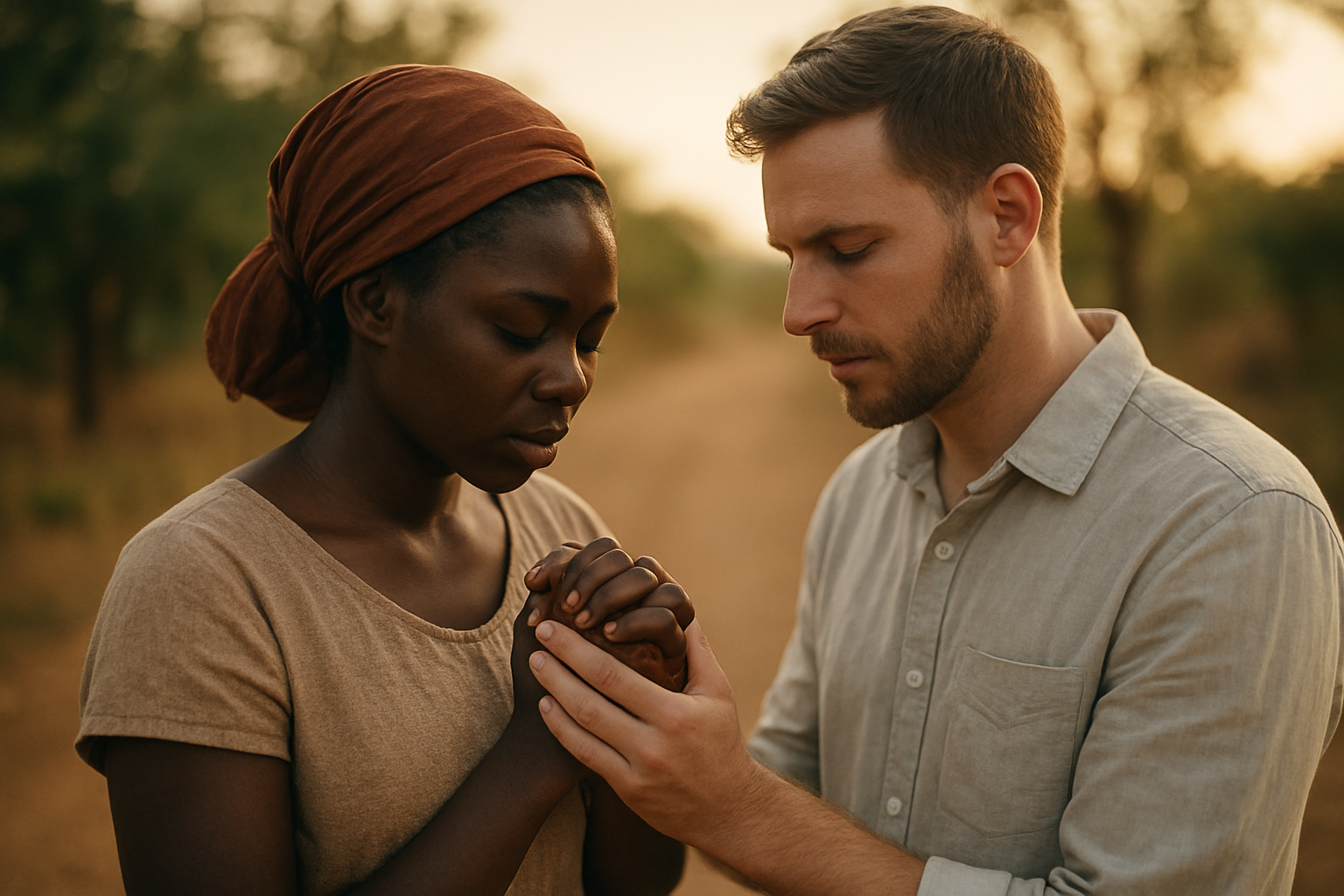
Picture this: a small congregation decides to pair with a pastor serving in a violent region. They stop at prayer and monetary support. Then they take one more step: weekly Zoom discipleship for new believers, a rotating team of teachers, and a local church’s child sponsorship program that includes Bible training. The change is visible in families—children learning Scripture, elders praying with courage, a community less susceptible to corruption because the gospel is rooting their hearts.
Principle Statement The mission of the church is covenantal responsibility, not optional charity. Context: When mission is central, the church addresses spiritual and social brokenness in the same breath.
- Practice: Reframe your church calendar so mission-focused teaching and disciple-making are regular, measurable rhythms.
A specific story beat from the field illustrates this: a pastor confessed he "would rather not preach at all if I lost my fire," and God gave him a heart for Nigeria. He has spent a decade going back and forth—ten years of presence, persistence, and partnership. That is the posture the Great Commission asks us to adopt.
How Should Christians Respond to Crises in Nigeria and Other Hotspots?
When conflict or persecution breaks out, our immediate instinct is to choose a side, or to throw up our hands. But the church’s role is different: we grieve, we pray, we serve, and we witness. That sequence changes outcomes over time because it targets both physical need and spiritual hunger.
Christians are rightly concerned about current events in Nigeria. The reality on the ground is complicated—ethnic tensions, power struggles, and religious elements intersect. One vivid detail from those conversations was a pastor’s testimony about local responses: at funerals, Muslim neighbors would stay and then offer to educate widows’ children. That scenario showed how education and practical care can be arenas of spiritual influence.
The Heart of It: Prayer and presence are the first arms of any Christian response; action that follows must meet both soul and soil.
Imagine a rural Nigerian market town where a church decides to open a community education center for orphans and vulnerable children. The first day, skeptical neighbors watch. The second month, teachers from multiple faiths are offering to help because children are being fed, clothed, and taught. Over time, neighbors start to ask, "Why are you doing this?" and the gospel finds a door.
Behind the Words: Romans 11 speaks to God’s faithfulness to Israel and the inclusion of the Gentiles—Paul wrote to remind early Christians of God’s long game in salvation history. In many crises today, God’s plan still unfolds across nations, but it does so through people who embody mercy.
Try This: When news of a crisis reaches you, do three things in order: 1) Pray specifically for named leaders and communities, 2) Give to reliable on-the-ground partners who combine humanitarian aid with evangelism, 3) Commit to sustained prayer and relational support for at least a year. Short bursts help; long presence changes culture.
One hard saying from the conversations needs pastoral unpacking: "It's hard to cast out a devil that you like." That is a convicting line—the enemy often hides as comfort, status, or an easy compromise.
Pause with me: if we reward ourselves with the very thing that dulls our spiritual sensitivity, how can we expect revival? The warning is not to live in fear, but to live intentionally. We must not cherish comforts that make us ineffective witnesses.
When Comfort Becomes a Prison: Why Discipleship Matters More Than Ever
Comfort is subtle. It shows up as busier schedules, softer convictions, or an unwillingness to risk for neighbors overseas. The transcript phrased it bluntly: "comfort can become a prison." That image sticks because it captures how ease can cage spiritual vigor.
Discipleship counters comfort by forming resilient souls. When we disciple, we cultivate spiritual habits that outlast political swings, economic downturns, and cultural fads. A nation that forgets to disciple its children will raise adults who are "unmoored," as one speaker observed; without anchors they become vulnerable to ideologies that promise identity and power.
The Heart of It: Discipleship creates durable faith that will serve the world, not windows of sentiment that evaporate under pressure.
Consider the scene of a family dinner where Bible stories are read every night. A teenager watches a father kneel publicly in a crisis. Years later, that son is the person who organizes relief convoys and opens his home to refugees. Discipleship is ordinary; its results are extraordinary.
Principle Statement Spiritual formation is the long-term answer to cultural drift and corruption. Context: Hearts changed by Scripture resist the short-termism of political fixes.
- Practice: Start a three-year pathway in your congregation that pairs Scripture memorization, missional service, and one-on-one mentoring.
Discipleship also guards against the spiritual lethargy the transcript describes in leaders who return from intense service with urgency but are told to "slow down" by a comfort-loving culture. We must not mistake gentleness for timidity. The goal is to embody Christlike firmness that persuades, not provokes.
Try imagining your church as a training ground for world-ready disciples: regular cross-cultural exposure, practical service projects, and robust teaching on the cost of discipleship. Over time, you will see fewer nominal Christians and more courageous ones.
Pulling Threads Together: The Church as the Missing Link
Politics alone cannot change hearts. The transcript made that exact point: politicians "can't politic the heart"—only the Word and the Spirit can do that work. The church is called to be the bridge between mercy and justice, prayer and policy, proclamation and practical care.
We must cultivate unity in the body for effective witness. Denominational divides and public squabbles undercut our credibility. Unity does not mean uniformity; it means we choose reconciliation and common mission over petty distinctions.
Picture a city where denominations convene monthly to pray for international crises, pool resources for an education project in a Nigerian community, and send rotating teams of disciplers for sustained mentoring. The result is not just better charity; it's a living demonstration that the love of Christ changes societies.
Try This: Begin with a simple step this week. Invite a missionary or a pastor working abroad to speak to your congregation (virtually if needed). Adopt one community for regular prayer and monthly support. Make discipleship the method of your outreach.
Closing encouragement
We are not helpless. The Great Commission ties our local souls to global needs. When we stop treating mission as an extra and make discipleship and compassion the oxygen of our church, the world notices. Comfort will always tempt us, but the Spirit calls us to sacrifice, presence, and enduring faith.
Let us ask God, honestly and together, what role He wants our church to play internationally. Then let us step into the answer—praying, giving, going, and training others to do the same. The world waits and God’s heart is for every nation.
Key Takeaways
- The church has an obligation to respond to international crises actively.
- Prayer is a vital component in addressing global challenges.
- Christians should seek guidance from God to understand their role in the world.
- Unity in the body of Christ is crucial for effective ministry and outreach.
- Comfort in culture can lead to complacency; active engagement is necessary.
Notable Quotes
"I do believe that if we hone in and start praying, asking God, what role do we play in the international community? I believe God will give us an answer."
"Revival is when we truly repent, when we truly submit to the will of God."