When Surrender Opens the Way Forward
When addiction burns your plans, surrender to Christ opens a path: practical rehab, steady discipleship, and restored identity offer real, lasting freedom.
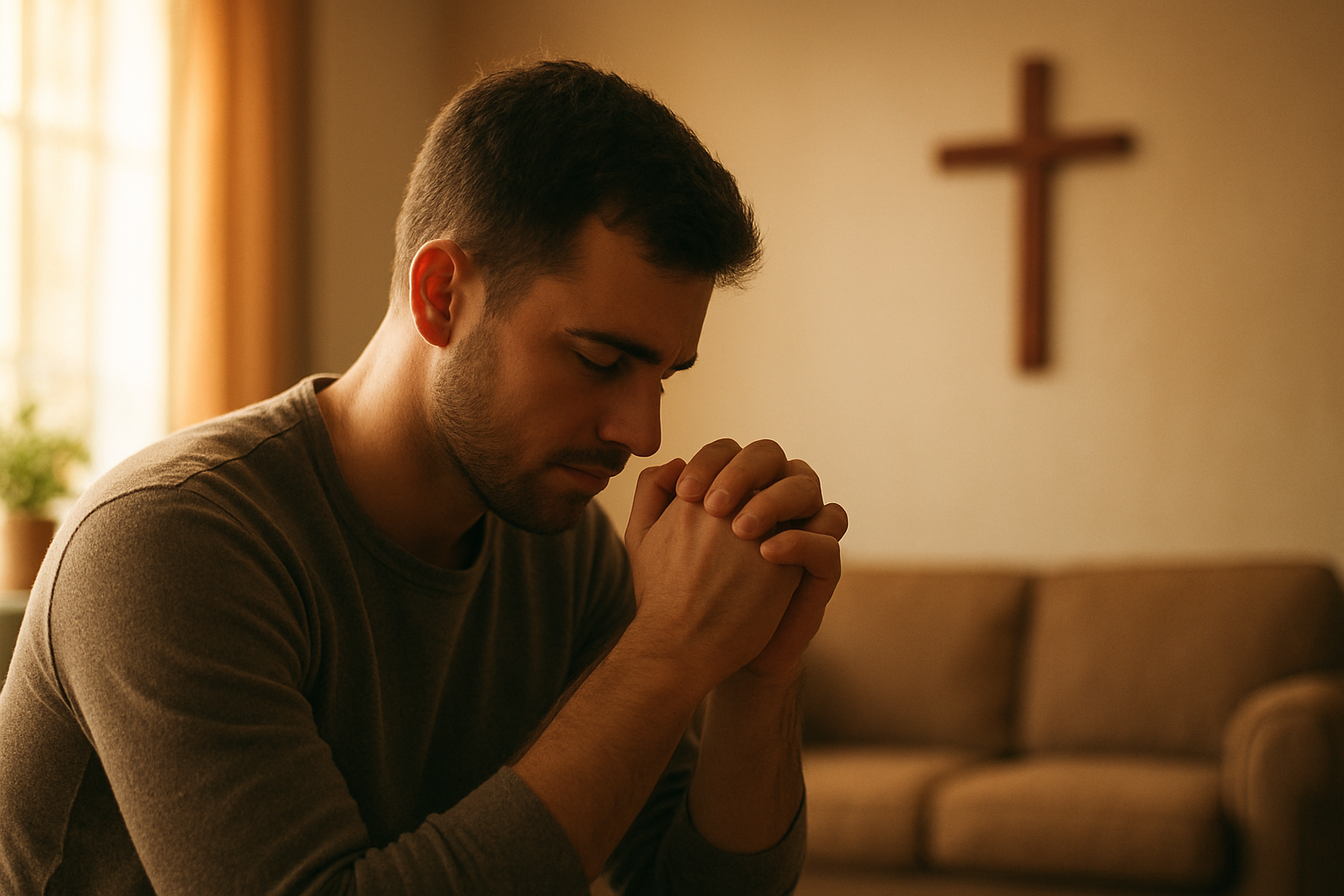
Why Failure Often Precedes Purpose
Failure isn’t final. But it’s painful—and the pain can either hide us or humble us. Too often, people assume addiction marks someone as beyond repair, that a past of broken choices locks a person into a future of regret. That’s not what God’s economy says.
One man’s story makes this plain: while cooking methamphetamines in a small trailer, the fuse built up and a spark from the heat lamp ignited the trailer. He escaped with second- and third-degree burns—and with a new recognition that his life had to change. That violent flashpoint was not the end but the painful beginning of transformation.
The Heart of It: Surrender often begins at the edge of disaster.
If you’ve been running, your worst moment can be the hinge of your life—the place where grace meets honesty. That’s why we don’t minimize the wreckage; we name it, bring it to God, and then let him begin the slow work of repair.
- Try This: Name one concrete loss from the past this week and pray, “Lord, I bring this to You.”
The practicalities matter. When someone enters rehabilitation there are small humiliations that underscore how far they’ve fallen—the thrift-store dress picked out to leave jail, the paperwork, the long lines. One woman remembers going to rehab with no money and having to buy a clean outfit from a thrift store just to leave jail. That detail shows how raw new beginnings can be.
What does the church do when someone shows up in that thrift-store dress? We don’t pretend holiness; we offer steady hands. We remind them that forgiveness is both real and practical help is necessary: housing, job training, and consistent community. And we pray—not as generic sentiment, but with specific petitions for healing, employment, and restored relationships.
The phrase “Jesus is the answer” is often spoken in recovery spaces. Those four words are not an escape hatch from responsibility. They are an invitation to a Person who meets us among ashes.
Jesus' Invitation to the Weary
Behind the Words: When Jesus invited the weary to come to him (Matthew 11), he was speaking to people crushed by religious burdens and political oppression. They were not moral cartoons; they were exhausted, taxed by systems and choices beyond them.
"Come unto me, all ye that labor and are heavy laden, and I will give you rest."
— Matthew 11:28
The Heart of It: Rest from the burden doesn’t mean softening truth; it means being held by the One who paid for rescue.
Try This: Picture the night you decided you had to stop—perhaps the trailer smoke, the siren, the shame. Bring that night to God by name and ask for rest over that wound. Repeat it aloud, several times if you must.
Common misunderstanding: Rest is not the same as instant relief. It’s the steady presence of God that teaches patience and perseverance.
This is where compassion meets accountability. We should be tender, but not laissez-faire. Surgery can be painful; so can repentance. But both are steps toward life.
How Does Rehabilitation Lead to Real Freedom?
Rehabilitation is not a program; it’s a process. We can’t reduce it to a checklist, but neither can we elevate it into mere sentiment. Real rehabilitation includes spiritual change, vocational training, and community reintegration.
A crucial hinge for many was not a flash of willpower but being rerouted by the justice system—drug court instead of an 18-year sentence. That redirection placed people into accountability, classes, and relationships that would shape a new path. One woman says she’d been offered 18 years, but because someone advocated for her, she was sent to drug court instead. That one decision changed the trajectory of her life.
The Heart of It: Structure plus grace produces sustainable change.
Rehab without structure is hope with no scaffolding; structure without grace is punishment masquerading as help. Balance is the difference between a short-lived victory and a lifelong recovery.
Try This: Find a local recovery program that combines counseling, work or school placement, and a faith community.
The story continues: people who begin in rehab often take one practical step at a time—applying to school, getting scholarships, cleaning houses for $61 a week, laying tile, and returning to class when the schedule allows. The steady, small choices compound. One woman described taking a single step—applying to school—and then watching God provide scholarships and doors she couldn’t plan.
Rehab must also address identity. For a long time the label "addict" can feel like the only truth someone knows. Rehabilitative work should offer alternative narratives: student, parent, employee, child of God. Those narratives require reenforced habits, mentors, and reminders that worth isn’t performance-based.
As Scripture teaches, "Love keeps no record of wrongs." When a person returns to family, forgiveness must be offered—but it must be real and paired with boundaries. Forgiveness doesn’t erase consequences, but it opens a path for trust to be rebuilt.
There’s a hard pastoral edge to honest rehab work. A counselor in one program bluntly told a woman in court, “You need to give your life to Christ.” Another counselor introduced a house-arrest student to a class so the room would realize everyone had struggles. That humility built community rather than shame.
Identity Rewritten in Christ
Behind the Words: Paul writes that "if anyone is in Christ, he is a new creation" to a church grappling with moral failure and identity confusion. His words were meant to re-anchor identity not in what a person had done, but in what God had done.
"Therefore if any man be in Christ, he is a new creature: old things are passed away; behold, all things are become new."
— 2 Corinthians 5:17
The Heart of It: Your past does not define your future; Christ’s new-creation power rewrites identity.
Try This: When shame whispers, say aloud: "I am a new creation in Christ." Then list three new roles you want to live into this year—student, employee, parent—and take one step toward one of them.
Common misunderstanding: Saying you’re a new creation isn’t magical. It requires confession, discipleship, and changed habits.
Rehab also needs post-treatment care: mentorship, job placement, and a faith community that will be honest and kind. That’s where we move from survival to vocation—education, ministry, and serving others who still struggle.
From Trailer Flames to a Master’s Degree
Is that even possible? Yes. God does wild restoration—and He often invites ordinary means into that process: scholarships, night classes, thrift-store clothes, and patient mentors. One person who began as a high school dropout ended up earning a master’s degree because each small step was met with favor, scholarships, and doors he didn’t expect.
The Heart of It: Redemption often looks like slow, steady education and faithful new rhythms rather than dramatic, instant fix.
If we expect overnight miracles and nothing else, we’ll miss the grace that arrives by steady obedience. Success in recovery is usually a thousand tiny acts—showing up, being clean one more day, returning a call, turning a paper in, or staying in class when the building itself feels fraught with past associations.
Try This: Make a six-week plan: three classes to audit, one resume tweak, one counselor meeting, and one small financial goal.
Part of recovery after addiction is rebuilding family life—and that can be the hardest work. Couples who come out of addiction discover that romantic love isn’t enough; they have to learn to grow in love through forgiveness, honesty, and shared faith. One blunt reframe used by a woman in recovery was, "They need to be brainwashed." She meant it lovingly: we must immerse ourselves in truth so that old patterns are overwritten. Theologically speaking, that immersion is the washing of the water of the Word.
That is a pastoral call to seriousness: replace destructive narratives with gospel-saturated ones. Surround yourself with people whose majority voice is gospel. Let them tell you to repent and to love when temptation whispers otherwise. This is not replacement of truth with therapy-speak; it is discipleship.
Practical habits matter: attending church, regular confession, household patterns that reduce isolation, and small acts of service that rebuild self-worth. When a father returns from rehab, his kids won’t simply forget the past. He must repeatedly show up—on time, sober, patient—to reconstruct trust.
There’s also a ministry call here. People who have been through the furnace are uniquely credible ministers to those still trapped. The books and prison ministries started by those who came through the fire—printed and given away free—show how testimony, when paired with theology and training, becomes a tool for others to find the same freedom.
What Scripture Teaches About Identity After Loss
Scripture doesn’t pretend loss away. It names the devastation, laments, and betrayal; it sings laments and then moves toward hope. Our identity after loss is not centered in what was taken but in who holds us.
"He heals the brokenhearted and binds up their wounds."
— Psalm 147:3
The Heart of It: God’s gaze fixes on the wounded, not on the wound alone.
If we can rest in that, identity moves from "I am what I lost" to "I am held by the One who makes all things new." Practically, that changes how we parent, how we pursue education, and how we build marriage.
Try This: Speak Psalm 147:3 each morning for a week and write down one wound God is helping you carry.
When a community welcomes a returning mother or father, they choose resurrection over condemnation. That requires firm mercy—boundaries for safety and unconditional love for the person’s soul. Forgiveness says, I will not keep a ledger of your sins; boundaries say I will not give you free access to my children until trust is rebuilt.
Marriage after addiction is possible, but it’s not easy. Couples must learn the art of growing in love. That means choosing more often to put Christ first and then practicing the small daily habits that express love: listening, making meals, showing up to meetings, and forgiving when old patterns resurface.
Forgiveness opens the way to restoration; it doesn’t erase the need for accountability.
You are not defined by a night of flames or a season on the streets. You are defined by the One who redeems, who dresses you from the thrift store of shame into purpose, who takes small daily steps and turns them extraordinary.
If you’re standing at a crossroads, consider this call: name your ruin, ask Christ for rest, and then take the next practical step—seek a recovery program that integrates faith, find a mentor, or apply to one class. Surrender is not a single act; it’s a daily turning. When we do that together, we learn the holy rhythm of starting over with courage and faith.
Key Takeaways
- Surrendering to Christ is crucial for real transformation.
- Community support and relationships are important for recovery.
- Prayer should be sincere and heartfelt for it to be impactful.
- Education and personal growth can follow even the darkest times.
- Marriages can thrive through shared faith and commitment.
Notable Quotes
"Jesus is the answer."
"Love keeps no record of wrongs."
"You can have eternal life and forgiveness of all your sins through just turning from your sins and putting your faith and trust in Jesus Christ."
Related Articles
- Hope After Addiction and Teen Pregnancy
Stories of women who found freedom from drugs and found purpose in early motherhood remind us: rescue is practical—meals, a bed, steady people—and gospel real.
- Street Ministry, Addiction, and Discipleship
Meet people where they are: practical, faithful ways to reach the homeless and those battling addiction, then walk them into lasting discipleship.
- When Broken Things Get Repurposed
Art, accident, addiction—three unlikely places where God repurposes what’s broken. Read how murals, a prosthetic comeback, and recovery reveal grace in ordinary life.