When Scripture and Strife Meet
When sirens interrupt a shoot and young people flock back to scripture, a resilient hope emerges: truth pursued with tenderness renews faith across generations.
How filmmakers keep telling the story when war erupts
Filmmaking is often chaos dressed as art. Add war, and the choreography becomes holy improvisation. On several shoots the crew heard bombing before the sirens. A morning planned for the Sermon on the Mount became an emergency run to a shelter; later that same day the team found clear skies and filmed atop Mount Arbel. Actors cast as apostles were called away for national service; schedules bent around reserve duty. In some scenes the cast literally left for the battlefront between takes—so scenes were shot in the gaps between service.
That tension—shooting by the Sea of Galilee while nearby areas closed the next day—gave the production an odd authenticity. The ground felt raw. The stakes the historical Jesus faced breathed into the present shoot: decisions, dangers, sacrifice. The crew learned to pivot fast: relocate to a different shore, rearrange wardrobe, trust local producers who knew safe routes, and, most of all, keep faith in the project's timing.
The Heart of It: Trusting God's timing matters when logistics collapse.
Behind the Words: When plans fall apart under missiles and sirens, trust becomes the scaffolding that holds the work together.
Try This: Rehearse contingencies, but rehearse prayer and patient presence more—showing up can be witness.
Two practical realities stand out for any church or ministry operating under pressure. First, community competency matters: local teams who know the rhythm of a place can reroute a production or a relief convoy in minutes. Second, art itself becomes a ministry of presence. When the crew filmed a scene after running to shelters, the footage carried a witness no staged set could match.
There is a pastoral cost as well. One filmmaker confessed, without dramatizing, "I personally lost my joy." That honest admission is a pastoral pivot point: grief is real, and creative work can be a way back to joy when done in service of truth. When you show up for the story—literally and spiritually—you participate in a resilience that reflects God's fidelity in crisis.
Can the New Testament be trusted?
Ask why the Gospels exist and you find urgency. Early Christians called the gospels the "apostolic memoirs"—accounts written because eyewitness memory was fading and communities needed anchors. Luke begins his careful account by noting many "set out to write accounts" and names orderly inquiry as his method. That context matters: these were not myths plucked out of nowhere but testimonies produced in communities that treasured eyewitness tradition.
"Many people have set out to write accounts about the events that have been fulfilled among us." — Luke 1:1-4
Behind the Words: Luke wrote to an educated friend, compiling reports and eyewitness testimony in a culture that prized careful record-keeping; his opening lines promise research, not invention.
The Heart of It: The New Testament emerged as communal memory preserved under scrutiny, not as fiction born long after the facts.
Try This: Picture a small coastal house where an elderly disciple tells stories of a teacher from Galilee—how he calmed storms, forgave sins, and turned tables on religious showmanship. Sit at that table in your imagination and ask: who would risk their life to invent this? Now imagine a historian coming years later to write it down, asking dozens of witnesses to cross-check details. That image recalibrates doubt into curiosity.
Common Misunderstanding: Some say the gospels are too late to trust. But the early church preserved them with seriousness—multiple manuscripts, early citations, and widespread liturgical use—that argues for living transmission rather than a centuries-late invention.
Another Scripture helps here. Jesus' beatitude about peacemakers isn't a political slogan; it is a theological posture the early church embodied while bearing risk.
"Blessed are the peacemakers, for they will be called children of God." — Matthew 5:9
Behind the Words: Jesus spoke this in a context of Roman occupation and intra-community conflict; peacemakers were not passive but agents of reconciliation in hostile circumstances.
The Heart of It: Scripture calls us to constructive engagement—peace that requires courage.
Try This: Imagine a community meeting after an attack, people whispering anger and fear. A peacemaker stands to broker food distribution, argue for shelter-sharing, and create a safe space for grieving. That is the gospel at work: messy, risky, and real.
When scholarship and faith work together—when archaeology, manuscript studies, and early patristic testimony are taken seriously—the trustworthiness of the New Testament becomes not an article of blind faith but a reasoned conviction. We don't bypass doubt; we learn to hold it alongside evidence and prayer.
Why Millennials and Gen Z are returning to the Bible
Surprising numbers are reshaping the church's next decade. Bible sales spiked—double-digit increases in recent years even while general publishing flatlined. Young people long written off as post-Christian are showing deep spiritual curiosity. They're asking embodied questions: Where can I find peace? How does faith address anxiety, purpose, sexual identity, and community?
Several forces explain this hunger. The pandemic cracked the illusion of control and accelerated questions about meaning. Widespread social isolation produced spiritual longing. Add a media environment hungry for stories, and the Bible suddenly reads like an old map rediscovered in a blizzard—dangerous, consoling, and oddly practical.
The Heart of It: Spiritual hunger leads to rediscovery when institutions fail to satisfy deeper needs.
Behind the Words: When schools and social networks offer identity without roots, people crave a story that lasts across seasons.
Try This: Offer accessible study groups that meet both online and in living rooms, where questions are welcomed and Scripture is explored carefully.
A compelling detail: on some campuses students gather in thousands around bodies of water for prayer and testimony, unplanned and raw. Young people are tired of curated images and hungry for authenticity. They want Scripture not as doctrine boxed for exam answers but as a living language for life.
There is a theological-literacy gap we can close. The Church Fathers—generations close to the apostles—help explain how the New Testament was read and used. Returning to those early voices aids younger readers who want to see how communities historically understood Scripture.
Early church readers and modern seekers
Behind the Words: The early church fathers lived one or two generations removed from the apostles; they preserved oral traditions and clarified how communities read the gospels amid persecution and growth.
The Heart of It: Reading the New Testament with the early church's interpretive lenses helps us hear the text as a living conversation rather than a museum piece.
Try This: Picture a college student opening a worn patristic excerpt beside their Bible at midnight; a desk lamp slices the page as an early sermon pulls a verse into daily life. Suddenly the Scripture is a companion in the small room, not a theory.
Common Misunderstanding: Some think tradition stifles inquiry. But the early interpreters often preserved questions and multiple readings, treating Scripture as communal conversation rather than dogmatic monologue.
Young people are not simply nostalgic. They are hungry, and they demand resources honest about history yet unafraid to invite personal formation. When we provide robust teaching, honest history, and safe spaces for doubt, we see return and revival.
What larger hope emerges when faith, scholarship, and hardship meet
When scholarly integrity meets pastoral courage and real-life suffering, something stubbornly hopeful happens. Stories filmed amid missile strikes carry a witness studio sets cannot replicate. Scripture read in the wake of grief is no longer abstract; it becomes a final love letter that reaches across centuries into our living rooms and ambulances alike.
The hard saying that must be unpacked is blunt: "Christianity did not begin in a lie, and we can and we must demonstrate this." That is both accusation and invitation—an invitation to engage history without fear and a pastoral charge to hold apologetic work in humility. Demonstrating trustworthiness is not about winning arguments for pride's sake; it is about removing needless obstacles for seekers and offering the gospel's claims to a skeptical world in a winsome, evidence-informed way.
The Heart of It: Truth paired with tenderness persuades better than truth alone.
Behind the Words: When we argue facts without compassion we sound like prosecutors; when we show care without truth we sound sentimental. The gospel requires both.
Try This: Train teams that pair historical briefing with pastoral listening—apologetics with bedside manner.
Practical scenes matter. Imagine a young parent in a community shelter after an attack, Bible pages damp from anxious hands, a neighbor offering both a clear explanation about the text's origins and a steady presence to pray. That combination—clear-headed scholarship plus warm pastoral care—changes doubt into conversation.
Community also holds power. During crises neighbors showed up with meals, therapy, and bomb shelters. That same solidarity sustains ministries that send film crews into dangerous places and supports churches hosting Bible studies for the anxious. When researchers, pastors, artists, and ordinary neighbors act together, faith becomes resilient.
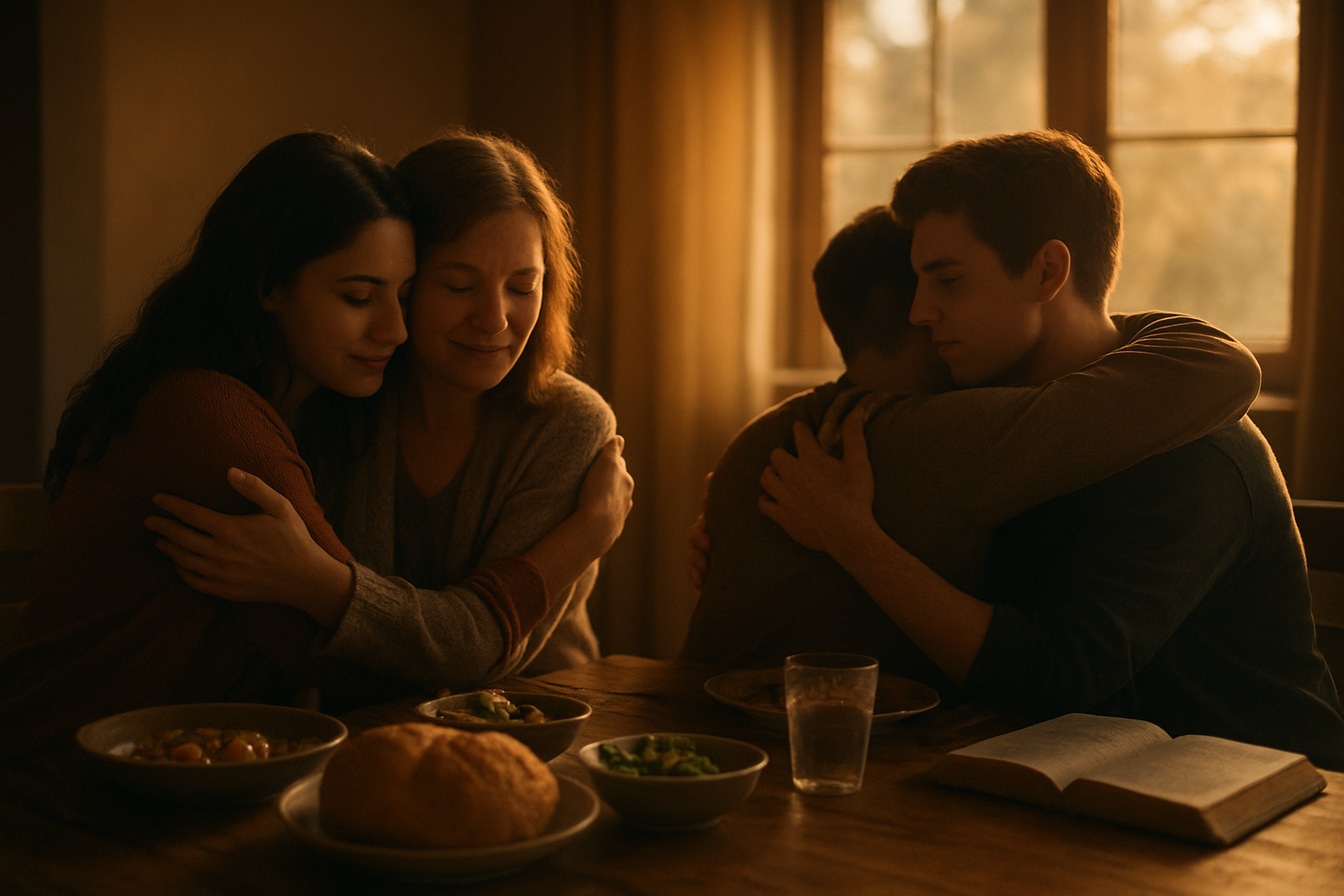
We must do two things from here: tend truth and tend people. Teach carefully. Love insistently. Match scholarly rigor with kitchen-table mercy. When we do, the Bible will not only be opened; it will be lived.
Read with both eyes—one on the text's history and one on your neighbor's heart. Bring your questions. Bring your doubts. Come to the table where Scripture meets life, where filmmakers, scholars, and the next generation gather to keep old stories alive in new, very broken, and very hopeful places.
We will not pretend the path is tidy. War interrupts, joy is lost, and schedules collapse. Yet when a team goes back to the Sea of Galilee and films anyway, when young people gather in thousands at a campus lake, when communities keep each other through retreat and therapy—those are signs that God's story keeps finding us. May we be people who steward that story well.
Key Takeaways
- The documentary aims to reinforce the trustworthiness of the New Testament.
- Filmmaking can continue even under challenging circumstances, reflecting resilience.
- Young people are increasingly engaging with scripture amidst societal challenges.
- Understanding the historical context of biblical texts can enhance faith.
- Community support is crucial during times of crisis.
Notable Quotes
"We'll be right back."
"I feel like telling more and more spiritual stories like this story to give more light in these very dark times."
"God has this plan, and he knew that right now there was going to be this resurgence of hunger in the Bible."