When Prayer Becomes Breathing
Prayer can become as natural as breathing when we make it two-way, pray Scripture aloud, and let walking shape our petitions. Start with a verse today.
Why Prayer Must Be Two-Way
We know prayer is “talking with God,” but too often the talking becomes a monologue. The disciples asked a blunt, honest question: "How should we pray?" That question still hums in our hearts.
Jesus’ model invites both address and attention. He gives words — the Lord’s Prayer — and opens a posture of listening. Prayer is not merely a list of requests; it is an exchange where God shapes our desires as much as we present them.
"Pray then like this: 'Our Father in heaven, hallowed be your name. Your kingdom come, your will be done, on earth as it is in heaven.'" — Matthew 6:9-10
The Lord’s Prayer frames petition inside relationship and kingdom alignment. Jesus taught his followers to address God intimately as Father while asking for kingdom realities. That pairing invites a pause: speak your need, then wait to hear how God will change you through it.
Behind the Words: Matthew 6:9–13 was taught to disciples living under heavy religious formality. Jesus replaced rote ritual with a rhythm of address (Father) and alignment (kingdom), showing how to pray with both audacity and submission.
The Heart of It: Prayer asks for what we need while inviting God to form our wants.
Try This: Next time you pray the Lord’s Prayer, pause after each petition. After "give us today our daily bread," ask silently, "How do You want to shape my hunger?"
A hard warning cuts into our complacency: if our prayer is all motion and no meeting, it becomes illusion. When prayer is only performance — or pleading to a God fashioned from our own desires — it leaves us spinning. Expecting a voice changes the posture: we stop rushing and start listening.
Imagine kneeling with a list of urgent names. After the first amen, you sit back, eyes open, and let one name linger. You breathe that person's face before God. You wait. Maybe nothing comes. Maybe a Scripture line surfaces. Either way, you practice receiving—and that habit trains you to hear.
Common misunderstanding: two-way prayer does not require audible words from God every time. Conversation can be slow: a deepened peace, a Scripture that surfaces later, a fresh desire. Patience is part of the exchange.
When the Bible Feels Like a Diving Board
Many of us run out of words. We sit before God and our vocabulary dries up. That’s why praying Scripture is a lifeline: the Bible supplies prayers that have been prayed through centuries.
One helpful image is the Bible as a diving board at the pool’s edge. You climb the ladder, step onto the board, and launch. The Psalms, especially, can be that launch.
Read a Psalm aloud. Don’t skim—vocalize it. Try Psalm 63 or Psalm 84; make the phrases personal. "Lord, how lovely is your dwelling place" becomes, "Lord, how I long for your presence today in this messy kitchen."
"I pray that you, being rooted and established in love, may have power... to know this love that surpasses knowledge... that you may be filled to the measure of all the fullness of God." — Ephesians 3:17-19
Paul’s prayer in Ephesians speaks cosmic truth into everyday hearts. He prays that believers be rooted, established, and filled by the Spirit so that God’s love transforms desire and action.
Behind the Words: Ephesians 3 prays theology into lived experience—Paul writes so readers would be grounded in love and swept into the fullness of God.
The Heart of It: Scripture is not just information; it is a form of prayer that enters and reshapes our hearts.
Try This: Choose one verse or a short Psalm and make it your spoken prayer for the day; repeat it while you cook or commute.
Practically, some have described starting with the Psalms and watching how verses stay with them through ordinary tasks—worshiping while making supper, praying while at work. That is the diving-board effect: Scripture launches you into God’s language and carries you through life's routines.
Picture your day as small tasks—wiping the table, fixing lunch, picking up a child. As you perform those tasks, repeat a phrase of Scripture softly. Let the words soak into the bones of your routine. Brother Lawrence called this offering of ordinary tasks to God "the practice of the presence of God." Make those acts steady prayer.
A practical tip: keep a short list of Scripture lines on a post-it at your workspace. When your mind drifts, read one aloud and make it a sentence to God: "Lord, be my wisdom in this meeting," or "Fill me with your love as I speak to my neighbor."
Common misunderstanding: using Scripture as prayer is not mere repetition or performance; it’s apprenticeship—learning to want what God wants.
What Prayer Walking Does for Your Faith
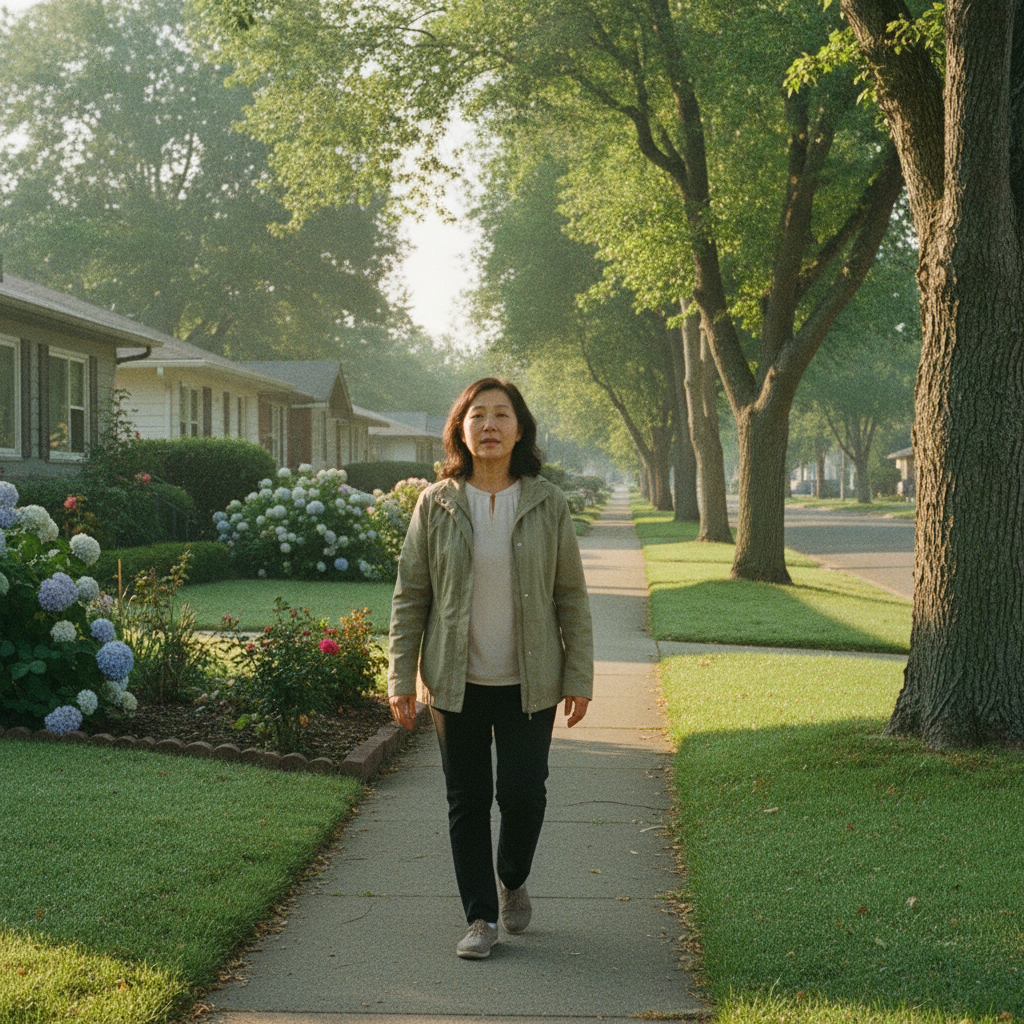
Walking while praying reconnects body and soul. It shifts prayer from a solitary posture into kinetic confession and petition. You move through space and take the neighborhood with you into God’s presence.
There are two complementary rhythms. One is contemplative: walk in creation and let God speak through trees and sky. The other is intercessory: walk your street and pray for houses, schools, workplaces—petitioning "your kingdom come" into actual places you pass.
A helpful suggestion advised both: walk in God’s creation to receive, and walk the streets to give—petitioning for specific places. In one posture you receive; in the other you act.
The Heart of It: Prayer walking joins our feet to our faith—what we see becomes what we pray for.
Behind the Words: Scripture often links journey and prayer: Hannah at Shiloh, Jesus withdrawing to pray. Movement frames attention and carries intention.
Try This: Once a week, take a 20–30 minute walk with a single prayer focus—your block, a local school, or a workplace.
Picture stepping out with a name in your pocket. You pass a café where a barista looks tired and pray for that person by name. Moving past the place gives your petition shape; it becomes specific instead of abstract.
Practical prayer on the go is powerful. When our hands are occupied, words can come alive. Vocalizing and attaching prayer to movement helps words stick—the body remembers.
For families, prayer walking can become a shared rhythm: a stroller walk with the child’s name spoken aloud, a blessing at the school gate, a brief prayer for the neighbor at the mailbox. For solitary seasons, walking carries burden out of the chest and into God’s hands.
Get creative on these walks: pause at a window and offer a short benediction, thank God for a small mercy you notice, confess aloud when bitterness surfaces. Be literal; be particular.
Common misunderstanding: prayer walking isn’t only for extroverts or outdoorsy types. Even a brief loop around the block matters; intention is what counts.
How We Make Prayer Our Daily Breath
If prayer is to become as natural as breathing, we need rhythms more than one-off strategies. Habits matter: a brief quiet time, family prayer, a morning time of worship, and a trusted prayer partner all help.
Begin small. Habits form when attached to existing routines—a short prayer with morning coffee, a Scripture line while commuting, the Lord’s Prayer before bed. The goal is formation, not ritual for its own sake.
The Heart of It: Consistency matters more than cleverness; a small habit practiced daily deepens into a life of prayer.
Behind the Words: The New Testament invites persistent prayer. Paul modeled frequent, specific prayers; 1 Thessalonians 5:17—"pray without ceasing"—points to pervasive dependence, not nonstop verbal prayer.
Try This: Pick one daily anchor (morning, lunch, or evening) and protect that time as prayer for 30 days.
Helpful practices widen a rhythm. Keep a prayer list or journal to remember names and read it during a walk or while making supper. Use the Psalms as a launch pad when words fail. Corporate prayer matters too: praying with others trains us beyond ourselves—join a church prayer meeting, workplace group, or keep a prayer partner.
Don’t neglect confession. Simple, humble confession—"forgive us our sins"—clears the air for honest conversation with the Father. We need both petition and surrender.
Don’t be discouraged by dry seasons. The earlier warning that prayer can become illusion is a wake-up call. The cure isn’t guilt; it’s practice: honest speech, listening pauses, Scripture, walking, and faithful return.
Try This: For the next month, attach one short Scripture sentence to a daily task and speak it aloud as you do that task.
Common misunderstanding: long prayers do not automatically equal good prayer. Frequent short breath-prayers through the day often form deeper communion than rare long sessions.
We are not called to a super-spiritual performance but to a steady life of hearing and speaking. Jesus left a model—a Father who invites address, asks for daily bread, and beckons us to seek his kingdom—that both comforts and compels.
So take the diving board: let Scripture launch your prayers. Put one foot on the pavement and pray as you walk. Test your prayer by whether it draws you closer and changes your desires.
You can learn to pray in ways that are honest, patient, and ordinary. Start where you are: a short spoken verse today, a twenty-minute walk tomorrow, a pause after a petition to listen. Breathe. Speak. Receive. Keep coming back.
Key Takeaways
- Make prayer a daily practice, like eating.
- Engage in different types of prayer to enrich your relationship with God.
- Pray for your needs but also for the needs of others.
Notable Quotes
"Prayer for the disciple of Christ is like breathing. It is essential for maintaining a vibrant and healthy spiritual life."
"Prayer is either a sheer illusion."
"The good news is that the Lord desires to be in a communicative relationship with us."