When Music Meets Ministry: Faith, Prayer, and Fear
How do faith, prayer, and the work of facing fear reshape a music career into ministry? Practical, pastoral guidance for artists navigating calling and courage.
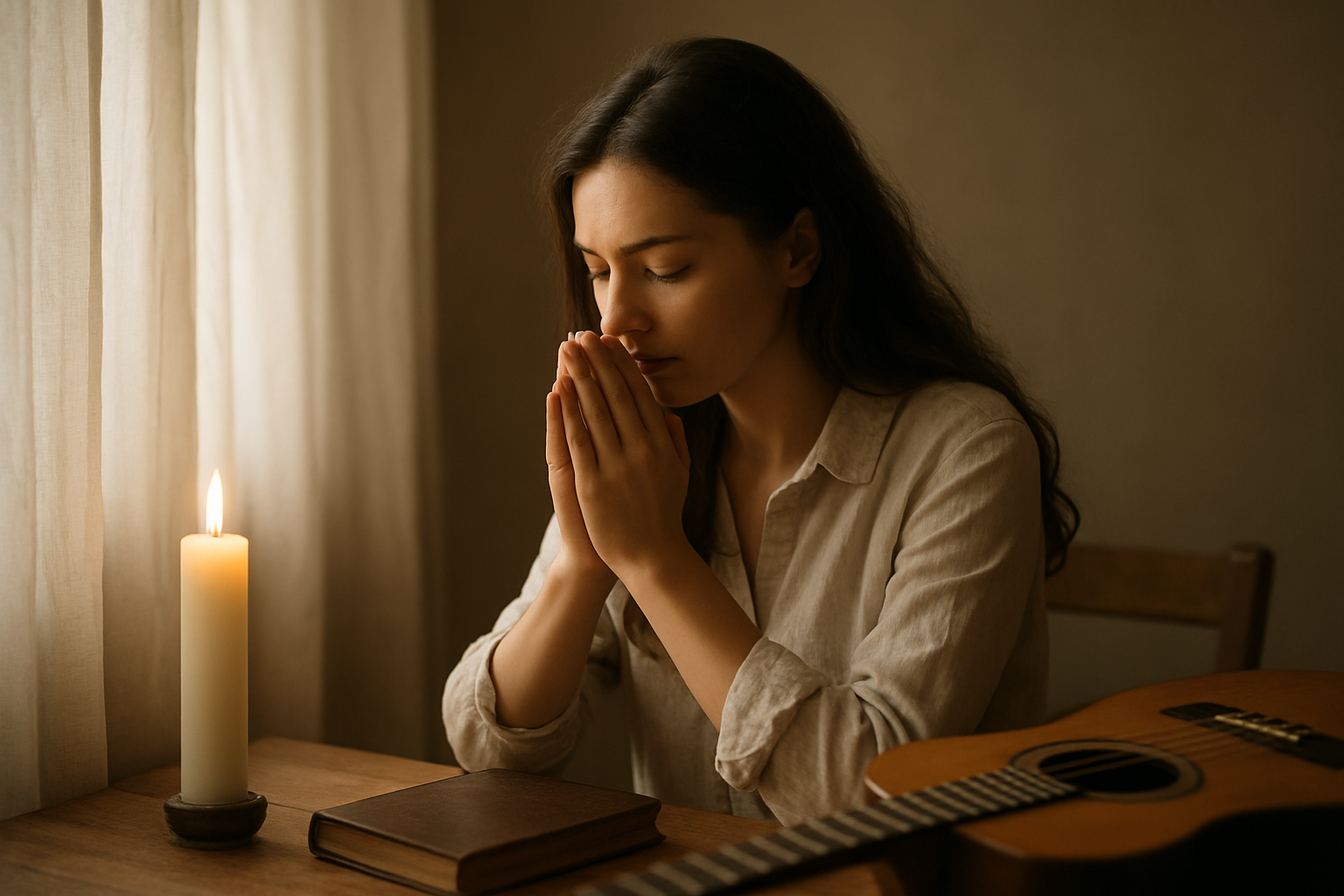
Why does faith reshape a music career?
There is a strange mercy in being pushed sideways into purpose. Many artists find mainstream doors opening when gospel labels won’t sign them, or when traditional gatekeepers simply don’t see what God is doing in their lives. One musician described a promise he made: if he crossed over into mainstream success, he would "take the crossover with me." That’s a posture worth emulating—refusing to treat secular stages as separate from kingdom work.
Principle Statement Faith reorients success so that influence becomes a ministry, not merely an accolade. Context: When we view careers through kingdom lenses, chart positions and awards become platforms, not endpoints.
- Position your goals so that audiences are invitations to ministry, not just markets.
Consider the detail of the artist who intentionally stylizes his stage name in a specific way—capitalizing every letter and ending with a period—as a little theology of identity. That choice in branding was not vanity; it was a declaration: this is who I am. Small, concrete decisions like that give shape to how we carry calling into public spaces.
Behind the Words: Genesis 15 records God speaking to Abram with the promise, "I am your shield; your reward will be very great." In the original scene Abraham is anxious—alone, childless, and uncertain of the inheritance God has promised. The promise lands as assurance, not an abstract motivational line.
The Heart of It: God’s promises trump our professional doubts—the good news is anchored in Presence, not in proof.
Try This: Picture yourself signing a record deal or stepping onstage, heart pounding. Hear God say, "I am your reward." Let that be the first thing you accept before the applause, contracts, or critiques arrive.
A specific scene from the transcript that cuts to the heart: an artist who wrote a love letter to God saw that very song become a bridge—weddings, mainstream airplay, and even endorsements from elders in the craft. When faith governs the why of the song, the where and how follow as stewardship.
And remember this: you may be refused in one season by people who can't yet see the fruit. That does not mean the calling was mistaken. There were "scales over Saul's eyes" in Scripture until God removed them; sometimes timing, not talent, is the barrier.
How does prayer actually power a creative life?
Prayer is not a last-resort tool reserved for crises. It is the ongoing conversation that refines our work. One simple lyric used again and again says it plainly: "I prayed for you." There’s power in naming that habit. Prayer steadies an artist’s heart before the spotlight and seeds music with pastoral intention.
Principle Statement Prayer converts ambition into vocation by inviting God into every practical decision. Context: Creatives who pray for their audiences and their industry are not being sentimental; they are aligning their agenda with God’s.
- Begin commercial conversations, collaborations, and release plans with prayer and watch strategy become sanctuary.
"And we have access to the greatest of all time. He will see to assuring that we know he hears us and he has us." — Romans 8:28
Behind the Words: Romans 8:28 was written to believers who were suffering under persecution and uncertainty. Paul’s comfort was not a promise of quick success but the assurance that God weaves suffering and blessing into a larger tapestry for those who love Him.
The Heart of It: God works in and through circumstances—prayer helps us trust the pattern even when we cannot yet see it.
Try This: Imagine the night before a release. Instead of staying awake tangled with what-ifs, kneel and pray over not just the outcome but the listeners who might be touched. Picture a mother in a hospital holding your song as her anchor. Let that image re-route your nervous energy into intercession.
Prayer also removes the dangerous assumption that our agendas are too small for God. Some creatives say, "I don’t bother God with chart positions or award hopes." The pastoral correction is gentle and firm: God cares about all the things of our lives—including Billboard dreams and booking concerns. We are not calling on a distant deity; we are inviting intimate help.
A vivid detail from the transcript shows the communal nature of such prayer: a text received in the deep of the pandemic asking influential friends to join in prayer—then a song was written from that moment. The music became a public prayer, a sonic benediction for a country wearing anxiety like a cloak. That trajectory—from private petition to public anthem—is the pathway many of us should learn to walk.
Why does fear try to hijack creative calling, and how do we face it?
Here is a hard saying we must name plainly: "fear ain't ever been a friend." It’s a blunt line, but its truth is pastoral. Fear presents as helpful caution but often disguises itself as a permanent residence. It tries to settle us into futures without God.
Principle Statement Fear is false evidence appearing real; it wants a foothold in our imaginations so it can limit our obedience. Context: Fear often masquerades as wisdom—"Be careful, don't take that risk,"—but it becomes spiritual theft when it prevents us from stepping into the assignments God is giving.
- When fear speaks, respond not by arguing longer but by returning to trust-filled action: pray, create, release.
The transcript offers a memorable metaphor: fear and anxiety are like mail you never signed for—so the instruction is to "return to sender and grab hold of this powerful thing we have as hope." Picture a studio night where every note trembles because of a worry about future bookings; instead of feeding that thought, mail it back. Send it where it came from.
A Teaching Moment is appropriate here.
Behind the Words: The Bible is full of commands to not fear because God’s nearness is the remedy. In context, early Israelites faced literal armies and exile; the repeated command—"do not fear"—was spiritual therapy for people under real threat.
The Heart of It: Courage is not the absence of fear; it is the practice of moving toward God while fear is present.
Try This: Picture yourself backstage, palms sweaty, second-guessing every lyric. Speak a short honest prayer: "Lord, I feel fear. I will step forward anyway." Then take one concrete step—sing the first line, strum the first chord. Let motion break the spell.
Common misunderstanding: Some think brave artists are those who never feel afraid. That’s not the biblical picture. Even saints felt fear; they moved in spite of it because they belonged to a God who had promised presence.
Consider how the creative process itself trains us for faith. "Process is the journey, the blessing, the work, the activation." That lyric is not fluff; it’s a theology of formation. The rehearsal rooms, the rejected demos, the seasons of silence—these are developers of character, not accidental delays. If we rush, we miss shaping that which God intends to steward through us.
Practical steps out of fear: name the fear, talk to a trusted friend who prays, rehearse in small rooms before big ones, and anchor your identity in God’s presence rather than in applause. That sequence keeps influence from becoming idols.
An unforgettable narrative in the transcript helps: a hardened biker in Texas whose motorcycle broke down wandered into an unfamiliar church service, experienced worship that "felt like light coming out of her mouth," and was changed forever. He went from heavy metal to old-school gospel because he allowed a new sound to reach him. The scene shows how vulnerability and openness displace fear and open people to transformation.
How do these strands—faith, prayer, and facing fear—reshape your creative calling?
When our faith informs our career, prayer fuels our daily decisions, and fear is acknowledged but not allowed to dictate our next step, music becomes ministry in the truest sense. We stop counting followers as identity and begin counting moments of grace: a lyric that stops a hand from picking up a drink; a line that steadies a separated heart on a hard night.
Principle Statement The process—often slow, sometimes painful—is the laboratory where gifts become character and influence becomes faithful stewardship. Context: Scripture and lived stories teach that preparation is not a roadblock but an essential formation ground.
- Treat each season (the studio, the silence, the touring lull) as a seminary where your calling gets cultivated.
There is freedom in that reversal. Instead of seeing detours as derailments, we learn to read them as God’s curriculum. Remember the text image: when God spoke into a moment of doubt, He invited Abram to look at the stars—an invitation to wonder, not merely a promise of outcome. That posture invites us into long obedience in the same direction.
And please, let us be kind to each other. Creatives are frontline ministers in a cultural battle for hearts. What they make matters. When we criticize rather than encourage, we risk turning ministry into micromanagement. We need people who will help carry the load, who will intercede, and who will celebrate the small victories.
Closing encouragement
You are not alone in this season—whether you are just learning to call a melody holy, or you’ve landed on Billboard and wonder whether the platform changed you. Keep praying. Keep making. Keep wrestling with fear, and then take the stage anyway. Music is a language God uses to speak into brokenness; when you steward it under the Lordship of Christ, you are participating in a grander story than any chart could tell.
Go and make something that matters. Say the prayer. Sing the truth. Let the process do its holy work.
Key Takeaways
- Faith is central to overcoming challenges in music.
- Prayer is a powerful tool for artists and everyone.
- Creativity evolves and should be embraced.
- Fear can be managed by bestowing hope.
- Music has the potential to bridge cultural divides.
Notable Quotes
"Fear, while it may come, literally can be felt, but you don't have to keep it."
"Process is the journey, the blessing, the work, the activation."
"Your help comes from the Lord."