When God Heals: Animals, Prayer, and Hope
Stories of a healed dog, a nuzzling horse, and the power of communal prayer remind us that God cares for all creation and brings healing to body and soul.
Why Scripture Gives Humans Dominion Over Animals
"And God made the beasts of the earth after their kind... and let them have dominion over the fish of the sea..." — Genesis 1:25–27
That familiar line sits near the beginning of the Bible to teach something foundational: creation is graciously ordered and entrusted to human care. In the ancient Near Eastern world of Genesis, to be given "dominion" meant stewardship, not ruthless exploitation. It called for governance with wisdom—like a shepherd-king who tends flocks, not a conqueror who crushes them.
The Heart of It: Humanity bears God's image, and that calls us to reverent responsibility for creation.
- Caring for animals reflects care for the Creator who made both them and us.
When we say we are made in God’s image, we are saying that every interaction with another living creature reveals something of God. So when a small act—praying a blessing over a beloved pet, or taking time to tend an injured bird—happens, it is not incidental. It is theology lived out on a porch, in a shelter, at a neighbor’s farm.
One simple, startling story helps explain why this matters. A woman once brought what she called a sick puppy; it turned out to be a very large German Shepherd with painful hips. After a moment of prayer, that dog leapt into the back of her car without using the steps—an immediate, unmistakable change. That detail is not proof we control everything. It is a reminder that God sometimes meets small things with large mercy.
We must not romanticize dominion. Dominion is not domination. It is faithful rule—care, protection, and restoration.
Behind the Words: Genesis 1:25–27 was written in a culture surrounded by kings and empires; its language about "dominion" would have suggested rightful, God-given authority over creation.
The Heart of It: Stewardship means responsibility, not authority for selfish gain.
Try This: Imagine your street as a tiny kingdom God has entrusted to you. Walk it this week looking for one living thing—plant, pet, or person—to protect or tend in a small but deliberate way.
Common misunderstanding: Dominion is often read as permission to exploit. The Bible’s narrative of care and Sabbath, of feeding the hungry and rescuing the weak, shows a different ethic.
How Prayer Brings Healing to Body, Mind, and Community
Prayer is not primarily a technique; it is a relationship. We don't use prayer to manufacture results; we enter into the life-transforming presence of the God who heals. James 5:14–15 gives the early church a practice for communal healing: elders pray, oil is used, and the prayer offered in faith restores the sick. In its original setting, this was about families and households gathered when someone was ill—intimacy, not spectacle.
"Is anyone among you sick? Let them call the elders... and the prayer offered in faith will make the sick person well; the Lord will raise them up." — James 5:14–15
The Heart of It: Prayer opens ordinary people to extraordinary grace because it aligns our hope with God's will.
- Bringing the sick into communal prayer invites God’s presence to touch body and soul.
When you bring a pain into prayer, you join a long, tangible practice of people asking God to intervene. Prayer shapes the body and the mind—softening fear, directing attention away from isolation and toward a wider family of faith. In seasons of isolation, prayer becomes an audible way to say, "You are not alone." That phrase is a lifegiving refrain.
A short, hard line from pastoral ministry needs unpacking: "Stop it. Call me." Spoken to someone contemplating suicide, it is painfully direct and merciful at once. It refuses to let despair stand as final. Pastoral care sometimes needs blunt commands because the alternative can be tragic.
When someone posts a prayer request and others respond with a thumbs-up emoji or a brief message, that small recognition can mean, "I saw you; I'm standing with you." Prayer also calls us to practical action—meals, calls, financial help, accompaniment.
Behind the Words: James addressed a first-century church where sickness was often communal and medical help scarce; prayer and anointing were practical interventions lived out by elders.
The Heart of It: Faith-filled prayer connects human need to God’s healing presence.
Try This: If you are anxious tonight, speak one sentence of prayer aloud—"Lord, be with my fear"—and then text one friend that you did. Let prayer push you into connection.
Common misunderstanding: Prayer is sometimes portrayed as a tidy formula. It is messy, patient, and often works through other people.
A Franciscan Moment: When a Horse Hugs You
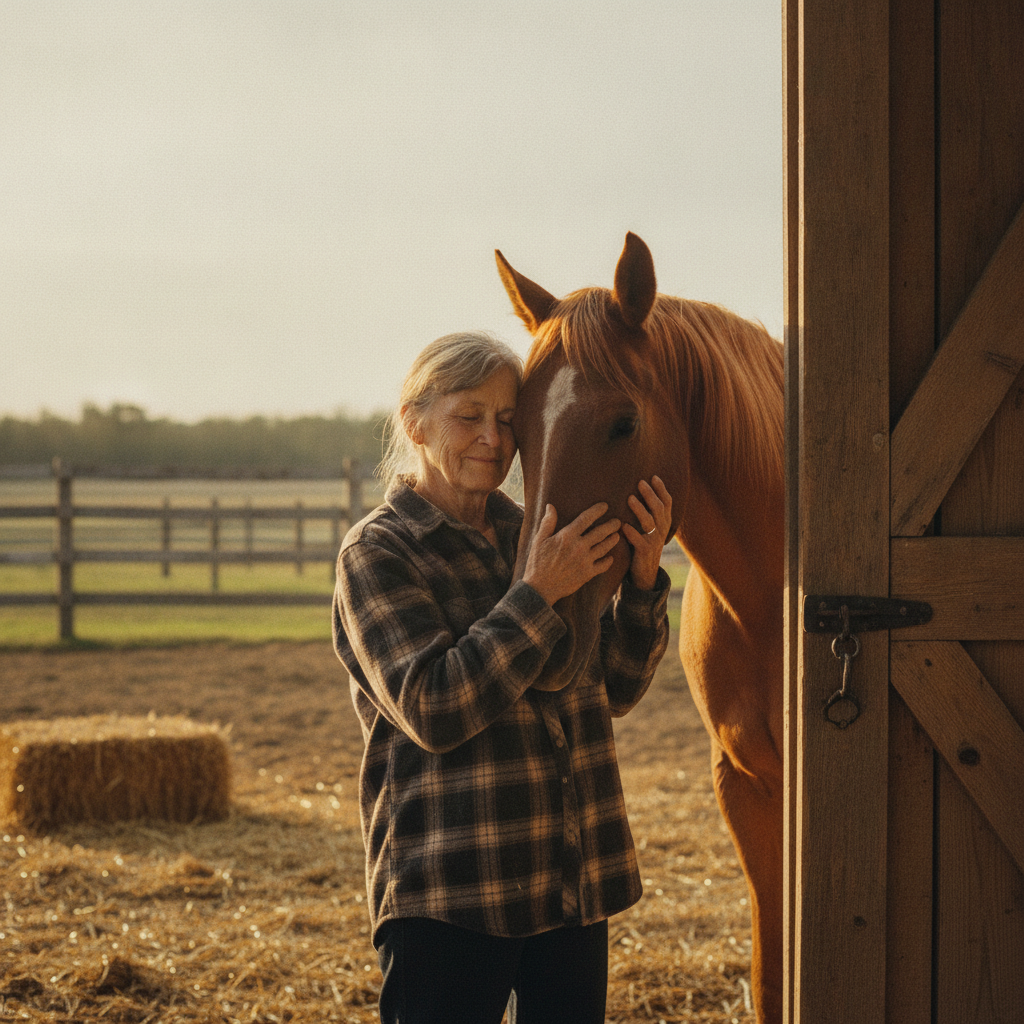
Picture a tense horse that marched up and—at the last second—swerved, put its head over a stranger's shoulders, and simply nuzzled. They hugged. That moment resisted easy categorization. It was part animal behavior, part human vulnerability, and wholly a sacramental encounter where God seemed to say, "You are loved."
The Heart of It: God uses ordinary creatures to teach us about grace and to heal what human words cannot.
- When animals trust, they model a vulnerability that invites our own healing.
You might remember another small but pointed example: a wasp bothered a youth group leader, who quietly pointed and told it to go in Jesus' name—and the insect flew away as she pointed. That detail sounds odd until you place it beside many other moments when attention, courage, and prayer shifted a situation. We are called to have dominion—not dominion as arrogance, but dominion as informed love that says, "Go in peace," and trusts the Spirit.
A pastoral truth here: encounters with animals are not magic tricks. They are signs. They do not replace medical care or therapy. But when a nervous child sees an aggressive dog calm and then realizes, "Maybe faith is real," a heart opens for human healing as well.
Behind the Words: Stories about St. Francis in medieval settings emphasized radical simplicity and tenderness toward animals, reminding us that holiness often looks like gentleness.
The Heart of It: Encounters with animals can soften defenses and invite us into God’s reconciling presence.
Try This: Next time you feel braced against the world, sit near an animal—yours or a neighbor’s—without agenda, and thank God for His care.
Common misunderstanding: People sometimes treat animal healings as proof texts. They are invitations to believe that the Creator cares, not guarantees of control.
How Faith-Based Healing Practices Shape Everyday Life
Faith-based healing practices include prayer, anointing, blessing, and communal support. They are rooted in the conviction that God is the great physician and that faith expresses itself through both words and deeds. In practice, this means we pray for illnesses, bring the lonely food, advocate for better care, and keep showing up.
The Heart of It: Healing practices are most effective when faith leads to concrete compassion.
- Prayer that does not translate into action is incomplete; love in deed completes prayer.
On a farm once, after praying for crops and animals, a ministry visitor was asked to pray for a 27-year-old horse with arthritis. The horse was drawn to the stranger, became still, and then nuzzled like an old friend—an ordinary creature showing an extraordinary trust. After that day, a husband who had fed the horse for decades could at last touch and care for it without fear, because the horse’s long memory of abuse was soothed. That story is not an endorsement of simplistic theology; it is an invitation to see how faith intersects with trauma, tenderness, and time.
We live with telemedicine and hashtags; faith-based practices must adapt without losing their core. Blessings over video calls, a phone call to someone tempted by despair, a prayer team that reads and responds to hundreds of requests—these are new forms of ancient practices. We say to one another: "You are desperately loved." Those words are not trite; they are lifelines.
Behind the Words: Early church practices combined prayer with community care because health was communal and faith was lived out in households.
The Heart of It: Faith-based practices heal most fully when they combine prayer, presence, and practical help.
Try This: Make a short list of three practical ways you can pair prayer with action this month—deliver a meal, offer a ride, or sit with someone who is grieving.
Common misunderstanding: That faith-based healing is only for the miraculous. Most often it moves through the ordinary: listening, visiting, steady presence.
God’s economy of healing does not follow our tidy expectations. We find God in a nuzzling horse and in the silence of a prayer whispered at a bedside. We see God in a dog that suddenly walks without pain and in the slow mending of a human heart after years of hurt. When we remember that God is still in the business of healing, our response is neither passive nor frantic; it is faithful.
Be a people who pray with courage, who practice compassionate dominion over creation, and who pair prayers with practical love. If you feel alone, hear this pastoral promise again: you are desperately loved. And if you are ever in crisis or thinking about ending your life, please reach out right now: call someone you trust, or call or text 988 (the Suicide & Crisis Lifeline in the U.S.). Let us walk with you.
May we be a community that blesses animals because doing so blesses the Creator. May we be a people who believe that if God can heal animals, he can heal you too. Go, tend one small thing this week in the name of the One who made us all.
Key Takeaways
- God loves and cares for every creature.
- Prayer can lead to healing and transformative experiences.
- There's a strong connection between humans and animals worth nurturing.
- Community support is vital during times of struggle.
- The teachings of St. Francis can guide us in showing compassion.
Notable Quotes
"If God can heal animals, he can heal you too."
"You are desperately loved by Jesus Christ."
"Your God is your flesh. He lives in your nearest neighbour in every man."