When Global Conflict Meets Local Faith
When foreign policy and local politics collide, we must respond with prayerful discernment and compassionate action—protecting the vulnerable while offering a winsome, faithful witness.
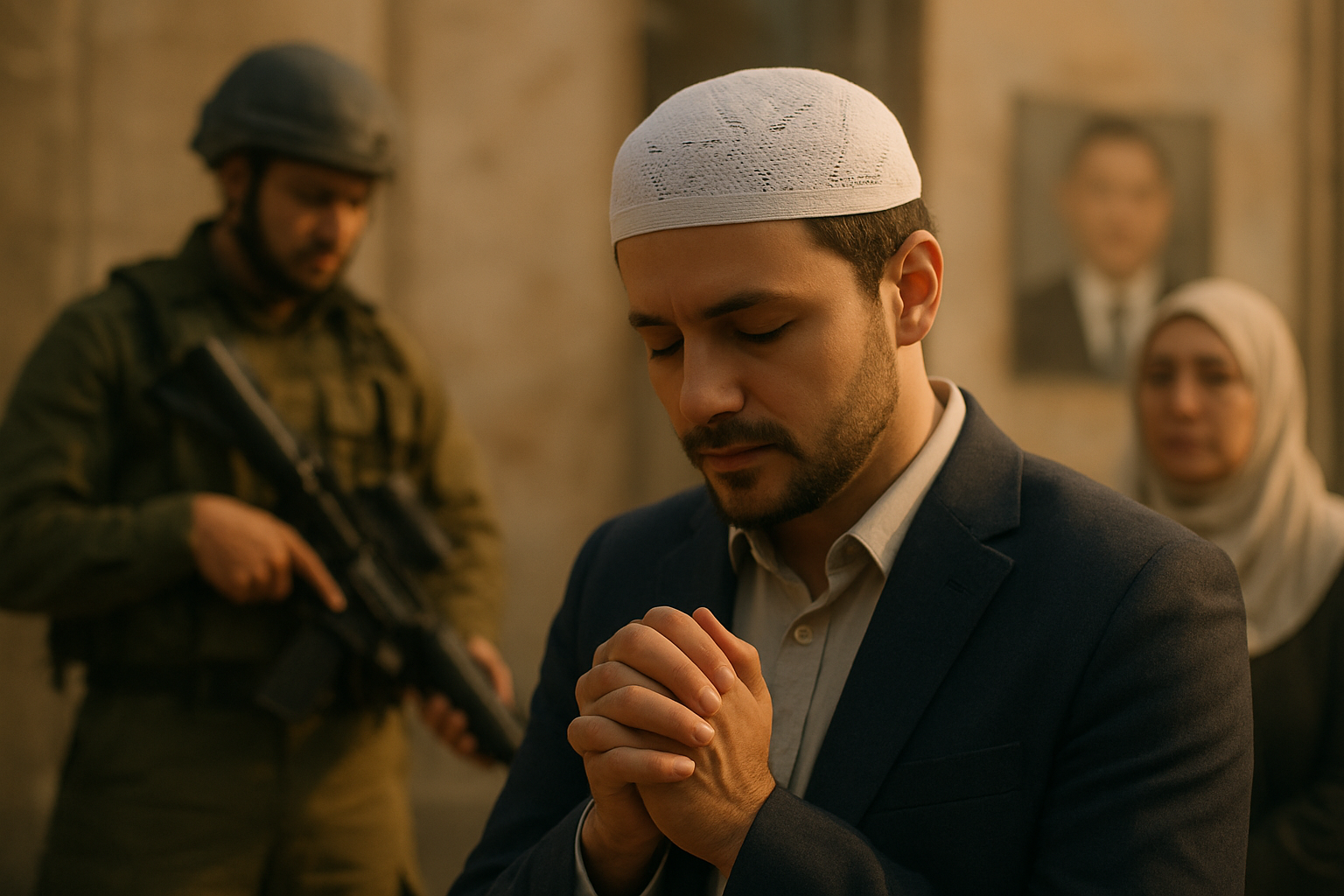
Why an international stabilization force in Gaza raises red flags
The phrase that kept appearing in briefings was blunt: "Hamas enablers." That language is shorthand for a very practical worry — who will be in the room when reconstruction and security are decided? An Arab nation publicly announced it will not take part in the proposed international stabilization force in Gaza, citing concerns that certain participants would effectively enable Hamas. That withdrawal is not a small diplomatic hiccup; it signals distrust about who would carry influence in Gaza's immediate future.
From an Israeli perspective and that of several regional actors, the question is not merely who shows up with uniforms, but who will be allowed to shape institutions after a conflict. A civil-military coordination center sits down about a two-hour drive from where I am standing, a reminder that plans on paper must be translated into coordination on the ground. Will the ISF be an impartial guardian of civilians, or will its composition mean certain factions gain political advantage? Those are not academic questions; they dictate whether aid reaches the wounded, whether rubble is cleared safely, and whether displaced families can return without fear.
The Heart of It: Stability needs legitimacy.
Stability imposed without trust is fragile. When local communities sense outsiders are partial, reconciliation stalls. Practical realities make this hard: some nations are labeled as sympathetic to Hamas, others fear being dragged into politics they cannot control. The United Arab Emirates' decision to step back underscores that the ISF may struggle to reach the scale envisioned unless its legal framework and command structure win trust across the region.
There is a spiritual dimension too. When we read about ceasefire negotiations and postwar plans, we encounter human longing for peace writ large — a longing the Scriptures echo. We must watch how reconstruction is handled, refusing partisan cheerleading and instead insisting — as we pray and speak — that any effort protects civilians and enables genuine restoration.
Behind the Words:
"Let everyone be subject to the governing authorities, for there is no authority except that which God has established."
— Romans 13:1
Paul wrote this to a mixed church in Rome under imperial rule, urging believers to live responsibly within civil structures that upheld order in a city of competing powers. The early Christians were not calling for uncritical submission to evil, but for a posture that recognized God’s sovereignty while practicing faithful witness.
The Heart of It: Responsible citizenship and prayerful engagement are not optional for faith; they are expressions of trust in God amid political complexity.
Try This: Imagine your church as a small embassy of gospel peace. On a Monday morning, someone brings a headline about Gaza to the prayer list. Before reacting in fear or outrage, ask the congregation to pray for those who will make on-the-ground decisions — that they would seek justice, protect the vulnerable, and avoid empowering factions intent on revenge. Do that for four weeks.
A common misunderstanding is that Romans 13 requires unthinking loyalty to every government action. It does not. The same Scriptures call us to speak truth with love and to stand for the oppressed.
Should Americans be concerned about Islamists in government?
News that a foreign-born Muslim will soon be sworn in as mayor of a major American city has stirred public debate about assimilation, identity, and what it means to hold public office in a pluralistic republic. Some voices warn of organized political Islam seeking influence; others caution against conflating faith with ideology. We must parse both concerns honestly.
There is a real distinction between Muslims who participate in civic life faithfully and those who advocate a political program that seeks to replace constitutional norms. A quoted line that landed like a slap in the face for many listeners was stark: "they are most certainly here to further weave Islam and Sharia concepts into American life to ultimately subjugate and bring down Islam." That is a strong charge — a hard saying that demands pastoral unpacking.
First, we must not reflexively accept blanket accusations. Many Muslims arrive in America hoping to raise their children in peace, to work, to worship, and to belong. To assume hostile intent across the board is unfair and unwise. Second, we also cannot ignore genuine ideological projects that seek to undermine liberal democracy. We are called to discernment that neither succumbs to paranoia nor flattens critique into prejudice.
The Heart of It: Engage with clarity, not caricature.
When we reduce people to monolithic enemies, we lose both truth and love; the gospel asks us to hold both together. Seek specific evidence about policy and action rather than ascribing motive from identity.
Practically, that means distinguishing between a person’s faith identity and their public policy record. Ask: What does this candidate propose about the rule of law, religious liberty, and equal protection? Does their platform align with constitutional principles? Resist social media snapshots that claim entire communities have a single agenda; give space for local testimony and civic accountability.
Behind the Words:
"But in your hearts revere Christ as Lord. Always be prepared to give an answer to everyone who asks you to give the reason for the hope that you have."
— 1 Peter 3:15
Peter wrote to churches experiencing social pressure and misunderstanding, urging believers to combine reverence with readiness to explain their faith winsomely. For persecuted Christians, this meant showing a different kind of courage — public civility paired with clear conviction.
The Heart of It: Our witness in civic life must be winsome and courageous: clear-eyed about threats to liberty, yet graceful toward neighbors who are not like us.
Try This: Picture a neighborhood meeting after a contentious election. Instead of retreating, organize a small forum at your church where local residents — Muslim and Christian — discuss what religious liberty looks like in practice. Offer childcare, translate materials if needed, and commit to listening as much as speaking. That posture practices civic faithfulness.
A common misunderstanding is equating critique of Islamist political movements with hatred of Muslims. They are distinct. We can oppose political projects that threaten freedoms while praying for and befriending Muslim neighbors.
Certain public clips included blunt concerns over "Every house" in one viral clip and worries that some will call for "boots on the ground" in foreign policy decisions — language that raises emotions both at home and abroad.
How Christians should pray and act when global geopolitics touch local life
We are not spectators. Our faith sends us into the public square with both hands open — one for courage, the other for compassion. That means three practical rhythms: pray, discern, and serve.
Pray. Not rote but specific prayer that reflects the complexity of international and local realities. Pray for leaders making decisions about stabilization forces and for local officials navigating diverse constituencies. Pray for those displaced by conflict and for neighbors of new elected officials who fear marginalization. Prayer is not passive; it shapes our hearts and informs our actions.
Discern. Ask good questions. Who benefits from a policy? Who is left out? When a nation announces it will not take part in a plan, what are the legal and moral reasons they cite? When a new mayor is elected, what are their policies on law enforcement, education, and religious liberty? Discernment resists slogans and seeks specifics.
Serve. The most credible witness often comes through service. A reported scene of campus revival — thousands gathering for worship, hundreds responding, dozens baptized — reminds us that lives change when the church shows up with worship, love, and practical help.
The Heart of It: Service is our strongest argument.
When Christians demonstrate tangible care for neighbors — regardless of creed — public trust grows and fear shrinks. Volunteer at refugee support centers, offer English classes, or partner with local nonprofits to meet basic needs.
Try telling the story this way: imagine a new mayor and a pastor sitting in a community room after a local crisis — not as adversaries, but as people committed to making life better for families. Picture the pastor bringing sandwiches, the mayor listening, and a Muslim neighbor telling a story about their child’s first day at school. That scene breaks down caricatures and builds a shared future.
Behind the Words:
"He heals the brokenhearted and binds up their wounds."
— Psalm 147:3
Psalm 147 praises God for both cosmic power and tender care; it comforted exiles longing for restoration. The line points readers toward God's heart for repair and reconciliation amid ruin.
The Heart of It: Restoration begins with wounds being acknowledged and healed; politics alone cannot accomplish what mercy and willingness to serve can begin.
Try This: If your church has not connected with a campus ministry or refugee resettlement group, take one small step this month: host a hospitality night, provide a laundry voucher outreach, or pray publicly for peace in distant lands and for local leaders tasked with difficult choices.
A common mistake is thinking political action replaces spiritual formation. It does not. The revival glimpsed on campuses — thousands gathering, hundreds responding — shows that hearts change when worship and witness intersect with service.
Across these spheres — international stabilization plans, civic debates about who governs our cities, and revival among young people — a single thread connects them all: people made in God’s image long for peace, dignity, and hope. We must be both wise and tender in how we respond.
The world will continue to serve us headlines that tempt either panic or indifference. But we are called to a third way: faithful, informed engagement grounded in prayer and expressed through loving action. We will need discernment to read complicated international maneuvers, courage to speak truth to power at home, and humility to befriend those we fear.
When the next news alert arrives, let it be the spark that takes you to the prayer meeting and the coffee shop, not only to your keyboard. There is work for us to do — to pray, to serve, and to stand as a people shaped by grace in a world hungry for it.
Key Takeaways
- Understand the complexities surrounding international relations and aid in the Middle East.
- Recognize the impact of political changes in local government on national dynamics.
- Engage with faith communities to promote outreach and revival.
- Stay informed about governmental processes and their implications for everyday life.
Notable Quotes
"Israel doesn’t want any influence of the Muslim Brotherhood that would pose an existential threat to the state of Israel."
"If you migrate to America, you must assimilate."
"There is a real battle, ideological battle in the Islamic world."