When Faith Shows Up at the Ballot Box
How do low voter turnout and Christian civic engagement shape our schools and communities? Practical, pastoral steps for believers who want to make a faithful difference.
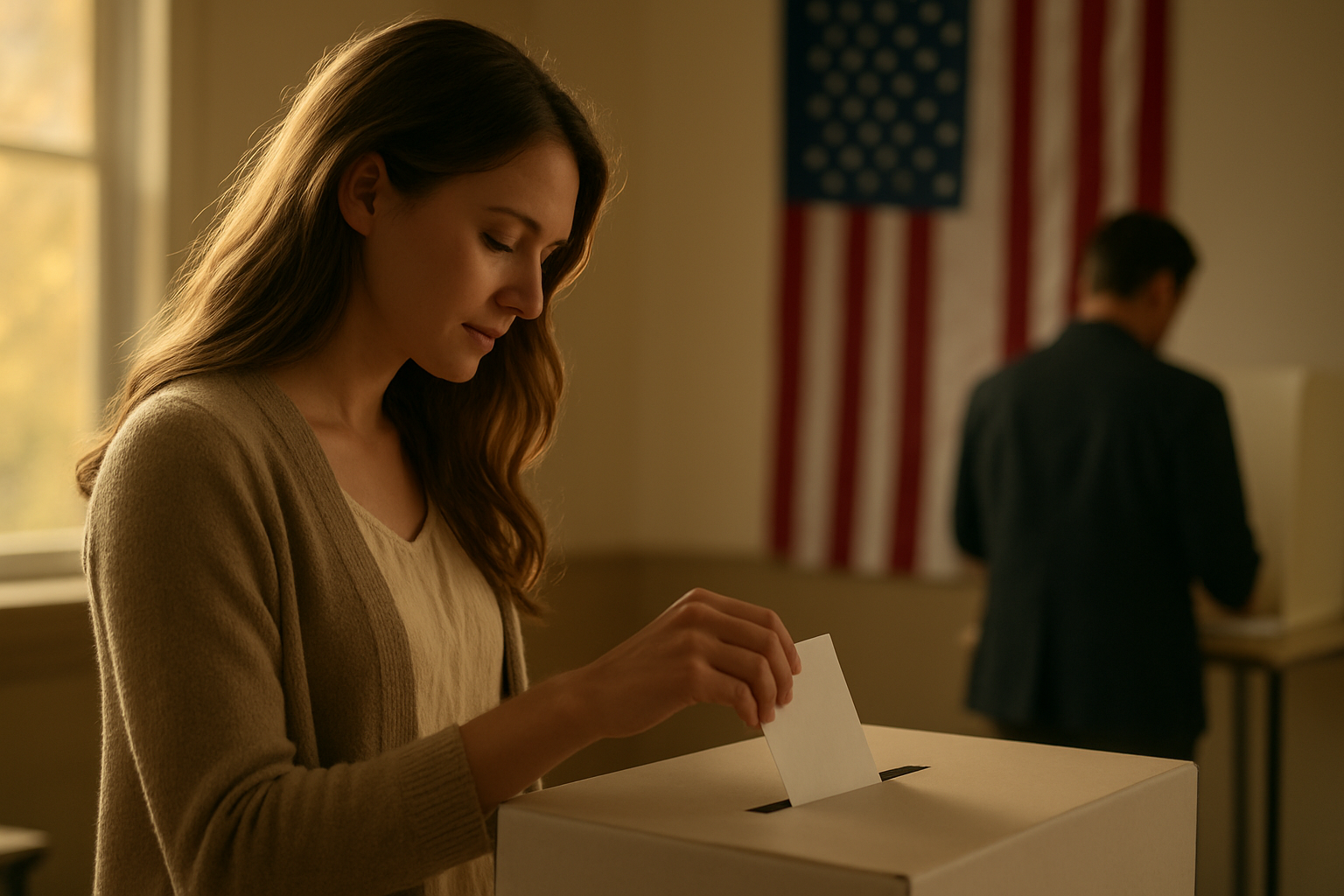
Why did voter turnout fall, and why should the church care?
"Low voter turnout" shows up in every report. It isn’t just a statistic; it’s a moral question. When fewer people cast ballots, urgent decisions about families, schools, and immigration land on a smaller group — concentrating influence in ways that can feel unbalanced or unjust.
In raw numbers, about 147 million people voted. That scale matters, but a quieter fact is how many did not. Among people of faith overall, turnout was modest. That should prick our conscience.
The Heart of It: Participating in civic life is an expression of stewardship, not merely politics.
Being faithful with our citizenship flows from the same soil as being faithful with time, money, and mercy. When we withdraw, we cede moral imagination to those who have no interest in our values.
- Try thinking of voting the way you think of church membership: a consistent habit that bears witness to the world.
We must also admit a hard pastoral truth: part of the reason for low turnout is discouragement — the belief that nothing changes. That belief is a spiritual problem, not just a political one. Private comfort at the cost of public good is a recipe for cultural drift. We must not let ease be our ethic.
Teaching Moment 1
"Hear, O Israel: The Lord our God, the Lord is one. Love the Lord your God with all your heart and with all your soul and with all your strength."
— Deuteronomy 6:4-5
Behind the Words: Deuteronomy 6 was Israel’s charge to remember God’s covenant teaching in every part of life — at home, on the road, at work. It called for passing faith down, integrated into daily routines rather than confined to temple time. The Israelites were urged to let God’s instruction shape public life as well as private practice.
The Heart of It: Faith that shapes family life will inevitably shape public life; separation of faith and civic duty was not the intent of the biblical witness.
Try This: Imagine a parent on Sunday evening sitting with a child over a school flyer about a new curriculum. Instead of shrugging, the parent reads it aloud, prays, and asks, “How do we want our children to learn about our history?” That small, intentional conversation can ripple to a school board meeting.
A common misunderstanding is that Deuteronomy mandates a theocracy; it does not. It invites a people to embody God’s wisdom in how they live together — which includes how they vote and teach their children.
How did Christian influence actually shape the election outcome?
You may have read different takes about who moved the result — young voters, demographic shifts, social media noise. One anchor stands out: a large share of the electorate identified as Christian. Roughly 72 percent of voters identified as Christian, and within that group many leaned heavily toward one political direction. That concentration created a sizable cushion in totals.
A subgroup drew attention: the "SAGE Cons" — spiritually active, governance-engaged conservatives. Estimates suggest about 13 million of them, and remarkably, nearly all of them voted. When a group is both spiritually active and civically organized, their vote has disproportionate influence.
The Heart of It: Active faith communities shape public outcomes more than passive ones.
When believers worship, pray, and then show up as voters, their values move from sermon illustrations into law and policy. That shift happens not because Christians act as a monolith, but because consistent civic habits produce predictable public consequences.
- Practice faithful participation: regular worship, regular study, regular voting.
We also need to name a pastoral tension: the same data that empowers can tempt us to triumphalism. When Christians make a measurable difference, we must resist claims that electoral wins equal spiritual perfection. Scripture never promises moral unanimity; it calls for faithful witness.
Teaching Moment 2
"Fathers, do not exasperate your children; instead, bring them up in the training and instruction of the Lord."
— Ephesians 6:4
Behind the Words: Paul wrote these words to households in the Roman world where family structures were under stress. His counsel aimed to avoid harshness and instead encourage parents to cultivate virtue through teaching and example. The command is pastoral — it assumes parental responsibility for the moral formation of the next generation.
The Heart of It: If we care about the future of our civic order, we begin with how we form our children spiritually and intellectually. Public policy follows private formation.
Try This: Picture a family at breakfast unpacking a local school newsletter. Instead of reacting impulsively, they map out one evening a week to discuss civic questions — history, local budgets, school choices — and pray about them together. Over time, children learn that faith and public life belong together.
A common misunderstanding is to think Ephesians limits duty to the home; actually it widens duty: the home forms citizens who will serve in the public square.
We must also ask: how well do we teach young Christians to think about immigration, national security, and civic virtue? Exit data showed those were decisive issues for many believers. That means our teaching must be sharp and winsome, not merely partisan slogans.
What role will education policy play for Christian voters going forward?
Education repeatedly shows up as the tipping point for voters at local and state levels. In some places, debates about curriculum — which books, which histories, which civic stories — became the single issue that decided key races. Parents worried about curricula such as the 1619 Project or state frameworks sought alternatives, and institutions promoted approaches that teach founding documents alongside fuller stories of America.
The federal government has grown more involved in education, but most educational decisions still happen locally. That means town halls, school boards, and parent groups matter in ways national rhetoric can disguise. When Christians engage, they rarely arrive with a single script; they bring concerns about character formation, truth-telling, and the dignity of every student.
The Heart of It: Local engagement in education protects the conscience and future of Christian families.
We cannot outsource the moral formation of children to distant bureaucracies and expect the body of Christ to remain unchanged. Participating in school governance is a pastoral act, not merely a political one.
- Attend a school board meeting, read proposed materials, and bring questions that arise from love for children.
One practical picture: a small group of parents gathers in a kitchen to read a new curriculum guide. They swap notes, pray, and then decide to speak at the next board meeting. That ordinary act redirected policy in more than one district.
Education debates can get ugly. We must refuse the temptation to mirror the worst of the culture. Instead, let our interventions be marked by clarity, patience, and respect.
"SAGE Cons" and similar categories aren’t magic; they’re a reminder that spiritually engaged people who also care about governance can alter the course of their communities — for better or worse, depending on how they act.
When the winds and waves come
Jesus used a simple image: houses built on rock or sand. The cultural equivalent is clear. If we ignore the shaping power of faith in family and civic life, the storms will scatter more than just our comfort. They will rearrange schools, immigration policy, and the assumptions of daily life.
But the opposite is also true: steady discipleship produces salutary public effects. When we teach our children, show up to vote, and steward local institutions, we become agents of resilience.
We must resist two traps. First: withdrawal because politics is messy. Second: the belief that politics is the sum of discipleship. Neither is biblical. We are called to be faithful in both private and public life — to love God, love neighbor, and love the common good.
So what do we do tomorrow? Begin where you are. Pray about the next school-board agenda. Talk at your dinner table about why voting matters. Encourage the spiritually active people in your church to channel convictions into consistent civic rhythms. Remember the detail that matters most: faithful living looks like steady participation, not performance.
We can grieve low turnout, celebrate that Christians made a difference where they voted, and double down on formation — because the future of our neighborhoods, schools, and children depends less on slogans and more on steady discipleship. When the winds come, may our houses stand.
Key Takeaways
- Understanding the demographics of Christian voters is crucial for future elections.
- Being engaged in the political arena is a civic duty for Christians.
- Scripture can provide valuable guidance in political decisions.
- Communities need to focus on rebuilding their cultural foundations through active participation.
- Educating the next generation about civic responsibility is essential.
Notable Quotes
"If we're going to really look at what's going to hold our country together, it's our belief in Jesus Christ and the word of God."
"The winds are gonna come, the waves are gonna rise up and it will stand firm."