When Faith Shows Up After Disaster
When floods and policy collide, our faith must show up both with chainsaws and with advocacy. Learn how local recovery and life-saving foreign aid are connected—and what you can do.
What ties a flooded RV resort to global health budgets?
There is a single thread running through our instinct to help: human life is sacred and finite, and our faith calls us to act. Whether a family has lost a camper in a Texas RV resort or a child in a far-off clinic depends on systems of care — neighbor-to-neighbor aid, local churches, nonprofit teams, and governmental programs.
That is why we cannot separate how we respond to flash floods from how we vote about public health dollars. The same compassion drives both. So when we step into crisis, we should carry prayer, muscle, strategic thinking, and a willingness to press for public policies that protect the vulnerable.
How do communities recover after sudden flash floods?
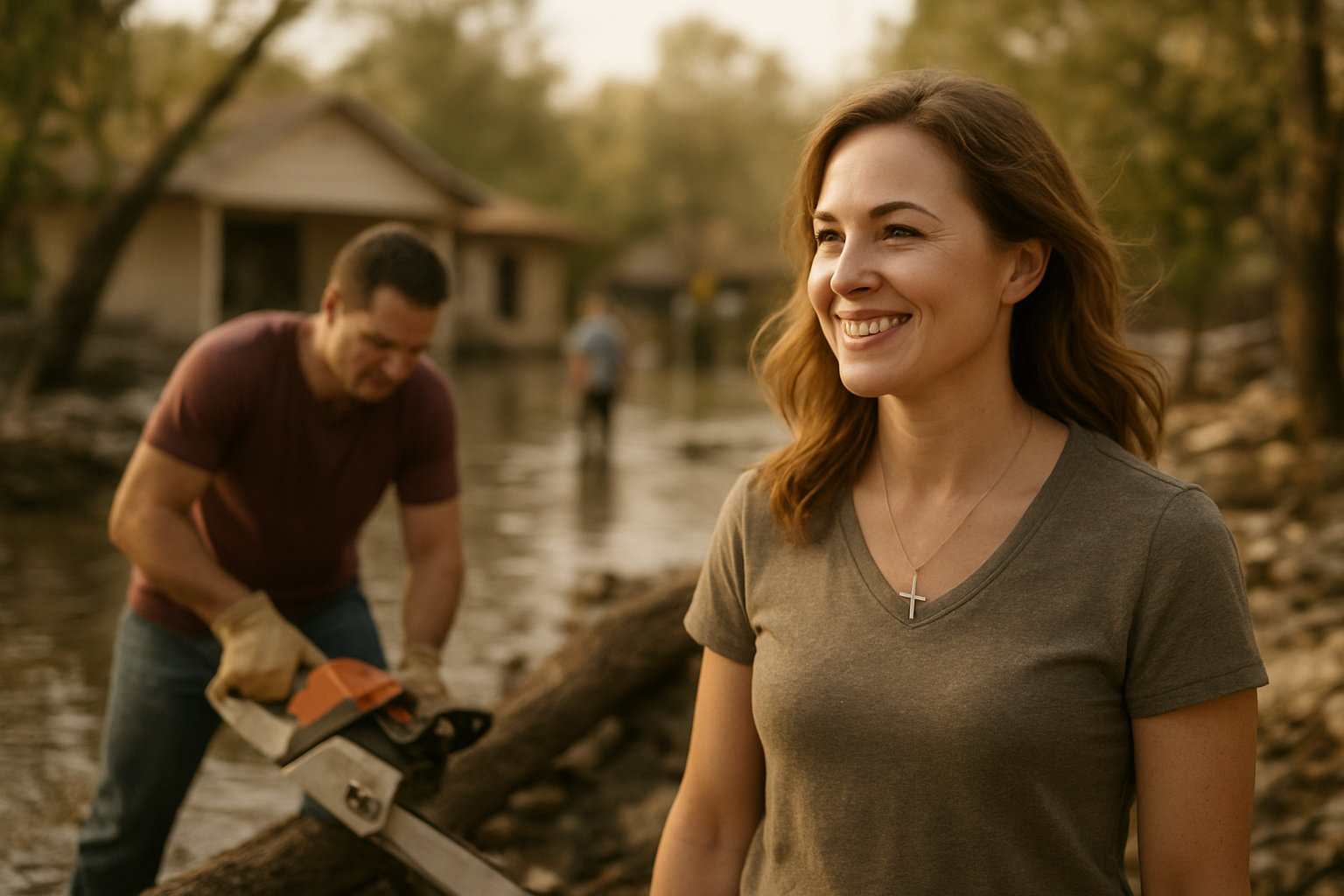
When flash floods arrive without warning, recovery begins in shock and requires sustained presence. In one county an RV resort was described as devastated after waters that at the height rose at a terrifying rate swept through, leaving nothing where cabins once stood. Young girls from Camp Mystic remained missing, neighbors searched, and volunteers converged with chainsaws and lunchboxes.
Local churches and relief groups set up distribution points — tents in store parking lots, meal lines for rescuers, and teams taking work orders to clear mud out of homes. Operation Blessing and other faith-based teams were on the ground, making hot meals, taking work orders, and helping to pay funeral costs when families could not. The strain is not only physical; the air is heavy with grief because, as one responder put it, "the loss of life is there we can't really measure that."
"God is our refuge and strength, an ever-present help in trouble." — Psalm 46:1
Behind the Words: Psalm 46 was first heard by a people in crisis—cities shaken by war and displacement. The psalm assured them that God is near amid chaos, not a distant observer.
The Heart of It: God’s presence does not remove danger, but it anchors us to hope and to action.
Try This: Imagine stepping into a gutted camper with a neighbor. The lights are out, but you bring a battery lantern, a thermos of coffee, and a Bible. Instead of rushing, you sit and listen to the story of what they lost. What would it look like if we stayed long enough to become part of the recovery story?
Common Misunderstanding: Presence is not passive; showing up once and leaving is not the same as investing in long-term restoration.
What matters in those first weeks
The early response needs speed and clarity: clear communication from authorities, safe zones for displaced people, coordinated volunteer efforts, and immediate resources for funeral expenses and temporary shelter. These practical priorities heal in visible ways.
- Partner with local churches so help is culturally wise and sustained.
The Heart of It: Presence must be paired with structure.
If we only bring emotion, the opening energy fades; if we only bring systems, we miss the human heartbeat.
You and I can do more than pass along donations. We can call the local church, volunteer on cleanup teams, and pray for the families whose lives have been ruptured. When we minister, we remember the specific wounds: neighborhoods cut off, families with no time to react, and children missing from camp.
How should Christians think about foreign aid and life-saving programs?
Our neighborly instincts extend beyond county lines. When we say we love the world, that should show up in policy as well as parish life. Take, for example, a program credited with saving millions of lives overseas: sustained funding for international HIV treatment and prevention has transformed markets, hospitals, and futures.
Congressional decisions about foreign aid can feel abstract, but they have clear consequences. Cutting funds that maintain treatment infrastructure can lead to resurgences of disease — real children and families affected. Programs that once looked like emergency interventions have become stable lifelines, and when we call something "pro-life," we must ask: which policies actually sustain life across borders?
"Truly I tell you, whatever you did for one of the least of these brothers and sisters of mine, you did for me." — Matthew 25:40
Behind the Words: Matthew 25 addresses a community judged by how it treated people in need—hungry, thirsty, a stranger, naked, sick, and imprisoned. Jesus identifies with the vulnerable.
The Heart of It: Christian discipleship means faith that changes policy and poverty, not just piety.
Try This: Picture a rural clinic in another country with pharmacy shelves half-empty because shipments were delayed. A nurse opens a letter from a donor program and sees funds restored. That one act of sustained giving can save a life that otherwise would have been lost.
Common Misunderstanding: Foreign aid is not charity for its own sake — when well-designed, it is strategic care that protects communities and reduces long-term need.
The Heart of It: Compassion that crosses borders requires accountability and consistency.
Conversations about budget cuts often use sharp rhetoric. Yet when programs that deliver vaccines, antiretrovirals, and maternal care are targeted, the moral calculus is direct: we are talking about lives saved and lives at risk.
Practical engagement for congregations looks like two things: first, informing ourselves about which programs deliver measurable results; second, advocating gently but persistently with our representatives. We can support organizations on the ground and also insist that policy decisions consider the human cost.
When faith shows up in the rubble
There is an image from the field that lingers: a parking lot at a big-box store converted into an operations camp—volunteers signing up at folding tables, meal trucks steaming, grief counselors offering quiet corners. That image captures what faithful presence looks like: improvisation with dignity, muscle with mercy.
We must resist the temptation to idolize speed. Flash floods rise in minutes—one account described waters rising so fast people had almost no time to react—and those who faced it had almost no warning. That urgency teaches us that preparedness matters: early warning systems, evacuation plans, and neighborhood relationships can save lives.
Not every crisis fits neat solutions. Public debates over spending sometimes use language that divides rather than heals. You may have heard a reporter press for blame and then a local official snap a stinging retort. Such hardness reflects how politics can harden grief into accusation. We need to name that hardness—and then disarm it with grace.
The Heart of It: Rhetoric that humiliates erodes public trust.
If we default to scorn when we are afraid, we make compassion harder. Instead, we must insist on accountability without cruelty and policies that protect without scapegoating.
Picture two scenes side by side: one where volunteers sort donated clothing and a pastor signs funeral checks for a grieving family; another in a committee room where budget decisions threaten to cut lifesaving health programs. The same love that drives volunteers should push us to the ballot box and to the phone lines of our lawmakers.
We are called to both immediate presence and long-term advocacy. When Operation Blessing set up distribution points and paid funeral costs, that work showed how local faith-led action meets urgent human need in the wreckage. When citizens ask senators to preserve funding for proven programs, that is faith translated into policy. Both matter.
And we must not forget prayer. One relief worker said plainly, "Prayer is our best tool that we have." Prayer without action is empty; action without prayer is brittle. We bring both together.
The Heart of It: Faith that moves is steady enough to both hold a shovel and sign a petition.
Try This with your small group: Spend one evening praying for a local recovery effort, then commit to one practical step — pack a cleanup kit, call a relief organization, or write an email to your representative about foreign aid programs that save lives.
Finally, remember the quiet miracles. Responders on the ground reported that "miracles are happening daily." Those words are not mere sentiment; they are testimony from people who saw lives spared and hope renewed when communities chose compassion over cynicism.
Closing Invitation
We will not be able to fix every broken thing all at once. But we are not without resources: prayer that steadies, neighbors who show up, churches that coordinate help, and public systems that, when funded wisely, multiply care.
So ask yourself: where can you be present this month? Can you give two hours to a cleanup team, or read about a life-saving foreign aid program and share that story with your congregation? Can you pray and then act? Our faith calls us to be both steady and imaginative in the work of restoration.
We do not walk into disaster alone. God meets us there — in the mud, at the funeral table, in the long conversations about budgets — and invites us to bring healing in ways that honor dignity and defend life.
Key Takeaways
- It is crucial to stay informed about humanitarian crises and engage in support efforts.
- Evangelicals play an important role in public discourse affecting legislation.
- Community solidarity is essential in responding to disasters and tragedies.
- Prayer and faith-based action are vital components in addressing grief and loss.
Notable Quotes
"We can be the hands and feet of Jesus to help the ones that are suffering."
"Israel has decimated the top leadership."
"Many families coming to terms with the idea that..."