When Combat Meets Calling
When danger narrows life to essentials, faith's questions come fast. How do combat, loss, and testimony lead a veteran from survival to starting a church?
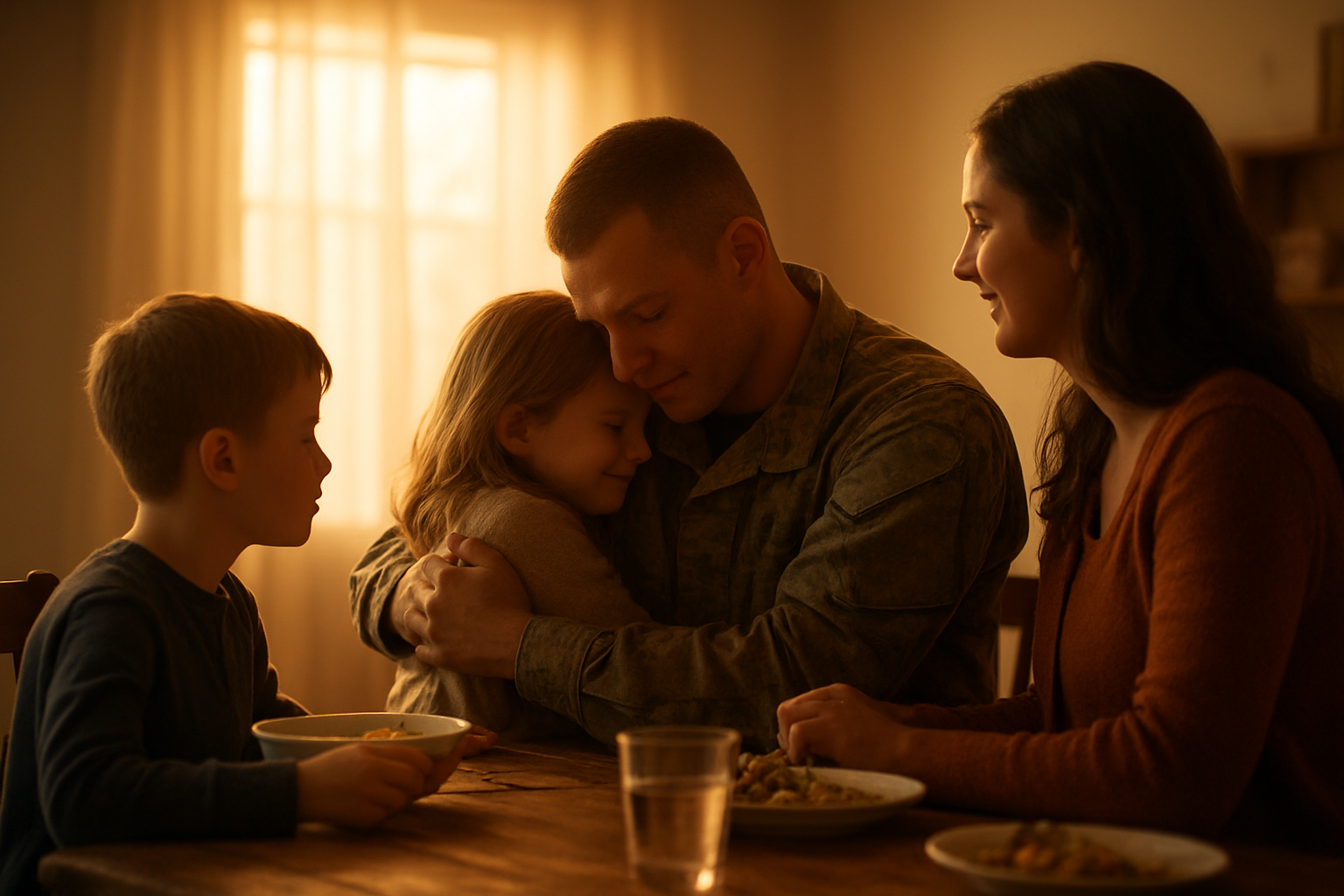
Why men in war often become more open to the gospel
On the ground in Somalia there were 140 Rangers, multiple Special Forces, and a day when 18 Americans were killed. You can read that and try to keep a distance, but when mortality arrives up close, questions hit differently. Combat strips polished defenses: the jokester goes quiet, the heckler who once mocked faith will listen.
The Heart of It: Crisis often strips life to essentials and makes people receptive to eternal questions. Why this matters: when everything else is uncertain, people are more willing to consider what comes after this life.
- Try offering presence before answers: sit, listen, and let honesty lead the conversation.
Behind the Words: Revelation 12:11 speaks about victory through testimony and the blood of the Lamb. In its first-century setting, persecuted Christians testified under duress that Christ's death and resurrection had defeated ultimate powers. That text links testimony with spiritual victory, showing how telling what God has done is itself a means of spiritual triumph.
"And they conquered him by the blood of the Lamb and by the word of their testimony." — Revelation 12:11
The Heart of It: Testimony is a spiritual weapon; our stories point others to Christ more than arguments do.
Try This: Imagine you're on a patrol humvee after a long mission. The buddy next to you has his head down. You don't speak theology; you say, "Let me tell you about the night God kept my family safe." Let story be your evangelism.
A common misunderstanding is that faith born in fear is shallow. In truth, conversions in crisis can be deep because they're rooted in existential honesty—the honest facing of life-and-death realities.
How loss reshapes identity and vocation
Survivor's amazement follows those who live when others do not—sometimes gratitude, sometimes despair. Some men were permanently maimed, some gave their lives, and some walked away without a scratch. That contrast forces a choice: cling to the old life or press into one shaped by what we've seen.
The Heart of It: Survivorship gives urgent clarity: our lives are not solely for comfort but for stewardship of what remains. Why this matters: when we recognize life as a loan rather than an entitlement, our priorities change.
- Try making a single sacrificial commitment this month that points outward—teach a class, mentor someone younger, or begin praying publicly about a local need.
Leaving military structure for ministry structure is not a reduction but a recalibration. The same discipline that helps a unit survive—rhythm, accountability, mission-focus—becomes scaffolding for a new congregation.
Picture the veteran who once counted ammunition now counting hymnals and names on a sign-in sheet. He remembers faces lost and decides, "Before I go the way of all the earth, I'm going to do something with my life." That resolve birthed a church that began with a couple and, years later, had between twenty and thirty children in its fold—small by some metrics, but souls transformed all the same.
Behind the Words: Psalm 23 was written by a shepherd-king familiar with danger and care. David draws on pastoral imagery to describe God's protection amid enemies and uncertainty.
"Even though I walk through the valley of the shadow of death, I will fear no evil; for You are with me." — Psalm 23:4
The Heart of It: God's presence is not a promise of a painless life but a guarantee that we do not travel hardship alone.
Try This: Visualize your life as a valley walk. Name the shadows—losses, regrets, fears—and speak aloud one sentence of trust to God about each. This practice trains our tongues to testify instead of retreat.
A common pastoral mistake is assuming veterans want only structure and toughness. Many actually yearn for theological honesty and a place to process suffering with people who stay.
Why church planting is hard—and strangely hopeful—for veterans
Church planting is often sold as a heroic sprint. In reality it's long endurance, not flash. One associational missionary told a veteran, "It's really hard... You're starting with nothing at all, and you're trying to make a church that didn't exist before." Those words clarify that planting asks us to build relationally, not administratively.
The Heart of It: Church planting is disciplined evangelism; it requires the same perseverance veterans relied on under fire. Why this matters: the spiritual muscles honed in military service—teamwork, planning, resilience—translate directly into gospel work.
- Try forming a monthly habit: gather a small group in a living room and practice telling one short testimony each week.
Imagine the first Sunday service: no building, just folding chairs in a rented hall. You and your spouse bring a thermos of coffee; you watch faces you helped invite. One child finds a bulletin and tugs a parent's sleeve with a whispered question about God. Those small scenes are where churches take root—gritty, faithful, ordinary.
A specific detail anchors this: over seven missions, lives were altered forever. That history gives credibility to a testimony. People who have seen mortality up close often say simply, "Remember back to the testimony, remember what God has done for you in your life." That invitation shifts conversation from abstract doctrine to real deliverance.
Behind the Words: The early church spread through households and hospitality; Paul's letters presuppose small gatherings and personal testimony as engines of growth.
"They will know we are Christians by our love." — (Inspired paraphrase of the early church's witness; see Acts and Paul's letters for household church patterns)
The Heart of It: The gospel spreads best through relationships where truth is lived out, not merely preached.
Try This: Spend a week consciously listening to one unreached person in your neighborhood. Ask one question each day about their life story. If they seem open, pray with them for five minutes.
A common misunderstanding is that planting requires charismatic visibility. Often it requires stubborn faithfulness—turning up week after week, inviting the neighbor, forgiving small failures, staying present in ordinary life.
Bringing testimony, combat experience, and planting together
There is a pastoral rhythm here: trauma can make hearts ready; testimony directs attention to Christ; church planting channels that readiness into community. The conviction, "there is something beyond what's going to happen after I die," can either harden people in fear or open them toward a Savior.
Consider the veteran who became a planter. Military missions taught him to trust team cohesion, lead with humility, and bear loss. When he and his wife started with just the two of them, they translated that trust into hospitality. Twenty to thirty kids later, that tiny beginning became a living testimony: small numbers, big faith.
The Heart of It: Our scars can testify to God's sustaining grace and become the foundation for community-building. Why this matters: when we offer our stories humbly, we invite others into hope.
- Try inviting one person who has suffered into a meal this month and listen for openings to talk about how faith has held you.
We must not romanticize suffering. The gospel does not seek pain; it redeems it when it comes. Helping someone see God's glory while honoring real grief is pastoral work—gentle, honest, patient.
If you've ever stood where survival felt accidental and gratitude fierce, you know this shape. When danger narrows life to essentials, faith's questions come quickly. We can hide the story or share it—telling of God's keeping, quietly or boldly. That testimony is both weapon and welcome: it builds churches, steadies hearts, and points weary people to the One who walks with us through the valley.
So what will you do with the story God has given you? Will you hold it like a private medal or use it to invite others into the same hope? Take discipline learned in hardship and channel it into humble evangelism. Remember, tell, and plant.
If you lead a small group, open the next meeting with a personal testimony—no polish, just truth. If you're not ready, begin by writing your story down, one paragraph at a time. And if you're a veteran or a friend of one, make space to listen; the gospel often moves when we pay attention.
May our testimonies, like the blood of the Lamb and the word of our story, point others to victory that is not our own but Christ's.
Key Takeaways
- Faith can grow stronger in the face of adversity.
- Personal testimonies can be powerful tools for evangelism.
- Church planting requires dedication and resilience.
- Crisis situations can open doors for spiritual discussions.
- Remembering and sharing personal experiences of faith can inspire others.
Notable Quotes
"There is something beyond what's going to happen after I die."
"Remember back to the testimony, remember what God has done for you in your life."
"Whether somebody's been down in a helicopter in Somalia or nothing's happened in their life significant like that, they can use their life for the glory of God."