When Bullying and Despair Meet the School Gate
When your child is the target of relentless cruelty, faith and action must meet. Learn to spot warning signs, press schools for safety, and offer steady pastoral care.
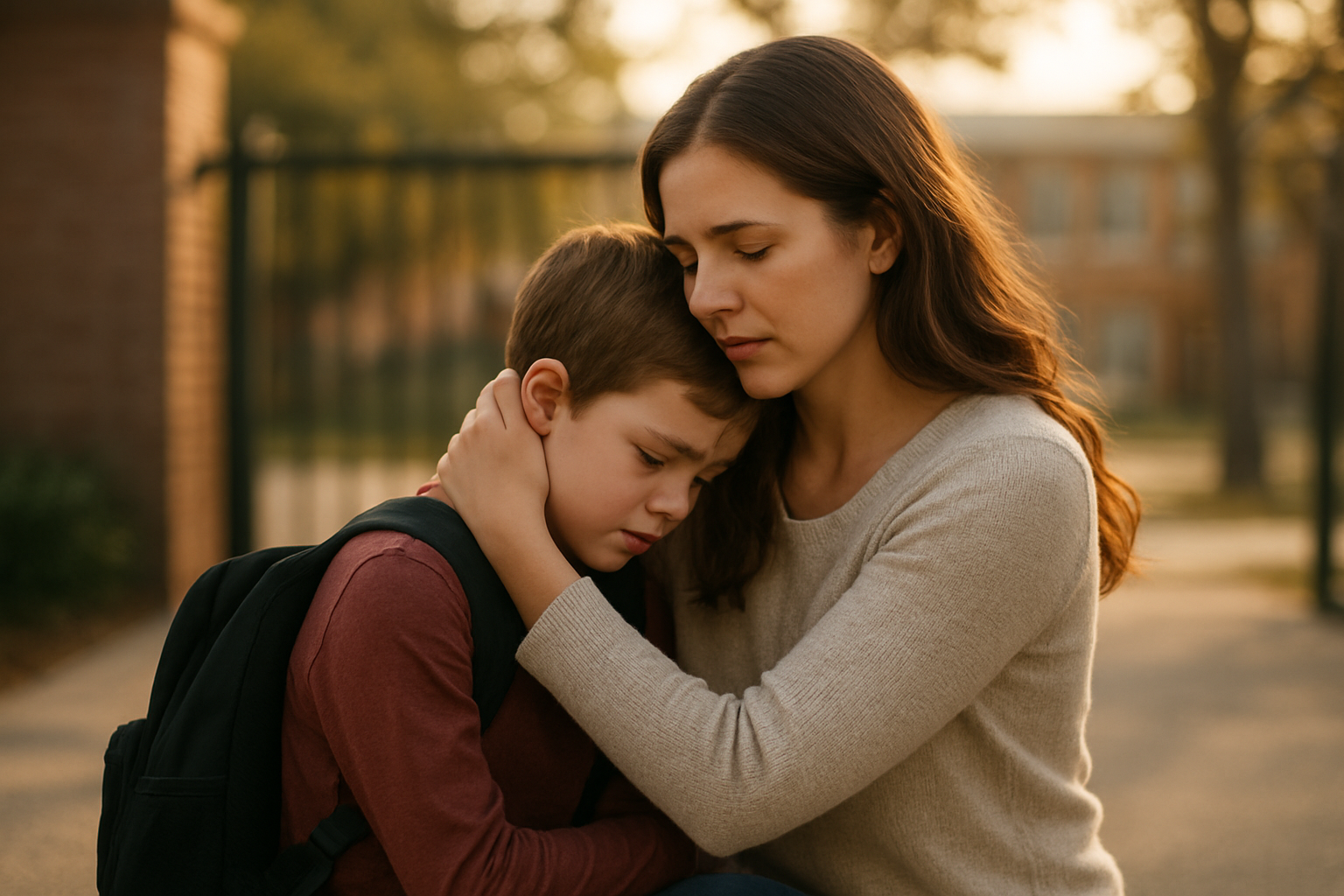
When the Hallways Break Quiet
There is a quiet way bullying begins: a small exclusion, a joke at dinner, a name dropped in passing that accumulates like salt into a wound. Over time that accumulation can snap the thin rope a child holds onto. One counselor described bullying as an epidemic — not to sensationalize, but to name a pattern of repeated harm that reshapes a young brain toward fear and shame. When a child withdraws, refuses the bus, falls asleep in study halls, or says there is nothing to tell you, do not be reassured by the polite version of events.
Some of the details people have shared are painfully specific: parents who filmed unsafe moments on campus, communities scrolling through lists of deaths that may be linked to ongoing humiliation. These are not abstractions. They are scenes that should call us to action.
The Heart of It: Bullied children live inside repeated, cumulative injury.
This matters because isolated incidents look different from ongoing humiliation — the latter erodes identity and hope.
- Notice behavioral shifts: sudden school avoidance, falling grades, changed friend groups, or emotional flatness.
Behind the Words: Jesus' warning about causing little ones to stumble (see Matthew 18:6) reads sharp in its original context: he spoke into communities where children were especially vulnerable to being led astray or harmed by those with power. His words make care for children a moral test of the community.
The Heart of It: Protecting children from harm is not optional; it is a communal duty that reflects how seriously we take the image of God in the young.
Try This: Picture the cafeteria at lunch and a new kid sitting alone. Walk over with your child and ask, “Can we sit with her?” Model that small, brave move until it becomes instinct.
There are practical steps that change trajectories. When cyberbullying appears, collect the evidence immediately: copy URLs, screenshot messages, and record times. Report to the platform and then to the school. If the school responds, press for specifics: who was notified, when, and what monitoring steps were taken. Ask for written plans and for supervision during vulnerable times like lunch and on buses.
Advocacy is persistent. A single meeting rarely solves a pattern of harm. Show up in PTA rooms, write clear emails, attend school board conversations. But anchor advocacy in truth and love rather than uncontained fury; we can be fierce and still keep charity central.
Be careful with language that inflames without helping. Deep anger is often a natural response to perceived betrayal, but ask whether the words you use clarify the next protective action or simply amplify fear. The goal is practical safeguards and restoration, not spectacle.
How to Recognize and Respond to Youth Mental Health Crises
More children enter adolescence carrying heavier burdens than previous generations. Anxiety, depression, and social cruelty often show up as physical complaints: stomachaches, headaches, insomnia. Sometimes the child who laughs most at home hides the deepest wounds. We must learn to see behind the mask.
The Heart of It: Warning signs are often behavioral, not verbal.
Most children do not announce despair; it arrives as avoidance, secrecy, sudden perfectionism, or a drop in pleasure. Track changes over time and create a simple daily check-in ritual where feelings are asked about as routinely as homework.
Behind the Words: The pastoral encouragement in 1 Peter 5:7 — “Cast all your anxiety on him, because he cares for you” — was written to a community under pressure. The exhortation is both theological and practical: trust God with burdens and receive communal care. It reminds us that faith invites us into both prayer and mutual responsibility.
The Heart of It: You and I are given ministry when a child’s soul feels fragile — faith is not passive comfort but active shelter.
Try This: If the child is awake late scrolling under a blanket, open the door and sit quietly with a small lamp between you. Ask, “Tell me one thing that felt heavy today.” Let the child set the pace and give presence before solutions.
When warning signs escalate — explicit suicidal talk, giving away prized possessions, or detailed plans — act urgently: stay with the child, remove access to means, and contact emergency services or a crisis line. Enlist trusted professionals: a counselor, a pediatrician, and a pastor who can pray and walk alongside the family.
Address the ripple of shame carefully. Shame says, “Something is wrong with you,” while empathy says, “Something happened to you.” Help the child name the experience rather than internalizing fault, and affirm that suffering can be held in God’s hands and ours.
Finally, treat the digital dimension as part of recovery. If digital cruelty is the instrument, digital boundaries are part of the remedy: limit social apps temporarily, change passwords together, and replace scrolling with family rituals — a walk, a shared meal, or a game. Those small human rhythms rebuild neural pathways of safety.
What Parents Do When Schools Seem Unresponsive
If a school tells you it "didn't know," keep asking for the paper trail. Request incident reports, a review of surveillance where available, and written plans for supervision during vulnerable times. Ask for a formal safety plan for your child that includes monitoring, counseling options, and scheduled check-ins with an assigned staff member. If reassurances are vague, respond with specific requests and deadlines.
The Heart of It: Institutional silence is not a substitute for parental action.
Schools operate by policy and record; your requests should create a documented chain of responsibility.
- Insist on written responses, timelines, and meeting notes that you keep copies of.
When community conversations drift into louder cultural controversies, keep the focus narrow: the child in front of you. Point back to observable behaviors and documented incidents rather than broad debates.
If the school remains ineffective, escalate respectfully and in order: counselor, principal, superintendent, school board. Bring evidence: screenshots, witness names, dates and times. If criminal actions are involved, involve law enforcement. If you feel isolated, enlist community support — other parents, faith leaders, and local advocacy groups who can stand with you.
There is spiritual work in this process, too: pray for wisdom and clarity, but pair prayer with paperwork. Faith and action are not opposites; they are how we steward the children entrusted to us.
And do not forget restoration. A child emerging from harm needs safety and reconnection: trusted friendships, a counselor who teaches coping skills, and activities that rebuild confidence. Invite the child into small circles where they can be known and loved without pressure to be fixed all at once.
Stand up. Speak up. Sit with your child in the tiny, steady ways that communicate: you are seen, you are believed, you are protected. Our faith calls us to bring urgency to systems and tenderness to souls. Let our voices not fall silent, and let our hands be busy with the work of care and restoration.
Key Takeaways
- Parents must actively engage and monitor their children's school experiences.
- Recognizing warning signs of bullying can save lives.
- Communication between parents and schools is crucial to ensure safety.
- Students should be empowered to stand up against bullying.
- Resources are available for families to navigate bullying effectively.
Notable Quotes
"We have to wrap our mind around."
"They say they’re good as gold. My voice is not gonna fall silent."