When a Painting Points to a Painter
Look at a painting or a house—design implies a designer. Discover how creation testifies to God, how to talk about it, and how to respond when others deny Him.
What evidence does nature give for the existence of God?
When someone says, "there is no God," it can feel like a jolt—especially if you grew up believing otherwise. We don't respond well to jolts; we either defend or dismiss. Yet the evidence the world offers is often quieter than we expect: ordered ecosystems, finely tuned constants that permit life, and the moral and aesthetic depth embedded in human beings.
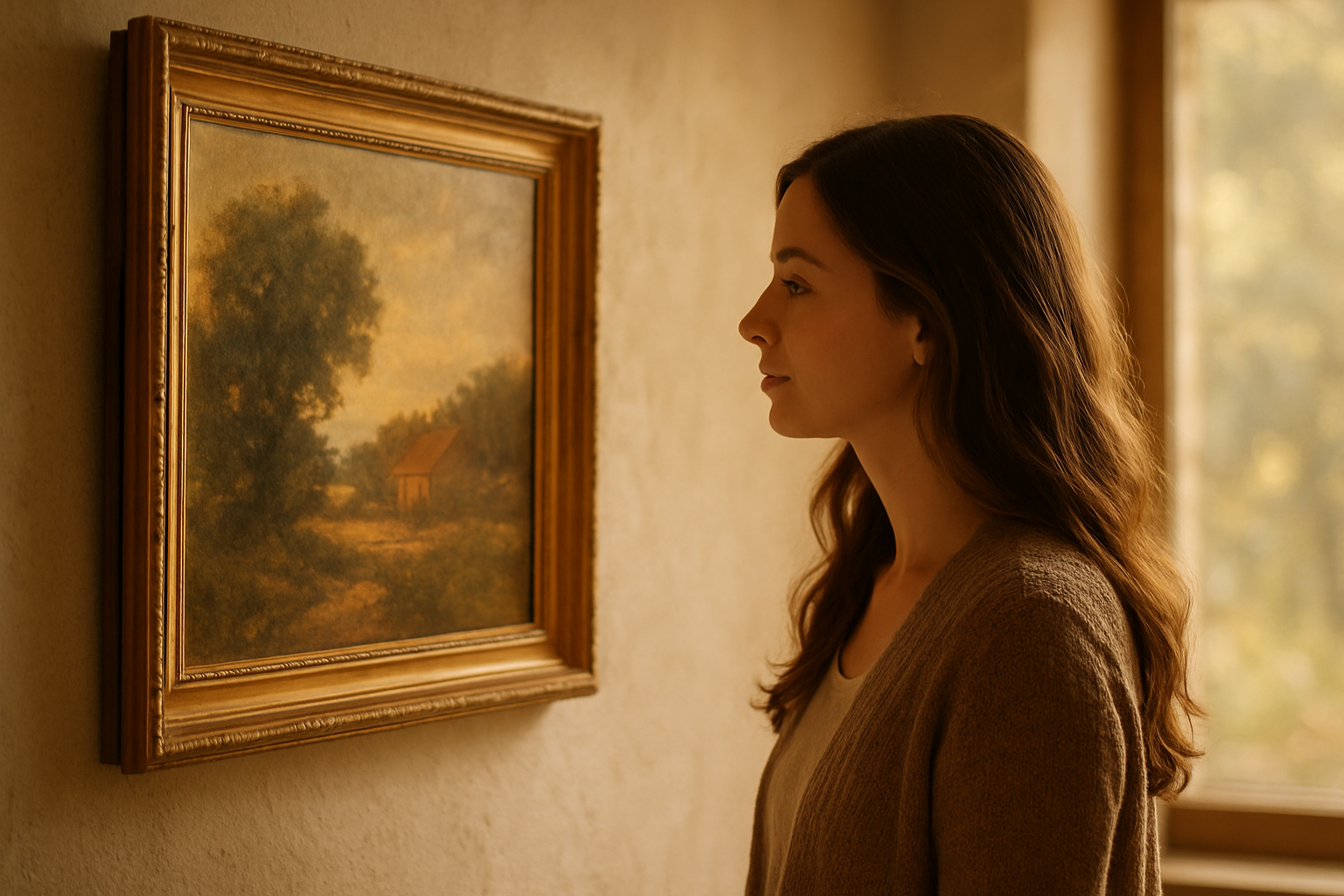
Start with a simple observation: you wouldn't look at a building and wonder whether there was a builder. You wouldn't look at a painting and question whether there was a painter. That everyday logic is not a cheap rhetorical trick; it's a principle of inference we use constantly.
The Heart of It: Design points to a Designer.
This matters because our reason operates by pattern recognition—when complexity and purpose appear together, we naturally infer an origin beyond random assembly. Treating natural order as merely accidental removes an explanatory framework that helps make sense of morality, purpose, and value.
Behind the Words: Paul wrote to people who could see order and intentionality all around them—listeners who watched ships navigate by stars, artisans shape marble, and cities arise from planning. His argument was not abstract philosophy but a call to face what was already visible in daily life.
The Heart of It: The visible world carries a testimony that makes belief reasonable, not irrational.
Try This: Stand at the edge of a coral reef, colors flashing, systems humming with life. Instead of cataloguing only species, name one way the reef behaves like a city—transport, waste removal, food supply. Let the analogy lead you to ask, "What kind of mind could arrange such interdependence?" Use that question as an opening in conversation rather than a conclusion.
"For since the creation of the world God's invisible qualities—his eternal power and divine nature—have been clearly seen, being understood from what has been made, so that people are without excuse." — Romans 1:20
Paul's point carries pastoral urgency. If the invisible is made visible in creation, then denying God becomes less a neutral absence of belief and more an active refusal to accept what is plain. That refusal can be subtle—an intellectual posture, a cultural reflex, or a protective hardness of heart. We must name it, not to condemn, but to invite people back to honest sight.
How can we point to creation as evidence without sounding arrogant?
Pointing to evidence is not the same as winning a debate. Evidence invites; it doesn't bully. When we say the world testifies to a Creator, we are offering an interpretation of what someone already sees, not demanding immediate surrender of their mind.
Begin with curiosity. Ask thoughtful questions about the things people notice: Why do planets follow precise orbits? Why does DNA carry information in a language-like code? These are not mere puzzles—they are invitations to wonder, and wonder is often the first step toward worship for many hearts.
The Heart of It: Gentle curiosity opens doors that dogma slams shut.
This matters because people are more likely to explore than to argue when they feel safe to ask. Practice asking, not asserting: "What would explain this—chance, necessity, or design?" That question opens a real conversation instead of cornering someone's beliefs.
A useful everyday metaphor: a painting in a small gallery. You don't have to be an art historian to recognize skill. You can point to brushwork, the choice of color, the silence in the background. Similarly, when you point to creation, use descriptive, invitational language—describe what amazes you, then offer the possibility of a Creator who explains it.
A frequent pastoral diagnosis is this: people 'suppress the truth.' That phrase names a common human move—to ignore inconvenient evidence because it would require change. People suppress truth for many reasons: fear, habit, reputation, or because believing requires more than intellectual assent—it requires a reorientation of life.
Behind the Words: In many ancient cities, people lived amid impressive artifacts—temples, aqueducts, sculptures. The fact that creation points to design was not obscure; it was obvious in daily life and explained in various ways.
The Heart of It: Evidence becomes transformative only when met with humility.
Try This: Picture a conversation at a café. You point to a glimmering dew on a spiderweb and say, "Look how every drop clings—what do you make of that?" Let the other person answer. Let curiosity, not triumph, guide the exchange. Small, shared moments of wonder model trust: a quiet opening that invites further questions.
"The heavens declare the glory of God; the skies proclaim the work of his hands." — Psalm 19:1
That psalm reminds us beauty itself argues—not in syllogisms but in summons. When we lead with beauty, reason often follows.
How should we respond when someone insists 'there is no God'?
Hearing the blunt claim "there is no God" can feel like a dismissal of everything you find meaningful. But the appropriate response isn't panic; it's calm, pastoral engagement rooted in shared human experience.
First, listen. Denial is often symptomatic—fear, past hurt, unanswered prayer, or honest intellectual struggle. When someone says "there is no God," they're offering a window into their life. Ask about the story behind the claim. Treat people as persons, not positions to be refuted.
The Heart of It: Truth is best encountered in relationship, not merely in argument.
This matters because conversion and conviction are processes that move through trust and credibility, not only propositions. Build bridges by acknowledging legitimate doubts, sharing honestly about faith's costs, and offering reasons alongside real compassion.
There is a texture to modern secular confidence we cannot ignore. Some equate disbelief with sophistication; others recoil because they were hurt by religious communities. Still others prefer a closed system that avoids moral accountability. Naming these helps us respond with clarity and kindness.
Return to the building-and-painting comparison. It's a simple, almost childlike piece of common sense. Use it as a doorway, not a cudgel: "When I see a well-built house, I assume a builder. When I see a portrait, I assume a painter. I see the same with life—what do you see?" That invites mutual exploration rather than a forced surrender.
Behind the Words: The charge against suppression reads less like a legal verdict and more like a pastoral diagnosis. It names a heart pattern that resists evidence because it fears what evidence would require—change, repentance, dependence.
The Heart of It: True faith includes honest seeing and honest turning.
Try This: Imagine a late-night conversation where a friend admits they used to believe but now doubt. You make coffee and listen. Then tell one true story from your life where creation and hope met—perhaps a night under stars that led to a quiet decision to forgive. The human story matters more than an argument.
Simple response steps are profound in practice: listen well, ask good questions, name the evidence you see in creation without demanding assent, and model trust in Christ with humility. Trust spreads when it is embodied, not only argued.
A closing encouragement
We don't have to answer every objection in a single conversation. We participate in a long work—God's patient drawing of hearts through beauty, reason, and relationship. When you stand before a mountain or hold a painted card, the ordinary logic still holds: complexity, purpose, and beauty suggest a mind behind them.
Keep looking. Keep asking. Keep telling honest stories about why you trust in Christ. Sometimes faith grows not by winning an argument but by watching a life that reflects the Creator's love. When that life is visible, the question "there is no God?" often becomes a doorway rather than a wall.
Key Takeaways
- Recognize the evidence of God in creation.
- Do not suppress the truth about God's existence.
- Trust in Christ as the Creator and Redeemer.
- Utilize common sense alongside biblical teaching.
- Engage with apologetics to defend one's faith.
Notable Quotes
"You wouldn't look at a building and wonder if there was a builder."
"Don't suppress the truth."