Walking on Water: Faith, Prayer, and Storms
Learn how the Jesus story of walking on water reshapes fear into faith: practical prayer rhythms, small disciplines, and how to stand in storms with courage.
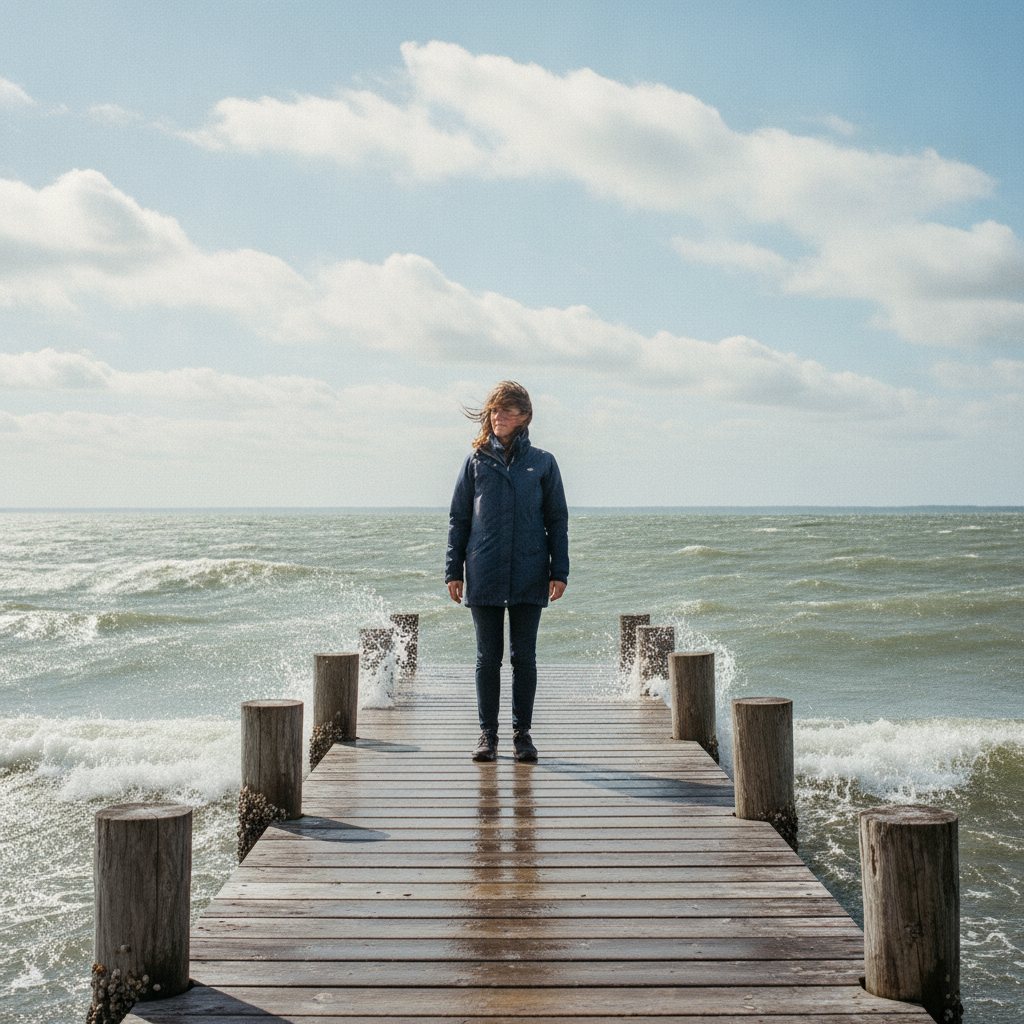
Walking Above the Ground
What if the point of the walking-on-water story is less a magic trick and more a map for a life shaped by Christ? The image returns again and again: a storm, a frightened crew, a supernatural approach, and then—calm. That sequence holds a pattern for us. The scene tells us two things at once: there is a storm, and there is a Savior who breaks the rules of the world we think we must obey.
"When evening came, his disciples went down to the lake, got into a boat and set off across the lake for Capernaum. By now it was dark, and Jesus had not yet joined them... A strong wind was blowing and the waters grew rough. When they had rowed about three or four miles, they saw Jesus approaching the boat, walking on the water." — John 6:16–19
The Heart of It: Fear is the expected human response; stepping out is the spiritual response.
Behind the Words: The disciples modeled the human default—panic—until Jesus intervened. Notice how your immediate reaction to bad news is often anxiety; practicing a different first response trains faith.
The text gives a startling, intimate image: the disciples were "instantly transported to the other side" when Jesus stepped into the boat. That sudden movement isn't incidental; it is a theological point. God’s presence repositions us—sometimes literally, more often spiritually and relationally. We are seated with Christ in the heavenly realms; what is under His feet is, by identity, under ours. This is not escapism but a claim about identity and authority.
We don't live in merely ordinary categories. That is not an invitation to avoid the world but an encouragement to a different allegiance: we belong to a Kingdom that occasionally overrides the ordinary rules. The miraculous is not meant to puff us up; it is meant to rewire what we expect from God and from ourselves.
It is practical. The same Jesus who walked on water invites us to walk above ground-level reactions. We trade predictability for the willingness to be unpredictable in faith—moving when He calls, even when the wind says stay put.
Why Walking on Water Matters for Believers
The story shows how faith and fear interact in real time. Peter’s impulsive request—"Lord, if it's you, tell me to come to you on the water"—is not embarrassment-free piety; it is raw longing and risk. He steps out and walks for a moment, then looks at the wind and begins to sink. That moment reveals the anatomy of faith: the call, the response, the distraction, and the rescue.
"He said, 'Come.' Then Peter got down out of the boat, walked on the water and came toward Jesus." — Matthew 14:29
The Heart of It: The miracle is less about physics and more about posture—trust over terror.
Behind the Words: John's Gospel was written to a community wrestling with belonging and authority in Christ. When he records Jesus walking on the water, he reminds readers that Jesus is sovereign even when human systems fail. The disciples are not examples of perfection but of the very human encounter with divine interruption.
The Heart of It: Miracles publicly confirm who God is and cultivate a private confidence to act when the world says no. This is not spectacle for its own sake; it is confirmation of identity.
Try This: Picture the last time your courage slipped. Rehearse one short, specific step you can take this week that requires trust (a phone call, a reconciliation, a spoken prayer). Take that step and ask a friend to pray by name with you beforehand.
A common misunderstanding is pursuing miracles as trophies. The aim is transformation—becoming the sort of people whose lives reflect the God who changed the rules.
The walking-on-water moment also stretches our theological imagination. John 14:12 raises the stakes:
"Very truly I tell you, whoever believes in me will do the works I have been doing, and they will do even greater things than these." — John 14:12
If Jesus intends his followers to participate in rule‑breaking acts of love and power, our faith must be both expectant and practiced. The power to step out doesn’t come from bravado but from formation. The disciples had watched Jesus feed thousands, withdraw to pray, heal, and teach—and these exposures shaped them. Likewise, our ordinary disciplines—consistent prayer, Scripture, and sacrificial service—form us into people who can keep our eyes on Jesus when the waves roar.
How Prayer Activates Miracles in Daily Life
Prayer is not a spiritual hobby. It is the medium through which we are remade to receive what God is doing. Picture groups meeting early and regularly, pressing into God until the supernatural becomes ordinary. That grassroots prayer produces reports—changed bodies, mended relationships, unexpected provision. Prayer cultivates a different nervous system for the soul.
The Heart of It: Prayer is the engine that aligns our wills with God’s and prepares us for the miraculous.
Behind the Words: The Gospels show Jesus withdrawing to pray before major moments. Prayer positioned him to operate in perfect alignment with the Father. The disciples, who sometimes mistook urgency for readiness, needed that aligning.
The Heart of It: Prayer reshapes expectation and surrender; when our inner life changes, our outer life follows.
Try This: Imagine a morning rhythm: read one short Gospel passage, pray aloud a confession and a request, then walk into your day asking for one small sign of God’s presence. Tell someone by evening what you expected and what you saw.
There is pastoral realism here: prayer is not a vending machine for desires. Prayer transforms the pray-er. Persistent smallness matters: consistency yields capacity. Regular, simple practices expand what we can carry of God’s life.
Prayer also corrects the posture of panic. Our flesh gravitates toward the loudest newsfeed; prayer re-teaches our gaze. Instead of absorbing the panic, we learn to posture toward praise and petition. We move from frantic passengers to people who, when Jesus appears, are ready to invite him into the boat.
How to Keep Faith in the Face of Storms
The hard edges of faith show up in small, daily disciplines. If we cannot exercise simple self-control—over cravings, over what distracts us—we will not be stable when testing comes. Spiritual authority grows from disciplined smallness.
The Heart of It: Spiritual authority is formed in small, consistent surrender.
Behind the Words: Jesus expected the disciples to be governed by the Spirit in small things so they could stand in storms. Choose one small habit this week—fast one meal, turn off news for a day, or confess a specific sin—and practice it with a friend.
Small habits reveal heart posture. Humility shows in being teachable and sacrificial in small things. That is the soil from which weathered faith grows.
The cinematic image of being "transported to the other side" reminds us of unexpected mercy that alters trajectory. Presence expects participation. Peter walked on the water because he responded to an invitation, not because he calculated the odds. He began to sink when his attention shifted from Jesus to the storm. Our gaze follows the loudest thing; we must train our eyes to stay fixed.
There is urgency about the politics of fear today. Instead of joining every conversation of outrage, choose to gather where prayer is happening and where people are formed. The kingdom of God is not a matter of talk but of power; we measure effectiveness by how faithfully we live and pray, not by how loudly we argue.
Imagine waking at dawn on a cold morning for twenty minutes of group prayer. You are sleepy and tempted to hit snooze. You go anyway. By the end of the month, your language toward crisis has changed: you no longer lead with panic in family conversations; you ask, "What does God want us to do here?" The habit reshapes the response.
And when you fail—when your eyes go to the wind and your courage ebbs—Jesus reaches out and takes your hand. He rebukes, rescues, and restores. That rebuke is not humiliation; it is corrective love designed to teach us to keep our gaze fixed on him.
We are invited into a life that is anything but ordinary: to walk above the ground, not for entertainment, but to be formed into people who reflect his rule. Our call is simple and demanding: cultivate prayer that reorders your heart, take small discipleship risks that build muscle, and keep your eyes on Jesus when the water rises.
Pick a place to start. Ask a friend to pray with you tomorrow morning. Fast a meal and use the hunger to pray for someone who needs provision. When fear whispers that the storm will win, say out loud, "It is I; don't be afraid," and reach for the hand of the One who walks toward us on the sea. We will not be left drifting—because what is under his feet is under ours too.
Key Takeaways
- Embrace the extraordinary in your relationship with God.
- Faith can transcend fear and panic.
- Develop a robust prayer life to experience God's power.
- Miracles are a demonstration of God's intervention in our lives.
- Our identity in Christ allows us to break free from limitations.
Notable Quotes
"We are sitting in the heavenly realms with Jesus Christ and everything is under His feet is under your feet."
"We don't live in a normal world. And why should we be normal?"
"Without faith it is impossible to please God."