Teaching Children to Pray and Hear God
Practical, pastoral steps to teach children to pray, hear God's voice, and store Scripture in their hearts—simple rituals that form lasting faith in everyday moments.
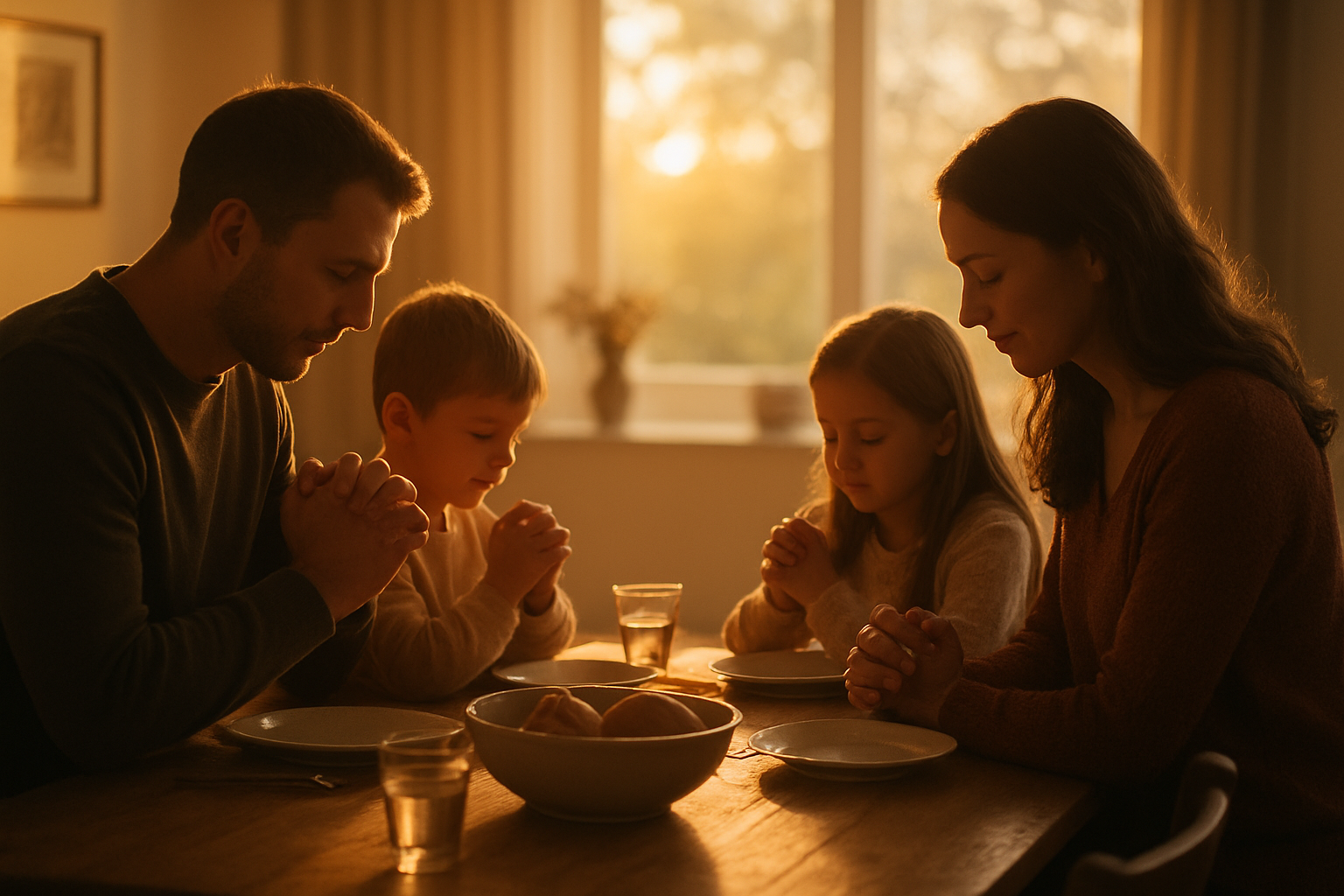
Can we teach little hearts to pray and listen?
You watch your child fold their hands, or more honestly, squiggle them together, say a line of prayer they heard, and then run off to play. You feel both relief and a tug of responsibility. How do we move from rote phrases to a living, listening relationship with God without scaring them or making prayer a performance?
We can do this. But it takes intention, repetition, and a willingness to let our own spiritual life be visible. This is not just habit-building for children; it is apprenticeship. We don't hand them a formula and walk away. We walk with them—teaching them to pray, helping them learn God's voice, and filling their imaginations with Scripture that becomes a shelter in hard moments.
What ties prayer, discernment, and Scripture together?
There is one unifying thread: formation over information. If we treat faith like a syllabus to cover, our children learn facts. If we treat faith like apprenticeship, they learn to recognize God's voice and live out a gospel-shaped heart.
When we make space for simple conversations with God, when we help kids remember a verse more than a slogan, and when we model silence after prayer, we are forming their spiritual hearing. We can't share what we don't have. So our growth matters—not as perfection but as proximity to Christ that our children can watch and imitate.
How do we teach children to pray?
Prayer for young children begins with making it ordinary and conversational. Start small. A short prayer before a meal or a one-sentence bedtime prayer is not a theological compromise; it's a foundation. Repetition creates memory; memory creates familiarity; familiarity creates trust.
The Heart of It: Prayer is a conversation, not a checklist.
Saying prayers together teaches children the rhythm of speaking and waiting—God hears the words and the silences.
- Invite a child to say one line, and then you respond with one line of thanks. Make it a duet.
Practical scenes help. Picture this: it’s a Thursday afternoon; a scraped knee and a stinging pride sit together on the couch. You get down to eye level and ask, “Who do you want to talk to about this?” The child says, “God.” You pray aloud: simple, honest, specific. Then you sit quietly for ten heartbeats. Say nothing—just hold their hand. That stillness teaches them that prayer isn’t always about filling the air; sometimes it’s about listening and feeling safe.
Behind the Words: In Deuteronomy 6, Israel was instructed to keep God's words in the center of family life—spoken at home, on the road, at bedtime and in conversation. The original setting was a community forming identity after liberation, wanting faith to be lived daily rather than only observed ritually.
The Heart of It: Faith is caught in everyday rhythms more than it is taught in one-off lectures.
Try This: After supper, start a two-minute family prayer ritual where each person names one small thing they saw God do that day. Keep it playful at first—let the youngest lead with a silly thank-you. Over time these tiny offerings become the habit of noticing God.
A tangible help is having short prayer prompts—cards on the fridge, a simple prayer song, or a phrase they can repeat when anxious. The aim is familiarity, not performance. We model what true prayer looks like—sometimes still, sometimes urgent, always honest. "We've got to really pray for them," a conviction that moved a parent to pray over their children repeatedly; let that be our posture: persistent, expectant, humble.
How can children learn to hear God’s voice?
Children learn voices by listening to them repeatedly. We learn accents, melodies, and tones by exposure. The same is true for the voice of God. Listening skills develop when Scripture is read aloud in the home, when silence is practiced after prayer, and when parents describe how God’s words shaped a decision.
The Heart of It: God's voice grows familiar through the cadence of Scripture and the witness of life.
If a child only hears adult opinion, they will mistake cultural noise for God. The antidote is consistent exposure to the Bible’s language and the lived-out example of believers.
- Read a verse aloud together, then sit silently for a few breaths to help the verse settle into the heart.
Imagine a child in the kitchen, spoon in hand, about to swallow a courageous lie to fit in. In your voice—calm, steady—you whisper a short Bible line they've memorized. They freeze. That pause is not fear; it's discernment waking up inside them. This is how the echo of Scripture and your voice can protect them in impulsive moments.
Behind the Words: Jesus’ words in John 10 describe the intimate relationship between shepherd and sheep—familiar voices, one who knows his own. In that first-century rural context, sheep literally followed the shepherd they could recognize by voice and touch.
The Heart of It: Discernment begins with recognition—if we know Jesus’ voice from Scripture and experience, we will notice when something else calls.
Try This: Teach one short verse as a “listen line” for your child—something like “Trust in the Lord” or “Be kind.” When doubt or impulse rises, coach them to whisper that line and take three calming breaths.
We must also address fear. Some parents worry that talking about spiritual battle will create terror. That’s a real risk. The hard saying from a childhood story captures how real the spiritual struggle can feel: "the enemy wanted me to open that door and die." That line is stark, but pastoral care transforms it. We teach kids the reality of evil while anchoring them in the supremacy of Jesus. We explain that God’s presence and our prayers keep us safe in ways we cannot always see.
A practical habit: after you pray for protection, praise aloud specific ways God has kept you—small, concrete stories. A child who hears testimony learns that God acts, not just that danger exists.
When the door is ajar: training hearts between fear and faith
There are moments when the spiritual life of a child feels fragile—like a slightly-open door you don’t want to slam but must guard. In those moments the power of Scripture in parenting shows up not as an abstract lesson but as a lived muscle memory.
The home is the workshop. One practical resource used by parents is a set of devotionals designed for grown-ups to read alongside daily life—52 devotionals, one for each week—so that parents grow as they guide. These small, steady inputs into a parent's own faith shape what their children inherit. We can't share what we don't have. That truth presses us to prioritize our growth as spiritual parents.
The Heart of It: Scripture is the family’s memory bank; it supplies vocabulary, promises, and discernment.
When verses are stored in children’s hearts, those verses surface in real-time and act as guides in temptation and sorrow.
- Encourage your child to memorize one short verse a month and talk about when they might use it.
Picture a seven-year-old—curious, obedient, people-pleasing—reaching for a door handle in the dim foyer. In a flash, a memory of a prayer, a mother’s voice, or a line of Scripture nudges them to stop. That domestic tableau is where spiritual formation wins or loses ground. It’s not dramatic. It’s daily.
Behind the Words: Psalm 119 celebrates treasuring God’s word in the heart. Originally this psalm was a devotion celebrating how God’s law guides life in exile and return; literacy of scripture was crucial for identity and hope.
The Heart of It: Memorized Scripture is more than facts; it becomes an internal counselor in moments of decision.
Try This: Create a small ritual—before leaving the house, the family shares a two-line verse and prays a short protective blessing. Soon the child will carry that blessing like a talisman, not magical, but a reminder that they are held.
We also model how to receive conviction without shame. Some children are sensitive and may carry guilt long after forgiveness is given. One pastoral approach is to celebrate the truth of forgiveness aloud—remind them of the specific words you prayed with them and the promise of grace. Don’t rehearse the sin; rehearse the pardon. And keep praying. We become prayer warriors for our children not by scaring them but by interceding with confidence.
Finally, remember a simple catchphrase from family resources that resonates: "fix your eyes on Jesus." It’s a verb children can practice. Fix—not glance. Fix. When we instruct them to fix their eyes on Jesus, we’re teaching attention and orientation—where to rest when storms rise.
Weaving it together: what do we do tomorrow?
Teach them to pray by making it ordinary and honest. Let them speak the words they have; then sit in silence with them. Guide them to hear God by saturating home life with Scripture and testimony. Hold the tension between warning about real spiritual danger and offering an unshakeable picture of God’s protection.
Start with small, repeatable practices: a two-minute after-dinner prayer, a one-line listen-verse for sticky moments, and a weekly family memory verse. Model the habits you want to pass on—because your children will inherit not only your words but your spiritual rhythms. We've got to really pray for them; persistent prayer is the backbone of formation.
Let one final pastoral encouragement settle in: your parenting will not be perfect, but it can be faithful. The enemy is real, and so is the Shepherd who calls his sheep by name. Keep reading Scripture aloud. Keep praying without pretense. Keep telling the story of how God has kept you. Over time, your child will learn to stop at the ajar door and listen.
Key Takeaways
- Be intentional about teaching children scripture and prayer.
- Engage children in discussions about faith and spiritual life.
- Model spiritual maturity and discernment as parents.
- Encourage open conversations about challenges children face.
- Pray consistently for guidance and protection for the next generation.
Notable Quotes
"We can't share what we don't have."
"We've got to really pray for them."
"We're in a situation when we have children, we just have to lead by example."
Related Articles
- Raising Prayerful Kids: Childlike Faith & the Spirit
Teach children a daily prayer habit, cultivate childlike faith, and invite the Holy Spirit to empower young prayers—practical, pastoral steps for families and churches.