Surrender, Community, and the Way Out of Addiction
Surrendering control and leaning into community are often the hinge for lasting recovery. Discover how faith, practical steps, and church care make freedom possible.
Why Surrendering Often Precedes Lasting Recovery
Surrender is not resignation. It's an act of trust that says, "I cannot do this alone, and I will stop pretending I can." When we talk about surrender in Christian terms, we mean a full relinquishing of control—our plans, our shame, our attempts to fix ourselves—into the hands of One who knows us and loves us.
"The LORD is my shepherd; I shall not want." — Psalm 23:1
Behind the Words: Psalm 23 was written by David when he was acutely aware of danger—surrounded by enemies, fleeing for his life, sometimes wandering alone. Calling God “shepherd” reminded his listeners that God leads, provides, and protects even when circumstances scream otherwise.
The Heart of It: Surrender is the admission that God’s guidance is better than our improvisation.
Try This: Picture a late-night argument that keeps replaying in your head—the words you wish you could take back. Now imagine handing the replay to God like an old cassette tape; you stop rewinding it, and you ask Him, "Re-write me through Your strength." You do not erase the memory. You change the posture toward it.
There is a spiritual discipline beneath surrender: naming the truth about our limits and offering our unmet needs to God. This is not passive. Surrender makes room for God’s active work to begin.
Principle: Surrender unlocks God-sized solutions. Context explaining why this matters. Surrender opens the door for transformation that our own strategies can’t manufacture.
- Begin by saying, aloud or in prayer, "I can't do this alone," and then invite God to take the next step with you.
In the Scripture and in real lives, surrender is often the hinge of change. The woman in Luke who had been bent over for years did not change because she tried harder; she encountered Jesus in the place she already attended. The encounter required a posture of release—being willing to be helped. That posture matters today.
How Community Helps People Leave Addiction Behind
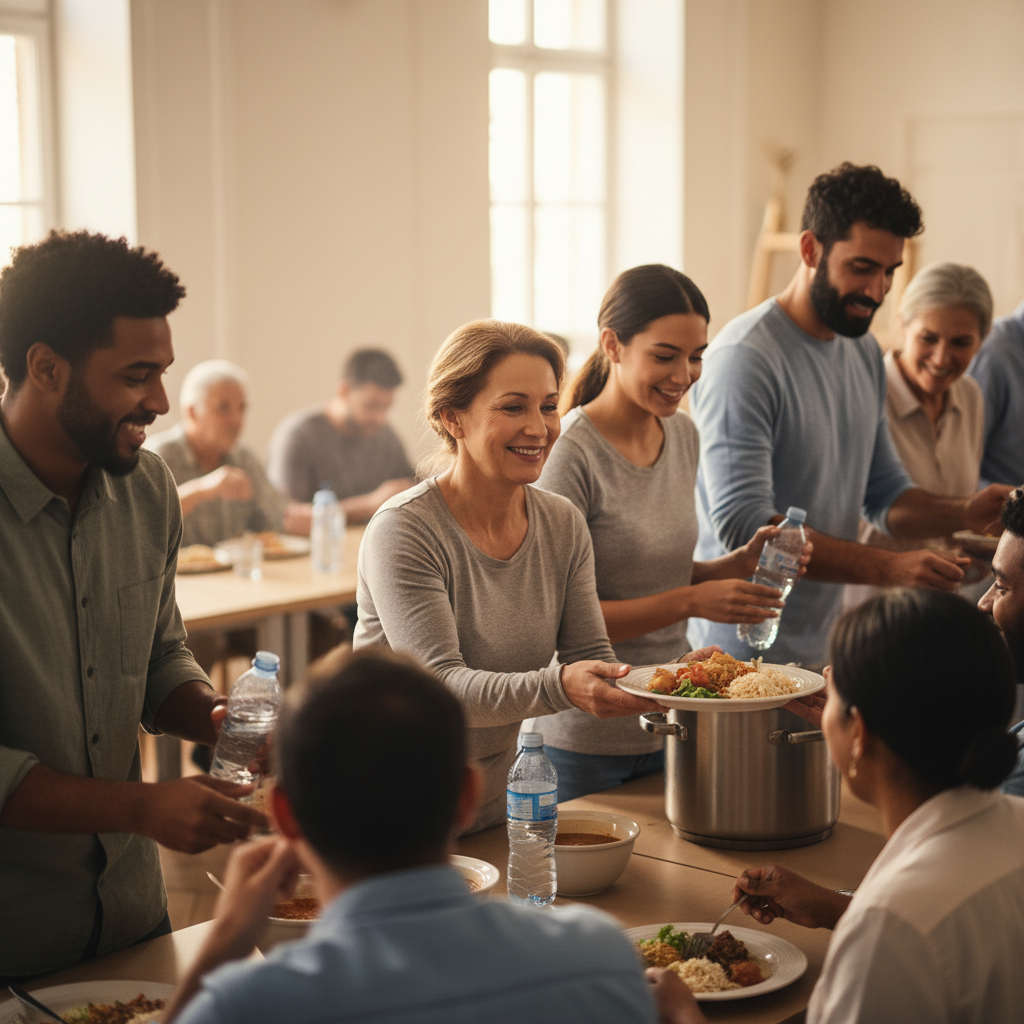
Addiction is not purely individual. It roots itself in isolation, secrecy, and shame. Community does the opposite: it sees us, speaks truth in love, and gives practical scaffolding for change. When someone surrenders but then returns to a life of isolation, relapse is likelier. But when surrender is paired with a local, compassionate tribe—the kind that prays, confronts gently, and keeps showing up—freedom becomes visible.
Consider a story of a mother trapped by meth, living homeless at times, who confessed that the only time she spoke to God was to beg, "please kill me today and get me out of my misery." That is a hard saying—but it points to the depth of despair addiction creates.
When she was arrested and faced the bare night of a cell, something changed: the fear of God, the flash of her children's faces, and a complete surrender. Because she had family and a pathway to rehab ordered by the court, she went home to her mother, was reconciled with her children, began attending church, and—over time—found recovery. That path shows how systems and people can scaffold surrender into sustained change.
The Heart of It: Recovery is a communal work—God heals but often uses people to hold the healing in place.
Try This: Picture a living room where meals are prepared for someone coming out of rehab; imagine the phone tree that checks in three times a day; imagine the same faces week after week who refuse to treat the person as their old label. Community looks ordinary until you need it.
Principle: Community multiplies accountability and grace. Context explaining why this matters. The journey away from addiction is logistical, emotional, and spiritual—no single kind of help suffices.
- Invite one trusted person to call you each morning for 21 days. Ask them to pray with you and ask about one small, concrete step you will take that day.
Community also confronts unhealthy pride. Some of us say, "I don't need others," when what we need most is a humble neighbor to steady our hands. Churches and recovery groups are not merely social networks; they are laboratories of grace where repentance, forgiveness, and practical help meet.
There is another specific detail worth noting: when historic church buildings are stewarded by new hands—when an abandoned sanctuary becomes a place of worship, art, and outreach—it models what recovery looks like. A building vacant for nearly 20 years can be a metaphor for a life left to decay. When a congregation steps in to reimagine that space, it declares: we will invest in resurrection, not demolition. That is the work of community.
When God Meets Desperation: Stories of Radical Change
Some conversions and healings look dramatic, immediate, and almost cinematic. Other recoveries are slow, stubborn, and full of relapse and return. Both are real. What unites them is a moment—a hinge—where a person stops relying on themselves and turns to God.
One image from scripture and story is unforgettable: "one moment with Jesus changes everything." That phrase captures the suddenness of divine interruption—how a single encounter can reorder a life. For one woman in the Gospels, being bound for 18 years ended in an instant; she was "immediately delivered" when Jesus saw her. That miraculous immediacy did not negate the reality of long pain. It honored it—and healed it.
"And a woman was there who had been disabled by a spirit for eighteen years; she was bent over and could not straighten up at all." — Luke 13:11
Behind the Words: Luke 13 tells of a woman who had come to the synagogue frequently and suffered for nearly two decades. Her condition was both physical and spiritual in the worldview of the time—her ailment carried public shame and private loneliness.
The Heart of It: Even long seasons of suffering can be interrupted in one gracious act of Jesus.
Try This: Imagine a Sunday where you sit in a familiar seat, carrying an old hurt. Instead of rushing past it, silently lay that hurt at Jesus' feet during the worship song. Stay a moment longer than usual. Listen—He may meet you there.
There is also the story of a cancer survivor whose doctors gave little hope—triple-negative breast cancer, brain metastases, a prognosis measured in months. She and her family pressed into prayer, leaned on a wider church network, and kept fighting. Scans later showed no active disease. "I'm trying to learn that it's okay to be the miracle," she said, wrestling with survivor's guilt while also celebrating God’s mercy. These stories remind us that the miraculous can and does break into ordinary calendar pages.
Principle: God specializes in redeeming what seems irredeemable. Context explaining why this matters. When the medical odds look bleak or the past feels permanent, God can reroute history through a single act of mercy.
- When you face an immovable diagnosis or addiction that feels undefeatable, gather your circle of prayer, be honest with your medical team, and keep your hands open to how God chooses to act—through medicine, prayer, or both.
And remember the haunting, convicting line earlier—"please kill me today and get me out of my misery." Pastoral unpacking is needed here: that plea reveals two things simultaneously—how deep the spiritual warfare and shame can be, and how urgent the need for compassionate intervention. We cannot sentimentalize such words. We must act.
If you hear that cry inside yourself or from someone you love, respond with immediate compassion, pastoral care, and practical safety measures. Surrender and community are not abstract answers in the face of suicidal ideation; they are lifelines. Faith communities must be ready to do what they do best—show up, call crisis lines when necessary, and refuse to leave people alone in the dark.
Practical Next Steps: How Your Church or Group Can Hold People in Recovery
Surrender and community are theological truths—but they also require practical choices. Churches and small groups can build simple, sustainable structures that help people leave addiction behind and stay free.
- Create consistent, low-barrier recovery groups that meet weekly.
- Train a network of prayer partners who can check in daily by text or phone.
- Partner with local ministries and rehab centers so there is a real pathway from arrest or crisis to long-term care.
Principle: Structured compassion saves lives. Context explaining why this matters. Love without structure can be erratic; structure without love is hollow. The two together create safety and hope.
- Start with one pilot: recruit five volunteers to form a 24/7 call rotation for immediate needs, and review it quarterly.
Specific details from community renewal projects offer a metaphor here. When a historic church building—built by a congregation decades ago, even one founded by a formerly enslaved leader who walked to Washington DC in 1863—was left empty for nearly 20 years, a new vision reclaimed it as a place for art, worship, and outreach. That reclamation was not a solo project; it required stewardship, vision, and people willing to invest. Recovery works the same way. The baton is passed; the next generation receives both the scars and the inheritance.
Surrender, then, is public, not private. It happens under the roof of community. It is baptized in concrete actions: meals, rides to meetings, help with resumes, and relentless prayer. We are not merely spectators of miracles; we are hands and feet of them.
Closing
If you are reading this and something inside you recognizes the pattern—control, secret-keeping, relapse—hear this pastoral word: God is nearer than you think, and people are closer than you fear. The first step is simple and honest: admit you cannot do it alone, and ask for help. Say aloud, "I need you, Lord," and then reach for another human hand.
We believe in small, practical steps that meet spiritual realities. Surrender softens the will; community steadies the journey. When those two meet, lives get rewritten. Join a recovery group, call a trusted pastor, or ask one person to walk with you for the next month. Let us carry one another into the freedom Christ promises.
If you are in immediate danger or thinking of harming yourself, please contact local emergency services now. And if you want someone to pray with you, reach out to a trusted leader in your church. You are not alone—He is waiting with open arms.
Key Takeaways
- Transformation is possible through faith.
- Community plays a crucial role in recovery.
- Surrendering control to God can lead to miracles.
- There is hope and healing available for those in dire situations.
- Miracles happen, and we should celebrate them.
Notable Quotes
"If you will draw near to God, I promise you with everything in me, He will draw near to you."
"I'm trying to learn that it's okay to be the miracle."
"He is waiting with open arms."
Related Articles
- Finding Freedom in Your True Identity
We carry plates, memories, and old voices that tell us we don’t belong. Discover how Scripture, honest self-talk, and community reclaim identity, forgiveness, and recovery.
- When a Town Decides to Fight Addiction
How does a town turn despair into recovery? Practical stories from faith-driven community action show that changing surroundings, offering presence, and unity save lives.
- Letting Go: From Self-Will to Lasting Recovery
Do you feel pulled between your desires and a deeper call? Learn how surrendering self-will to Jesus, faith-filled recovery, and community support form a three-fold path to lasting freedom.
- Rooted Recovery: Faith, Friends & Boundaries
Recovery grows where faith, steady community, and healthy boundaries meet. Discover concrete, gospel-shaped steps to rebuild life from addiction.
- Hope, Recovery, and the Promise of Reunion
Hold onto the hope that reshapes grief and recovery: Jesus brings freedom, restoration is possible, and Christ’s return gives our choices eternal weight.
- Rise, Shine, and Recover: Faith That Restores
When addiction has shaped your story, purpose can feel distant. Discover how faith and community turn brokenness into testimony and practical next steps for recovery.