Spiritual Care in War: Chaplains, Churches, Hope
How do chaplains and local churches bring spiritual care amid war? Explore practical ways believers meet desperate needs with mercy, courage, and gospel hope.
Why chaplains matter on the front lines
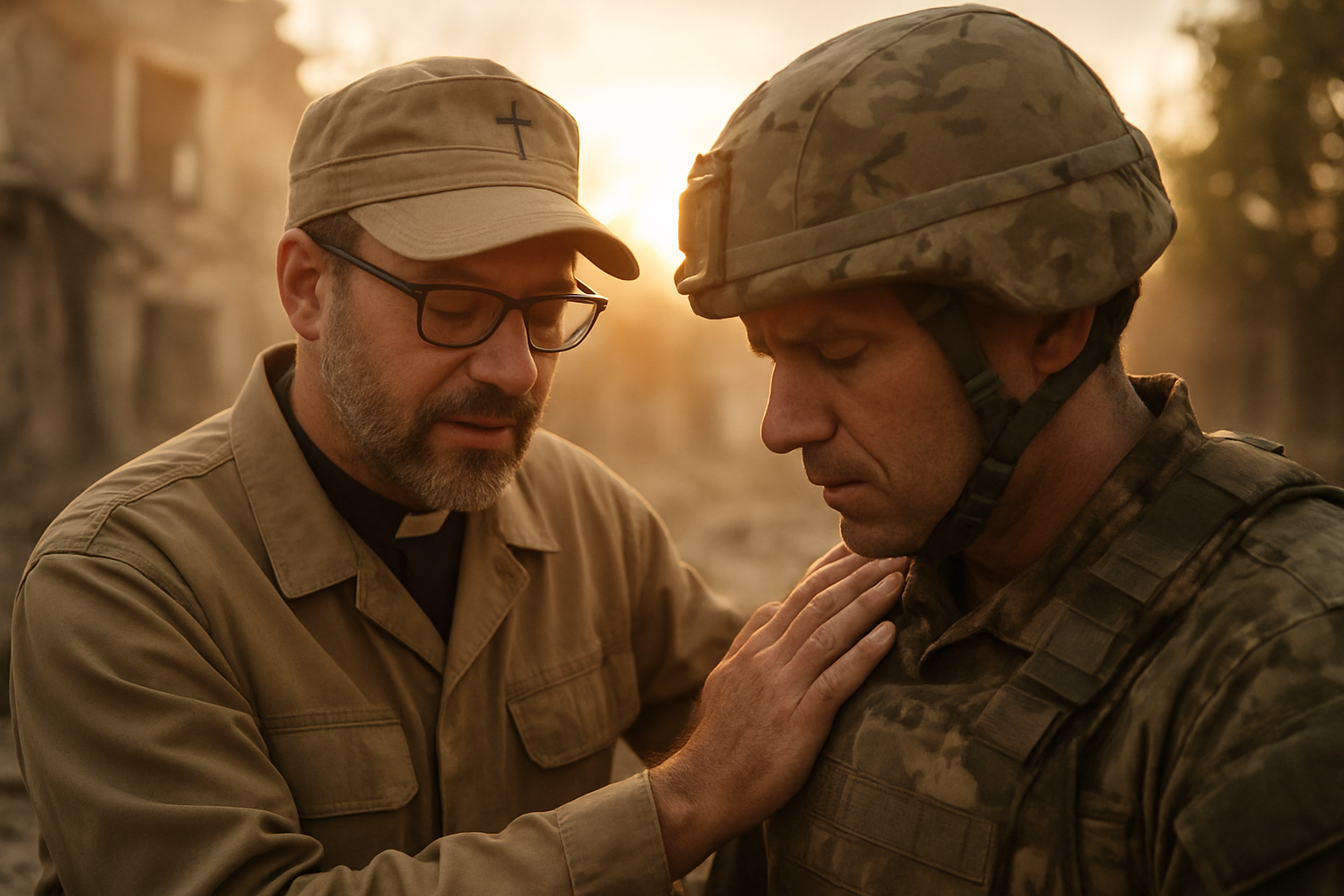
Chaplains go where others hesitate. They enter shelters and field hospitals with practical training and the willingness to speak of Jesus; they also carry the steadiness of presence. This is not abstract ministry. On the ground, chaplains walk through air-raid alarms and teach people how to put on protective gear, then sit in dim light and pray with someone who watched a loved one die.
The Heart of It: Chaplains bring both presence and proclamation. Trauma creates questions that practical aid alone cannot answer; the chaplain's role is to name suffering and point people to the One who walks with us in the valley.
- Offer a quick prayer and a listening ear before any theological conversation.
Behind the Words: Psalm 23:4 — "Even though I walk through the valley of the shadow of death, I will fear no evil; for you are with me; your rod and your staff, they comfort me." David wrote these words from the tension of shepherding and warfare. He knew fear and also God's steadying hand.
The Heart of It: Even in the darkest valley, God walks with us and offers comfort our eyes cannot manufacture.
Try This: Picture the coach of a makeshift shelter calling a frightened mother to the side. He kneels, places a hand on her shoulder, and speaks Psalm 23:4, then quietly asks, "Who do you want me to pray for right now?" This small scene changes the shape of a long night.
Chaplains are crisis-trained caregivers. They learn to triage emotional shock and spot when someone needs long-term counseling. They coordinate with medical teams and local pastors so spiritual care is not a bandage but part of sustained recovery. In many places, the chaplaincy model has multiplied local leaders—raising up local chaplains to continue ministry long after the first responders leave.
Practically, chaplains know how to work with scarce resources and strict security briefings. They walk through ruined hospitals, enter liberated towns where mines still lie hidden, and offer hope—and practical comfort—by saying, "We have God's hope." That phrase is not sentimental; it is the hinge that turns compassion into gospel witness.
When every day brings a brush with mortality
Fear sharpens theology. When explosions puncture a morning and tanks roll down a road, faith either becomes a scoreboard or a shelter. Questions about eternity stop being abstract; they become urgent. People ask: "What now? Who holds us when there is no guarantee of tomorrow?"
The Heart of It: Hard seasons clarify what we truly worship. Danger strips away distractions and reveals the alignment of our hearts—ministry must meet people where those hearts are.
- Start with presence; lead into the gospel gently and clearly.
There is a hard pastoral truth: spiritually, crisis often creates openness to the gospel. That truth should cut through complacency, not glorify suffering. When the normal scaffolding of life is shaken, people may ask about Jesus, attend services, or seek baptism.
Behind the Words: John 4:10 records Jesus offering living water to a Samaritan woman at a well—an encounter across cultural walls that exposes spiritual thirst beneath physical thirst.
"If you knew the gift of God and who it is that asks you for a drink, you would have asked him, and he would have given you living water." — John 4:10
Jesus spoke into daily life and revealed deeper needs.
The Heart of It: Spiritual thirst often looks like fear, loneliness, or confusion during crisis; Jesus meets that thirst with life that does not run dry.
Try This: Imagine a food-distribution line. Instead of only handing out supplies, a trained volunteer pauses, offers a bottle of water, and asks, "Can I pray with you for strength today?" The conversation that follows can bridge to deeper questions about hope.
That bridge is why chaplains and responders emphasize both emotional and spiritual care. In towns cut off for months, people who had been silently wrestling with despair began attending services again after receiving food and an invitation into community. Sometimes this led quickly to baptisms in rivers and small gatherings where people declared a fresh trust in Christ.
We must guard, pastorally, against treating suffering as merely an opportunity. That makes us opportunists, not servants. Instead, we enter grief humbly, offer compassion, and testify to God's love because it has been shown to us.
How local churches sustain communities under siege
Local churches are the scaffolding that remains when institutions fail. When water pipelines are cut and people form lines to collect water from drainage pipes and buckets, churches organize distribution, drill wells, and coordinate volunteers. They are already present—trusted neighbors in a crisis—and that presence multiplies daily.
The Heart of It: The church is where gospel witness and mercy meet in a single heartbeat. Because congregations live among those they serve, their acts of compassion are both credible and irreplaceable.
- Support local leadership so aid is culturally wise and sustainable.
On the ground, churches coordinated well drilling, staffed field hospitals with volunteers, hosted displaced families in church halls, and trained local chaplains to continue pastoral care after external teams left. Tragic, vivid details—like a man stepping on a mine while harvesting mushrooms or another reaching for a booby-trapped gas can—demand both medical response and soul-care.
Churches also channel long-term recovery. Large logistical efforts often flow through church networks. Buildings that once held Sunday worship became distribution centers, counseling hubs, and places where people heard about Jesus in concrete ways.
Local leaders know their neighborhoods deeply: which families are most vulnerable, which roads are passable, and which people will come if someone knocks. That knowledge makes interventions effective and sustained. Investing in churches is investing in community resilience.
This is not to romanticize congregational life. Months of conflict can harden hearts. Markets close, supply chains halt, and trauma accumulates. Yet churches that stay—feeding the hungry, caring for the wounded, offering prayer—become the reason some families survive emotionally and spiritually.
A practical picture: a small church basement turned clinic. A volunteer sits with a man who cannot sleep after nights of shelling. They talk; the volunteer brings a Bible verse, prays, and later connects him with trauma counseling. Over months, that man returns, helps at the clinic, and tells others how he found steadiness in faith.
That endurance—churches that plan to be there for the long haul, partnering with ministries to meet physical and spiritual needs—is what we must support.
We cannot pretend to remove every danger or fix every broken pipe. But we can choose to stand where people are scared, offer comfort and steady witness, and invest in the local bodies of Christ who will shepherd these communities for years. You may not be able to go, but you can learn the posture of those who do: they show up, listen first, and speak hope second.
A simple first step: pray with intention for places where fear presses in. Then ask, "Who in my local church can be trained to offer emotional and spiritual care?" Train, equip, and sustain. When chaplains and local churches work together, they form a lattice of care—meeting needs with food and water, with first aid and counseling, and with the gospel.
Remember images from the field: people lining up for buckets, a booby-trapped gas can, the steady movement of supplies, voices saying, "This is where I want you at this particular time." Those scenes are raw and they are invitations. We are called to bring presence, mercy, and the living hope of Christ into them.
Stand with the church. Care for the neighbor. Keep speaking the name of Jesus in word and deed. We will not erase every scar, but we can be the hands that bind them and the mouths that proclaim that God has not abandoned his people.
Key Takeaways
- The importance of providing spiritual and emotional care during crises.
- Faith can lead individuals to find hope amidst despair.
- Community efforts and local church support are vital in times of disaster.
- Every act of compassion counts in the face of overwhelming need.
Notable Quotes
"We want the world to know that God loves them and cares for them."
"The war is the worst time for people, but spiritually speaking, the war is probably the best time to preach the gospel."
"It's a great joy that I came to Jesus."
Related Articles
- Chaplains, Testimony, and Winning the Battle Within
A chaplain’s quiet presence, honest testimonies, and Scripture spoken aloud form a pastoral strategy for overcoming temptation and standing firm in faith.