Seeing Through the Smoke: Faith, Media, Israel
How do Christians hold sorrow, truth, and witness in the Israel–Hamas crisis? Learn a faith-filled approach to media, anti‑Semitism, and faithful action.
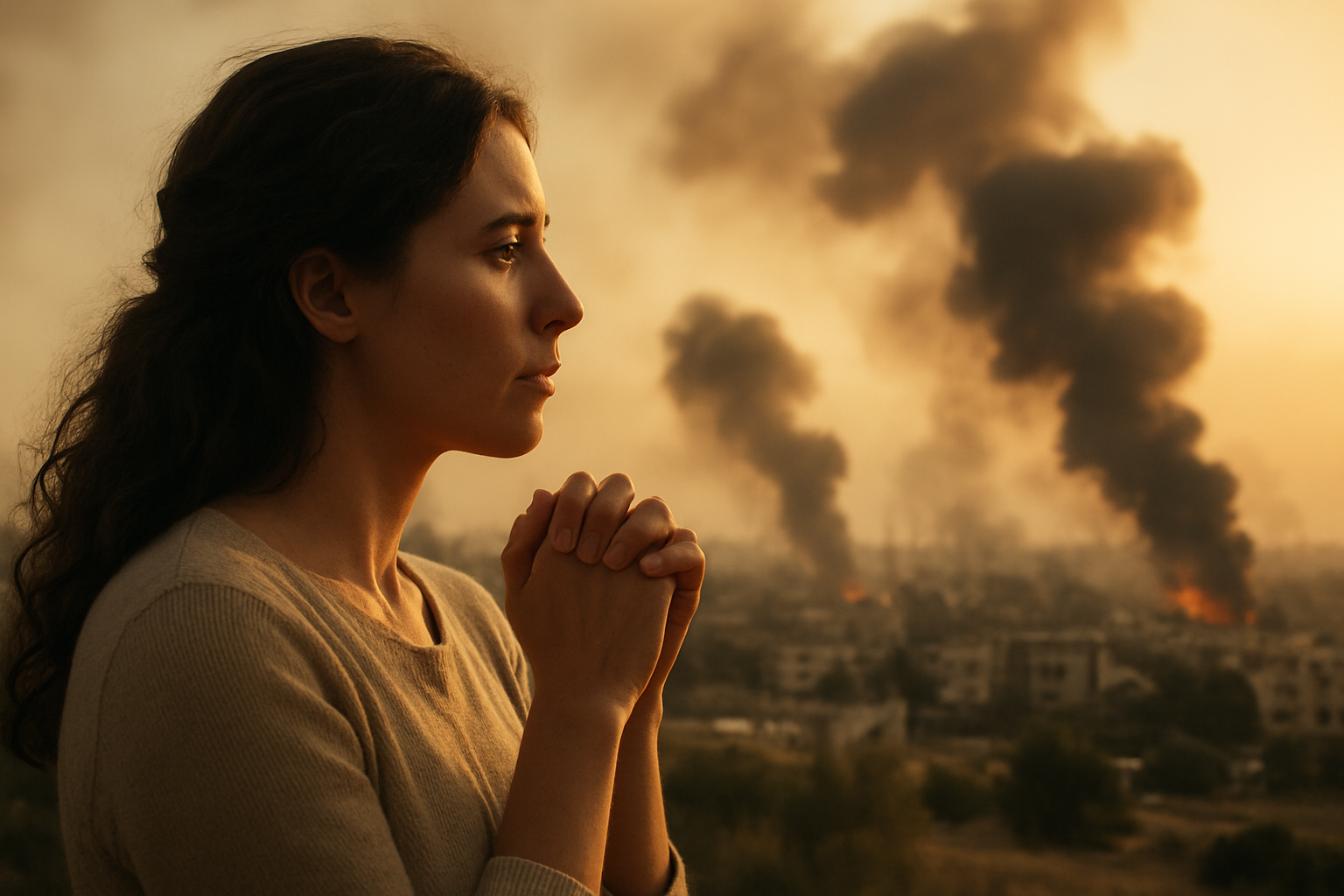
How should Christians understand the Israel vs. Hamas conflict?
Many want a short answer: elect the right leaders, negotiate a two-state solution, or pray harder. But this conflict is layered—historical, political, and spiritual—and it touches real bodies and real families in violent ways.
One specific detail that matters for how we speak is the human reality on the ground: some people were kidnapped from a music festival and from their homes on kibbutzim. That specificity refuses abstraction. When we say the word hostage, we are not speaking of a legal category or a diplomatic talking point; we are talking about people taken from a night of music, from a kitchen table, from a bedroom where a child once slept.
Listen to this hard line and let it settle in: these are not prisoners of war. That phrase cuts through euphemism and calls us to moral clarity. When language is honest, our prayers and our policies become more honest too.
The Heart of It: What we name shapes what we protect.
- If we refuse euphemisms, we begin to defend the vulnerable instead of defending political options.
"He moved from there and dug another well; and they did not quarrel over it. He called its name Rehoboth, saying, 'For now the LORD has made room for us, and we shall be fruitful in the land.'" — Genesis 26:22
Behind the Words: Genesis 26 records Isaac digging wells, facing hostility, and finally naming a place Rehoboth—"room enough"—after conflict and contention. In its original setting, this chapter shows a shepherd negotiating life in a contested landscape and receiving a sign from God that space for life and blessing has been provided.
The Heart of It: God creates room for flourishing even after repeated conflict. The promise of space—Rehoboth—is a tangible sign that God’s blessing can follow hard seasons.
Try This: Picture the kibbutz at dusk after a long harvest. Imagine a neighbor coming with a shovel, helping refill a well, and naming the place "room enough." What would it take for you to be that neighbor—digging, listening, refusing to claim the ground for retaliation?
A common misunderstanding treats Rehoboth as a quick political program: "we'll just redraw lines and call it peace." The deeper pastoral truth is that God’s provision of space requires trust, covenant, and a settled humility that rejects cycles of retaliation.
When Christians talk about a political solution, begin with the people whose bodies and dignity are at stake. Advocate for wise policy while refusing to reduce victims to bargaining chips. Let our prayers, advocacy, and charity follow that posture: human first, political second.
How does media shape what we believe about war and peace?
Media does not merely report reality; it frames it. That framing shapes what millions accept as true, and it shapes how Christians respond. In the middle of a complex war, the noise around the subject can drown out witness. The call to "wake up" is not an invitation to panic; it is an invitation to discernment.
Picture a tense scene: a family sits around a tablet watching a thirty-second clip that goes viral—no context, only emotion. Within hours, tens of thousands form opinions from that clip alone. The result is a cascade of half-truths that fuel fear, anger, and misplaced compassion.
The Heart of It: Discernment is the Christian antidote to viral deception.
- If we train ourselves to ask: Who benefits from this story? What context is missing?—we curb the spread of harm.
"And might reconcile us both to God in one body through the cross, thereby killing the hostility." — Ephesians 2:16
Behind the Words: Paul wrote to a divided early church where Jewish and Gentile believers were at odds. His words addressed a real rift—cultural, religious, and social separation that threatened the unity Jesus intended.
The Heart of It: The cross is not merely personal forgiveness; it is a public reconciling justice that tears down walls of hostility.
Try This: Next time a charged post arrives in your feed, pause. Read beyond the headline. Ask one person who knows the region for perspective. Imagine someone whose family was in the story—what would they want you to understand before you shared it?
Remember the blunt charge: "don't just believe anything." That isn’t cynicism—it's a spiritual discipline. The early church taught believers how to test teachers and prophets. We must train ourselves now to test headlines.
Try This: Slow the share. Read two reputable reports. Name victims by their humanity. Refuse to allow outrage to outpace truth. When we do that, our online witness becomes a ministry of peace rather than a megaphone for division.
When headlines become battlefields
How often have we watched the news and felt our spirits grow hard? The public rise of anti‑Semitism in the wake of the conflict is not an abstract trend; it is an angry current that touches synagogues, campuses, and neighborhoods.
One specific request has been for religious leaders to teach the Jewish holidays and the Jewish roots of our faith—to encourage pastors to explain why Israel matters biblically and historically. That request isn’t about politics alone; it’s about correcting a theological error that quietly erases God’s covenant promises. Our Scripture roots give context to how Christians should stand in solidarity and humility.
A hard saying from the public conversation merits careful pastoral unpacking: "How can peace be attained when people are saying death to Jews, death to America, death to Christians?" Those words are jarring. They confront us with an ethical boundary: you cannot build peace on platforms that openly call for annihilation.
The Heart of It: Rhetoric shapes reality; words that call for death must be confronted with truth and love.
- Speaking truth to hate protects the vulnerable and preserves the space needed for genuine reconciliation.
"As regards the gospel, they are enemies for your sake; but as regards election, they are beloved for the sake of the fathers. For the gifts and the calling of God are irrevocable." — Romans 11:28–29
Behind the Words: Paul wrestled with Israel’s place after the coming of Christ. In context, he speaks to Gentile believers tempted to boast and to minimize God’s ongoing covenantal promises to Israel.
The Heart of It: God’s relationship to Israel is not revoked by human failure. Our calling is to receive mercy and extend mercy—without erasing history or excuse.
Try This: Picture a pastor in your city who, this Sunday, teaches a careful sermon: she explains a Jewish festival, reads Isaiah about light rising upon Israel, and offers time for confession and prayer. Imagine the congregation listening, learning, and then writing letters of care to a local Jewish community center. What if teaching like that became ordinary again?
A common misunderstanding is that supporting Israel politically equals worshipping the state. It does not. Biblical teaching about God’s covenantal faithfulness invites us to love the Jewish people and to stand against anti‑Semitism—even while we critique specific policies.
We must also guard against weaponizing immigration conversations into cultural paranoia. Some public figures raise alarms about demographic change in ways that feed fear rather than invite careful civic engagement. As Christians, we hold two responsibilities at once: to protect our liberties and to love the stranger. Both duties require wisdom, not slogans.
Unity within the body of Christ matters. Division weakens our witness precisely when the world needs light. The call is not to political uniformity but to theological and moral solidarity rooted in Scripture, repentance, and honest compassion.
We live between headlines and hope. The work before us is practical and spiritual: name victims honestly, practice media discernment, and oppose anti‑Semitism wherever it appears. Teach our people the Bible’s story, including the Jewish roots of the faith, so convictions are shaped by Scripture and mercy rather than loud voices.
Pause before you share. Ask questions before you decide. Teach the next generation the history and the heart of God’s promises. On the other side of fear is a faithful witness—a church that refuses to trade truth for convenience and compassion.
May we be people who dig wells of Rehoboth—making room for life, protecting the vulnerable, and pointing always to the God who keeps his promises.
Key Takeaways
- Understanding the importance of media literacy.
- The need for Christians to embrace a unified front in the face of conflict.
- Acknowledgment of the historical context around the Israeli-Palestinian conflict.
- Importance of personal and communal forgiveness.
- Call for deeper biblical education among church leaders.
Notable Quotes
"Where is a leader of the Palestinians like that?"
"We need to wake up in this country."
"Please, it's very important that you pay attention. Don't just believe anything."