Reuniting God's Family: Love, Prayer, Unity
Practical pastoral guidance for Jewish, Arab, and Gentile believers to move from division to family—through love, intercession, and faithful realignment with God's purposes.
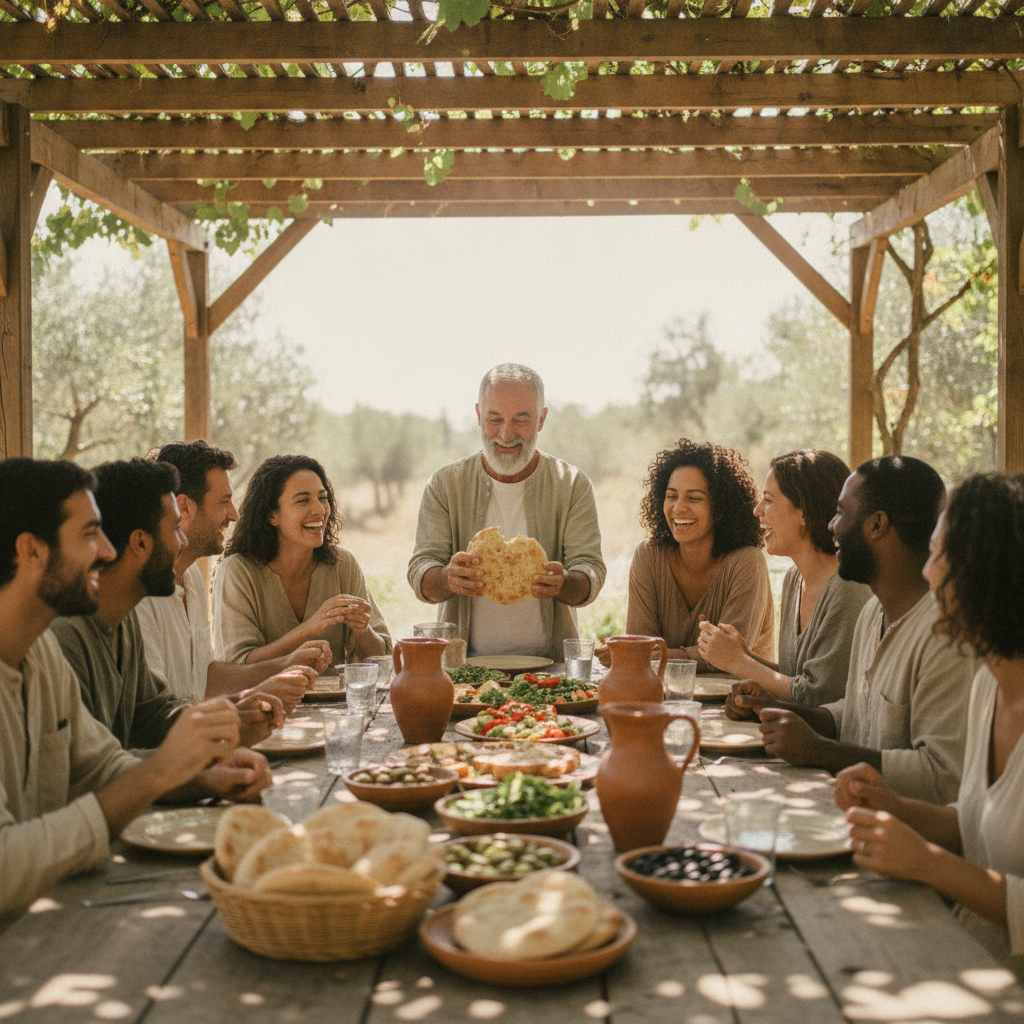
Why unity between Jewish and Gentile believers matters
The Scriptures never picture the people of God as isolated islands. John 17 records the prayer of One who wanted a people unified as a sign of the Father’s work. When Jew and Gentile refuse to face one another’s wounds, we cripple the Church’s ability to represent God to the nations.
"I do not ask for these only, but also for those who will believe in me through their word, that they may all be one." — John 17:20–21
Behind the Words: Jesus prayed on the eve of His passion to a community fractured by ethnicity, interpretation, and fear. His plea for oneness was not administrative; it was covenantal—meant to reveal the Father to a watching world.
The Heart of It: Unity is a spiritual testimony that makes the Gospel credible; without it, our promises ring hollow.
Try This: Picture a small living room where a Messianic family and Arab Christian neighbors sit across from one another. The conversation is awkward at first—names and histories hanging heavy. Someone reads a Psalm aloud in Hebrew; another replies with a prayer in Arabic. Silence becomes blessing; barriers fall as shared sorrow is named and wept over. That evening a new resolve forms to meet monthly.
A concrete detail from life: gatherings near Jerusalem’s outskirts began when Messianic and Arab believers discovered a "love connection" so strong it changed how they saw each other—proof that proximity plus vulnerability births family.
The Heart of It: Unity requires humility.
If you want to see the fruit of reconciliation, someone must step forward first and risk trust.
- Begin with hospitality: offer your table, not your arguments.
We must also wrestle with identity. Scripture points back to Abraham as the model of plural fatherhood. Abraham’s plea in Genesis 17:18, Lu Yishmael yichyeh lefanecha—"May Ishmael live before you"—is a theological thread: Abraham’s calling included both Ishmael and Isaac. To reject one branch is to short-circuit the promise.
Remember this hard saying: you must die to national, ethnic, or religious pride. This is not a call to erase identity but to surrender pride that bars relationship. It is painful. It is necessary. It is kingdom work.
How to practically love those you've been taught to hate
Love in the Bible is not a soft sentiment; it is a disciplined, costly practice. In the Sermon on the Mount, Jesus instructed people to "love your enemies." That command produces seismic change when lived among communities socialized to reciprocate hostility.
"But I say to you, love your enemies, bless those who curse you, and pray for those who persecute you." — Matthew 5:44
Behind the Words: Jesus said this to people who expected retribution, not reconciliation. Loving an enemy was not abstract pietism; it was a revolutionary ethic meant to undermine cycles of violence.
The Heart of It: Love breaks the power of inherited hostility by refusing to repay hate in kind.
Try This: Imagine standing at a checkpoint in your mind where someone who has hurt your family approaches. Instead of rehearsing a rebuttal, you breathe and pray: "Lord, bless them." Then take a small practical step—send a loaf of bread, offer to help with a child's school fee, or simply listen. Over time, these small acts of blessing accumulate and build trust.
A phrase used among those doing the work is "liquid love"—a gentle, persistent pouring out that melts what once felt like stone. Another image is blunt and intimate: "we are twins." The twinness points to a shared origin—separate, yes, but inextricably connected. When two people finally sit and weep over lost children or shared land, they begin to reclaim mutual identity.
The Heart of It: Small, steady acts of blessing produce structural change.
When we choose consistent kindness over dramatic gestures, relationships grow resilient.
- Commit to one monthly act of blessing toward someone across the divide.
Loving an enemy is not naïve. It is a disciplined strategy that acknowledges spiritual stakes and relies on God’s justice—while refusing to mirror the enemy’s tactics. Vulnerable testimony from those who grew up amid conflict often notes that "love your enemies" was the only teaching that made sense; that honest admission reveals the Gospel’s power. We must not sentimentalize; we must equip one another with patience and accountability while we learn to bless.
How to pray and intercede for reconciliation that endures
Prayer is not a passive wish; it is a battlefield posture that clears the way for spiritual transformation. Isaiah’s call to "build up the pathway, remove the obstacles out of the way of my people" invites us into active intercession—spiritual labor that aligns heaven and earth.
"Build up, build up, prepare the way! Remove every obstruction from my people's way." — Isaiah 57:14
Behind the Words: Isaiah spoke to a people who had lost their way and needed practical restoration—roads repaired, stones removed, pathways leveled. Spiritual intercession mirrors that work: it names obstructions of hate, pride, and fear and asks God to clear them.
The Heart of It: Intercession prepares the terrain for reconciliation; it is spiritual landscaping for the Father’s family.
Try This: Picture intercessors gathered before dawn, names whispered in Hebrew, Arabic, and English—each petition lifting obstacles: pride, fear, misremembered histories. They claim Psalm 2’s promise about God’s chosen King and Jerusalem as the hill for His reign—not as a political trophy but as a spiritual center for restoration. Those who pray together become courageous enough to step into relationship.
A practical rhythm: combine lament and blessing. Spend the first half of an hour confessing ways your own community has contributed to division. Spend the second half blessing specific people and places—naming mayors, teachers, pastors, refugees. This dual posture avoids triumphalism and cultivates compassion.
The Heart of It: Prayer without confession keeps the barriers intact.
When we intercede while refusing to name our own complicity, the prayers can become cosmetic. Confession humbles the heart and aligns our petitions with God’s restorative will.
- Schedule weekly intercession with an accountability partner across the divide.
Leaders in some gatherings have modeled submission to one another—humbling themselves before those they once distrusted—creating a family atmosphere rather than networks or ministry boxes. That humility in prayer meetings has birthed trust that opened doors otherwise closed. Intercession then becomes not only spiritual labor but relational labor—transforming worship into covenant-making.
Signs that reconciliation is becoming culture
When the work of reconciliation moves from pilot experiments to an emergent culture, three things become visible: a reshaping of identity, new strategic fruitfulness, and a witness that stuns the nations.
First, identity reshapes. Like a husband who cannot be a husband without a wife, our faith identities are married to one another in God’s purposes. The Abrahamic model—being a father of many nations—requires both branches to flourish. When Jews and Arabs refuse the temptation to cancel one another, they find a fuller, richer version of themselves.
Second, power shifts. The grafted-in olive tree of Romans 11 is not an abstract metaphor; it yields life from the dead when branches are reunited. When communities stop hoarding spiritual fruit and start sharing it, blessing accelerates—both numerical and qualitative.
"For if their rejection means the reconciliation of the world, what will their acceptance mean but life from the dead?" — Romans 11:15
Behind the Words: Paul wrote to a church wrestling with inclusion and inheritance. He used olive imagery to show how God's plan threads ethnic restoration with global salvation.
The Heart of It: Reconciliation births the kingdom; it is inventive and generative, not merely corrective.
Try This: Imagine practical cooperation becoming routine: churches share youth workers; believers jointly sponsor a clinic; pastors teach each other’s congregations how to read Scripture across cultural lines. Out of strategic friendships come initiatives—schools, hospitals, shared prayer hubs—that accelerate gospel advance.
Beware easy answers. This is not a replacement of identity; it is a deeper expression of it. When we die to pride, we do not lose who we are—we gain our truest selves. That paradox is at the cross. The cost is real. The reward is resurrection.
Beloved, the road home is not sentimental. It asks for courage, confession, and consistent affection. Yet the movement we describe is both ancient and practical: a return to Abraham’s heart, a living out of John 17, and a daily practice of loving those who once felt like enemies.
Start small. Invite one person across the divide into your life. Join a weekly intercession band that confesses before it petitions. Read Scripture together—Genesis, the Psalms, Romans 9–11, and the Sermon on the Mount—and listen for where God is reshaping your story. Where possible, be present: gatherings near Jerusalem’s outskirts remind us that proximity matters; when we show up to be seen, God uses our presence.
We are not building a new institution but reviving an ancient family. That family will not be made by clever programs but by humble people who practice the hard art of blessing. If fear rises, remember the ransom paid at the cross: identity is not lost by surrender—identity is recovered. If you feel small, remember that God delights to work through remnant faithfulness. If you are discouraged, look for the small, steady acts of kindness that have already begun to thaw the frost.
Pray now: for the humility to confess, for the courage to bless, and for the perseverance to pray until the pathway is clear. The Lord is setting a king on His hill, and He is calling His scattered children home. Will we go?
Key Takeaways
- The Church must actively work towards unity and reconciliation.
- Understanding and embracing our shared identities as children of God is essential.
- Love and forgiveness are pivotal in overcoming past divisions.
- Acknowledge and honor the prophetic significance of Israel's role in God's plan.
- Participate in community efforts to bridge cultural gaps and build relationships.
Notable Quotes
"If you don't have that, then you can't become a global family."
"There's something very special with what's going on in this conversation; it's the heart of the Father to bring his family together."
"Beloved, I just want us to recognize there's something very significant here as a foundation to the restoration in God's family."