Returning to Nicaea: Creed, Unity, Jerusalem
Explore why the Nicene Creed matters, how Catholics, Orthodox, and Protestants can pursue reconciliation, and what a shared pilgrimage to Jerusalem might accomplish.
Why the Nicene Creed still matters today
The creed is a concise claim about who Jesus is—claims that settled disputes about the heart of the gospel. When churches stand together and say the Nicene Creed, we are not merely reciting history; we are confessing that the one who saves us is both God and man. Those two simple phrases—true God and true man—guard the gospel from empty myth and from a Suffering Servant who is only a moral exemplar.
Unity depends on clarity about Christ. The creed matters because it protects the meaning of salvation: if Christ were not fully divine, forgiveness and victory over death collapse into sentiment. When you teach children about Jesus, start with these two truths.
The council that produced this confession faced a real crisis: a persuasive voice argued that Jesus was a created intermediary rather than the eternal Son. In that setting, bishops argued, prayed, and formulated language like "begotten not made" and "consubstantial with the Father" to name precisely what salvation requires—God taking our flesh.
Behind the Words: Hebrews 9:22 captures the seriousness of sacrificial language: "Indeed, under the law almost everything is purified with blood, and without the shedding of blood there is no forgiveness of sins." The early church heard this against the background of temple sacrifices and saw Christ's once-for-all offering as accomplishing what repeated ritual could not.
The Heart of It: Without the shedding of Christ's blood, there is no forgiveness; the Incarnation and Atonement are the hinge of our hope.
Try This: Picture a funeral scene where a family debates whether Christ was merely moral or truly God. Read Hebrews 9:22 together and explain why His divinity is not an abstract doctrine but the assurance that death was defeated.
When we say the Nicene Creed together we are reminded of this core: the mystery of God becoming human to heal what was not merely sinful but broken. That language—"begotten not made"—is not rhetorical hair-splitting. It is pastoral protection so that those drowning in loss, guilt, and fear have a sure anchor: a Savior who is the maker of the world and also the one who bled for us.
Historical honesty matters here too. The early council, like every human gathering, bore failures. Anti-Jewish prejudice had already crept into parts of the church; the record shows painful blind spots even as the Spirit preserved truth through flawed people. We must confess both truth and error, and refuse sentimental nostalgia for a perfect past that never existed.
How Catholics, Orthodox, and Protestants can move toward reconciliation
We are not starting from identical positions. We come from different liturgical rhythms, theological vocabularies, and even calendars. Yet across centuries and continents many of us still pray the same creed. That common confession is not an ending; it is a beginning for honest, humble reconciliation.
Reconciliation grows where confession meets repentance. Reconciling bodies requires both truth-telling about past wounds and a shared repentance that looks forward, not backward. Begin with a mutual fast or shared scripture reading across traditions to cultivate humility.
Listen to a blunt truth: "It is Satan who divides." That phrase names the spiritual enemy at work whenever we elevate institution over incarnation. Unpacking that means admitting how politics, nationalisms, rivalries, and ecclesiastical strategies have become idols. One blunt way to put it is to set aside what is not essential—the encrustations of ecclesiastical politics, rivalries, and claims—so that renewed witness might breathe.
Behind the Words: Read Ephesians 2:14–16 together: "For he himself is our peace, who has made us both one and has broken down in his flesh the dividing wall of hostility... that he might create in himself one new man in place of the two." Paul wrote this to Gentile and Jewish believers in Ephesus, addressing real social and religious barriers and envisioning the Spirit transforming identities, not merely policies.
The Heart of It: God’s design for the church is unity—one body reconciled through the cross, not a federation of competing tribes.
Try This: Imagine a parish hall where an Orthodox priest and a Protestant pastor read Ephesians 2 aloud, then tell one another a brief, honest story of harm their tradition caused in the past. Let that moment be short, vulnerable, and prayerful—an opening toward shared lament and mutual blessing.
Practical steps look simple and stubborn: mutual prayer days, shared Bible studies centered on the Gospels, and joint acts of mercy in the neighborhood. But simplicity doesn’t mean ease. We must face real historical details: at Nicaea there were bishops swayed by error, and later centuries saw policies that fueled anti-Jewish attitudes. These are not abstract footnotes; they are the soil where suspicion grew. A reconciled future is built by naming those roots and working concretely to undo harm.
Theology matters too. Unity without truth is hollow; truth without charity is brittle. We must hold both. That means Catholics, Orthodox, and Protestants can continue to confess together the substance of the faith while honoring differences in polity and sacramental practice. It also means mutual recognition: allowing theological vocabulary to be clarified rather than weaponized.
A pastoral caution from the tradition helps: when a searching soul finds a perfect church, don’t join it—because it will not be perfect anymore. The point is realism: the church is always spirit and mud. If we come to reconciliation expecting perfection, we will be defeated. If we come expecting a pilgrimage of small faithful steps, the Spirit can do the rest.
Pilgrimage to Jerusalem: returning to the Upper Room and the stones of faith
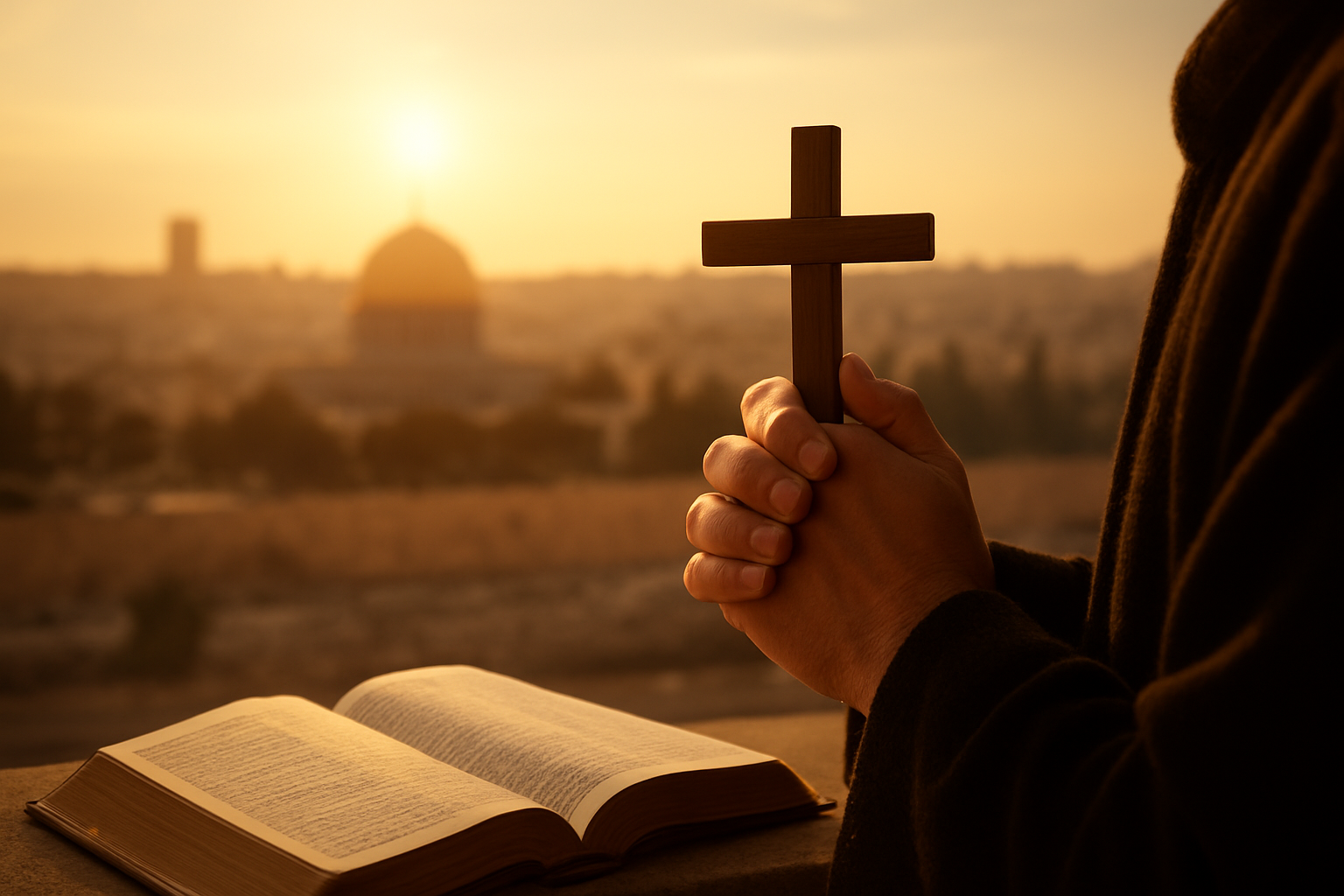
A call has been issued for a pilgrimage to Jerusalem in 2033. That invitation—to return to places like Golgotha, the Upper Room of Pentecost, and the empty tomb—holds deep symbolic power. Pilgrimage is not an empty tourist trip; it is formation in flesh and soil. When believers of varied traditions kneel on the same stones and name their common Lord, the gestures can teach us anew how to be one body.
Pilgrimage remakes memory into mission. Walking the path our Lord walked turns theology into embodied worship and reorients fractured communities toward a shared mission: making the gospel believable. Invite a small delegation from another tradition to walk with you to the Wailing Wall or the Garden Tomb and share a meal afterward.
Think of the early apostles: crushed by the cross and then transformed by encounter. Acts shows frightened disciples becoming bold missionaries after Pentecost. A shared trip to Jerusalem aims to recover that pattern: go back to where the story began and receive fresh sending from the same Spirit who raised Jesus.
Pilgrimage also contains practical discipline. Traveling together forces conversational proximity that phone calls and statements never achieve. Long walks encourage confession; shared meals invite laughter and lament; sunrise vigils shape wonder. Imagery of returning to the Upper Room—to remember foot-washing, to stand at the tomb, to recall Pentecost—describes an embodied catechesis. This is not sentimental nostalgia. It is a chance to set aside non-essentials—politics, strategies, and alignments—and renew the simple work of proclaiming Christ.
We must not pretend a pilgrimage is a fix-all. Real wounds require long-term reparations: theological study, shared liturgies in local contexts where trust has been rebuilt, and concrete steps toward addressing antisemitism in church history. A pilgrimage can catalyze those things, but it cannot replace them. It is a spark, not the whole fire.
A pastoral image helps: imagine a tired town divided by a river. Bridges exist but are unused. A pilgrimage is like hundreds of people walking together across every bridge at once, refusing to let old grudges keep them apart. The sight of that movement changes the town’s imagination about what is possible.
If congregations, seminaries, and leaders begin preparing now, Jerusalem in 2033 could be a watershed moment: an act of corporate repentance, a mutual remembering, and a renewed commitment to evangelize as one body. We must plan logistics, yes, but also prepare the inner pilgrimage: confession, forgiveness, and practical restitution where churches have wronged others.
We will not shortcut centuries of pain, nor will we pretend creeds and councils are mere artifacts. The Nicene Creed is our theological spine. Honest reconciliation requires truth-telling about wrongs and sustained acts of love that repair trust. A pilgrimage to Jerusalem in 2033 could be more than symbolism if we let it be an embodied school of repentance and renewal. So what will we do next week? We can pray, listen to those wounded by our traditions, and begin small acts of shared service.
Let us dare a faithful imagination: people from different traditions kneeling together and saying the simple words—true God and true man—then standing, hand in hand, to go out into the world as one witness. If that seems audacious, remember the old warning: "It is Satan who divides." We resist that work by returning again and again to the one who made us one.
May we be a generation that chooses truth with grace, confesses what is ugly in our past, and walks together toward Jerusalem—ready to be formed and sent. Come, Holy Spirit; bind what we have unwisely loosened and mend what we have carelessly torn.
Key Takeaways
- The importance of understanding church history.
- Unity among Christians is essential for effective witness.
- Recognition of Jewish roots in Christian faith strengthens unity.
- Historical divisions must be addressed and reconciled.
- The hope for renewed ecumenical engagement among Christian leaders.
Notable Quotes
"Jesus came to bring unity, and the only path to true unity is through him and in him and with him."
"The church has always been, I like to say, spirit and mud."
"The only way we can find true unity except through the blood of Jesus Christ."