Rest, Worth, and Renewed Hope
Learn how rest, Scripture, and small weekend rhythms reshape a God-centered self-image and renew hope so your worth rests in who God says you are.
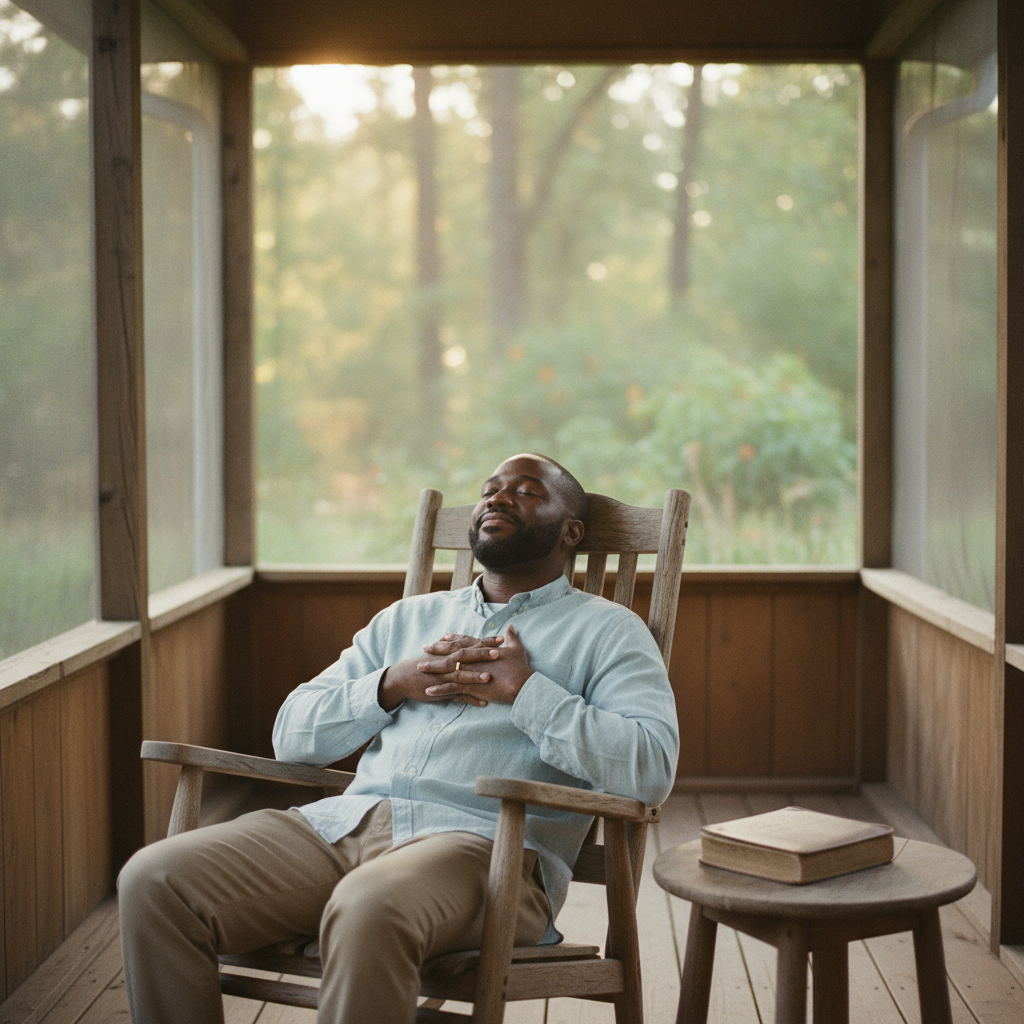
Why rest is essential for a God-centered self-image
We live under what some call the "tyranny of the urgent" — the small fire that screams loudest and crowds out the still, small voice. Sometimes our weekend planning is as careful as choosing where to eat breakfast, and that reveals how shallow our margin has become. When our self-worth is measured by productivity, rest looks like failure. But Scripture invites a different metric: presence.
"The Lord will fight for you and you shall hold your peace and remain at rest." — Exodus 14:14
Behind the Words: Exodus 14:14 sits at the moment the Israelites faced an impossible exit; they were trapped between Pharaoh’s army and the sea. Moses’ declaration was not logistical bravado but a call to trust God’s deliverance when human options were exhausted.
The Heart of It: Rest is not passive avoidance; it is active trust in God’s fight on our behalf.
Try This: Imagine setting your weekend alarm ten minutes earlier to sit with God before you open your laptop. Picture the list in front of you, and say aloud, "Lord, You are with me in these tasks. I am resting in You." Watch your shoulders drop as you hand one item back to God.
One common misunderstanding: rest is not laziness. When we rest into God, we refuse to let our worth depend on what we produce.
When we accept rest as a spiritual habit, our image of God affects our image of ourselves. If God fights for us, our worth is no longer an achievement meter. Calmness rooted in divine presence reshapes the inner voice that says, "You’re only as good as your last deliverable."
The Heart of It: Rest changes what we believe about ourselves. If we refuse rest, we rehearse the lie that busyness defines value.
- Try This: Invite God into one small, ordinary moment and watch how He rearranges your inner scorecard.
There is a pastoral edge here: many are genuinely burdened — named bluntly as people who feel "weary, tired, and exhausted". That Greek description captures the depth of fatigue that chores and worry intensify, not solve. When you’re that tired, rest must be intentional. Refuse to let the calendar decide who you are.
What Scripture teaches about identity and renewed hope
If rest recalibrates our self-worth, Scripture supplies the content of that new identity. We are not accidents; we are God’s workmanship. The Bible repeatedly pulls identity from the hands of performance and gives it to promise. Ephesians 2:10 calls us God's handiwork, recrafted in Christ to walk paths He prepared — not to prove ourselves, but to live a prepared life.
"For we are God’s own handiwork, recreated in Christ Jesus, born anew that we may do those good works which God predestined..." — Ephesians 2:10
Behind the Words: Ephesians 2:10 was written to a community wrestling with worth after failure and division. Paul reminds them they are not mistakes; they are purpose-made for living out God’s good works.
The Heart of It: Your identity is rooted in who God made you to be, not in your performance or the verdicts of others.
Try This: Visualize yourself as a handcrafted item laid out on a workbench. God is the artisan who knows the final form. Walk through your week asking, "What small step today aligns with my Maker’s design?"
One common misunderstanding: this does not mean we are passive. Being God’s handiwork calls us to active obedience — to work out what He has put in us.
Another scripture anchors hope when doubt chokes the heart:
"I am counting on the Lord. Yes, I am counting on him. I have put my hope in his word." — Psalm 130:5
When we make Scripture the ledger of our worth, hope grows muscles. The promise that hope removes the enemy’s doubts is not a motivational slogan; it’s a tactical posture. Hope rooted in God’s word re-channels anxious energy into expectancy.
"Do not be anxious about anything, but in everything by prayer and petition, with thanksgiving, present your requests to God. And the peace of God...will guard your hearts and minds in Christ Jesus." — Philippians 4:6-7
Behind the Words: Paul wrote this from within a fragmented church and personal trials; he addressed communal anxiety. His counsel pairs honest prayer with thanksgiving — an oddly specific spiritual discipline.
The Heart of It: Prayer plus thanksgiving replaces anxious self-examination with a hope-filled posture toward God.
Try This: Next time worry rises, write one-sentence prayer and one sentence of thanks. Place them side by side; watch how thanksgiving reframes the petition.
Many think "being thankful" denies reality. The truth: gratitude doesn't erase trouble; it re-orients us so God's perspective becomes primary, not our panic.
The Heart of It: Scripture rewrites identity by reassigning the source of our worth from what we do to who God says we are.
- Try This: Memorize one identity verse and say it when shame whispers otherwise.
How to rest and reflect this weekend
Weekend rhythms are theological. How we spend our Saturdays broadcasts what we believe about God. If the weekend is merely a chance to catch up on chores, we rehearse a cycle of exhaustion. But if we build simple, repeatable practices, the weekend becomes a laboratory where faith is lived out in ordinary acts.
Start small. Pick one of seven guiding practices: rest your mind, relax your grip, reflect on your future, refresh your soul, renew your hope, rejoice in opportunities, recreate your future. Each tiny discipline shapes identity.
The Heart of It: Spiritual rhythms are more powerful than sporadic emotional boosts. Regular small practices form a new self-image over time.
- Try This: Choose one practice and commit to it for the next four weekends.
Three practical rhythms that fold theology into ordinary life:
- A Sabbath Hour: Turn off screens for 60 minutes. Sit outside, read a psalm, ask God one honest question about the coming week.
- A Reflection Page: Keep a one-page "future reflection" where you list three things God has done previously and three ways you want to follow Him next week. This trains your memory and imagination together.
- A Rejoice Minute: At a set time each day, name one gift — a cup of coffee, a friend’s call, a warm blanket — and say, "Thank You, Lord." Small things redirect our hearts.
A blunt pastoral line must be heard: buying something you can't afford, to numb anxiety, won't ease or refresh your soul. The pastoral response is invitation rather than condemnation: what would it look like to bring that ache to Jesus instead of the mall?
Expect resistance. The inner critic will say you’re being unproductive. When relaxation brings rewards, it does so quietly — not in Instagram highlights but in steadier faith and clearer discernment. As you experiment with these rhythms, your self-image shifts from "doer" to "beloved," and that changes how you face Monday.
When Sabbath practice meets Saturday life
There is a quiet miracle when Sabbath practice seeps into Saturday errands. Ordinary tasks become sacramental. Washing dishes becomes a place to pray. Fixing a leak becomes an exercise in patience and trust. We do not abandon responsibility; we reframe it.
"Come to me, all you who labor and are heavy laden, and I will give you rest." — Matthew 11:28
Behind the Words: Jesus spoke these words to crowds worn down by religious burdens and social pressures. He offered an alternative yoke — one that fits and lightens the heart.
The Heart of It: Sabbath rest is not a luxury for the pious; it is a grace for the weary.
Try This: The next time you move through routine chores, ask, "Lord, how are You with me in this small task?" Let the question make the task a place of presence.
Every true Sabbath practice nudges our identity away from self-reliance and toward reliance on God’s promises. We become people who can say, with humility and courage, that our worth is not measured by to-do lists but by the One who made us.
We are invited to "recreate our future" — not by reinventing ourselves alone, but by cooperating with God’s handiwork in us. The process is both restful and active: rest in God’s presence, then walk into the day with clearer purpose.
The Heart of It: Sabbath-infused Saturdays make disciples of ordinary life; our worth becomes woven into God’s greater story.
- Try This: Choose one mundane task each Saturday and turn it into a five-minute practice of praise or prayer.
This is hard when anxiety spikes. Remember the simple pastoral advice echoed plainly: "Just staying calm is great advice for everybody." Calm is not denial; it is a discipline that prepares us to see God’s hand in small things.
We do not earn our place in God’s family by how tidy our house is or how many boxes we check. Our identity is grounded in a God who fights for us, who calls us to rest, and who crafts us for good works. If you feel inclined to prove your worth this weekend by doing more, try a different experiment: do less, but do it with presence.
Pick one of the practical rhythms and practice it. Give the aching parts of your heart a place to sit with God. When the old measuring sticks fall away, you will find a sturdier truth waiting: you are God’s handiwork, loved and given a future.
Walk into next week not because you hustled harder but because you learned to rest better and to hope more faithfully. That is the work of a lifetime — and it begins in a single weekend.
Key Takeaways
- Practice rest and reflection to gain new perspectives.
- Embrace and cultivate hope through God's promises.
- Rejoice in daily opportunities provided by the Lord.
- Relax your grip on life's pressures and trust God's timing.
- Use scripture as a foundation for personal growth.
Notable Quotes
"The Lord will fight for you and you shall hold your peace and remain at rest."
"Just staying calm is great advice for everybody."
"Your hope will remove all the doubts of the enemy."