Raising Patriots: Teaching Freedom and Truth
Practical, faith-shaped ways to teach children about 9/11, freedom, and how pop culture shapes moral imagination—pastoral, biblical, and actionable.
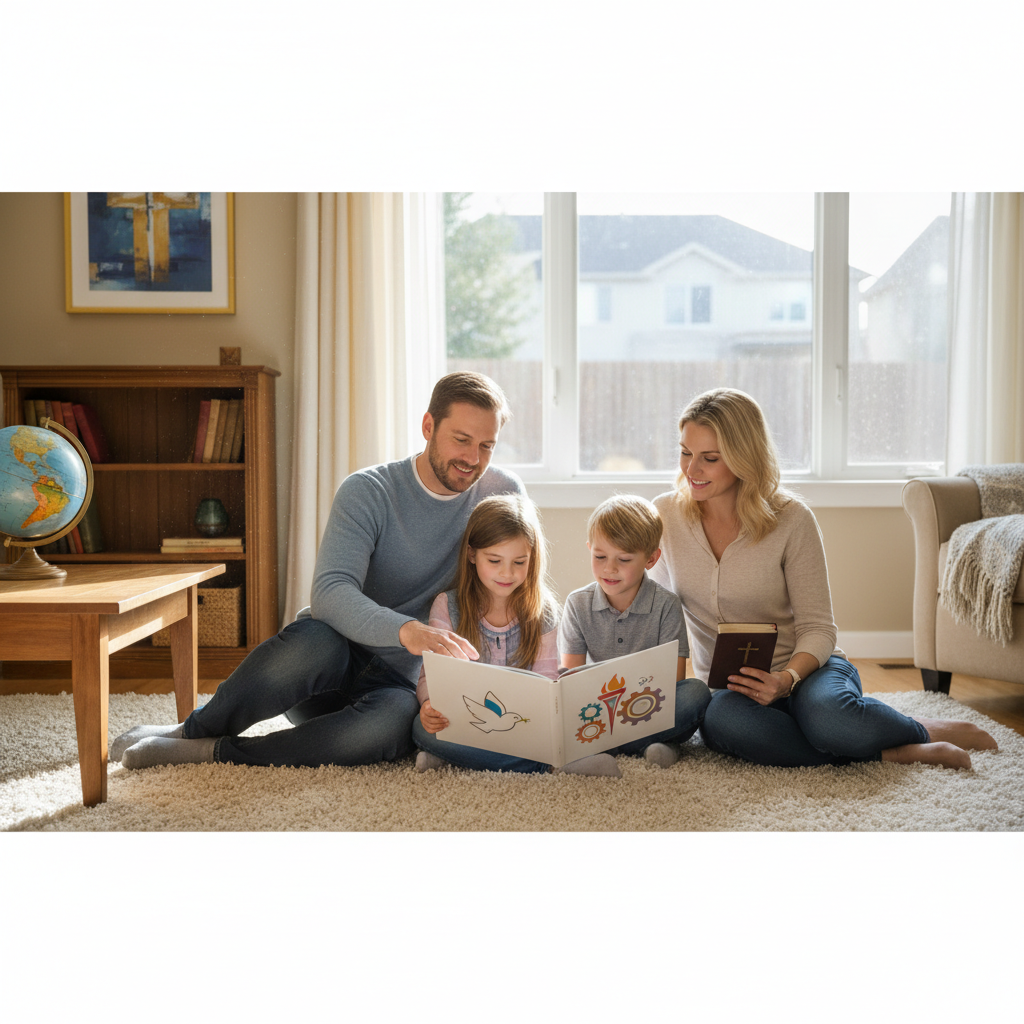
Why does remembering 9/11 still matter for our children?
We carry images from that day the way a family keeps an old quilt: patched, heavy, familiar. The historical facts are cold and precise—nearly 3,000 lives lost, first responders who ran toward danger, cleanup measured in months and tons—but the ministry of memory is warm and urgent. Visiting a local cemetery, seeing rows of gravestones, and reading the names makes history a human story instead of an abstraction.
Behind the Words: The rescue and recovery at Ground Zero involved clearing roughly 1.8 million tons of wreckage and took nine months. That logistical enormity reveals both the scale of loss and the patient labor of restoration it required.
The Heart of It: Remembering is not nostalgia; remembering trains our children to value sacrifice and to refuse amnesia in a culture that prefers distraction.
Try This: Picture a Saturday morning where you drive to the town cemetery. Your child reads aloud a soldier’s name, you pause, and then you say, "This person chose to protect others—what might that look like in our family?" Let the conversation drift from history to simple acts of courage you can practice this week.
The Heart of It: Memory forms moral imagination.
Behind the Words: If children learn only entertainment, then courage looks optional rather than essential.
- Take a family ritual: one night a month read an account of service and pray for someone who serves today.
We must be practical about fear, too. Children will pick up anxiety unless we give them spiritual frameworks: who God is in the midst of disaster and how ordinary people become heroes. Scripture helps here.
"Greater love has no one than this, that someone lay down his life for his friends." — John 15:13
Behind the Words: Jesus spoke these words to his disciples in the Upper Room, explaining the depth of sacrificial love he modeled in the hours before the cross. In context, the phrase reorients friendship around costly commitment, not convenience.
The Heart of It: Sacrificial love shows what true liberty costs and what it protects.
Try This: After reading John 15:13, invite your child to name one small sacrifice they can make this week—an extra chore to ease someone’s load, putting a screen away to listen well, or writing a thank-you note to someone who serves their community.
A common misunderstanding is to treat remembrance as political grandstanding. It is not. When done well, remembrance humbles us, teaches gratitude, and fuels service.
How should we teach kids about freedom so it lasts?
Teaching freedom is not a single speech; it is a steady culture you build in your home. There is a temptation to reduce patriotism to flags and anthems. Those are good, but unless we pair them with stories of real people—neighbors, veterans, first responders—freedom will remain an abstract object rather than a covenant we owe one another.
I remember a family field trip to a national cemetery where the gravestones seemed endless. At first the children were restless; they preferred the beach and sunshine. Then, within a few minutes, one child looked up and said, "These people died so that we might live." That spontaneous child’s wisdom is the kind of formation that sticks.
The Heart of It: Freedom is taught through proximity to story.
Behind the Words: When children meet the human face of sacrifice, ideals become obligations they can feel.
- Arrange a local visit to a memorial or invite a veteran to share a story over hot chocolate.
There are concrete facts families should know—not to frighten, but to inform. Nearly 3,000 souls were taken that day; hundreds of first responders gave their lives. Recovery was measured not in weeks but in months and monumental labor: those 1.8 million tons of wreckage and nine months of excavation are an earthly measure of what it costs to rebuild. Tell those details plainly; history that is sugar-coated becomes myth.
One hard saying haunts the shape of our civic formation: "If we ever forget that we are one nation under God, then we will be a nation gone under." That line shocks because it names a spiritual dimension to civic life—our liberties have moral roots.
We must unpack it pastorally. The statement is not a threat so much as a diagnosis: every freedom requires a moral grammar—truth, responsibility, and restraint. If we raise children believing freedom is merely consumer choice, then we will pass them a fragile liberty at best.
Behind the Words: The phrase about being "one nation under God" has been used historically to call a country back to a moral anchor in moments of drift. It presumes that law and liberty function best when tempered by shared moral commitments.
The Heart of It: Liberty without moral anchors dissolves into license.
Try This: Create a simple family covenant. It can be one paragraph: how you treat one another, how you handle money, how you serve those in need. Put it on the fridge and revisit it monthly. Practice makes belief embodied.
A common misunderstanding: teaching kids about freedom is equivalent to indoctrination into a political party. It isn’t. It’s about forming character—honesty, courage, neighbor-love—qualities that cross political lines.
How should Christians respond to celebrity influence on youth?
We live in a mediated age where cultural formation often happens through screens and soundtracks. Celebrities shape what is fashionable, what language is used, and often what moral categories children accept without question. That influence is not neutral.
A common pattern in celebrity culture: many start with a clean image, modest dress, and broad appeal; over time, production pressures and industry incentives can push them into edgier images and messages. When our children identify character and virtue with what is applauded on stage, we have a formative problem.
Public moments—where performers make headlines for provocative pairings or shocking reinterpretations of sacred stories—become shorthand for what is acceptable, and kids naturally equate acceptance with safety.
The Heart of It: Cultural signals teach morality as powerfully as sermons.
Behind the Words: When pop culture normalizes a behavior without showing consequences, children learn a one-sided moral picture.
- Monitor media, but more importantly, narrate it. Tell the story behind the story.
The church’s response is neither to hide nor to hurl invective. We must name truth and tend mercy. Scripture gives a clear moral grid but also calls us to speak compassionately about people who struggle. Paul’s warning about unrighteous behavior is sobering, but it comes with a call to repentance and restoration, not mockery.
"Or do you not know that the unrighteous will not inherit the kingdom of God? Do not be deceived: neither the sexually immoral, nor idolaters, nor adulterers, nor men who practice homosexuality..." — 1 Corinthians 6:9-10
Behind the Words: Paul’s first-century audience navigated pressures from pagan culture—temples, sexual mores, and social practices that tempted assimilation. His letter names behaviors that fracture communal holiness and calls the church to a countercultural ethic.
The Heart of It: Public morality is not simply personal preference; it shapes communal flourishing.
Try This: When your child encounters a celebrity who promotes a lifestyle inconsistent with your faith, turn that encounter into a storytelling moment. Don’t only say "That’s wrong." Ask: "Why do you think that’s celebrated? What could be missing in that story?" Encourage empathy for the person while holding fast to biblical conviction.
A common misunderstanding: confronting pop culture with Christian conviction must be mean-spirited. It doesn’t. We can refuse a message and still pray for the messenger. And when we explain why we disagree, do it with gentleness and clarity.
How formation ties freedom, memory, and popular culture together
These threads are not separate strands but a single rope. If we teach our children to value courage and sacrifice, and if we help them read culture well, those children will be less swayed by whatever the moment celebrates. If we only provide shelter, we leave them ill-equipped; if we only provide fight, we harden them. We need formation that is both hospitable and discerning.
The Heart of It: Formation is both defense and invitation.
Behind the Words: We defend children from harmful messages and invite them into a life that is beautiful, true, and good.
- Build practices: family story nights, annual memorial visits, media discussions over meals, and active service projects that let kids serve alongside adults.
Practical rhythms make theology practical. Teach gratitude by pausing before meals to name one thing freedom allows you to do that you will use for others. Teach discernment by watching one music video together and asking three questions: What does it praise? Who profits from this praise? What does Scripture say in response?
We are not helpless. The formation of a generation begins at the kitchen table and with the small courage of parents who name what matters. If one child, after a quiet walk among graves, says, "I'm so glad we came," we know the work is worth it. If we teach our children how to read culture—what it affirms and what it costs—they will be citizens who love liberty and live by truth.
We will not raise perfect children. But we can raise honest ones—children who know the cost of freedom and the contours of grace. Start small. Visit a memorial. Read a scripture out loud. Name what is beautiful and what is broken. Keep pointing them back to a God who gathers memory and makes meaning out of sorrow.
Remember the hard sayings we cannot soften away; speak them gently and follow them with mercy. As we do, our children will learn that freedom is not an entitlement but a trust, and that truth, grieved and embraced, forms the bravest hearts.
Key Takeaways
- Remember the sacrifices of service members and educate children about their significance.
- Be critical of the influence of celebrities on young people.
- Encourage open discussions about moral values with children.
- Stay informed about cultural and financial issues facing the nation.
Notable Quotes
"If we ever forget that we are one nation under God, then we will be a nation gone under."
"These people died so that we might live."
"It's important that we take our kids to a local cemetery, have them read about the fallen soldiers."