Raising Healthy Eaters: Practical Steps for Families
Practical, faith-rooted steps for parents to reverse childhood obesity: plan menus, ditch processed snacks, and involve kids in choosing and cooking whole foods.
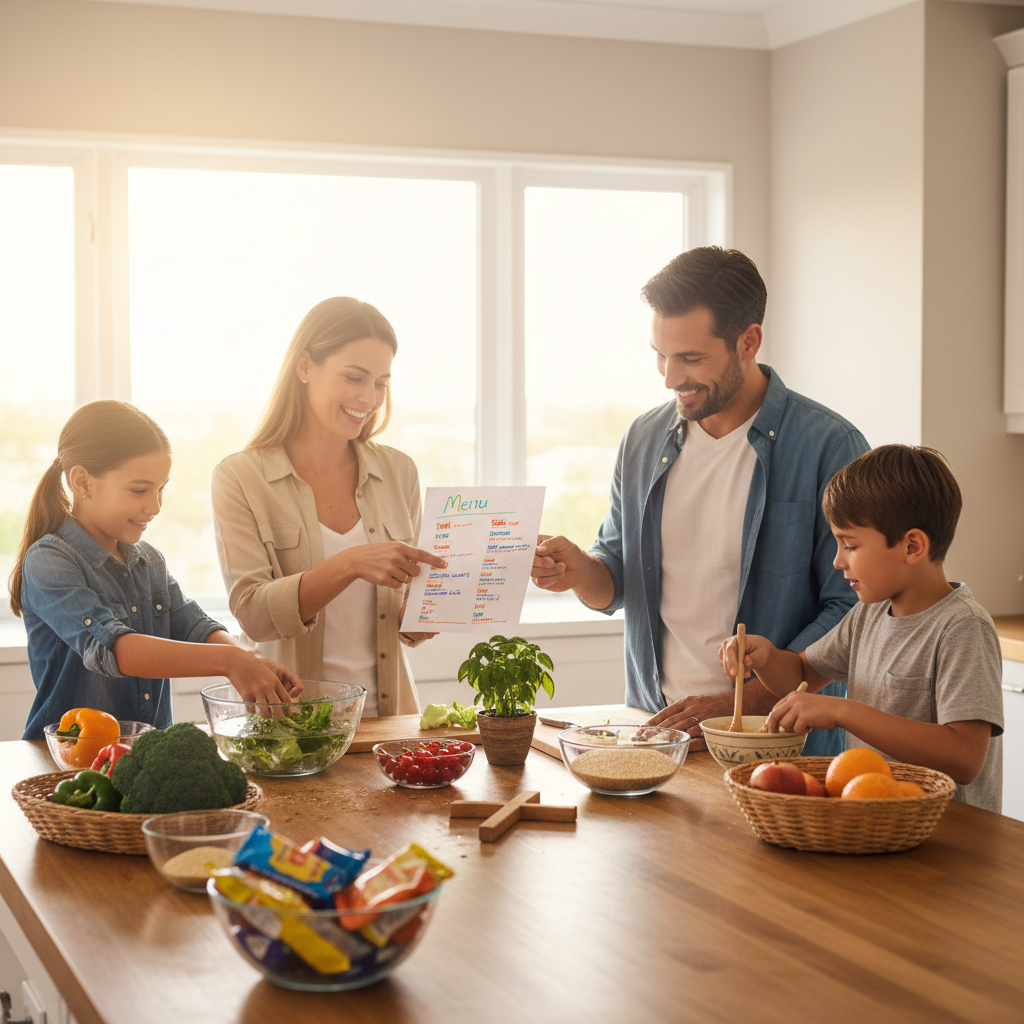
Why are childhood obesity rates rising, and what can we do?
Screens keep attention fixed and bodies still. Processed, calorie-rich foods replace fresh produce in lunchboxes. A pattern forms: less movement, more sugar, more convenience. Habits harden into health problems — and habits can be reshaped.
The Heart of It: Choose foods that came out of the garden.
Behind the Words: Children who routinely eat whole fruits, vegetables, nuts, seeds, and minimally processed grains and proteins tend to develop steadier appetites and fewer cravings for candy-like flavors.
Try This: Put colorful, whole options within reach; make them visible on the counter or at eye level in the fridge.
Start with small wins. Menu planning is not glamorous, but it is catalytic. Pick one day, sit with a notebook or an app, and plan the week: breakfasts, packed lunches, two simple dinners, and easy snack options. Repetition helps: when a child eats a blueberry bowl three mornings in a row, their taste buds begin to register that sweetness as normal.
When convenience architecture — fast food, vending machines, and the middle aisles of the grocery store — shapes a household's default choices, kids' bodies learn to prefer processed textures and bright sweet flavors. We can counter that with small swaps and visible, consistent options:
- Swap one sugary snack for fruit plus a fat or protein: apples with almond butter, berries with a handful of pecans.
- Limit soda and flavored drinks; offer water with sliced lemon, berries, or pomegranate seeds for variety.
- Keep whole produce visible: a bowl of oranges on the counter, a neatly arranged vegetable tray in the fridge.
Teaching Moment 1
"And God said, 'Behold, I have given you every plant yielding seed that is on the face of all the earth...'" — Genesis 1:29
Behind the Words: In Genesis 1:29, creation-language frames provision. The garden was a place of abundance and sustenance, not processed substitutes.
The Heart of It: Food is created good and meant for nourishment; eating well is part of stewarding the body God entrusts to us.
Try This: Picture a Sunday afternoon: you and your child rinsing strawberries together, the bright red sliding between small fingers. Let the child pick two fruits for the week and commit to serving them plainly first—no sweetened yogurt, no candy coating. After a few meals, ask them what they notice about the flavor.
Common Misunderstanding: Eating simply does not mean giving up joy; it returns us to the pleasure of real flavors and the satisfaction of true nourishment.
When the pantry becomes a battlefield: what processed foods do to our children
Open a typical pantry and you see an ecosystem designed to sell itself. Packaging shouts, sugar hides as multiple ingredients, and shelf-stable items promise ease. Ease has a cost. Foods that "sit on the grocery store shelf for months" are often stripped of nutrients and altered to trigger craving loops — salt, sugar, artificial flavors.
The Heart of It: Processed foods are engineered to be addictive and cheap—choose whole foods whenever possible.
Behind the Words: When children are fed mixtures of fat, refined carbs, and additives, their brains learn to prefer extreme flavors. Over time the pleasure center rewires; whole foods can seem dull by comparison.
Try This: When you reach for a boxed item, read the label. If sugar or refined flour is near the top, keep looking.
A sharp claim like "Glyphosate is a carcinogen" touches real fears about modern agribusiness. Don't let fear freeze you. Practical steps are available: prioritize fresh produce, use trusted organic sources when possible, rinse produce, and lean into foods that require minimal industrial processing. Our aim is not perfection but prudence. We steward what we can control: shopping patterns, kitchen habits, and table rhythms.
Storage and preservation matter. Fresh produce goes bad; wasted food discourages buying healthy items. A few habits change the math:
- Buy a smaller number of high-quality items and plan to use them in the next 3–4 days.
- Store leafy greens wrapped in cloth or in breathable bags to extend life.
- Chop carrots and celery into snack-ready containers so the first grab is produce, not chips.
Small rituals matter. I remember a toaster-oven-roasted asparagus with a little cheese on top, served with toast and avocado — a simple plate that tasted like a treat. Humble vegetables become beloved when prepared with delight. Recreate one slightly indulgent vegetable plate each week so children learn that veg can be enjoyable.
When a family collectively decides to swap chips for a chunk of broccoli and eat together, they are replacing an old habit loop with a new one. It might take a seven- to ten-day palate reset, but with consistency it sticks.
How can we involve kids in cooking to change tastes and habits?
Children are learners, not fixed taste machines. Involve them early: take them grocery shopping and let them choose a new fruit or vegetable. Invite them to help plan the menu on Sundays. When a child picks a bright red pepper and helps chop it, that pepper becomes discovery as much as food.
The Heart of It: Participation builds preference—when kids cook, they learn to like what they make.
Behind the Words: The skill of preparing food gives ownership. Ownership flips resistance into curiosity and often into appetite.
Try This: Assign age-appropriate tasks: rinsing berries, stirring batter made with almond or oat flour, or arranging a vegetable platter.
Picture a parent and a seven-year-old at the sink, soot-smudged fingers, a pile of peas on the counter. She remembers spitting peas into the hedge when she was small — texture and memory drove rejection. Today she helps blanch the peas, tosses them with butter and lemon zest, and eats a forkful at the table. The memory shifts from rejection to a funny family story.
Taste changes through repetition and story. Create a "new veg" tradition: each week the child picks an unfamiliar fruit or vegetable. Cook it together, talk about color and texture, and give it a playful name. Make the experience playful rather than punitive.
Practical rhythms that work:
- Sunday menu planning with kids; let them mark two meals they'd like to help prepare.
- A weekly "open kitchen" night where everyone helps assemble dinner — slicing, stirring, seasoning.
- Replace reward charts tied to sweets with charts tied to new tastes tried or kitchen jobs completed.
Teaching Moment 2
"Train up a child in the way he should go; even when he is old he will not depart from it." — Proverbs 22:6
Behind the Words: Proverbs 22:6 points to the long, habit-forming work of parenting in a family-centered culture: daily habits, repeated practices, and modeled behavior.
The Heart of It: Habits taught in childhood — what we eat, how we move, how we pray — tend to follow into adulthood.
Try This: Picture a Saturday morning: you and your child making pancakes with a healthier flour blend — almond or oat — and folding in berries. They pour the batter and flip a pancake. Small competence becomes pride. Weeks later, that pride can be the quiet reason they pick fruit at a school fair instead of a packaged treat.
Common Misunderstanding: This proverb is not a guarantee that every child will always choose well, but it is a reminder that faithful small acts shape future freedom.
Bringing kids into the kitchen is not just about food. It's about rhythms: shopping together, planning, preparing, savoring, and laughing. Those rhythms become the soil in which healthy appetites grow.
Closing thoughts
We stand before a practical and spiritual task: to feed our children well and teach them to choose life. That means planning menus, turning the pantry from a battlefield back into a place of provision, and inviting little hands to help at the counter.
Start small. Pick one swap this week: water with lemon instead of soda, a bowl of berries instead of packaged cookies, or a new vegetable chosen by your child. Keep the tone gentle. This is not a contest; it's the patient formation of a way of life.
We have begun to reclaim the table together. Let us keep going — one menu, one grocery trip, one shared sandwich at a time.
Key Takeaways
- Plan your meal menu in advance to form healthy food habits.
- Engage kids in grocery shopping to pique their interest in healthy foods.
- Limit processed and sugary foods in the household.
- Encourage kids to try a new vegetable or fruit each week.
- Utilize healthy cooking methods and alternatives to sugars in recipes.
Notable Quotes
"We have to help our kids learn healthy eating habits so they don't have to deal with a lifetime of medical issues."
"Eat God's foods."