Praying Through Job Loss and Financial Strain
When paychecks stop and fear rises, prayer reshapes our response. Learn how to pray practically through unemployment, resist spiritual attacks, and pursue restoration.
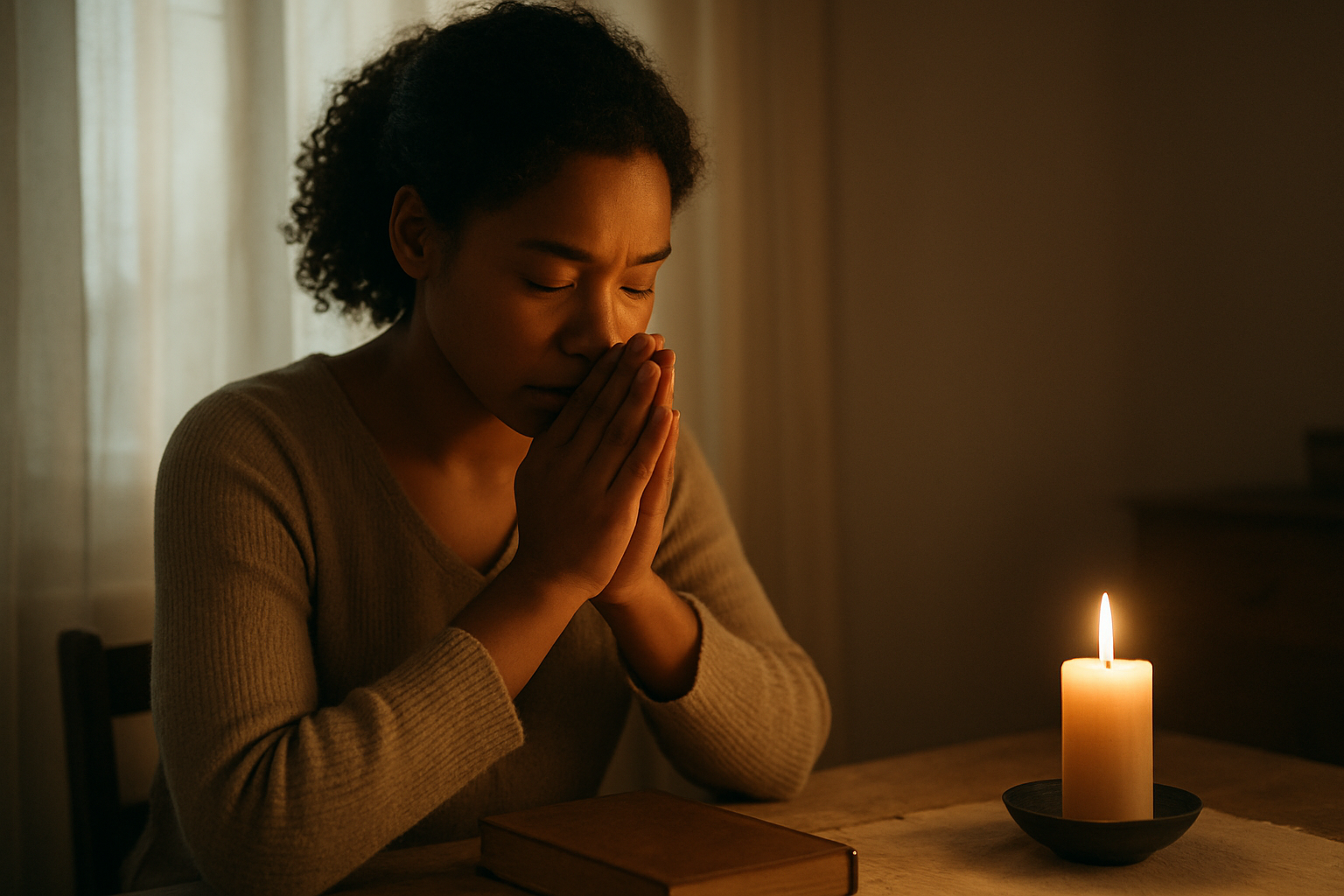
What can prayer do during unemployment and financial hardship?
When income stops, prayer can feel like a weak tool in a room full of practical problems. Prayer is not an escape from reality; it reorients reality around the God who provides. Scripture invites us to bring our needs before God, and prayer changes us—our posture, our courage, our imagination—and often opens doors we couldn't see.
Behind the Words: The promise in 2 Chronicles 7:14 was given to a people who had just built God's house and then faced national disaster—a call to humility and return before restoration came. The original setting is national, public repentance that leads to God's intervention.
The Heart of It: Turning to God in humility invites His healing into places we cannot fix by effort alone.
Try This: Picture the last pay stub you held. Fold it, place it on your kitchen table before God, and say a short, faithful sentence: "Lord, I need You to move." Then name one practical step you can take this week—email a former employer, update your résumé, call a contact—and ask God to help you take it.
The Heart of It: Faith without practical steps can become passivity. Prayer reorders our will so we act in alignment with God's provision.
- Put prayer and one practical action together: pray, then send that application or make that call.
A testimony brings this into focus: someone lost their job after being mistreated and relied on unemployment. On the very last week before benefits ran out, a job offer came—low pay at first, with the promise of growth. Training was delayed by the pandemic, but when the certificate finally arrived the person's income reached their goal. That sequence—loss, persistence, incremental steps, and eventual restoration—reminds us that provision often comes through gradual, providential processes rather than instant fixes.
We cannot promise an immediate paycheck. But we commit to stand with you in prayer, to help you rehearse hope through specific petitions, and to move in small acts of faith that open doors. Prayer is the soil where hope takes root; then our hands do the planting.
How should we resist spiritual attacks without becoming political or fearful?
In seasons of crisis the temptation is to point outward—to blame systems, polarize, or escalate conflict. Scripture calls us elsewhere: to a spiritual posture that recognizes deeper forces and to resist them in humility and obedience rather than with worldly force. The fight is real. As Scripture warns, this is not merely against people but against spiritual powers:
"For we do not wrestle against flesh and blood, but against the rulers, against the authorities, against the cosmic powers over this present darkness..." — Ephesians 6:12
Behind the Words: Paul wrote Ephesians to churches surrounded by competing powers—political, cultural, and spiritual. He urged them to put on spiritual armor to stand firm in hostile environments.
The Heart of It: Our battle is ultimately spiritual, and the primary weapon God gives us is prayer and steadfast faith.
Try This: At noon—wherever you are—pause for five minutes. Kneel or sit, and breathe a single prayer: "Lord, show me where to stand and what to leave to You." If possible, invite a family member to join hands. This is not performative; it is a posture of resistance.
A hard saying we must reckon with is plain and blunt: the battle can only be won by fighting on our knees. That conviction strips away self-reliance. The strategies of the world—shouting louder, organizing better—are not wrong in themselves, but they are secondary to the work God does when we submit in prayer. Kneeling is not passive; it is strategic.
The Heart of It: Resisting the enemy looks like submission to God first and active spiritual engagement second.
- Practice short, regular pauses for prayer—noon, evening, or whenever pressure mounts—and resist the urge to fight only in the flesh.
This posture does not excuse neglect of civic responsibility, wise planning, or common-sense precautions. Rather, it repoints anxious energy into prayerful clarity that then informs wise action—budgeting, networking, pursuing aid programs, or seeking counseling.
What does restoration look like after job loss and family strain?
Restoration is rarely a single lightning strike; it is the slow knitting together of what was torn. Scripture promises restoration when God's people return to Him, and that return often shows up in everyday ways—new opportunities, reconciled relationships, incremental raises, resumed certifications, and the steady rebuilding of trust.
"If my people who are called by my name will humble themselves and pray and seek my face and turn from their wicked ways, then I will hear from heaven and will forgive their sin and heal their land." — 2 Chronicles 7:14
Behind the Words: That verse links humility and seeking God with God's response. Though addressed to a nation, its pattern—humility, seeking God, and restoration—applies to our personal seasons as well.
The Heart of It: God invites participation in restoration: He heals when we humble ourselves, seek Him, and take faithful steps.
Try This: Picture the moment when a delayed certificate finally arrives and the stalled job finally pays what it promised. Imagine the relief, the simple meal you can now plan, the first night of rest. Let that scene shape your prayers and steady your actions.
The Heart of It: Restoration often comes through patient alignment with God's timing and our persistent obedience.
- Keep a tangible record of small wins: a pay increase, a returned call, a completed course. Celebrate them and thank God.
There is also a practical, counterintuitive element: faith sometimes asks us to sow—to give of time, skills, or resources—as a visible sign that we trust God's increase. This is not a formula; it is a posture that demonstrates willingness to participate in God's economy. When you give, ask God to guide you: give wisely and generously in ways that strengthen your local community and support your household.
Do not underestimate the power of spoken hope. A short, firm declaration—"I believe God will restore what was lost"—aligns your words with God's promises and steadies your heart to keep acting in faith.
You do not carry this season alone. We are a people who kneel when pressure mounts, who believe God can turn scarcity into provision, and who act with courage in practical ways. Pause at noon tomorrow and the next day if you can; resist with prayer; take one concrete step toward stability.
Hold to these small truths that change the arc of a story: God has more for you; fight the battle on your knees; keep taking faithful steps. The road back may not be quick, but it is real—walked one prayer and one obedient step at a time.
We will keep praying and working beside you. Hold to the hope that nothing is wasted when surrendered to God's hands.
Key Takeaways
- Engage in prayer as a collective effort for the community.
- Resist the challenges of life through faith and prayer.
- Believe in God's provision and restoration.
- Use specific scripture to guide personal prayers and supplications.
- Participate in scheduled community prayers for empowerment.
Notable Quotes
"The battle can only be won by fighting on our knees."
"God always has more for you."
"We must stand up and use the weapons God has given us."