Praying on the Steps: Faith, Witness, Washington
Take your church to the Hill: how prayer gatherings, the Capitol Bible marathon, and public nativity witness reclaim sacred space in civic life.
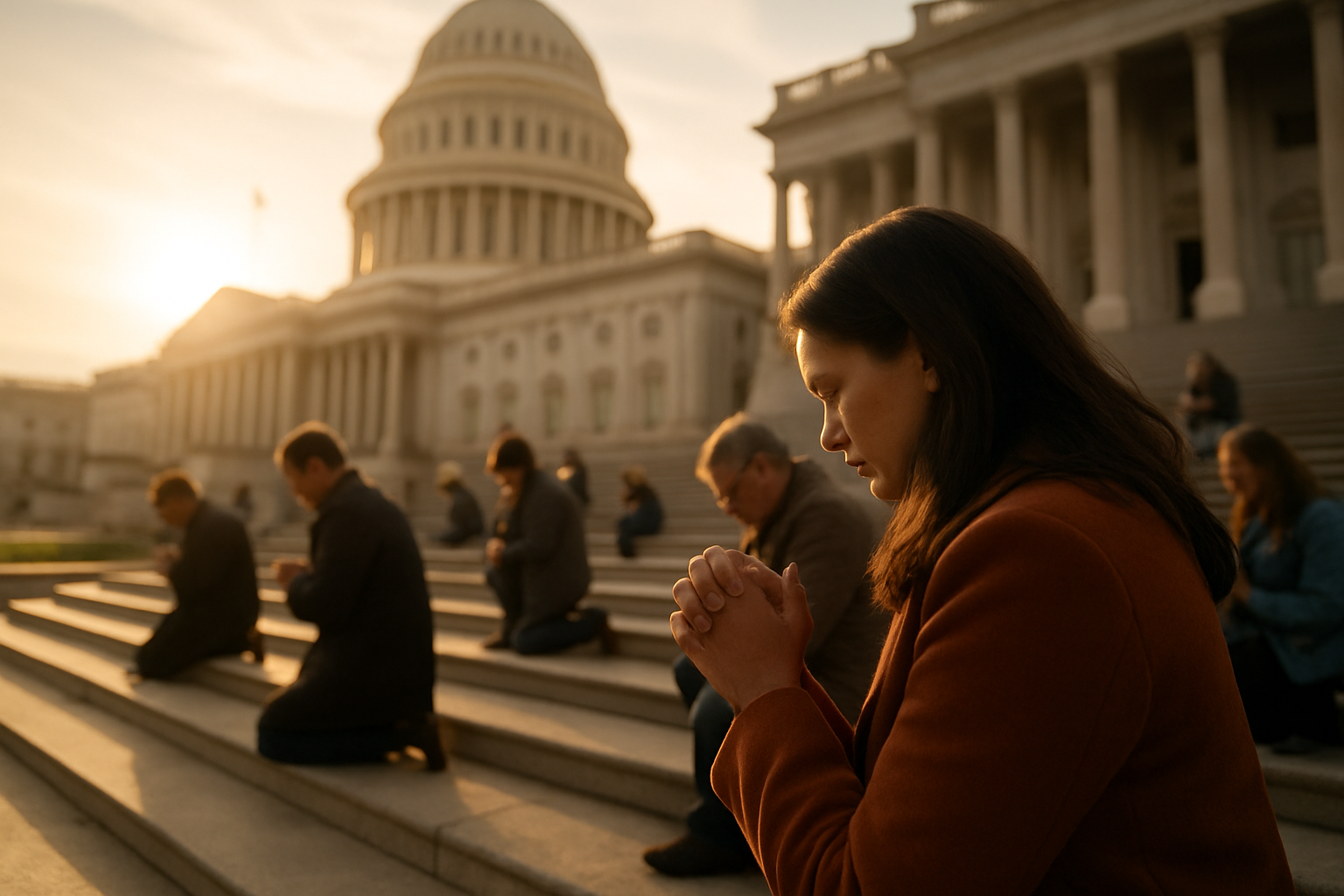
Why Prayer Gatherings Change Communities
There is power in the simple act of people kneeling together. Prayer gatherings collect grief and gratitude into one room, and we discover how the Lord meets both. We do not gather chiefly to lobby; we gather to align our hearts.
The Heart of It: Prayer forms the body for public service.
Prayer gatherings build spiritual stamina and moral imagination, equipping us to serve with humility. When we pray together, we are less likely to act alone or in anger.
In Washington, the ministry Faith and Liberty keeps an open-door posture for those who come onto the Hill seeking Scripture and spiritual support. They host Bible studies that include staffers, interns, chaplains and law-enforcement personnel. That presence shifts a place of protocols into a place of pastoral care. When a team sits across from a staffer and prays over family needs, policy conversations are no longer detached from human faces.
Someone observed, "God has a vision," and that claim reshapes how we show up. We are not merely consumers of civic life. We are intercessors for it.
A quick, practical scene: imagine your small group arrives at a reserved room near the Capitol. After a short Scripture reading and a time of silence, a young staffer slips in. His hands tremble as he asks for prayer for an exhausted colleague. You pray. Later he tells you that moment opened a door to faith. You will not remember colleagues' names months later, but you will remember kneeling with them.
Behind the Words:
"If my people who are called by my name will humble themselves and pray..." — 2 Chronicles 7:14
These words were spoken at Solomon's dedication of the temple, where God responds after a time of national turning and humility. The verse addressed a people who needed visible signs—a house for worship and a renewed posture toward God.
The Heart of It: Humility before God leads to communal renewal, not political quick-fixes.
Try This: Picture your congregation at dawn. The Capitol steps are empty, your group forms a tight circle, and you speak names—people, not policies—bearing burdens to the Lord. Then you go have coffee with a staffer. The prayer precedes the conversation and softens it.
Common misunderstanding: prayer isn't a replacement for action. It's the substrate that keeps action faithful.
How the U.S. Capitol Bible Marathon Strengthens Public Witness
Some public witness is loud; some is deliberate and steady. The U.S. Capitol Bible Reading Marathon is precisely that steady witness. People read the Bible from Genesis through Revelation, nonstop—24 hours for four days—across languages and ages.
The Heart of It: Public Scripture reading normalizes faith’s place in the common life.
Such readings remind passersby that the Bible still speaks into public questions and that faith communities care for civic spaces. When Scripture is read aloud in the plaza, it becomes part of the air again.
The marathon grew from one person's conviction into an annual offering that often draws more than 600 readers in around 40 languages. Reading the Word aloud in the nation's capital is not a stunt; it is a liturgical confession that God’s story intersects civic stories.
Picture a cold dawn, readers rotating, a toddler on a parent’s shoulders listening to Psalms, a tired intern pausing to hear the Sermon on the Mount. Someone says, simply, "pray for America," and people lift their heads. The marathon invites the stranger to pause, perhaps for the first time in months, to hear Scripture without commentary.
There is a practical takeaway for your church: recruit readers, organize travel for youth groups, or host a watching room synchronized with the marathon. When a church commits to showing up publicly in that way, its members return with a different posture—less fearful, more pastoral.
A hard observation from participants confronts us here: "You can't read the Bible without somebody being so discouraged or so angry about it that they have to voice ugly opinions." Public witness will encounter offense.
Prepare your people: teach them how to receive confrontation calmly, how to listen while holding conviction, and how to keep prayer as the first response. There is honesty in stepping into controversy with open hands and steady speech.
Behind the Words:
"Let your light shine before others, that they may see your good deeds and glorify your Father in heaven." — Matthew 5:16
Jesus spoke these words during the Sermon on the Mount to people living under occupation and longing for righteous living. The light metaphor urged visible good that points beyond itself to God.
The Heart of It: Christian witness is meant to be seen—not for applause, but to direct hearts to God.
Try This: Take one public event and commit to being the prayerful presence rather than the loudest voice. Recruit readers, assign two people to welcome questions with hospitality, and debrief with your group afterward about what you felt and learned.
When the Steps Become a Pulpit: How Events Invite the Church In
Washington can feel distant or intimidating to congregations. But the capital also holds possibilities for pilgrimage, ministry, and intercession. Events on the Hill—nativity reenactments, prayer retreats, coffee dates with staffers—are invitations to incarnational presence.
The Heart of It: Hospitality turns a city into a ministry field.
Turning up with food, a listening ear, and a consistent schedule makes the church a familiar, trusted neighbor in a place of power. Even a simple post-event lunch opens doors for discipleship and relationship-building.
Annual nativity scenes on the Capitol grounds bring characters and animals into the public square. Volunteers dress in costume and the manger tableau often includes camels, donkeys, sheep, even European calves. A live baby serves as a reminder that incarnation is messy, tender and real.
Imagine your youth group standing nearby as a camel ambles past. A tourist stops to take a photo. A law clerk steps out from a building and listens for five minutes. The scene becomes a gentle sermon: God came near.
Faith and Liberty models an open-door posture. They host prayer retreats where day one focuses on Congress, day two on the administration and agencies, and day three on supporters back home. That rhythm shows how prayer can be both specific and expansive.
Invite your church to a "coffee date." These relaxed encounters with staffers are not meetings to change votes; they are opportunities to pray, to listen, and to make pastoral connections. The smallness of a cup of coffee lowers barriers; regularity builds trust.
One practical scene: a pastor organizes a midweek trip. You book a short tour, attend a Bible reading, sit in a prayer circle and then have lunch with a staffer who shares spiritual questions. On the bus ride home, your members are quieter—moved, surprised at how ordinary public ministry felt.
Faithful presence also means resilience. When protests flare or angry voices rise, the pastoral task is to remain calm, explain why you are present, and keep prayer at the center. Someone said plainly, "Prayer is not a crime." That counters the idea that public devotion should be hidden; it insists prayer belongs in public life.
Practical steps for your church trip:
- Coordinate in advance with an organization that operates on the Hill; many ministries maintain volunteer calendars and permissions.
- Assign roles: small-group leader, hospitality lead, and reflection facilitator for the return trip.
- Prepare your people for responses—curiosity, indifference, and sometimes insistence.
When you return, tell the stories. Let people in your pews know how it felt to stand where history is made and to speak Scripture into that space. Those narratives shape a congregation’s imagination and create a hunger for sustained prayer gatherings.
Walking into Washington as a praying people takes courage. But it also offers a pastoral practice for the whole church: being present, persistent, and patient. The visible acts—the nativity with animals, the public Bible-reading marathon, the prayer retreats focused on Congress and administration—are invitations to embody faith where decisions are made.
We are called to a steady public witness and a deep private devotion. Bring both: your best prayers and your willing feet. Let your church be the place that says, plainly and humbly, "We will pray for America," and then goes to the steps to do it.
We can do this together. Let us pray, read, and show up—not to win arguments, but to be faithful.
Key Takeaways
- Engage in local prayer gatherings to strengthen community bonds.
- Foster women's leadership in church and community.
- Support youth programs and events actively.
- Volunteer for community outreach initiatives.
- Embrace a posture of prayer for national challenges.
Notable Quotes
"My mother... was a girl from a country. I grew up on a farm and hospitality, kindness, compassion..."
"He has a vision for every life, far beyond the world's view."