Pray, Stand, Remember — Faith in a World at War
Pray for soldiers, stand for justice, and act with compassion: a pastoral guide to faithfulness amid global conflict, oppression, and the call to pray without ceasing.
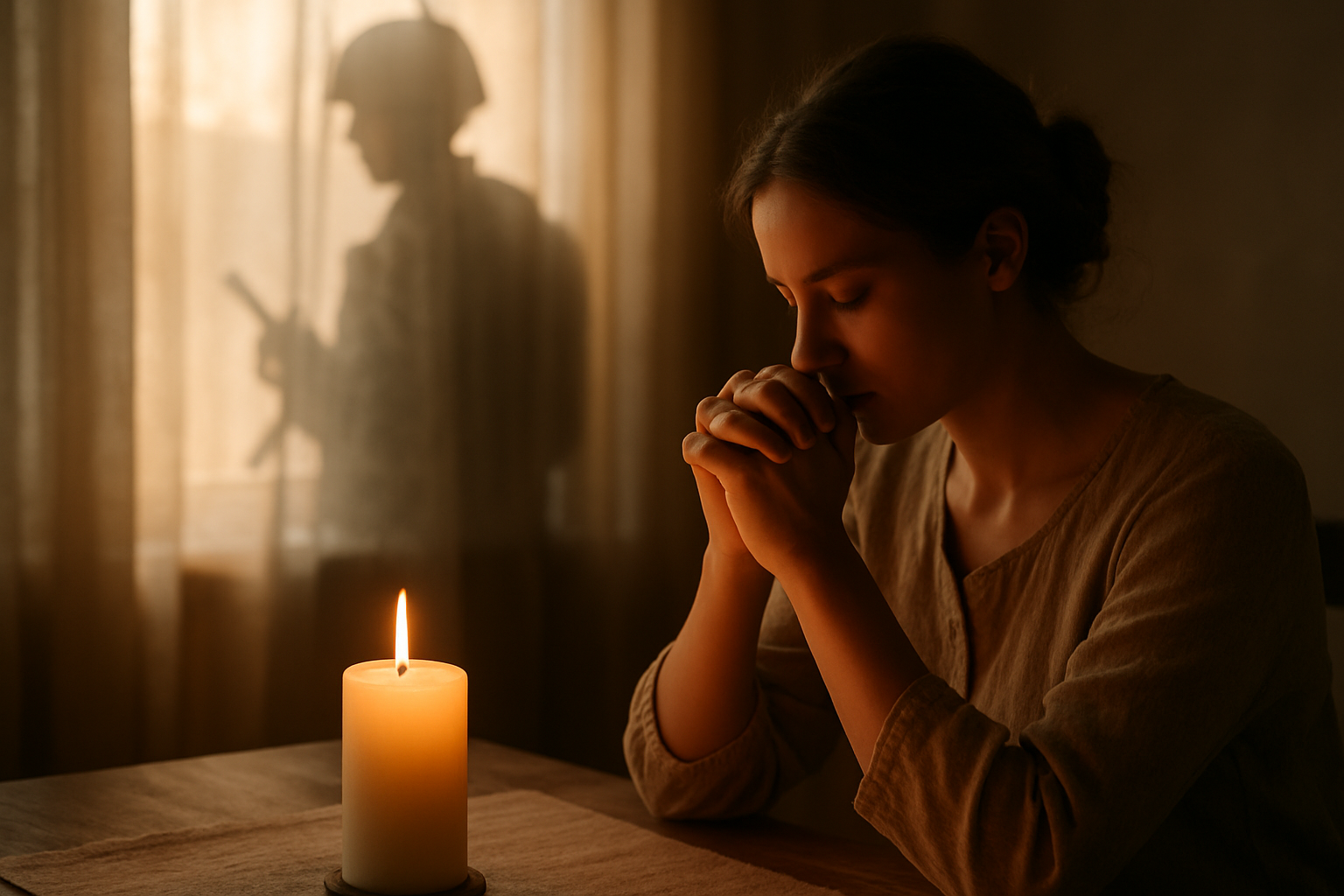
Why soldiers need our prayer and courage
When you see a uniform, remember a life rearranged. Soldiers trade a measure of personal autonomy for a mandate to protect something bigger than themselves. They follow orders, face moral complexity, and sometimes return carrying a coldness that family and friends misunderstand. That coldness is often not callousness: it is a survival set into their muscles.
We must pray for them. We must also ask them to stand for what is right. As one line in the message put it, "stand for justice, no matter who your government is." That is a hard saying—because it demands courage even when obedience to authority promises safety.
"I call heaven and earth to witness against you today: I have set before you life and death, therefore choose life." — Deuteronomy 30:19
Behind the Words: Deuteronomy 30:19 was spoken to a nation on the cusp of exile and return, given a stark choice: follow the covenant and live, or turn to idols and face exile. The words were meant to force a moral decision in a time of national consequence.
The Heart of It: Choosing life is an active decision to honor God's justice and mercy even when the cost is personal.
Try This: Picture a veteran at your church Christmas dinner, fingers trembling as they pass the turkey. Instead of small talk, ask, "What's been hardest for you since you came home?" Then pray with them—you may be the first person to offer sacred permission to grieve.
The Heart of It: Soldiers are human beings first; their sacrifice invites our compassion and our prophetic witness.
Behind the Words: Soldiers can be trained to set aside personal conscience under orders; loving them means calling them back to moral clarity.
Try This: Visit, write, and pray—show up in tangible ways that remind them they are seen. The message emphasized images of "soldiers all around the world" and urged prayer that soldiers have the courage to stand against tyranny. That appeal refuses sentimental nationalism; it asks for moral courage even against one's own government.
Imagine a young conscript in a country where dissent is lethal—our intercession with God and our practical support for human rights can be lifelines. We also cannot ignore the weight of loss the message raised: people grieving for the first time during a holiday season. Domestic grief and the grief of nations intersect. When we pray for soldiers, we pray also for the families who learn to live without a loved one in the same room.
How does prayer fight darkness in public crises?
What does prayer do when the headlines are full of prisons, missing people, and regime brutality? Prayer is not a passive palliative; it is an active stance that trains our heart to see with God's mercy and to act. The message insisted repeatedly: "pray for absolutely everything. Pray for our country. Pray for humanity." That posture is not escapism—it is preparatory.
"Praise the Lord, who executes justice for the oppressed, who gives food to the hungry. The Lord sets the prisoners free." — Psalm 146:7
Behind the Words: Psalm 146 was written for worshippers who had lost kings and trusted human power—it's a reminder that God alone secures justice for the weak and brings deliverance where human systems fail.
The Heart of It: Prayer aligns our vision with God's priorities: deliverance for the oppressed and justice for the vulnerable.
Try This: Imagine the list of names scrawled on a bulletin board at your church—people who are missing, imprisoned, or abused. Take one name home, light a candle, and pray specifically for that person for thirty days. Let the small act form you into someone who refuses cheap outrage and becomes a steady intercessor.
The Heart of It: Prayer is a form of spiritual work—disciplined, specific, and communal.
Behind the Words: When we pray without clarity, our prayer becomes a habit; when we pray with particulars, we begin to imagine practical responses.
Try This: Commit to a focused prayer list tied to tangible actions—letters to representatives, support for refugees, or giving to ministries that serve the oppressed.
The message included stark specifics: reports of prisoners, long lists of missing people, and shifts of control in war zones. Whether figures are precise or disputed, the image of lists of missing people should make prayer sober and urgent. Prayer also shifts our posture toward repentance. The source urged repentance as central: God can turn evil into good when hearts are willing to change. That is both a promise and a demand. Repentance humbles us; prayer sustains the humility so that we can act rightly in public life.
When we pray about global calamity, do we also prepare to act? Prayer should lead us to solidarity—letters, advocacy, donations, adopting a refugee family, or pressing for policy changes that protect human rights. Prayer without movement risks becoming a retreat from responsibility. The two belong together.
When the ground gives way: Israel, oppression, and spiritual stakes
One cannot talk about contemporary conflict without wrestling with how nations and faith intersect. The message placed Israel as a strategic and spiritual pivot: a people and a land seen as central to God’s unfolding plan. That point will not be without controversy—but the pastoral task is to refuse simplification.
The speaker described Israel as "the tip of the spear" in a complex regional struggle, noting actions against military assets and chemical capabilities. These images are political, but they were used to make a spiritual point: oppression is a reality; liberation matters. Psalm 146's promise that God "delivers the oppressed" was invoked to connect worship and justice.
The Heart of It: Nations can be instruments of both oppression and deliverance; discerning which is which requires prayer and wisdom.
Behind the Words: Scripture gives us lenses to evaluate power—not to cheer partisan victories, but to defend the weak and call rulers to account.
Try This: Study the human realities behind headlines before forming a moral judgment; advocate for policies that protect civilians and prisoners.
The message offered a hard saying that must be pastorally unpacked: "Stand for justice, no matter who your government is." That's convicting. It asks us to practice prophetic courage in civic life. Prophecy in Scripture often means telling kings what they do not want to hear; it means risking safety for the sake of truth.
Imagine a border town where families whisper about raids and disappearances. Imagine a small congregation with secret Christians who meet in basements, fearful for their children. That is the concrete human landscape behind geopolitical strategy. The pastoral response is twofold: pray for protection and for repentance; then act where you can—support human-rights organizations, sponsor displaced families, and push for diplomatic solutions that prioritize human life.
Another strong phrase in the message was: "What the enemy meant for evil, God meant for good." This is not naive optimism. It is a theological claim rooted in the Joseph story and the cross: God can redeem brutal intentions, weaving them into a larger story of restoration. But redemption doesn't erase responsibility. It calls for repentance and repair. We pray for deliverance; we work for justice; and we trust God to bring beauty out of brokenness.
Behind the Words: Psalm 146 and the prophetic tradition often juxtapose human failure with divine faithfulness—calling us to rely on God's justice while acting to protect the vulnerable.
The Heart of It: God’s redemptive hand does not excuse human sin but promises that even in catastrophe God can bring restoration.
Try This: Picture a family displaced by conflict. Imagine sponsoring a resettled household—help them find a school, a job, a doctor. When the ground gives way, our hands can be steady in the rubble.
The hard lines we must face (a pastoral challenge)
There are hard lines in public faith. The message was blunt: some governments imprison, torture, and execute dissenters; some leaders threaten catastrophic weapons. These realities demand that we pray with courage and speak truth without tribal loyalty.
The pastorally difficult charge—"Stand for justice, no matter who your government is"—asks us to prioritize God's kingdom over national narratives. This means we may critique leaders we otherwise support politically. It means calling for accountability when the vulnerable are harmed.
At the same time, the message reminded listeners that repentance and redemption are central: "the enemy meant for evil, God meant for good." That paradox is the gospel. It insists that while we resist evil, we remain convinced that God can bring transformation even to hardened hearts. We must balance prophetic rebuke with persistent hope.
The Heart of It: Holding both prophetic critique and hopeful repentance is the Christian posture toward nations and conflict.
Behind the Words: Without critique, faith becomes nationalism; without hope, critique becomes despair.
Try This: When you confront injustice, anchor your action in prayer and invite others into sustained, specific intercession.
Finally, remember the human cost. The message returned repeatedly to families grieving at holiday time, to prisoners in war zones, to hostages held by militant groups. These are not abstract losses; they are names, faces, and empty chairs. Our prayers must reach beyond ideology to the people who suffer.
We live in a season where global events press in on our conscience. But faith equips us not to be paralyzed—rather, to be formed. We can pray with precision, we can stand for justice courageously, and we can act compassionately toward soldiers, refugees, and prisoners.
So let us choose life. Let us pray for the courage that does not flinch from truth. Let us hold the hard lines that call for justice while embodying the hope that redemption is possible. When you pass that person in uniform, when you read another headline about missing prisoners, let your next move be a prayer or a letter or a meal. Small acts, sustained by prayer, change worlds.
We are the body. We will not look away.
Key Takeaways
- Pray for courage against the oppression of tyranny.
- Stand for justice irrespective of governmental pressures.
- Recognize the importance of spiritual warfare in our daily lives.
- Engage with global issues through a faith-based perspective.
- Understand the significance of recognizing human rights in conflicts.
Notable Quotes
"Stand for justice, no matter who your government is."
"What the enemy meant for evil, God meant for good."
"It is the responsibility that comes with the God that we believe in."