Passover’s Three Loops
Discover how Passover links the Exodus, Yeshua as the Lamb, and the final redemption—a living theology that shapes justice, sacrifice, and hope.
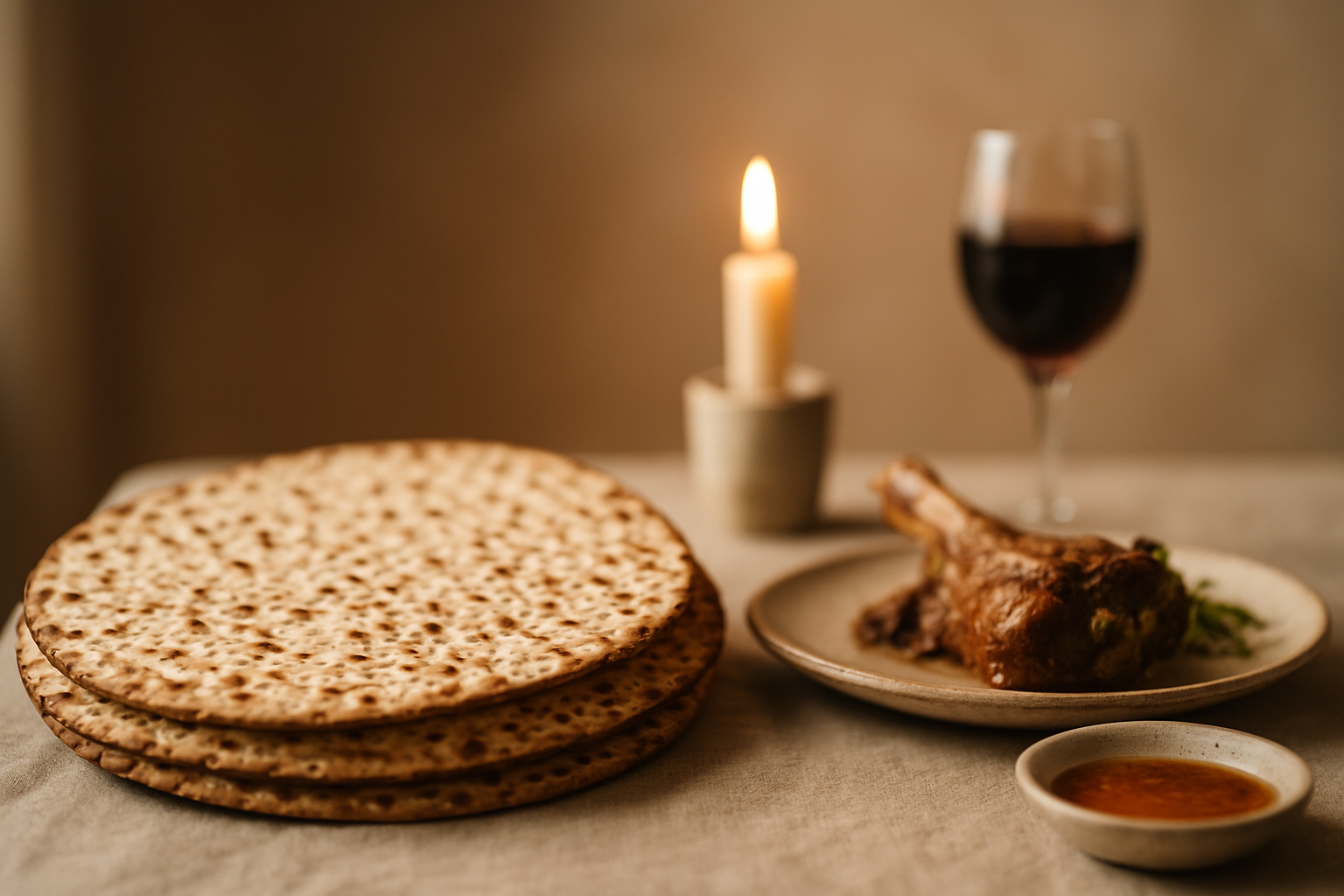
Why did the Exodus change the course of history?
The Exodus is not only an origin story for Israel; it is God's dramatic moral intervention on behalf of the oppressed. Egypt was the dominant empire of its day — a power structure that, in biblical imagery, marched under cultic symbols and cruel gods. The story narrates how God stepped into history and dismantled that system, freeing a people from slavery and establishing a moral law that would reorder communities.
God intervenes to establish justice
Behind the Words: The giving of the law at Sinai followed liberation; freedom and responsibility belong together. When liberation is real, it results in new obligations to God and neighbor.
The detail matters. Passover fell in Nisan, the first month of spring, and on the 15th you have a full moon — a visible marker in the sky. That timing is not trivial; the festival's date made it public, cyclical, and memorable across cultures. The Exodus night was not a quiet, private miracle. It was a public reckoning where plagues struck a world-power and a slave people's release became a theological statement about God's character.
Behind the Words: Exodus 12:13 records God instructing the Israelites to mark their doorframes with blood so the destroyer would pass over their homes. That instruction was given as a sign to protect a vulnerable people within a hostile land. In its original setting it separated the covenant people from judgment in a visible, communal way.
"The blood shall be a sign for you on the houses where you are, and when I see the blood I will pass over you." — Exodus 12:13
The Heart of It: God makes himself known as both just and merciful when he rescues the oppressed and sets moral boundaries.
Try This: Picture the family that night in Egypt — children anxious, ovens stoked, lamb roasted quickly. Hold that picture when you read laws like “you shall not steal.” The law protects the rescued; it refuses to let freedom become license.
There’s also a social-justice dimension we cannot shrug off. The Exodus story declares that God opposes systems that dehumanize. When we pray for justice today, we align with the God who once toppled an empire and led a people out of bondage.
How is Yeshua the true Passover Lamb?
The second loop brings the Exodus imagery forward and centers it on a person: the Lamb who takes away sin. The Passover lamb in the desert was a symbol — a substitution that marked life and warded off death. That symbol finds its fulfillment in the cross. The claim that Yeshua is the real sacrifice points us to the heart of the Gospel: the animal could mark and protect, but the Redeemer must stand on the level of those he redeems.
Substitution requires identification
Behind the Words: The Israelite sacrificial system pointed toward atonement but never exhausted what was required to reconcile humanity. Only when God clothes himself in human flesh does the substitution fully bridge creator and creature.
Behind the Words: John 1:29 depicts the moment John the Baptist sees Jesus and declares him the Lamb of God — language that reaches back to Exodus and forward into the death and resurrection narrative. In the original setting this announcement framed Jesus' identity for an audience steeped in Passover expectation.
"Behold, the Lamb of God, who takes away the sin of the world!" — John 1:29
The Heart of It: The Passover points to a substitutionary love: God gives what is costly so we can be freed and reconciled.
Try This: Imagine the upper room, the full moon outside, a group remembering the night of deliverance — and then picture the same scene reframed as a new covenant meal. You are there with friends; bread is broken; a cup is raised. The Lamb is not a distant symbol now — he is the one at the table, offering his life for yours.
This is a hard saying, and it must be handled with gentleness: a human life bore what humanity could not bear. It lands heavily because it names the cost of our reconciliation. But that cost is not arbitrary cruelty. It is the entrance of God into our suffering and alienation, bearing what we could not bear and opening a way back to God.
There are objections. Some will insist animal sacrifices were sufficient in their time, or that the language of blood is too violent for a compassionate God. Gentle correction: the sacrificial system was always provisional and typological. The ultimate rescue requires identification: God becoming one of us and paying the debt we could not pay.
Why will the last redemption be like the first?
The rabbis said, and Scripture echoes, that the last redemption will mirror the first. Why would God repeat a pattern? Because patterns teach. The Exodus model — oppression, plagues, plundering of empires, a dramatic deliverance and a people made holy — provides a template for how God acts in history.
History is theological and typological
Behind the Words: Biblical prophecy often uses earlier acts of God as blueprints for later fulfillment. When we read Revelation with Exodus in view, biblical images like plagues and a Pharaoh-like antagonist take on fresh coherence.
Compare the motifs. Pharaoh functions like an antichrist figure, an oppressive ruler wearing the garb of pride and false divinity — an image that captures the Bible’s fear of political-religious power corrupted by pride.
Plagues, witnesses, a crossing, and a final overturning of the cosmic order show up in both Exodus and Revelation. The plagues in Egypt foreshadow the judgments yet to come; the Red Sea deliverance anticipates the final defeat of hostile powers. The people of God are again called to be a visible, holy community that testifies amid trials.
Behind the Words: Revelation borrows Exodus language — the idea of plagues, witnesses, and a final rescue — to show that God's character and methods are consistent. Readers who remembered Exodus would hear comfort and a promise: the God who acted before will act again.
The Heart of It: God’s redemptive acts are patterned to teach faithfulness: if he saved before, he will save again — and his methods reveal his character.
Try This: Picture a community under pressure — enemies threaten, the culture mocks faith, and yet this community refuses to hide. They hold to the signs of God’s covenant and act as a living witness. Their protection and testimony become a public argument for God’s reality just as the blood on the doors became a witness to Egypt.
That imagery of the full moon again matters. The Passover's timing — the 15th of Nisan with its full moon — made the sign visible to travelers, neighbors, and empires. Timing, place, and witnesses are part of God’s design: he works where people can see and be called to faith.
When the full moon lifts the curtain
There is a poetic thread that connects timing and theology. The festival that began in a damp spring under a full moon, that later hosted the Lamb, will have echoes when God brings everything to its consummation. The world’s great crosscurrents — east and west, political empires, and cultural divides — converge in Jerusalem. A striking geographical detail: walk down the center of the city and you stand between east and west. That centrality is not mere geography; it’s a picture of redemption being offered at the center of history.
God meets us in the middle of our world
Behind the Words: The cross is lifted at the crossroads of cultures and empires, a visible claim that God’s rescue is for all peoples. Redemption is not a private thing; it is offered where the world can see.
Jerusalem’s center becomes emblematic: it is where heaven and earth meet, even if the execution stake was physically small. The detail affirms the paradox of the Gospel — Jesus is both lowly and cosmic, crucified in a small space but lifted up between heaven and earth.
The third loop — the last redemption — will likely use the same theatrical devices: public reckonings, visible judgments, and a people whose miraculous protection calls outsiders to ask why God moved. We are not to be frightened by images of judgment; rather, we are to be compelled to live as people whose lives make the Gospel’s truth visible.
Try This: Next time your congregation remembers Passover or shares the Lord’s Supper, hold both loops together. See the Exodus rescue, see the Lamb, and then imagine the final redemption. Pray for the courage to be a people whose lives point others to rescue.
The three loops of Passover — Exodus, the Lamb, and the last redemption — are not separate stories stitched together. They are a single, unfolding drama in which God reveals who he is: just, merciful, and faithful across generations. When we remember the blood on the doorframes and the Lamb on the cross, we are not celebrating nostalgia; we are rehearsing our identity as a rescued people called to witness.
So gather your family or table this season. Tell the story of slavery and freedom. Tell the story of a Lamb who gives his life. Tell the story of a God who will finish what he began. Let your memory become a practice that shapes your courage, your compassion, and your readiness for the day when the last redemption will be like the first.
Key Takeaways
- Understand the historical importance of Passover in the context of Christian faith.
- Recognize Yeshua's role as the fulfillment of Passover sacrifices.
- Explore the links between the Exodus narrative and future prophetic events.
- Reflect on the moral laws established by God through the Exodus.
- Consider the significance of blood atonement in both Jewish and Christian traditions.
Notable Quotes
"Passover without the blood on the door is no Passover."
"The last redemption will be like the first redemption."
"Yeshua is the real sacrifice. The Passover sacrifice is a symbol pointing to Him."