One People, Two Stories
How do Christians hold Israel’s election and Gentile inclusion together? Learn a pastoral way forward that honors Jewish identity, Messianic witnesses, and Scripture’s vision.
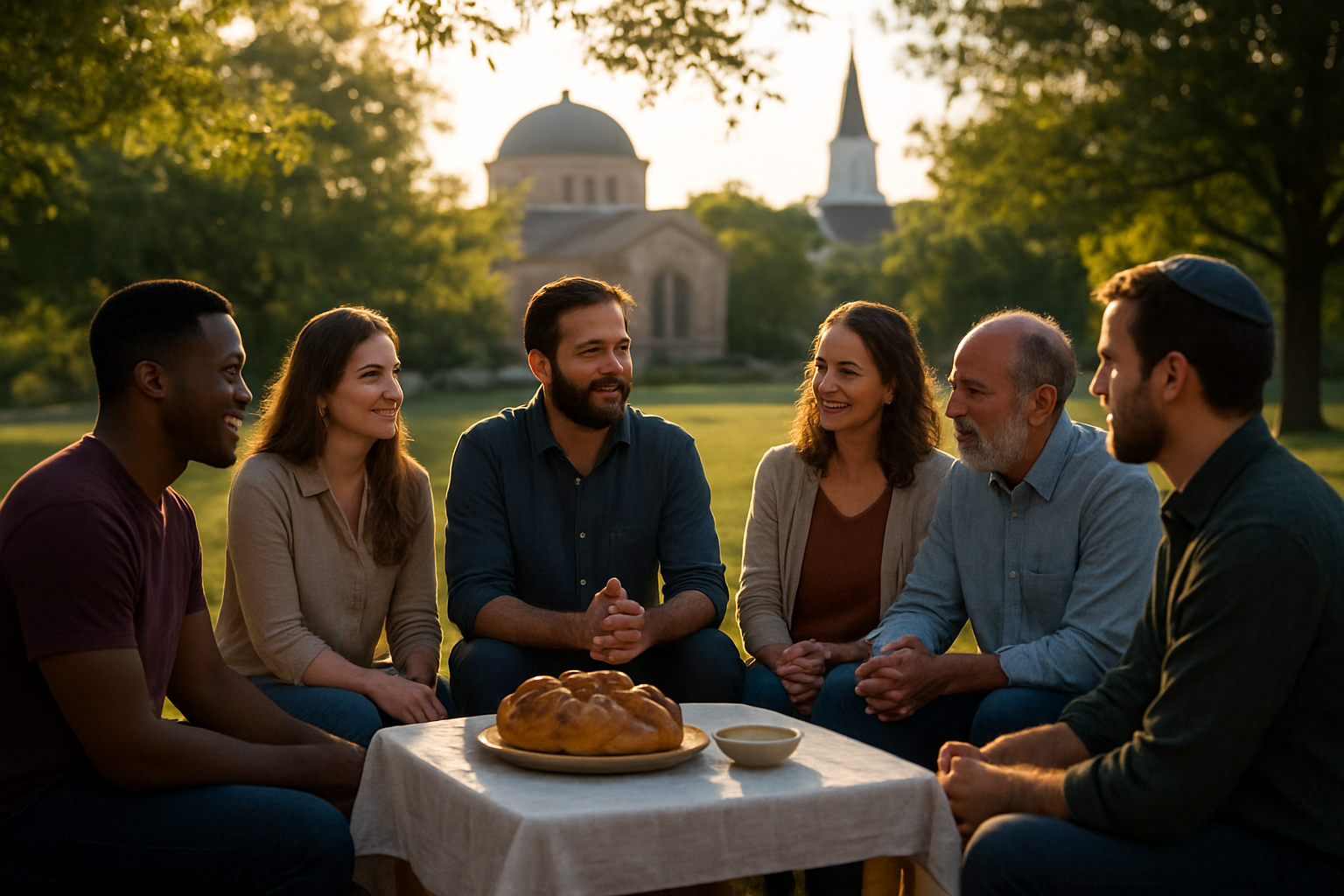
Central thread: Why this matters for us now
We live in a moment of renewed attention to Jewish–Christian relations and to how Gentile believers inhabit their calling. The unifying thread is reconciliation—rooted in Scripture and practiced in humility. If Jesus "brought near by the blood of Christ" a people once estranged, our work is to embody that nearness without erasing difference.
Between grief and hope there is work: learning the Jewishness of Jesus, listening when Christians confess a history of harm, and asking how Gentiles can follow Jesus without pretending to become Israel. This is not merely academic; it reshapes how we pray, worship, and practice discipleship in local congregations.
Between two covenants, one story (an invitation)
We need a narrative big enough for both Israel and the nations—one that refuses to make the fall the whole plot of creation. Too often Christians have told the story as if God’s primary action is a rescue operation that begins only after human failure.
"But now in Christ Jesus you who once were far off have been brought near by the blood of Christ. For he himself is our peace, who has made us both one, broken down in his flesh the dividing wall of hostility..." — Ephesians 2:13-16
Behind the Words: Ephesians 2 was written to a church made up of Jewish and Gentile believers living amid the first-century split between synagogue and nascent church life. Paul is addressing the real hostility that separated communities—hostility shaped by history, covenantal categories, and social exclusion.
The Heart of It: God’s work in Christ is to make one reconciled people while not erasing distinctive callings or histories.
Try This: Picture your congregation on a Sunday morning where a Messianic melody is sung beside a hymn from a Gentile tradition. Approach that hour not as a battleground for authenticity but as a rehearsal of the future gathered city—distinct peoples worshipping one Lord.
The Heart of It: Reconciliation requires us to read our story through Israel’s election and the nations’ grafting, not to subsume one into the other.
Behind the Words: Try asking a neighbor of Jewish background what Jewish continuity means to them before offering an answer about mission.
A conversational note: you may have heard the phrase "one new man" in theological circles. That phrase—short and startling—means layered things: unity in Christ, sustained distinctiveness, and a future where divisions are healed but not erased.
Specific details from recent conversations help ground this: one scholar spoke of a cousin undergoing Orthodox conversion to Judaism that stirred a fresh reckoning about leaving Jewish identity unexamined when entering Christian life. Another scholar’s dissertation became a book, Healing the Schism, which dialogued with theologies of Karl Barth and Franz Rosenzweig to show how 20th-century thinkers began to untangle this knot. These are not abstract moves; they shape pastoral decisions in pews and seminaries alike.
Why Nostra Aetate matters for Christians today
What the Catholic document Nostra Aetate did at Vatican II was break open centuries of taught contempt and say: the Church must rethink its posture toward the Jewish people. It didn’t solve everything overnight, but it named a shift: Christian institutions could and must repent of theological forms that fostered anti-Judaism.
Behind the Words: Nostra Aetate emerged in the shadow of the Holocaust and amid internal conversations about responsibility and teaching. It aimed to repudiate blanket accusations and to affirm the ongoing significance of God’s covenant with Israel.
The Heart of It: Institutional repentance matters; Christian confession about past wrongs is a theological act that opens new possibilities for relationship.
Try This: Imagine your church leadership drafting a simple public statement acknowledging historical Christian harms toward Jewish communities and committing to partnerships that learn, listen, and protect Jewish neighbors from violence and slander.
The Heart of It: Confession by institutions creates space for restored relationships.
Behind the Words: Start with prayer; then meet a Jewish leader and ask how you can serve rather than presume.
There is a hard saying we must face: Christians have carried "a pervasive pattern of Christian supersessionism, anti-Judaism, anti-Semitism." That’s not comfortable. We need pastoral honesty. To confess this is to admit that our theology sometimes made enemies of those whom God did not reject.
Practical responses look like teaching congregations the Jewishness of Jesus, supporting Jewish safety in public life, and refusing to let political alliances substitute for theological clarity. Standing with Jewish people does not mean uncritical agreement with every policy of the modern state of Israel—discerning love can both defend and critique.
After Nostra Aetate, Protestant denominations also issued statements reconsidering their theology of the Jews. That conversation opened Jewish reflection in return—a two-way movement that still needs our attention.
How Messianic Jews help heal the schism and what that means for us
Messianic Jewish believers often act as cultural brokers: they can translate Jewish practices and theological rhythms into terms that help Gentile Christians appreciate Jesus’ rootedness in Israel. That role is not merely anthropological; it’s ecclesiological and pastoral.
Messianic communities show that following Jesus need not be a process of cultural erasure. They keep Jewish calendars, remember synagogue patterns of reading Scripture, and embody a faith that is both Jewish and Messianic.
The Heart of It: Honoring Jewish discipleship pathways enriches Gentile understanding of the gospel.
Behind the Words: Invite a Messianic Jewish leader to teach on the Jewish context of the Lord’s Prayer or a Gospel passage.
Behind the Words: In Acts 15 the early church wrestled with whether Gentiles must become Jews to belong. The Jerusalem council pointed to the Spirit’s outpouring on Gentiles as evidence that God was opening the covenant without forcing ethnic conversion.
"And when they heard it they fell silent. And after Paul and Barnabas had declared what signs and wonders God had done among the Gentiles, James answered, '…it is my judgment that we should not trouble those of the Gentiles who turn to God.'" — Acts 15:12,19 (paraphrase)
Try This: Picture a community meal where a Messianic family explains Passover symbols while a Gentile elder explains the Lord’s Supper. How would worship change if we honored both narratives as converging revelations of Christ?
Two concrete scenarios illustrate this: a Messianic couple lived in Israel after marriage, bringing a lived witness of Jewish continuity into the life of Gentile students back in the U.S.; and theological writers have used the Messianic angle to ask how Gentiles can be authentically themselves without mimicking Jewish forms. Those scenarios move us beyond abstraction into discipleship decisions.
There is a spectrum among Gentiles who feel drawn to Jewish practice—from respectful learning to appropriative mimicry. The pastoral question is how we learn, adopt, and adapt with humility rather than aestheticize someone else’s covenant life.
What Scripture teaches about Gentile identity after inclusion
Scripture begins with God’s promise to Abraham and carries through to Paul’s image of grafting: Gentiles are brought into the olive tree, not by replacement but by participation.
"If some of the branches were broken off, and you, a wild olive shoot, were grafted in among the others and now share in the nourishing root of the olive tree..." — Romans 11:17
Behind the Words: Romans 11 addresses a Roman church where Gentiles were celebrating their place in Christ and sometimes forgetting that their inclusion was a mystery worked by God’s mercy. Paul’s olive tree image preserves Israel’s priority and Gentile participation.
The Heart of It: Gentile identity in the church is not a faint copy of Israel; it’s a grafted-in identity that participates in Israel’s story and bears fruit in its own cultural forms.
Try This: Imagine a small-group Bible study where Gentiles read Jesus’ parables alongside Jewish interpreters, asking what Jewish practices teach us about Scripture’s shape. Invite questions: what feels foreign? What enriches?
The Heart of It: Grafting affirms distinctiveness: Gentiles belong by grace and must cultivate their own faithful expressions within the body of Messiah.
Behind the Words: Teach the congregation about Paul’s pastoral concern in Romans 11: that Gentile confidence never become contempt for Israel.
A pastoral trap to watch for is the temptation for Gentiles to treat Jewish practices as a shortcut to authenticity—adopting trappings without theological grounding. Authentic discipleship is learning the story that makes those practices meaningful.
One more hard pastoral moment: Scripture sometimes uses stark language about separation, describing nations "without hope and without God in the world" before Christ. That described ancient social and religious reality, not a license for contempt. We must let healing of that old estrangement shape our posture now.
We are called to patient discipleship that refuses either/or choices. The Bible gives us a single, rich peoplehood: Israel at the roots, Gentile branches grafted in, all being renewed in Christ. That means listening harder than we speak. It means confessing where the church has injured and making practical moves toward repair: teaching, protecting, and praying for Jewish neighbors; inviting Messianic voices into parish life; and helping Gentiles grow into faithful, non-appropriating expressions of discipleship.
This is work for the long haul. It asks less the triumphal certainty of who is right and more the sober courage to walk humbly with God and one another. Will we step into that work?
Key Takeaways
- Engage in interfaith dialogue for mutual understanding.
- Recognize the significance of Jewish identity in the Christian faith.
- Challenge anti-Semitic perspectives and support Jewish communities.
- Explore theological adaptations that allow for inclusive understandings.
- Commit to ongoing reconciliation efforts between faith communities.
Notable Quotes
"I think we are living in an era, sort of latter half of the 20ness of Jesus and rethinking these Christian categories."
"What does it look like for Gentiles to authentically express their discipleship to Jesus?"