Move: Faith, Fear, and the Cost of Idleness
When good intentions gather dust, faith withers. Learn why idleness is dangerous, how action dissolves fear, and how to turn intentions into faithful deeds.
When Doing Nothing Becomes a Spiritual Trap
There is a phrase that lands like a stone: "If you do nothing, that's all you'll ever become, or have nothing." That blunt truth cuts through our romanticizing of rest-as-avoidance. Idleness is not merely time wasted; Scripture treats it as a moral and spiritual peril.
"So whoever knows the right thing to do and fails to do it, for him it is sin."
— James 4:17
This verse reframes omission as sin. The problem isn't only bad impulses; it is the deliberate withholding of what we know to be good. We often imagine sin as something we do; James forces us to see sin by omission—the things we know to do and don't.
The Heart of It: Doing nothing when you know better is not passive—it's a loss of stewardship.
Behind the Words: Scripture repeatedly places responsibility on the believer for what has been entrusted to them. In Luke's parable the master gives talents and expects occupation and increase.
- Try This: Walk into the room you avoid—your neglected relationships, that unpaid obligation, the small ministry you keep postponing—and do the smallest next thing.
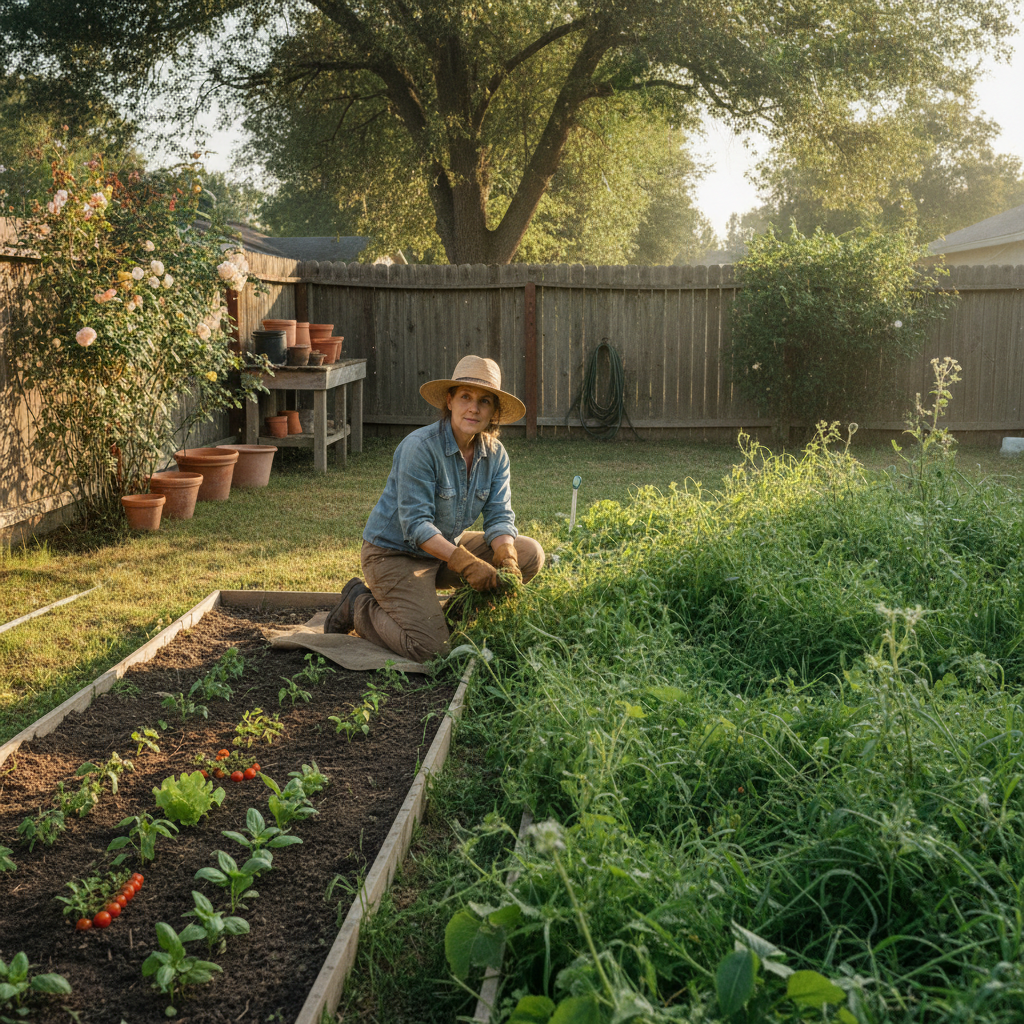
One scriptural image haunts the consequences of neglect: "I walked by the field of a lazy person, the vineyard of one with no common sense. I saw that it was overgrown with nettles..." That vineyard, overrun and broken, is a picture of spiritual decay. The weeds are choices unmade; the broken wall, a community left undefended.
We must resist the myth that not acting preserves options. In God’s economy, growth comes through faithful labor and faithful risk. The parable that tells servants, "Occupy till I come," is not a call to passive waiting but to purposeful engagement with what we've been given.
A hard saying hangs over this truth: "Hell is paved with good intentions." It is ruthless in its logic and pastoral in its warning. Loving intentions uncoupled from action are not merely unfruitful—they are culpable.
Imagine a small church kitchen entrusted to you. The light flickers, the pantry is sparse, and the sign-up sheet for outreach is empty. You could offer a prayer and plan to return "someday," or you could buy a bulb, sweep the floor, and sign up. One is sentiment; the other is stewardship. God honors the hands that occupy.
How to Overcome Fear Through Action
Fear is a great immobilizer. We tell ourselves that thinking or planning will banish it. But thinking will not overcome fear—action will. The Bible calls us to courage exercised in motion, not merely felt in sentiment.
"For I hold you by your right hand — I the LORD your God — and I say to you, Do not be afraid; I will help you."
— Isaiah 41:13
Isaiah speaks to a people trembling before enemies and exile. The promise isn't theoretical comfort but a tangible assurance: God is holding you and moving with you. The remedy for fear is partnering with that hand through small, faithful steps.
The Heart of It: Each step of obedience dissolves a piece of fear.
Behind the Words: The Scriptures repeatedly command strength and courage, not as platitudes but as summonses to action, because God goes before us (see Deuteronomy 31:6).
- Try This: Take one practical step this week—even a brief phone call or a five-minute prayer—that moves you toward what God has placed before you.
Imagine fear as fog on a road. Sitting in the car breeds nausea; you see nothing but hazy outlines. But when you put the car in gear and drive slowly, the fog parts inch by inch. Each yard traveled builds confidence. In spiritual life, the first tiny move—sending the email, making the call, showing up—changes everything.
Psalm promises a partnership in our steps: "The steps of a man are established by the Lord when he delights in his way." We are not abandoned in timid beginnings. God directs our steps as we do the next right thing.
Practical rhythm to adopt:
- Start very small. Don't despise small beginnings; do one thing well. God rejoices to see work begin.
- Chain micro-habits. One phone call becomes a conversation; one conversation becomes an opportunity.
- Reframe fear physiologically: breathe, pray, then move. Fear's bodily grip loosens with action.
Behind the Words: Zechariah 4:10 was spoken to a discouraged remnant rebuilding the temple after exile. The people felt small and insufficient; the work before them seemed larger than their strength.
The Heart of It: Do not despise small beginnings—God celebrates the opening steps.
Behind the Words: In the original setting, resources were meager but the Lord emphasized that beginnings matter because God’s presence is with the process.
Try This: Picture the first nail in a new project—awkward, small, imperfect. Do that tiny, visible thing today that shows you mean to begin: one volunteer hour, one sincere apology, one page written.
A common misunderstanding is thinking that small steps are insignificant. They are not. God measures faith by obedience, not by outward success.
Why Actions Matter More Than Intentions in Faith
We admire noble motives. We tell ourselves we mean well. Yet Scripture insists that people are judged by actions, not intentions. The Good Samaritan was remembered because he acted, not because he felt pity.
"Little children, let us not love in word or talk but in deed and in truth."
— 1 John 3:18
John wrote to a church wrestling with performative religion—words without deeds. He insists authentic love is concrete, visible, and costly.
The Heart of It: Good intentions are the soil; deeds are the harvest. Without sowing, there is no increase.
Behind the Words: Jesus and the apostles moved the ethic of faith from internal sentiment to external demonstration; faith that saves is proved by works.
- Try This: Move one intention into the world—deliver the meal, make the apology, sign up and show up.
There is a crisp accountability in human relationships: if you agree and don't follow through, trust erodes. Promises without provision become harm. Our faith must align with action so others are not left in the gap.
Practical alignment for daily living:
- Set immediate, measurable next steps for each intention this week. Write them down, assign a deadline, and tell a trusted friend.
- Use the James mirror test: if you hear the Word and walk away unchanged, you have not truly done what you heard.
Behind the Words: James 1:23–24 speaks to hearers who look in the mirror of God's Word but walk away unchanged. In the early church, hearing without doing risked mimicking culture rather than transforming it.
The Heart of It: Hearing God's Word without action clouds identity; action confirms it.
Try This: After reading a verse tonight, write one tangible next step that embodies that truth—then do it tomorrow. Do not let Scripture be cosmetic.
A common misunderstanding is believing that conviction alone proves obedience. It does not. Obedience is verified by the visible fruit of changed behavior.
We will never out-pray our need to act. Prayer opens us to the grace to do; action enlarges faith and scatters fear. We are not called to frantic activity but to faithful motion—small, steady, visible steps that steward what God has entrusted to us.
Return to that list, that neglected vineyard, that empty sign-up sheet. Remember the Good Samaritan was remembered because he had money and hands. Remember that God goes before us, holding our right hand, inviting our feet to follow.
Tomorrow morning you stand at a kitchen table with a cup of coffee and the list of intentions before you. Instead of re-shelving hopes, you cross one off. You make the call that has been waiting. You plant a seed where God asked. The weeds begin to thin; the vineyard looks a little less wild.
We are called to occupy—today and every day—until He comes. Move the small things. Watch faith grow.
Key Takeaways
- Idleness leads to spiritual and personal stagnation.
- Taking action is crucial for discipleship and personal growth.
- Trusting in God provides confidence to overcome fears.
- Actions speak louder than intentions; demonstrating faith through deeds is essential.
- Productivity should be pursued as a form of worship to God.
Notable Quotes
"If you do nothing, that's all you'll ever become, or have nothing."
"Thinking will not overcome fear, but action will."
"No one would remember the Good Samaritan if he only had good intentions."