Investing in Christian Media
Learn practical ways churches and faith-based businesses can partner in media, fund shared projects like radio towers, and build a united network to amplify the gospel.
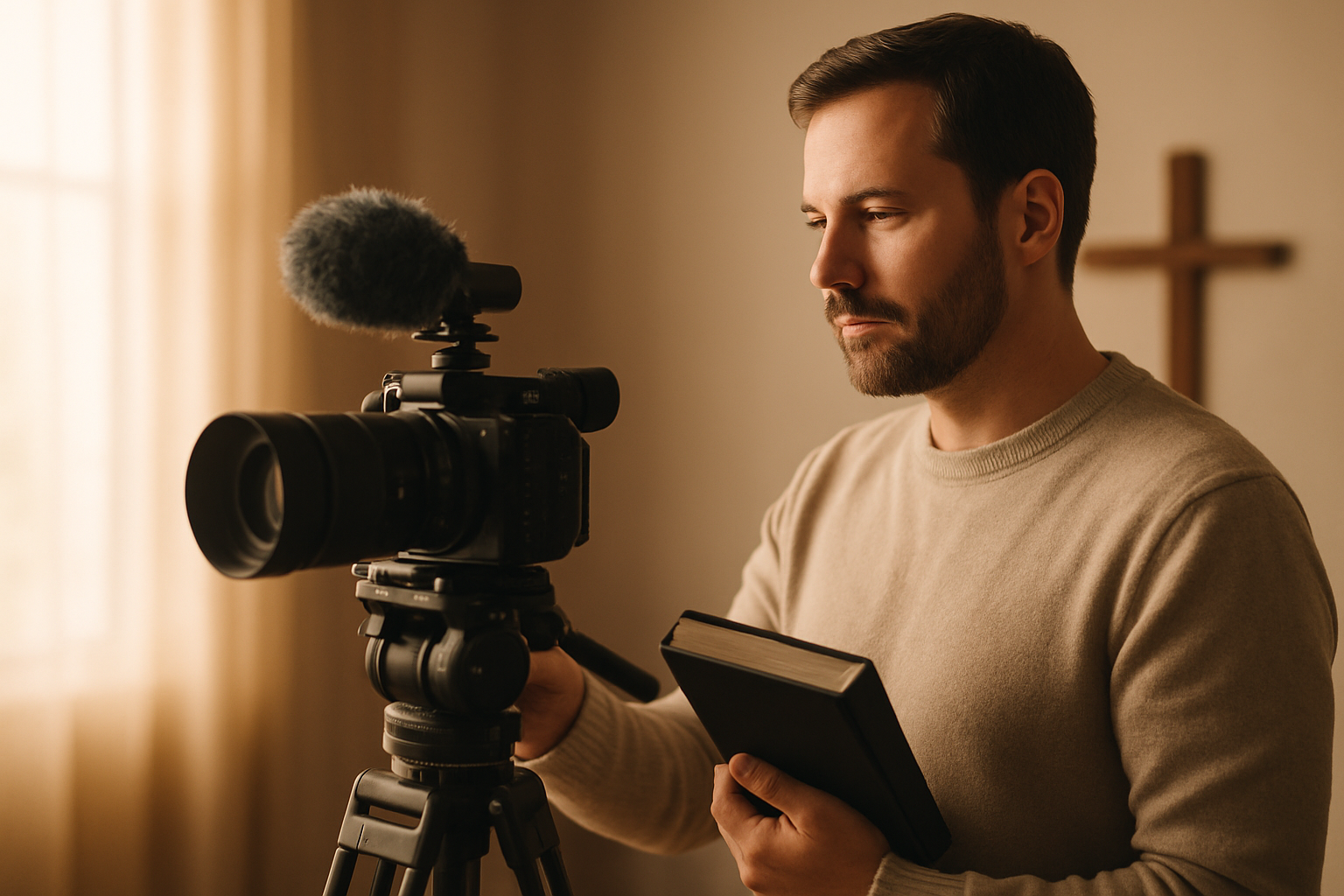
Why invest in Christian media outreach?
Media is not neutral. When we buy airtime, ad space, or create online content, we decide what conversations get amplified and who gets to speak. For small ministries and businesses, that decision can widen a doorway into new communities or keep a door unopened.
Too often we let cost be the final word. Multiplatform integration multiplies impact: radio, television, and internet can bolster one another so a single message reaches different audiences in different rhythms — commuters in the morning, families on Saturday, seekers scrolling at midnight. A coordinated platform can introduce a ministry or small business to thousands in a way none could do alone.
Bold stewardship of media multiplies gospel exposure more than isolated effort. Pooled resources let groups afford slots and production quality they couldn't on their own.
- Example: a small restaurant whose Sunday special becomes the welcome point for a community outreach dinner, promoted across radio and TV.
A weekly television slot creates a predictable place for people to show up. Predictability builds trust. It turns a passing viewer into a regular visitor and, eventually, into a partner.
Behind the Words: Acts 1:8 records Jesus’ promise that the disciples would receive power to be witnesses "in Jerusalem, and in all Judea and Samaria, and to the ends of the earth." That geographic movement was literal and strategic: witness began where people already lived and then moved outward. The passage shows mission that is local first and scalable beyond local walls.
The Heart of It: Witness is local and scalable; the power to witness is meant to change our neighborhoods first. Bold, shared stewardship of media extends opportunity for gospel encounters beyond one congregation or ministry.
Try This: Picture an empty storefront on Main Street. Now picture your ministry’s name on that window, your event promoted on a local radio morning show, and a short clip on Saturday TV. Who do you imagine walking through that door? Invite one new neighbor in this month.
A common misunderstanding is thinking media is only for those with huge budgets. Shared platforms and collective fundraising lower barriers.
How can businesses and ministries use media opportunities effectively?
You don’t need to be a media expert to benefit from media — but you do need a plan. Tailored media packages exist so entrepreneurs, artists, and churches can present a clear, inviting message without reinventing production every time.
Start with three questions: Who do we want to reach? What do we want those people to do? How will our message look and sound across radio, TV, and social media? Answering them turns ad content from noise into invitation.
There is also a posture: come alongside one another. Being present where conversations about values, family, and faith happen is not a takeover but faithful presence.
Clarity and partnership are two of the most strategic investments for small faith-based ventures. When we clarify our message and partner with existing platforms, we save time and money and gain credibility.
- Example: a musician featured on a morning show segment who is also linked in social posts so listeners become fans and customers.
Practical steps: craft a thirty-second message that names the problem you solve, invite listeners to one next step, and include a single URL. Test it on radio, then reuse the same clip as a social audio post. Consistency builds recognition; recognition builds trust.
Behind the Words: Paul wrote, "I have become all things to all people, that by all means I might save some" (1 Corinthians 9:22). He adapted methods without abandoning the gospel. The principle is adaptability in method, not compromise in message.
The Heart of It: We adapt our methods without abandoning gospel truth. Method is stewardship of communication, not dilution of doctrine.
Try This: Imagine a small bakery seeking to serve refugee families. They create a thirty-second ad inviting people to a Saturday community loaves morning and exchange the ad with a radio partner for discounted rotation. After six weeks, families who heard the spot arrive because community members trusted the radio recommendation.
A common misunderstanding is that adaptation equals compromise. It does not. Adapting how we share the gospel is faithful stewardship.
Now a pastoral prompt: examine whether we are withholding support because of cynicism, fear, or inertia rather than discerned conviction. When a platform emerges to support churches, artists, and businesses who share the faith, choosing to participate or ignore has consequences for communal witness. The call is corrective, not condemning — a call back to responsibility.
When the airwaves become our neighborhood
Think of a radio tower as more than metal and wiring: for a community, a tower extends a congregation’s voice to neighborhoods that can’t walk into our buildings. Some projects are simple to describe but costly to execute: a new tower might need $75,000; expanding television airtime can run in the low hundreds of thousands.
Fundraising for shared infrastructure is sacrificial and practical. When we fund a tower, we fund a neighborhood becoming reachable; when we fund a slate of television slots, we fund conversations that wouldn’t happen otherwise. The ask must be concrete: $75,000 for a tower upgrade; $200,000–$300,000 to expand television airtime. Those figures are the price tags of access.
Fundraising conversations can feel messy because they involve real people, real needs, and real limits. Messiness doesn’t negate purpose; it invites creativity.
Shared investment multiplies reach and responsibility in equal measure. Because media reach costs money, collective giving is the most biblical way to take territory.
- Example: when ten churches each give a small amount monthly, they collectively fund a weekly show that introduces thousands more to the gospel.
Practical fundraising ideas include product-driven campaigns (selling branded shirts to unite supporters), investment programs for committed partners, and recurring small gifts that compound. A visible unity project — say, a campaign where one million believers wear a single shirt — is more than merchandising; it signals presence in public life and cultivates identity.
Imagine a local campaign where ten artists produce content for a shared show. Each brings an audience; producers rotate spotlight segments. Sponsors fund airtime in exchange for community profiles. Within months the show becomes a hub: restaurants featured, ministries announcing events, musicians debuting songs. That hub is community-building in motion.
Fundraising also clarifies stewardship. When we ask people to contribute, we offer transparency: what funds do, who benefits, and how growth will look. When donors see a tower installation or a new broadcast schedule, trust builds and more people join the effort.
A common misunderstanding is thinking only wealthy people can start such projects. Not true: a large sum is often the sum of many faithful small gifts. The body moves when each part acts.
We are at a crossroads where media can be a bridge or a barricade. Will we treat platforms as shared missions and invest together with time, creativity, and money? Will we stop turning a blind eye to opportunities that require sacrifice? We can choose solidarity.
Support looks different for each of us. Maybe you sponsor a local slot, buy a product that funds a tower, or lend your voice to share a clip. Maybe you refuse to be a bystander when a community initiative asks for help. If all of us commit to one small action this month, the ripple will be visible.
We’re in this together — building a network of believers, funding the structures that let the gospel move, and helping businesses and ministries find a public place to serve. Make your neighborhood bigger by taking the airwaves seriously and stewarding them well.
Key Takeaways
- Engage with media to promote your business or ministry.
- Support local Christian initiatives and platforms.
- Collaboration and unity within the community can amplify impact.
- Invest in shared goals and opportunities to spread the message of the gospel.
- Persevere in your dreams despite challenges and negativity.
Notable Quotes
"We're trying to get the believers of God to come together and let's create that synergy and work together so that we can take territory in media."
"If you have a business or if you want to invest in the show, I can tell you we do have an investment program that I'll tell you about later."
"We want to use our platform to help you, to help you get your name out there, to help you get your business out there."