How U.S. Politics Shapes Peace — and What We Can Pray
A timely, pastoral look at how U.S. policy, a fragile Lebanon–Israel moment, and lame-duck diplomacy can shape peace — and what Christians can do next.
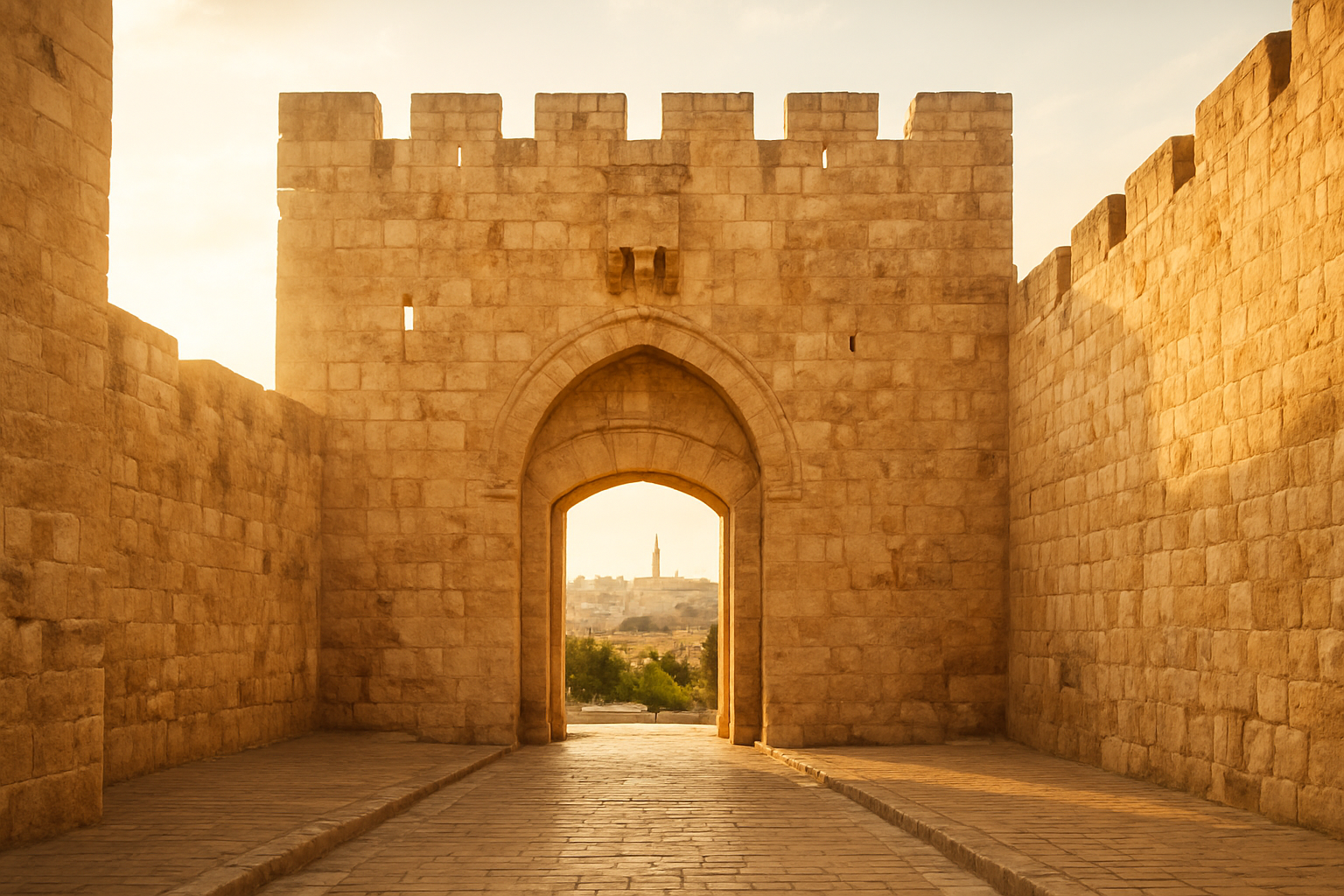
How will a Trump administration affect Israel and the Middle East?
Many in the region react before a new administration is sworn in. The projection of power — whether explicit policy or perceived posture — changes calculations among governments and militias. That matters because deterrence, whether real or credible, shapes whether tensions escalate into wider war.
We must hold two dynamics together. First: posture. A forceful posture can deter aggression and encourage diplomatic openings. Second: timing. Shifts in U.S. leadership are read as windows of opportunity or vulnerability. That reading invites action from regional actors who are "trying to think, prepare for either a Trump administration or a Harris administration," and who gauge what they can accomplish in narrow moments.
"For he himself is our peace, who has made the two groups one and has destroyed the barrier, the dividing wall of hostility." — Ephesians 2:14
Behind the Words: Ephesians was written to a church fractured along ethnic and religious lines as Judaism and Gentile Christianity began to intermingle. Paul urged them to see Christ as the one who dismantles walls of hostility. That context is not only about geopolitics but about the hard work of making former enemies into fellow heirs.
The Heart of It: Strength without reconciliation only preserves the peace of the powerful.
Try This: Name a relationship where safety replaced restoration. Picture your Sunday table and an empty chair for someone you avoid. Before you argue about policy, go sit in that chair and listen for five minutes without responding.
Common misunderstanding: Strength and reconciliation are opposites. They are not. Strength can create space to pursue lasting reconciliation, but unless reconciliation is pursued, strength becomes domination.
Try This: The Middle East reads U.S. signals quickly. When the State Department or the White House shifts tone, actors from capitals to militant cells reassess. Pray for restraint, for wise deterrence, and for God to soften hearts that currently prefer violence. Remember the hard saying often heard in policy circles: "the Iranian regime is homicidal but not suicidal." That blunt assessment is meant to push us toward urgent prayer for restraint and wisdom.
Can a peace agreement be reached between Lebanon and Israel?
Talk of an Israel–Lebanon peace once would have sounded fanciful. Today it is suddenly on people’s lips because of battlefield shifts and political fragmentation inside Lebanon. Hezbollah has been battered; leadership structures were targeted so effectively that observers described an org chart where "Israel finally took out the last person that was on that org chart." Names matter because organizations unravel when their mid- and upper-level command and control is disrupted.
Lebanon's political mosaic — Christians, Sunni Muslims, Shia Muslims, Druze and others — has been in precarious balance for decades. A Christian party that had been aligned with Hezbollah recently broke away, and those fractures create both danger and opportunity. When a bloc once aligned for pragmatism changes its calculation, the space for negotiation widens.
One detail from the field helps us grasp the cultural texture: a barber in Nazareth told a visitor, "I'm a Christian," and when asked what church he attends he replied, "I don't go to church. I'm an atheist." That exchange reveals how identity in the region is often cultural and communal rather than strictly doctrinal. Politics moves on those communal cues. If community leaders — not only clerics — sense a path to peace that preserves identity and security, they will pursue it.
The Heart of It: Peace requires fractured communities to choose integration over patronage.
Behind the Words: Negotiations in antiquity and modern diplomacy assume stable interlocutors. Lebanon's civil wars and external interventions fractured who actually speaks for the state. Historically, when command-and-control of militias was clear, treaties were possible; where they are diffuse, agreements fail. That background shows why disrupting leadership charts matters but is not sufficient for peace.
Try This: Imagine a makeshift negotiating room in Beirut. The air smells of coffee and diesel. A Christian regional leader speaks first, then a Sunni merchant, then a Shia municipal mayor. Each fears losing influence. What concession could each accept that preserves dignity and secures tomorrow? Picture offering a small economic package or a local security guarantee that lets them say yes at home.
Common misunderstanding: Removing militant leaders instantly creates peace. It doesn’t. Leadership removal can create a vacuum that must be filled with robust civic and economic rebuilding. The operation sometimes dubbed in conversation as "operation grim beeper" reduced command layers — but rebuilding local governance, economic trust, and cross-communal ties is the next, harder work.
As Christians, our role is to pray for peacemakers and to support organizations that invest in grassroots reconciliation. We can also model how to hold identity and humility together, recognizing regional identities that are cultural as well as spiritual.
What might the lame duck session mean for Israel at the United Nations?
The lame duck period — that brief stretch when outgoing officials still wield power — has historically produced actions incoming leaders find hard to undo. In diplomatic bodies like the U.N., this can look like last-minute resolutions, funding moves, or posture shifts that alter the playing field. When an outgoing administration is tempted to score a final political point, the repercussions can last for years.
A concrete flashpoint has been the fate of UNRWA, the United Nations agency serving Palestinian refugees. Reports have framed recent pressure on the agency with blunt language: a decision communicated as, "sorry we're done with you and you got 30 days." Whether literal or hyperbolic, that phrase captures the suddenness with which funding or operational permissions can be withdrawn. Those decisions ripple: schools close, aid convoys stall, and public opinion shifts.
Another dynamic to watch is Security Council maneuvering. An outgoing administration can abstain, withhold a veto, or push through resolutions that constrict an incoming administration’s options. Those maneuvers can be petty — but with massive repercussions for the people caught in the crossfire.
The Heart of It: Short-term political payoffs at international bodies often produce long-term harm for civilian populations.
Behind the Words: Security Council dynamics date to the post-World War II order, when great powers built rules to avoid direct conflict but frequently exerted influence through international institutions. That context explains why last-minute votes matter and why reversing them is politically costly.
Try This: Picture a school in Gaza that depended on an agency's payroll. One morning, teachers arrive and the payroll is frozen. Parents stand in the courtyard wondering where the next meal will come from. Write a letter, pray specifically for those teachers, and support vetted humanitarian partners who step into gaps with steady, principled relief.
The political lesson is blunt and uncomfortable. Some leaders will use lame duck sessions to press positions at the U.N., and some will use agency funding as leverage. That is why we must be attentive, prayerful, and active. We cannot control every vote at the Security Council, but we can influence the moral clarity of our own leaders and hold institutions accountable to protect civilians and promote genuine reconciliation.
"Blessed are the peacemakers, for they will be called children of God." — Matthew 5:9
Behind the Words: Jesus did not offer a sentimental commendation. Calling peacemakers "children of God" links their work to the shape of the kingdom: active, costly, and relational. Peacemaking requires courage, presence, and willingness to sit with those who fear and grieve.
We are called to be realistic about power and unwavering in prayer. Recognize the difference between deterrence and domination. Advocate for policies that protect the vulnerable. Support reconciliation efforts that bind wounds rather than exploit them.
We will pray. We will speak. We will act. And we will do so remembering the gospel's claim that we are entrusted with the ministry of reconciliation. That is our vocation, whether in our neighborhoods or in nations. When headlines shift, our calling does not.
Pray for leaders to have wisdom. Pray for civilians trapped by conflict. Pray for Christians everywhere to be bold peacemakers — not by taking cheap political victories, but by seeking durable peace.
Amen.
Key Takeaways
- Pray for peace and stability in the Middle East.
- Understand the political dynamics affecting Israel and its neighbors.
- Recognize the importance of reconciliation efforts across communities.
- Stay informed about the impacts of U.S. politics on Israel.
- Support organizations promoting Christian-Jewish ties.
Notable Quotes
"When you think of Christianity or faith in the United States, we think about it as an actual belief; in the Middle East, you got to just think of it in terms of that's what my community and culture does."
"Let's pray together as we go."