Prayer, Community, and Testimony Unlock Courage
Do you hesitate to speak into strangers’ lives? Ask one brave question: "How can I pray for you?" Small acts of prayer and community unlock unexpected courage.
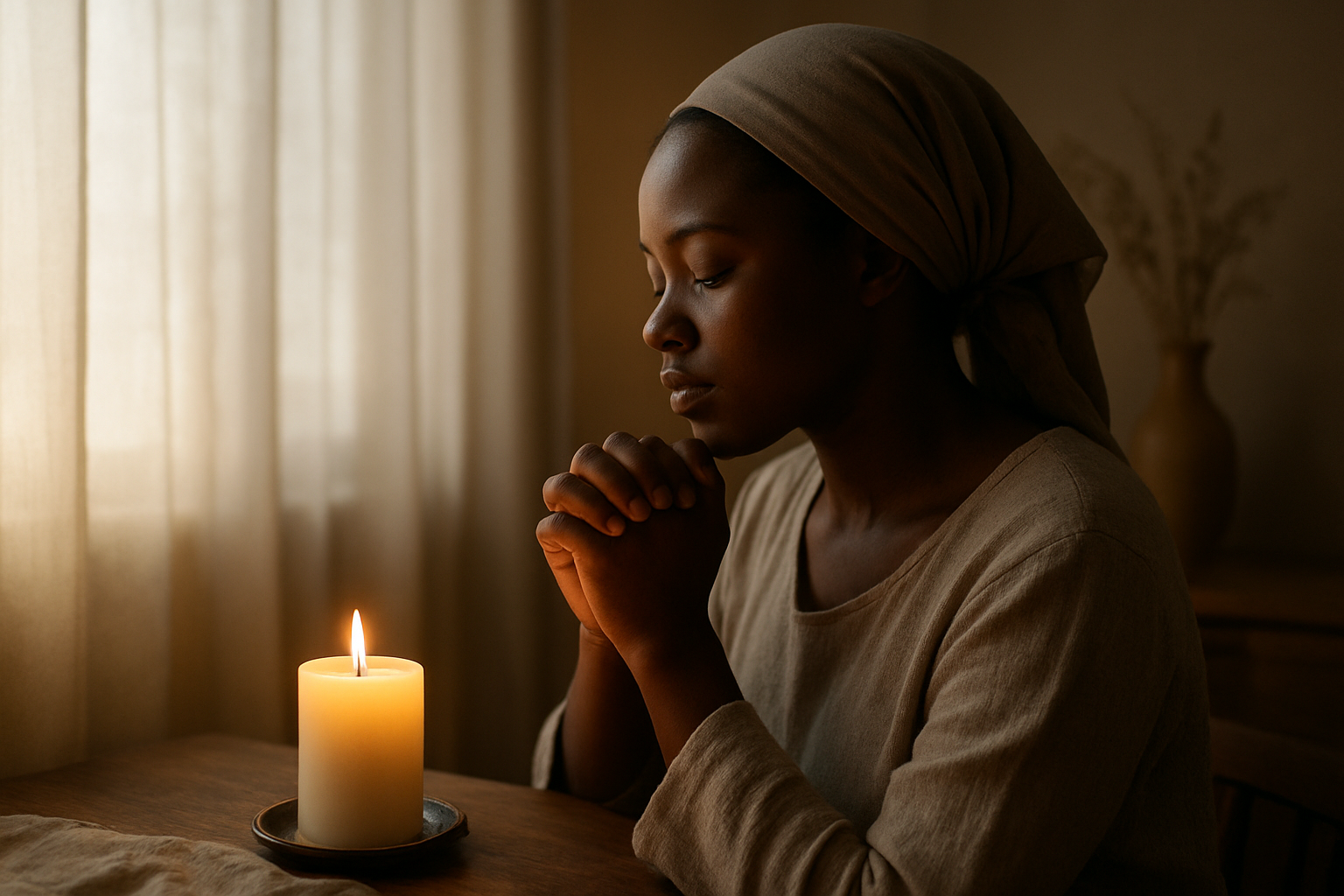
Why Your Testimony Matters After Long Seasons of Waiting
You may think your story is too small—too ordinary, too flawed, too late. Seasons that feel like deserts often become the source material for powerful testimony. One woman put it bluntly: she realized she had been "40 years in a desert" and then tasted a tangible newness of Jesus. That desert wasn’t wasted; it was preparation ground.
The Heart of It: Your history can be your mission field. This matters because God redeems timelines—what looked like delay can be the soil for testimony that comforts others.
- Try telling the story of one turning point, not the whole biography.
Behind the Words: Psalm 63 was written by David while in the wilderness of Judah, fleeing enemies and craving God’s presence. The original words come from deep thirst and a soul longing for God’s nearness in uncertainty.
The Heart of It: Long seasons of waiting sharpen our appetite for God and make our testimony credible to others.
Try This: Picture the moment everything changed—stand there in memory and write three concrete ways God showed up. Then begin with one line: the moment you first felt seen.
A hard, honest moment to hold: “I was identifying as a Christian yet not submitted at all.” It convicts because it strips away religious label and asks whether the life beneath the label is surrendered. We don’t fast-forward through the reckoning. We sit with it, repent, and then tell others about the mercy that followed.
When you tell your story, you don’t need to be polished. Be honest. The raw details—moving six hundred miles, standing in a driveway and realizing you’d been wandering—make testimony real. People don’t need a perfect protagonist. They need someone who has met Jesus in the middle of real life.
What Scripture Teaches About Prayer as a Connection to God
Prayer isn’t merely a religious duty. Prayer is the line that pulls heaven into our neighborhoods. One simple description nails the essence: prayer is our connection to God. Think of prayer less as a to-do list and more as a lifeline—an open channel. As someone put it plainly, “The phone lines are always open.”
"Pray without ceasing."
— 1 Thessalonians 5:17
Behind the Words: Paul’s short instruction to the Thessalonians came to a young church living under persecution and confusion. In that context, continual prayer meant dependence on God—a lifestyle, not a checklist.
The Heart of It: Prayer keeps us in sync with God’s purposes and reminds us our lives are not our own.
Try This: Before you speak to someone, pause and ask God one simple question: Who does this person need me to be right now? Then speak from that posture.
The Heart of It: Prayer is both warfare and welcome. This matters because it changes how we approach people: prayer prepares us to act and keeps our motives clear.
- Next time fear holds you back, pray one sentence—“Lord, help me see them through Your eyes”—and then move.
Stories from the street and the mall make the abstract concrete. A group of women began practicing walking out their faith—not waiting for perfect conditions but asking strangers, "How can I pray for you?" That question is a ministry tool, not a script. It opens doors, invites confession, and lets God do what He does best: heal, rescue, and mend.
Prayer reshapes us. When we pray regularly, worry loses its grip. Prayer and worry can look similar—both involve thinking about future problems—but prayer redirects the thought to God. The habit of prayer trains us to bring heaven’s priorities to earth.
How Community Helps You Finish What God Asked You To Start
We are not meant to do kingdom work alone. A writing group formed around encouragement and discipline shows how community completes calling. A group can move someone from doubt to delivery, from “I’m not qualified” to a finished manuscript in weeks.
The Heart of It: Community is the scaffolding God uses to build your calling. This matters because the solitary Christian life is a myth—Scripture and experience both show we thrive when we walk together.
- If you’re stuck, find two people who will read one chapter and tell you the truth.
Behind the Words: Hebrews 10:24–25 encourages believers to gather, spur one another toward love and good deeds, and not neglect meeting together. It arose for churches tempted to give up when hardship made gathering risky.
"And let us consider how to stir up one another to love and good works, not neglecting to meet together..."
— Hebrews 10:24–25
The Heart of It: We need each other to see God’s call through—from the first whisper to the last page.
Try This: Imagine a weekly habit: 30 minutes of prayer for one another’s projects, followed by 15 minutes of gentle accountability. Picture the group at a kitchen table or on a neighborhood walk.
Real scenes show how community births courage. A newcomer to a city was invited into a writing group that met through a program that provided structure and encouragement. She hesitated—"I wasn't trying to write a book," she said—but one friend nudged her, another provided deadlines, and consistent presence turned whispers of a calling into a published book. The group was the scaffold; God was the architect.
Community also helps us overcome the paralysis of comparison. It’s easy to watch others publish and think: I’m late. Faithful companions remind us God’s timeline is not the world’s. They expose lies: the enemy will whisper that your waiting is disqualification. Often the waiting deepens what He’s forming in you.
A vivid scene: two women walking a trail felt led to approach someone who looked burdened. They asked, tentatively, and the encounter "bust through the fear of man." The group learned by doing. The first time is awkward; the second time it’s habit; by the tenth it’s ministry.
Community prays with you, corrects ambition out of step with God, celebrates small wins, and receives the book when it finally comes. That friend who said, "Write about what just flowed out of you," may be the prophetic voice you need.
When the Ordinary Becomes Sacred
There’s a holy audacity in walking up to someone and saying, "I want to pray for you." It’s simple, human, and terrifying. And it works. Sometimes the most unlikely places become altars: a mall kiosk, a beach, a tourist trail. People who are hurting show up in ordinary places—and ordinary people who are willing become instruments of grace.
The Heart of It: Small acts of courage expand the kingdom. This matters because God rarely waits for perfect strategies—He meets our obedience where we are.
- Start with one small action this week: a quick prayer for the cashier, the woman on the bench, or the writer in your small group.
Here’s how that looks: a woman described coming to faith in prayer after moving six hundred miles. She began praying beside her bed, not knowing how to pray well, and the ordinary discipline of seeking God turned into a passionate calling to pray for others.
Another image: a women’s group intentionally conversing with strangers and praying. They learned quick starters—"Where are you from?"—and then followed the Spirit into deeper questions.
Sometimes ministry arrives with merchandise: shirts that read "coming soon" in front and "Jesus" on the back became conversation starters. An evangelistic T-shirt isn’t a gimmick if it softens the way people listen to a stranger with an open heart.
One more truth: faithfulness sometimes looks like long seasons of obedience before breakthrough. The woman who finally wrote a book said she’d been circling the same mountains for years. When the right word came, it flowed like a single document; a stalled project was suddenly released. Why? Because she had been prepared by community and prayer. She had been learning to say yes.
We don’t have to be experts to be useful. We simply need to be present—willing to tell our story, willing to pray out loud, willing to show up for one another. When we do, we release a countercultural witness: a people who approach strangers not with suspicion but with prayer.
Ask the question. Join a small circle. Tell the one true story of what God has done for you. If you hear the hard voice that says, "You weren’t submitted," let that voice drive you to repentance and then to testimony. God redeems the most awkward, shame-filled parts of our past and uses them to free someone else.
If today you want a practical next step: write one paragraph of your story that begins with the moment God felt real to you. Take it to a friend, read it aloud, and then pray for three people this week with the simple question: "How can I pray for you?"
Key Takeaways
- Embrace your past to find your purpose
- Community support is vital in faith journeys
- Prayer is a powerful tool for both personal and communal growth
Notable Quotes
"My passion is to serve their spiritual needs through discipleship."
"This has actually been something where she started with a different book, and then God just started moving on her."
"Prayer is our connection to God. It's our connection to heaven."