How Archaeology Strengthens Our Faith
Explore how the Copper Scroll and Dead Sea discoveries deepen our trust in Scripture and shape faithful pilgrimage—investigation as worship, not triumphalism.
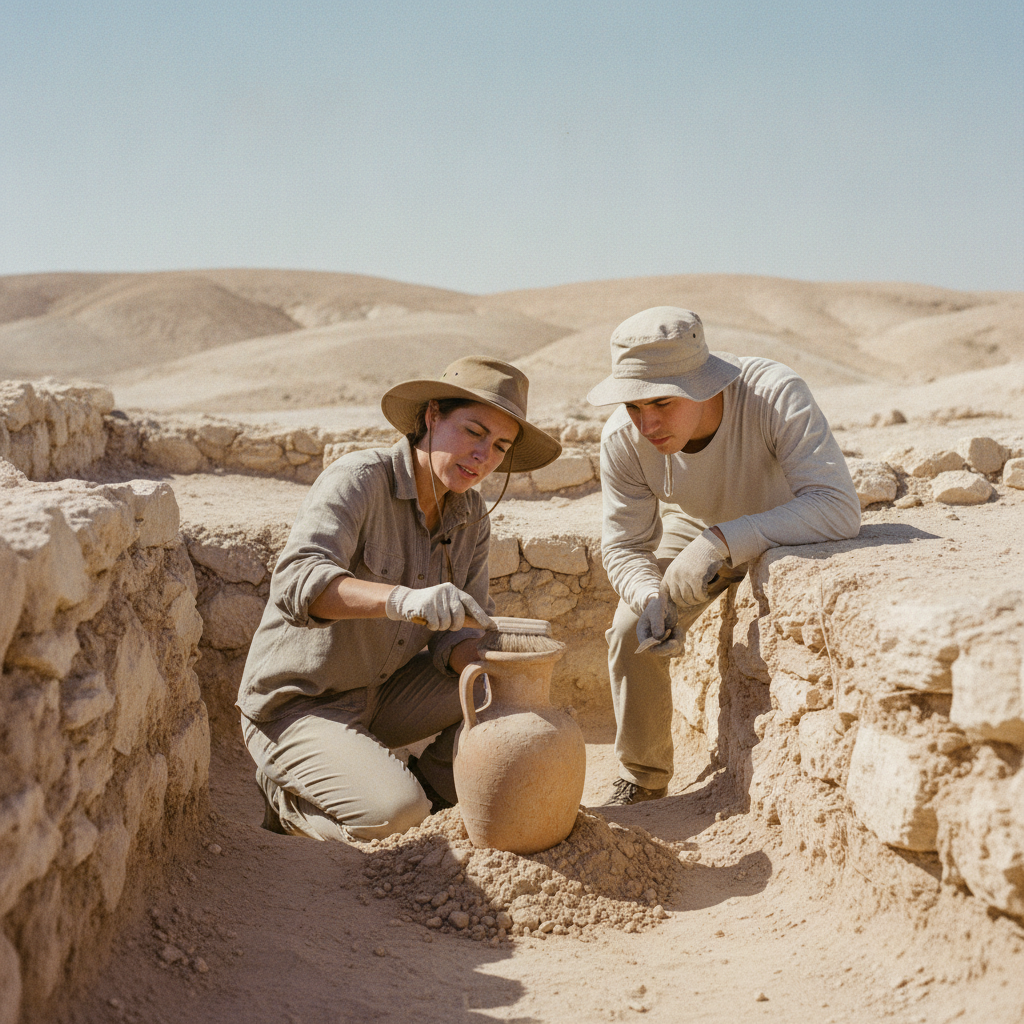
What is the Copper Scroll and why should we care?
The Copper Scroll stands out among the Dead Sea discoveries because it is literally metal—etched words on copper, not leather or papyrus. Roughly eight feet long and about a foot wide, it was found rolled up in two pieces in a cave near Qumran. That physicality matters: it’s a stubborn, heavy thing that refuses to be dismissed as legend.
The text etched on that sheet is not a theological treatise but a set of directions—lists and locations. The idea that a document would record where temple treasures were hidden makes the scroll feel like a map written across centuries, inviting investigation rather than mere admiration. That’s why archaeological method matters; it’s not curiosity for its own sake but a reverent pursuit of what God has placed in history.
The Heart of It: Physical artifacts can sharpen faith by turning stories into places we can visit mentally and spiritually.
Behind the Words: When an artifact is authenticated, the narrative that once seemed distant becomes proximate and relatable.
Try This: Let evidence deepen your worship rather than displace it.
Behind the Words: 2 Maccabees 2:4–8 sits in the tradition that tells of Jeremiah and others concealing sacred items before disaster. In its original setting this text comforted a people who believed God preserves what is holy through human hands and hidden places.
The Heart of It: Ancient actions—burying shrines, hiding treasures, making secret lists—tell us God’s story moves through messy, human decisions.
Try This: Picture the copper sheet unrolling in a cave—cold metal catching torchlight. Imagine those directions pointing not only to lost gold but to a lesson about stewardship and obedience passed down in clay and metal.
One of the most arresting stories connected to the Dead Sea discoveries is the almost comic scene of a young shepherd searching for a stray goat, tossing a stone into a cave, hearing a jar break, and stumbling onto ancient scrolls. That moment—shepherd boy, goat, tunnel—is not cinematic fantasy. It reminds us that God’s provision and truth often arrive through ordinary, even bumbling human moments.
We should be honest: archaeology won’t answer every question you bring to the Bible. But details like a metal scroll’s size, the way it was rolled and hidden, and the plain human stories woven through discovery anchor the text in history. When you stand before God, your faith is not diminished by evidence; it is allowed to grow into a deeper, tested confidence.
How do the Dead Sea Scrolls strengthen our confidence in Scripture?
The Dead Sea discoveries are not a single artifact but a library—thousands of fragments that together reconstruct the world in which the Bible took shape. They show scribal habits, textual variants, communal life, and the kinds of Scripture those communities read and revered. That context doesn’t replace the Spirit’s work; it complements it.
Archaeology has a patient, humble way of speaking. It doesn’t shout declarations; it offers traces: footprints, pottery rims, an ink stain on vellum. Those traces allow scholars to triangulate time and place, helping us understand how biblical texts were preserved, copied, and treasured by communities across generations.
The Heart of It: Historical finds give corroborating detail that makes Scripture’s world more tangible, not less sacred.
Behind the Words: When archaeology confirms cultural practices or geographic references from the Bible, it affirms the reliability of the narrative frame.
Try This: Let confirmed history deepen your reading of Scripture—we read with both reverence and curiosity.
A blunt pastoral warning is needed here: treating Israel’s story and the archaeological record as optional background noise is a mistake. When the church sidelines the history that formed our faith, we risk a shallowness that leaves believers ill-equipped to answer honest questions about origins and context.
Behind the Words: The prophetic and historical books of the Old Testament were written into specific moments—communities under threat, exiles longing for home, priests and prophets wrestling with national identity. Understanding those original settings helps us be faithful interpreters rather than romanticizers.
The Heart of It: Confidence in Scripture is not blind; it is strengthened when the historical record dovetails with the testimony of the text.
Try This: The next time you read a historical passage—say, an account of a festival or a priestly duty—pause and look up a short archaeological note about that practice. Let the unearthed detail pull you back into the world of the text, making characters’ choices more human and their faith more vivid.
Some ask, "Does archaeology ever contradict Scripture?" Rarely—and when it seems to, the contradiction often exposes a misreading of the text or a misinterpretation of data. Archaeology corrects assumptions; it doesn’t cancel revelation.
A detail worth holding: many of these scrolls were preserved because people chose to hide them. That very act—secret-keeping for preservation—tells us the communities who treasured these texts believed they would matter to future generations. Centuries later a shepherd searching for a lost goat stumbled onto them, and the scrolls passed through local dealers before scholars recognized their worth. The humility of that story should make us careful and grateful readers.
When the ground of history meets the heart
A spiritual posture is required when archaeology meets faith: curiosity married to humility. We come with questions, but as pilgrims—people longing to see more of God’s handiwork in the world. That posture shapes how we travel, how we study, and how we speak across cultures.
The Heart of It: Pilgrimage and research should cultivate reverence, not triumphalism.
Behind the Words: Going to sites where biblical events occurred trains our imagination to read Scripture as both story and history.
Try This: Approach holy places as a guest—listen more than you assert.
The conviction that people need to walk where Jesus (Yeshua) walked is more than heritage tourism. Walking the land forms memory in a different register than a sermon. When you stand on a hillside where a parable may have been told, the text stops being abstract theology and becomes a living prompt for worship.
A pastoral word: relationship must come first. Historical curiosity can become cultural insensitivity if we treat people as objects of evangelistic strategy. Respect matters. Friends who’ve spent time in Israel say it plainly: don’t harass locals about faith. Sit, break bread, ask good questions, and build trust. The soil yields its story to those who move with humility.
Behind the Words: Psalm 122 is a song of ascent—the pilgrims’ hymn sung as men and women traveled to Jerusalem to worship at the temple. It expresses both communal joy and the sense that being physically present in holy space shaped corporate identity.
"I rejoiced with those who said to me, 'Let us go to the house of the LORD.'" — Psalm 122:1
This verse invites explanation: pilgrimage expressed communal longing and shaped worship. Being present in holy places shaped how people remembered and practiced covenant life.
The Heart of It: Pilgrimage is a spiritual discipline; it reorients us toward God by placing feet where memory has been sealed in stone and story.
Try This: Imagine a two-week prayer rhythm before any pilgrimage: daily readings tied to the places you’ll see, brief devotionals picturing the people who lived there, and a commitment to listen to local believers before you speak. Let your trip be formation, not a photo op.
We also have to resist the temptation to treat archaeology like a magic show—dig here, and proof will appear. God is not a vending machine for answers. Evidence complements faith; it does not replace reliance on the Spirit. Pursue history with honesty and humility; faith is tested and refined, not overturned.
Practical cautions matter. Some sites are politically sensitive; some practices that once existed no longer do; and traditions are contested even among experts. Learn from reputable guides and scholars. You don’t need to be an archaeologist to be a respectful pilgrim, but come prepared to listen and learn.
How investigation can be an act of worship
Curiosity can become devotion when we recognize the world God made as a testimony of its own—written in stone and metal and the contours of cities. Investigative techniques—careful reading of maps, measurements, and context—are not merely intellectual exercises; they honor the Creator by stewarding truth.
A few practical habits change how we learn and how we witness about what we’ve seen. First, read with charity: scholarly disagreement is normal and often fruitful. Second, bring the Bible to the site and the site to the Bible—let both inform each other. Third, prioritize relationships with local believers so your presence does not feel like a conquest but like a conversation.
The Heart of It: Research done in the right spirit enlarges worship and equips witness.
Behind the Words: Investigative work should serve the church’s spiritual health, not its pride.
Try This: Share findings humbly, allowing them to point others back to Scripture and to Christ.
One clear truth: God sees our hearts. Many of us explain away spiritual longings with excuses—money, time, convenience—until we realize the discomfort is God’s kindness. If you sense a tug to pursue deeper study or to travel to a holy site, ask whether that tug is a call to growth, then obey in faith. God notices small steps of obedience.
Remember the copper sheet and the shepherd and his goat. The most consequential discoveries often come through small, unexpected acts. Test evidence, listen to experts, and remain shaped by prayer. Investigation becomes prayerful labor: seeking truth, stewarding history, and widening the circle of wonder for the church.
Take this invitation: let history correct and confirm your faith without replacing the One who is the author and finisher of it. Walk where the stories walked, study with prayerful eyes, love people fiercely, and allow the past to become a path that leads you nearer to Christ.
Throughout, we’ve held three things together: the metal stubbornness of an engraved scroll, the fragile human story of discovery, and the pastoral call to let evidence deepen devotion. We are not archaeologists for archaeology’s sake; we are pilgrims learning to worship with fuller minds and wider hearts.
Key Takeaways
- Understanding of the Copper Scroll's historical and theological implications.
- Importance of archaeological evidence in validating biblical events.
- Encouragement to visit Israel to deepen one's faith and understanding.
- Emphasis on cultural sensitivity while engaging with the Israeli community.
- Call to explore deeper aspects of faith beyond traditional church experiences.
Notable Quotes
"If we find what that copper scroll says is there, it's going to look off roof of archaeology."
"People need to walk where Yeshua walked, where Jesus walked."
"It's an enormous mistake. They need to know."