Hope After the Flood: Church, Rescue, Education
After devastating flash floods left communities reeling, churches, volunteers, and a tuition-free Christian school model how faithful presence turns grief into long-term hope.
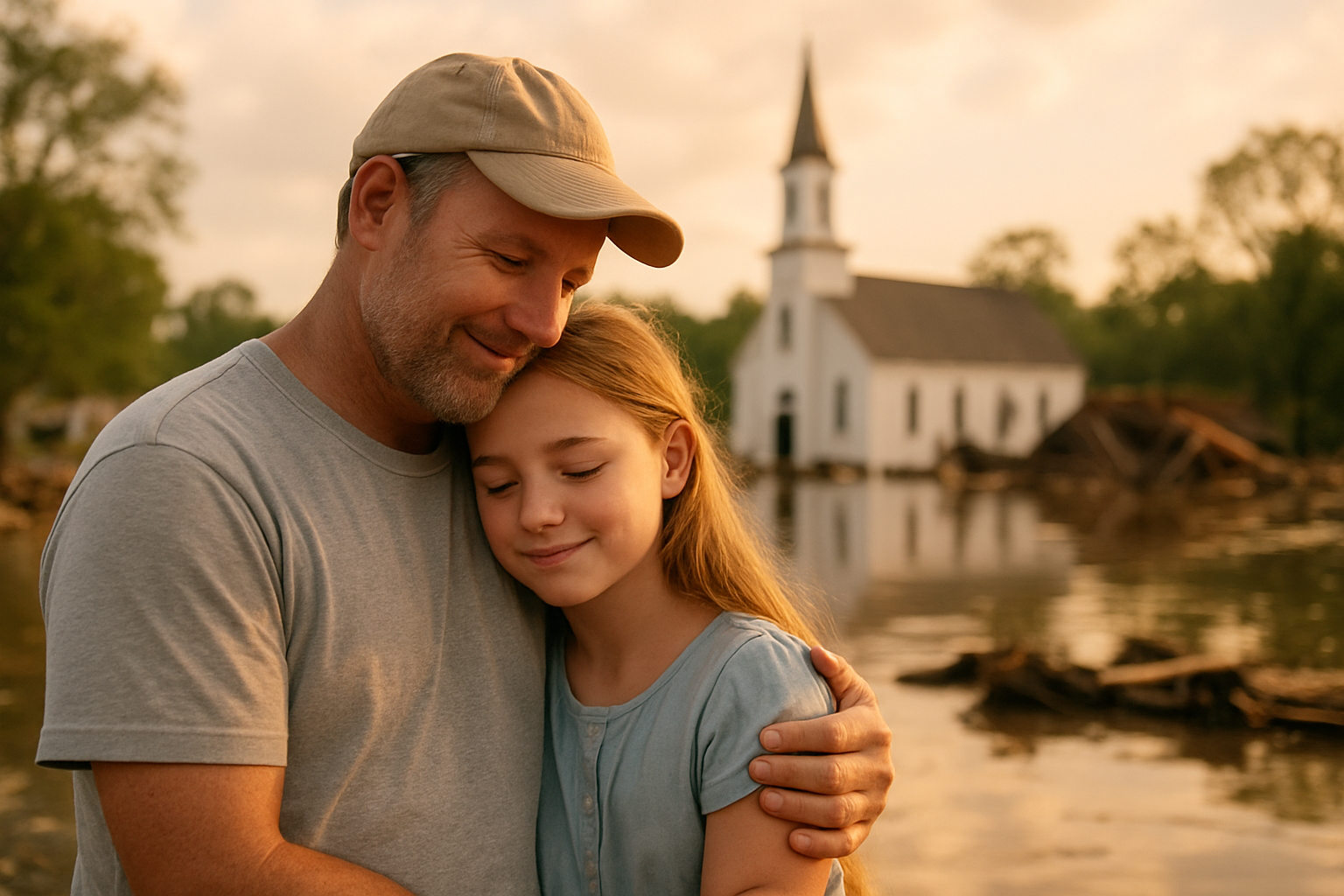
What connects a flooded campsite and a tuition-free school in Mississippi?
A single thread runs through both scenes: community that refuses to let people remain alone. From a Christian girls camp along the Guadalupe to a small classroom in Laurel, Mississippi, people stepped forward — some with boats, some with box fans, some with tutoring lessons and unwavering prayer. Different crises, same call: to bear one another’s burdens and build structures of hope.
This piece follows that thread: we sit with the grief of the flood, look at how churches and volunteers sustain recovery, and draw encouragement from a grassroots school that proves transformation is possible when faith and action meet. We are not spectators; we are a people responsible to one another.
When worship rose in a flooded bus
There is an image that should haunt us — a rescue bus slipping through rushing water and debris while rescued girls sang worship songs like "Pass It On" and "Lord Prepare Me to Be a Sanctuary." That was not staged. It was a trembling, holy response to terror.
To state the facts soberly: Camp Mystic, the Christian girls camp along the Guadalupe, still has not accounted for five campers and one counselor. Families wait. First responders keep working in hazardous conditions amid large piles of debris that complicate recoveries. The emotional weight of that work is real; leaders are monitoring officer and first-responder wellness, and we must take that seriously.
Grief does not move on a timetable. Churches and community teams will be needed long after the cameras leave. True recovery is measured in relationships rebuilt and futures restored, not just immediate rescues.
- Try This: Keep the long game in view — commit to follow-up visits, sustained prayer, and practical support like gift cards and fans for cooling.
A hard thing to say — and to hear — is the blunt count: “the death toll from last week's flash floods now passing 100.” How do we hold it without flinching? We hold it by refusing tidy answers and choosing steady presence. We mourn with those who mourn, act where we can, and pray without naïveté about the depth of loss.
Behind the Words:
"The LORD is near to the brokenhearted and saves the crushed in spirit." — Psalm 34:18
Behind the Words: In its original setting, this psalm comforted a people besieged by enemies and personal wounds. It reminded Israel that God’s nearness was not theoretical; it entered suffering.
The Heart of It: Divine nearness means we are not alone in our sorrow; God draws close to the broken and bewildered.
Try This: Picture the family who cannot find the scattered photos of a child lost to the flood. Sit with them — bring water, a cool place to sit, and say the child’s name aloud. Sometimes presence is the most audible sermon.
Common misunderstanding: Thinking a quick prayer erases the need for long-term practical support. Prayer is indispensable, but it must be married to action.
When worship rose in that bus, it was not escape from fear. It was a communal act that centered hearts around God even as chaos raged outside.
How churches and volunteers lead disaster recovery
When floodwaters recede a little, the real work begins: assessment, clearing debris, caring for first responders, and rebuilding homes. Local congregations are often the quickest to convert grief into sustained help.
One pastor spoke plainly: “God created us to take care of each other.” That line is not a slogan; it is theology that produces labor. Churches in neighboring towns collected supplies, offered trailers and transportation, and partnered with nonprofits to provide boots on the ground. They organized donation drives for box fans and gift cards — practical responses to heat and long-term need.
The Heart of It: Steady Presence
We are meant to be a people who bear burdens long-term. Temporary relief is necessary, but transformative care requires returning again and again — not for headlines, but for relationships.
- Try This: Organize small teams to rotate shifts at a relief hub for weeks or months, not just days.
Rescue operations also carry a spiritual burden. Responders report trauma, sleeplessness, and scenes they cannot unsee. The emphasis on officer and first-responder wellness is a reminder: rescue work takes physical, mental, and spiritual tolls. Churches can create listening spaces and coordinate professional counseling — a practical spiritual-care plan for those who run toward disaster.
There are specific needs that often get overlooked. Right now, communities asked for box fans and gift cards for future relief. Rather than pile clothing and items that may not fit the context, wise giving follows requests from local leaders. That humility is a spiritual discipline.
Consider a scene: it’s 100 degrees in a county shelter. A volunteer church team arrives with coolers, box fans, and quiet prayer. They do manual labor cleaning mud from a home one morning and the next week sit under a tree while a neighbor tells what they saw. That rhythm — work, listen, return — changes recovery from transactional to transformational.
We must keep praying for wisdom for civic leaders while advocating for systems that issue timely alerts and better protect vulnerable places. Prayer and policy should walk together; the two are not rivals.
How a tuition-free Christian school transforms at-risk children
If disaster shows what a community can lose, education shows what a community can gain. Unlimited Dreams Christian Learning Center began in the middle of the COVID pandemic. That detail matters because it started when conventional systems faltered — and it chose to stay.
The founder told a simple truth: “God owns everything.” That conviction became practical courage. In a town where some children were promoted without basic reading skills, one woman and her retired-teacher mother began tutoring. From that seed grew a tuition-free school that now serves K–12 students and has shifted educational outcomes for kids once written off.
The Heart of It: Dignifying Investment
When we invest in a child’s education, we invest in the whole community’s future. Children who learn to read and who are known by teachers who "love from their soul" grow in confidence and possibility.
- Try This: Support local Christian schooling initiatives with time, not just money — volunteer as a reading tutor, mentor students, or help with practical renovations.
The school's story is full of small miracles that add up. Enrollment grew despite pandemic fears. A retired teacher returned to help. Community partners renovated space so the school could move out of a cramped daycare and into a proper schoolhouse. Students who were once placed in special education because they were behind began earning A’s and B’s and saying, “I can work for Disney, maybe even like Hollywood as well.” That’s not hyperbole; it’s hope embodied.
Behind the Words:
"Bear one another's burdens, and so fulfill the law of Christ." — Galatians 6:2
Behind the Words: Paul wrote to communities navigating divisions and practical needs, urging them to carry each other’s burdens as an expression of Christlike love. In context, it addressed both spiritual and material obligations.
The Heart of It: We are called to practical compassion — not only to feel for the suffering but to stand in the gap where systems fail.
Try This: Imagine a single mother who cannot afford tutoring. The local school offers a slot — you commit to one hour a week. Over a year, a child moves from frustration to fluency. Volunteer presence becomes theological witness.
Common misunderstanding: Believing that charity undermines dignity. Properly done, charity restores dignity by offering sustained education and relationships, not fleeting pity.
When we teach, tutor, renovate, and pray, we do more than improve test scores; we create a culture where children know someone believes they matter.
Bringing the threads together: care that lasts
The flood and the school are different kinds of emergencies, but they demand the same Christian response: presence, humility, and endurance. Facing loss requires lament — honest, communal lament that refuses to paper over grief. Building futures requires patient investment.
Three practical rhythms to adopt as a church or individual who wants to respond faithfully:
- Show up and stay. Short-term relief is vital; long-term recovery is necessary. Commit to sequential trips, not just one-off drives.
- Partner locally. Follow the lead of local pastors and relief coordinators to avoid duplicating efforts or sending unusable goods.
- Invest in education. Support tuition-free Christian schooling efforts that tutor children, restore dignity, and teach Scripture alongside reading and math.
Those practices flow from a simple, faithful truth: "God created us to take care of each other." When we take that seriously, our prayer life deepens and our hands get busy.
Picture this: your small group brings fans and water to a shelter one Saturday, listens to stories, then returns each month to help with debris cleanup. Meanwhile, another team tutors two students at Unlimited Dreams every Thursday. Both efforts are ministry — one tends wounds, the other builds futures. Both testify that God’s people refuse to be bystanders.
Scripture gives both assurance of God’s nearness and the command to bear burdens. When we combine prayer with practical work — cooling a shelter, offering gift cards, mentoring a struggling reader — we embody the gospel in ways people can touch.
We will not solve everything today. Yet we can do one faithful thing: choose the slow, steady work of presence over the fleeting security of easy answers. When we do, grief is tended, rescuers are cared for, and children are given a chance to hope again.
If you are wondering where to start, find a local relief hub or a tuition-free school near you and ask how your church can partner for the long haul. Bring supplies that were asked for — box fans, gift cards, listening ears — and let your prayers be joined by persistent, humble action.
We will keep naming the cost of loss. We will keep answering where we can. And we will keep believing that the God who draws near to the brokenhearted can use our hands to bring healing over time.
Key Takeaways
- Community support is crucial during times of disaster.
- Education can transform lives, especially for at-risk youth.
- Prayer and faith offer hope in challenging situations.
- Political engagement is necessary for meaningful change.
- Resilient faith can help us navigate personal and societal crises.
Notable Quotes
"God created us to take care of each other."
"We need to pray for wisdom for our leaders."
"God owns everything."