From Prison Bars to Youth Music Ministry
A raw pastoral look at how prison, pain, and music can be the soil of a faith turned outward—practical steps for building youth services that reclaim culture.
When the night felt endless
You might recognize the lyric: "Nobody gave you a hand." It echoes in hollow places many of us carry—moments when no one supplied the map out. Some men learned survival on the streets; others learned it behind cell doors. One man’s story includes a detail most of us recoil from: he was shot point-blank in the face with a 12-gauge. He carried that wound through surgeries, shame, and seasons of hiding.
Those details are not sensationalism; they are the soil of redemption. They teach that grace often enters through places that look irredeemable. When the world says you’re finished, God says He’s not finished with you.
The Heart of It: Suffering is not the final word; it can be the hinge of a new calling.
Behind the Words: Pain sharpens dependence on God rather than independence from Him.
Try This: When you or someone you love has "no hand" extended, tend to the wound first—physical and spiritual—and name the next small step toward restoration.
How prison life shapes a faith journey
Prison is brutal honesty. It strips roles, masks, and applause; it leaves you with the raw question: who am I without my defenses? One scene stays with us: the first day a mother finds illegal substances hidden in the thermostat of the furnace, and the teenager who’d been kicked out not long before being shot. That furnace detail is small and domestic—and it shows how ordinary choices feed extraordinary consequences.
Prison exposes two things: the truth of the life you chose and the possibility of a new one.
"What profits a man to gain the whole world yet forfeit his soul?" — Mark 8:36
Behind the Words: Mark addresses a first-century crowd mesmerized by power and approval. Jesus warns against trading eternal value for fleeting success—an especially sharp word for people tempted by status through violence or hustle.
The Heart of It: No earthly gain is worth the loss of the soul.
Try This: Picture the late-night plan—money counted under a lamp, masks on faces, friends breathing fast. Now imagine stepping away and walking into the quiet kitchen where your child sleeps. The choice you make in that kitchen matters for eternity.
Common misunderstanding: some think this verse calls for withdrawal from the world rather than a reorientation of motives. The point is not retreat; it is refusing the world’s trade that costs your soul.
When a man remembers how he could walk himself to an ambulance after being shot—blood on his face, eye damaged—he later says he did not feel the pain at first. The waking in the hospital, the surgeons tugging to remove buckshot, the mirror showing an eye hanging out—these moments cracked open a heart that had learned to hide.
Prison also became a classroom for leadership. In concrete corridors, a young man found that people watched his movement—his kindness or his rage shaped the crowd. A fellow inmate once said, in the midst of chaos, "pay attention, you see everybody in here when you move they move." Leadership isn’t only built in pulpit polish; it’s built in how we behave when no one’s clapping.
The Heart of It: Seek God in low places, not just in comfortable pews.
Behind the Words: Incarceration forces the question, Who will I be when stripped of image?
Try This: Volunteer with prison ministries, or commit to regular, honest prayers for those behind bars—start by praying for the names you read in local news.
There’s a stubborn pastoral truth here: conversion in a cell can be loud and private at the same time. Men who once led others into trouble later led Bible studies in their bunks. The very environment designed to dehumanize often became the place where the soul re-learns dignity.
Why failure often precedes purpose
Why did that shotgun blast not end the story? Why did repeated incarcerations not make him bitter and static? Because failure—if not wasted—can become the training lab for compassion. One hard line from the life we’re drawing from is blunt: "You can't profit nothing; you can't succeed in doing wrong." It reads like a rebuke and a promise at once.
That hard saying forces us to ask: are we investing in what lasts?
"Study to show thyself approved unto God, not to man." — 2 Timothy 2:15
Behind the Words: Paul writes to a young leader in a fraught church and charges him to pursue right study and godly competence—training aimed at God’s approval rather than human applause.
The Heart of It: Excellence pursued for God’s sake reshapes past failure into focused purpose.
Try This: Imagine a dim studio where a teenager lays down a beat—only words he knows are from the street. Now picture a classroom in a community center where the same kid learns mixing, songwriting, and the discipline of practice. The sound that comes from that room is the voice of purpose crafted out of earlier chaos.
Common misunderstanding: technique alone does not save; discipline without a heart oriented toward Christ is just better performance of old sins.
Music shows this conversion clearly. The music that once lured men into bravado now became the pitch to get kids into a room where they could hear the gospel. That pivot—using music as a tool to bring young people in—trades momentary thrills for generational hope.
In that conversion, two practices mattered: honesty about the past and a refusal to worship attention. The line "Nobody gave you a hand" became not a lament but a summons. The man who once feared opinion learned to ask, "Who will I be when cameras dim?" Wanting God’s approval more than applause rewired the heart.
The Heart of It: Repentance redirects talent into service.
Behind the Words: Talent given to pride will hollow out; redirected toward God, it rebuilds communities.
Try This: If you lead worship, produce music, or teach—make a rule to mentor one younger person each year. Teach skill and character together.
Building youth services that reach kids where they are
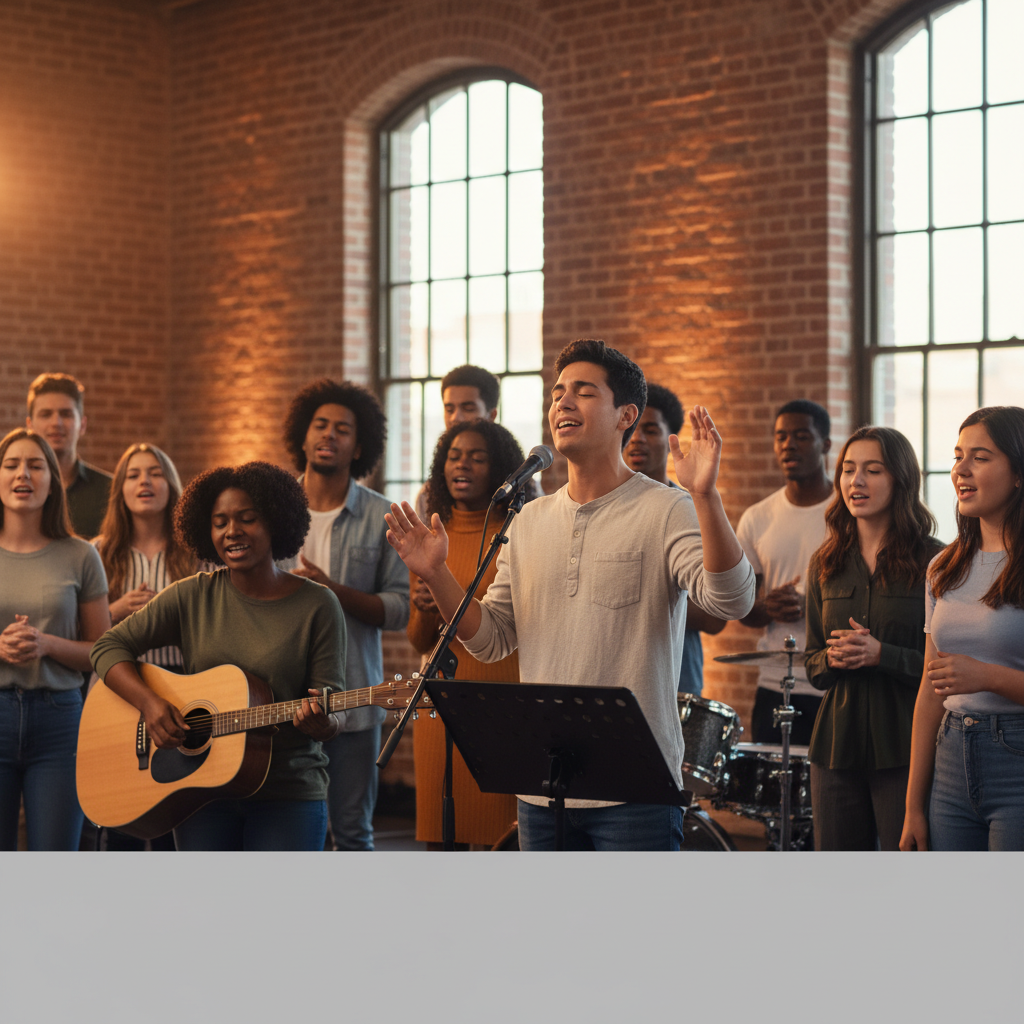
Good children's outreach doesn’t begin with more rules; it begins with presence. The ministry born from one man’s testimony set up community centers, brought in college students to teach, and built programming from pre-K to adult. That’s not hypothetical—this kind of initiative grew from a lived story. The plan was simple: use music as the pitch to get youth in the door, then teach them what actually changes lives.
Music is the bridge. It meets culture where it is, then walks people across to convictions that last.
One gritty scene from the life we’re learning from: after prison, the man watched younger inmates—teens barely older than boys—being shaped by whatever energy filled the yard. He began inviting them to read Proverbs together. The simple habit of reading scripture in small groups changed rhythms of the cell block. That same practice scales: read together, create together, serve together.
The Heart of It: Meet them with music; keep them with relationships.
Behind the Words: Kids don’t need another sermon; they need someone who will invest skill, time, and a steady presence.
Try This: Turn a music lesson into a discipleship moment. Teach a beat, then teach a verse; show how craft and character align.
Behind the Words: Jesus invested in apprentices, not audiences. His fifteen people model focused, persistent discipleship rather than one-time entertainment.
The Heart of It: A youth program that teaches craft and character reclaims culture for the kingdom.
Try This: Picture a community center: a single mother drops her fourth-grader off for a free Saturday program. He’s skeptical—he’s heard promises before. A college student shows him how to layer a track, then sits with him on the steps and listens. Over weeks, that boy’s rhythm improves; his steps change. The mother notices homework getting turned in. A teacher calls and praises a shift.
Common misunderstanding: organizations sometimes assume kids will be saved only after they feel guilt. Real transformation often begins with skill-building that leads into relationship and then into truth.
Practical steps we can take today:
- Start local: recruit one volunteer who knows audio production; invite five kids for an after-school session.
- Partner with schools for vo-tech exposure—connect skills to careers.
- Keep gospel content simple and abundant: short scripture readings, honest testimonies, a meal shared.
The goal isn’t only to keep kids busy—it’s to give them a new identity. The chorus from one song says it plainly: "All I need is G-O-D to find me." Let that be your program mantra: teach craft so God can do the rest.
You’ve read scenes of a life that looks ended and instead becomes a ministry seedbed: a furnace concealing marijuana; a shotgun blast with a 12-gauge; the quiet of a prison bunk where a man reads Proverbs and later writes plans to build ministries. Those are specific details—raw evidence that God meets us in the exact places we expect Him least.
We do not flatter pain. We do not romanticize it. But we confess a hope: God is expert at taking what the enemy meant for harm and redirecting it for purpose.
If you feel alone—nobody gave you a hand—hear this pastoral encouragement: keep standing. Let music sharpen your message. Let honesty with your past fuel mercy for others. Start small: open a room, bring a beat, read a short proverb together, and keep showing up.
We are a people of second chances. We are a people who know that sometimes God points with the same hand that corrected us. When the cameras fade and the applause stops, what lasts is the soul remade by God.
Peace to the ones who keep walking despite the pressure. Remember the lyric: "pressure to shoot" might be loud, but the Spirit’s whisper is louder. Keep listening. Keep building. Keep loving.
Key Takeaways
- Seek knowledge and information as a form of empowerment.
- Redemption is possible regardless of past mistakes.
- Utilize your experiences to help others in their journeys.
- Music can be a powerful tool for spreading the message of faith.
- Faith in God is crucial for overcoming struggles.
Notable Quotes
"Nobody gave you a hand, so you feel like you're alone yet keep on standing and pushing."
"In order to be blessed, you have to be sane."
"You have to search outside of what you see, because what you see can turn into a vibration to your brain."