From Ashes to Story: Faith, Film, and Theatrical Gospel
Real wounds reshaped into witness: how a life burned to 100% became a film of redemption, and why a dramatic gospel tour meets seekers where they are.
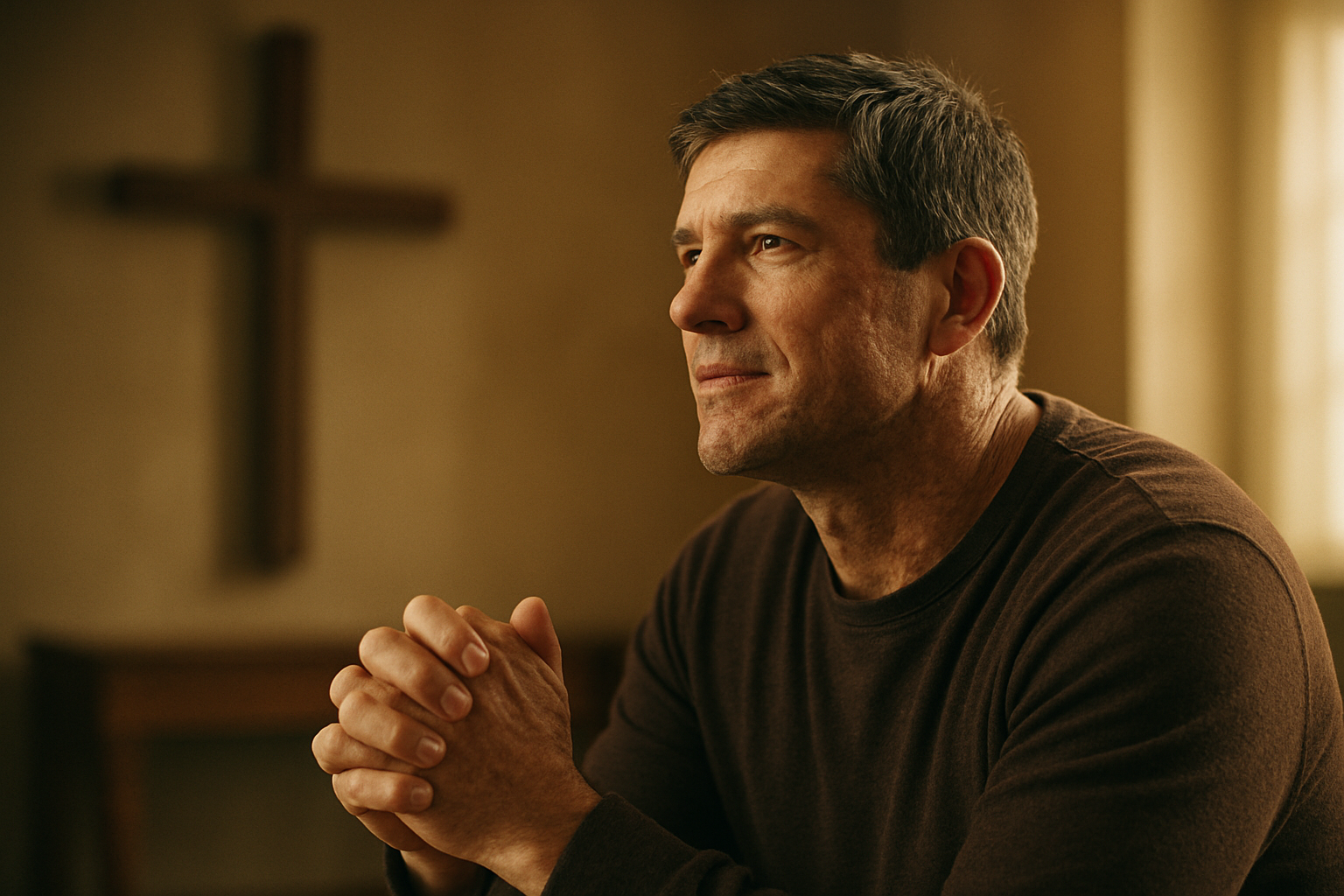
From ashes to a soul on fire
A boy was badly burned; the detail we keep returning to is stark: "burns to 100% of his body." Those words land like a fist. And yet the center of that life became, in one phrase repeated again and again, "It's a story about coming alive." We are drawn less to sensational survival and more to the work of redemption that follows trauma.
The rawness of the image matters because it makes the resurrection that follows feel earned. There is no gloss. The film adaptation keeps that honesty: the day of the fire was captured in the house where he was burned—the actual family home—so watching the scene is both hard to bear and strangely healing.
Why this matters
The Heart of It: Deep wounds do not disqualify you from being used; they often become the vessel of witness. Scripture shows us broken people—Moses with anger, Peter with failure, Paul with a thorn—not to erase pain but to place purpose alongside it. Our hope is not that trouble will vanish, but that God will give us a way to live through it with renewed meaning.
Behind the Words: The early Christian letters were written to communities wrestling with suffering, persecution, and disappointment. Paul and others wrote not to pretend hardship away but to show how God's purposes can run through pain.
"We are hard pressed on every side, but not crushed; perplexed, but not in despair." — 2 Corinthians 4:8
That verse doesn't deny pressure; it names resilience found in Christ. The image of being "not crushed" points to a hope that endures under strain, a place where testimony can grow out of trial.
Try This: Picture the neighbor down the street who refuses to leave her bedroom after a surgery. Take her a simple meal and offer one line from your story: "I once thought my life ended, but this is how it started again." Then listen. That sentence might be the first key to unlocking hope. Be specific: name the person who stayed with you, the nurse who wouldn't quit, the friend who brought casseroles. Helpers matter.
A hard saying sits in all of this: "I'm after one life and we already have one." It forces us to choose focus—numbers or the neighbor. It will feel convicting. But it refocuses ministry and art toward the person sitting in the dark.
Filming where it happened: truth, memory, and responsibility
Faithful storytelling refuses neat sanitizing. The creative team made a pointed choice: film where the event actually happened. Seeing the fire day recreated in the very house where the burn took place—his mom and dad's house—introduces a layer of witness that studio sets can't mimic. That choice respects memory and invites authenticity.
When you tell a story about pain, two temptations appear. One is spectacle—turning suffering into entertainment. The other is diminishment—pretending it didn't happen. Choosing the real location resists both.
The Heart of It: Truth-telling that honors real people insists on humility over hype. Authentic settings, careful casting, and attention to the people around the central figure—the caregivers, the community—allow the story to belong to more than one ego.
Behind the Words: The Gospels place the spotlight on events that actually happened in real towns, with named witnesses. The original readers valued location and testimony because those anchored truth in history and community.
"To the captives he proclaims freedom, and to the prisoners release." — Isaiah 61:1
Isaiah 61 anchors rescue in concrete action: proclamation and release. When storytellers name places and people, they follow that pattern—making the good news believable in the world we recognize.
Try This: Walk through an old neighborhood with someone who cared for you then. Tell them, "This place hurt me, but look what came through it." Record the walk or write it down. The place where pain happened can become a pilgrimage that points to God's movement.
There is also an ethic about outcomes embedded here. The film creator's aim—"I'm after one life"—is a hard saying that recalibrates success. It's uncomfortable because we like metrics. But it’s faithful because it remembers that real people, not box office, are the measure of impact.
Large-scale theater that meets culture: what is The Thorn?
If a production is described as "Cirque du Soleil meeting the passion of the Christ," you know it's trying to fuse spectacle with sacred narrative. The Thorn is a large-scale theatrical event that weaves drama, music, dance, martial arts, and acrobatics to tell the sweep of Scripture from Genesis to Acts.
Concrete details reveal the scope: it travels with a 52-person cast and crew, and the story is framed by an imagined 95-year-old John the Beloved on Patmos, carrying the audience across creation, crucifixion, and the early church. It has been filmed for cinema presentation and staged in performing arts centers seating about 2,500.
That combination—intense artistry plus biblical breadth—helps the show reach people who might say, "I don't love live theater," yet find themselves moved by its pace and immersion.
The Heart of It: Creative excellence can be a form of worship when it lifts the gospel in ways culture understands. The gospel is translatable into forms people already value—movement, rhythm, visual storytelling—without compromising content.
Behind the Words: In the early church, stories of Jesus and the apostles were told in synagogues, streets, and homes—using the familiar idioms of each community. A Patmos narrator is a creative echo of early eyewitness testimony.
"He has sent me to bind up the brokenhearted, to proclaim freedom for the captives." — Luke 4:18
Luke's commission language links proclamation to healing. When art binds up the brokenhearted, it participates in that same movement: attention to wounds followed by invitation to freedom.
Try This: Picture a teen who loves gymnastics but avoids church. Invite them to a performance that uses acrobatics and music to tell Scripture. Afterward, don't lead with doctrine. Ask, "What scene stayed with you? Why?" Then listen. That question can open a door.
There’s a detail worth holding: the production began as a local youth ministry response to a hurting young person. From a volunteer illustrated sermon it grew—over decades—into a touring event and a filmed version for theaters. Small pastoral gestures, when done faithfully, can scale to touch thousands.
A word to carry home
We live in a time when art, testimony, and ministry intersect like never before. A life that begins amid ashes can be used to spark hope. A house that held tragedy can become a site of healing. A staged Passion told through movement and music can make the gospel feel immediate for someone who has never walked into a church.
Stories are not just entertainment. They are pastoral tools. They teach, they reproach, they invite. But they also demand discernment. We must guard against turning neighborly suffering into spectacle. We must be more interested in one life changed than in one award won. Remember the hard saying: "I'm after one life and we already have one." It is a pastoral refusal of celebrity and a reorientation toward presence.
You may never write a screenplay or produce a touring show. But you carry a story. A scar. A name of someone who showed up. Consider who needs to hear it. Tell one truth this week—plainly, humbly, and with the names of the helpers included.
Bring a casserole. Sit down. Say, "I used to think this would end me, but here's what happened instead." Then listen. That is the quiet work that turns embers into a soul on fire.
Key Takeaways
- The power of storytelling can transform lives.
- Challenges can lead to inspiring outcomes.
- Music can be a medium for expressing faith.
- Community support is crucial in overcoming personal struggles.
- Finding purpose in pain can lead to greater impact.
Notable Quotes
"My goal is not a big top line number or box office target. It's can we impact one life for good?"
"The most powerful weapon on earth is the human soul on fire."