Faith, Vote, and the People's Jury
Believers are called to pair prayer with lawful action: vote, learn civics, use civic tools like grand juries, and steward culture toward justice.
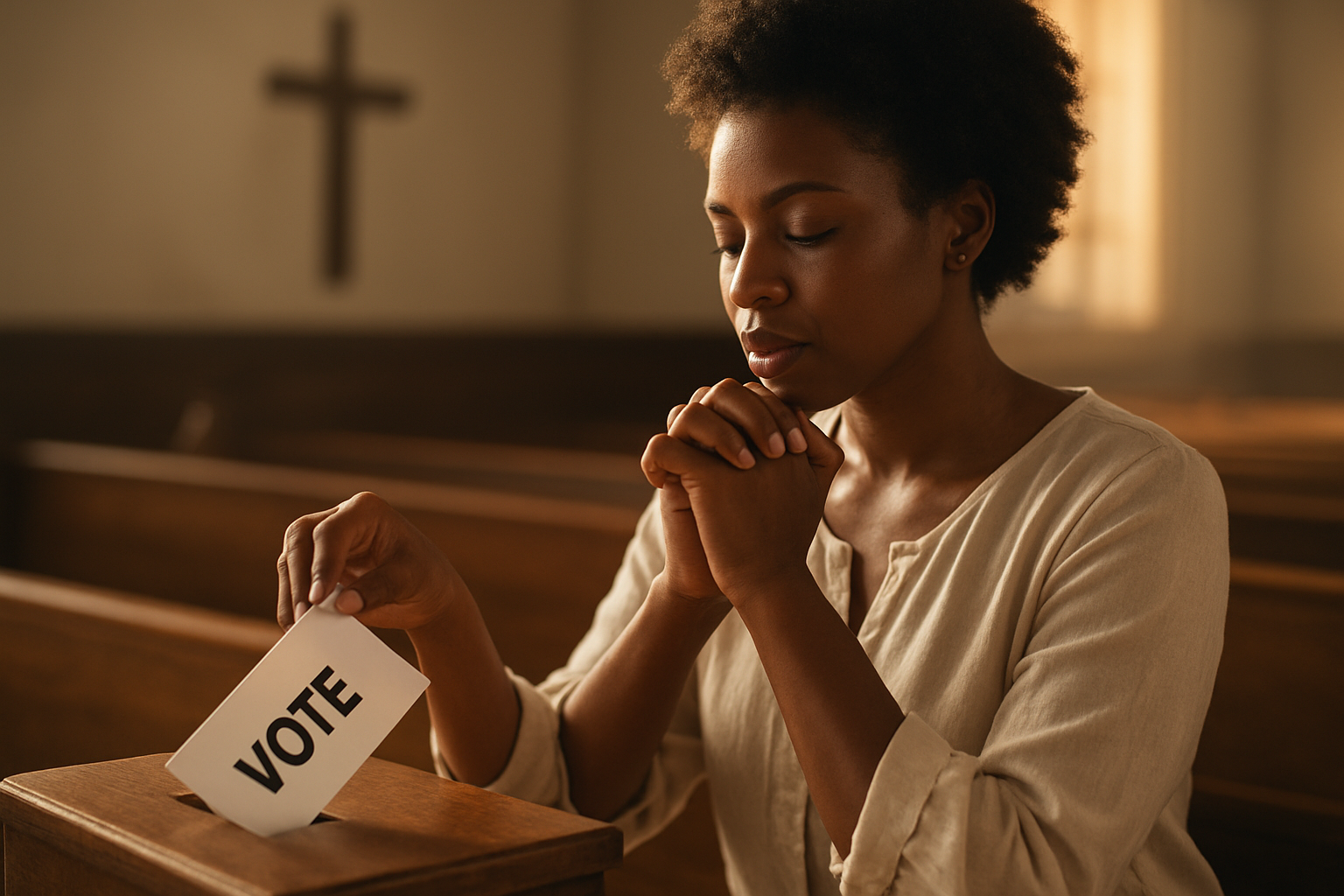
When Your Faith Meets the Ballot Box
You’re standing at the intersection of Sunday worship and Monday civic life. The conviction you carry out of the sanctuary — that God is just and calls us to love mercy and seek justice — doesn’t tuck away when you enter the polling place or read a local ordinance. It follows you. It asks questions.
What does it look like for believers to move from private faith to public responsibility without losing humility or becoming the thing we resist? How do we pray for God’s will “on earth as it is in heaven” and act so our neighborhoods bear witness to that prayer?
Quick Thread
Our unifying thread: faithful action is never merely spiritual or merely political. It is both prayer and practice — an embodied witness that seeks justice and protects liberty.
Why Believers Must Help Shape Culture
There is a spiritual logic to civic engagement. Scripture and the early church did not separate private piety from public life the way many modern Christians do. When we withdraw from structures that govern schooling, law enforcement, public debate, and even jury service, we forfeit influence we were meant to steward.
You might feel small — like Moses at the bush, or a single voice in a noisy square. But history shows it only takes a coordinated, dedicated few to reshape reality. The Black Robe Regiment, for example, reminds us that pastors once used their pulpits to mobilize civic courage. They preached and then marched. That legacy is not a relic to romanticize but a model to reawaken.
Behind the Words: Amos speaks to a community where religious ritual had outpaced social justice; the prophet called Israel to let justice roll down like waters rather than offer hollow worship. In its original setting Amos diagnosed prosperity indifferent to the poor.
The Heart of It: Worship without justice is anemic; justice without worship is brittle.
Try This: After a city meeting on a zoning change that affects low-income families, imagine a small team from your congregation — teachers, elders, young parents — sitting at the table, listening, asking humble questions, and offering practical solutions. You are keeping vigil with the vulnerable.
One common misunderstanding is that involvement equals partisanship. It doesn’t have to. Acting for justice can cross political lines because we serve a higher King. Those blunt prods — “we need to vote” or “you can’t just sit on the couch and do nothing” — are honest challenges to overcome apathy.
How Should Christians Approach Voting and Civic Duty?
Voting is a moral act, not a magical talisman. The hard saying we wrestle with is this: we cannot vote our way out of tyranny. That truth refuses to let voting become a spiritual shortcut. Voting matters. It’s stewardship. But it is one instrument among many: education, community organizing, public prayer, and lawful public action work together.
Behind the Words: The Lord’s Prayer includes the petition, “your kingdom come, your will be done on earth as it is in heaven.” In Jesus’ Jewish context, this was a radical plea for God’s reign to transform everyday civic life, not an escape from it.
The Heart of It: Prayer fuels action; action bears witness to prayer.
Try This: Before a local election, gather a small group to pray, then spend one evening researching candidates’ positions on issues that affect the poor. Choose one practical way to act together — walking precincts, delivering nonpartisan voter guides, or helping neighbors navigate absentee ballots. Let prayer lead study, and study lead service.
We have an obligation to understand the systems we live under. Civics is often stripped from classrooms, leaving a vacuum filled by ideology and confusion. That vacuum makes people easy to frighten and divide. When you vote, do the follow-up: stay engaged, ask spiritual leaders thoughtful questions about policy, and teach the next generation how government works.
Picture this: a small group from your church learns how school funding formulas work. They meet the superintendent, ask about equity data, and quietly press for changes that protect the most vulnerable kids. They pray together beforehand. Then they show up at the meeting. That sequence — prayer, learning, action — shifts culture.
Restore civic literacy in your congregation. Bring civics into adult classes. Invite nonpartisan experts to explain how local government functions. Encourage young adults to serve on volunteer commissions. Teach children that citizenship is a calling. Re-engagement isn’t conquest; it’s faithful presence.
What Are Grand Jury Rights and Why They Matter to the Church?
Grand jury rights may sound like dry legalism, but they’re a civil mechanism designed to protect citizens from abuse. They are a lay check on official power: a place where everyday people can inquire into public wrongdoing without being bogged down by technical rules.
The Heart of It: Restoring lawful civic tools strengthens local justice and protects the vulnerable.
Behind the Words: Historically, grand juries arose to prevent centralized power from trampling local rights. Legal historians note cases and commentaries showing the grand jury’s protective function for citizens.
Why should the church care? Because justice is central to God’s heart. When civic systems are transparent and participatory, ordinary citizens — including people of faith — can guard neighbors against abuses of power.
Imagine a county where citizens convene a lawful grand jury to investigate a pattern of public spending that leaves marginalized communities chronically underfunded. Neighbors testify. Clergy offer moral testimony. The grand jury’s findings prompt reform. That is the church partnering with civic tools to pursue justice.
Some fear that such participation drags the church into partisan conflict. But the Christian calling is to be a prophetic presence that speaks truth to power while preserving charity and truthfulness. Grand jury rights are a mechanism for testimony and accountability — not a political sword.
Try This: Host an evening with a local attorney or county official who can explain grand jury rights and civic recourse. Create a short guide your church can share that outlines lawful steps to raise community concerns.
One common misunderstanding to address: grand jury rights aren’t weapons for vendettas. They are disciplined communal tools for seeking public good.
Note: grand jury procedures vary by jurisdiction. If your church plans teaching or action on this topic, consult local officials or counsel for accuracy.
Bringing Prayer and Action Together
Prayer without action becomes private sentimentality. Action without prayer becomes prideful activism. God invites us to bring heaven’s ordering to earth’s institutions — not through coercion, but through lawful, liberty-minded action that pairs obedience to Christ with respect for the rights of others.
What does that look like in practice? Pray for leaders, then participate in the processes that hold them accountable. Teach civics in adult classes, help neighbors register and cast ballots, attend public meetings, and explore lawful mechanisms like grand juries when systemic harms persist.
Picture a modest team from your church meeting weekly to pray and then divide tasks — one researches policy, another meets a council member, another volunteers as a poll worker. They are neither loud nor conquerors. They are steady and persistent. They refuse panic and apathy — and they embody the peace of Christ as they serve.
We may be tempted to weaponize every disagreement as an existential fight. Resist that. Scripture warns that our “war is not against flesh and blood,” which frees us to engage opponents as neighbors and to model gracious disagreement.
"Finally, be strong in the Lord and in the strength of his might. For we do not wrestle against flesh and blood..." — Ephesians 6:10-12
When we keep eternal realities in view, our civic action becomes an offering, not a grudge.
Closing Words: Small, Steady, Faithful
We will not remake culture overnight. God often works by small, steady acts of faithful people. A local Peacemaker sheriff movement began in a single city and spread because ordinary citizens chose to act lawfully and prayerfully. Legal history recorded in works like The People’s Panel shows that civic tools once protected the powerless when citizens used them.
Start with one faithful step. Vote, yes — but then do the neighborly work that follows. Teach your children what government does. Ask your church leadership honest questions about public engagement. Learn what grand jury rights mean in your county. Pray for justice. Love mercy. Walk humbly.
We are not called to be perfect in the public square, only present. When we marry prayer with action — when we refuse to sit on the couch and do nothing — we become the kind of community that helps God’s will be done on earth as it is in heaven.
"But let justice roll on like a river, righteousness like a never-failing stream!" — Amos 5:24
Key Takeaways
- Engage in the electoral process by voting and educating oneself about civic duties.
- Unity among believers is essential for impactful community engagement.
- Prayer and sustained action are crucial in fostering justice and righteousness.
- Historical context can guide current actions and decisions in civic matters.
Notable Quotes
"We have to have unity among humanity in order for us to have true unity with God."
"We need to vote. The faith community needs to get out there and express itself."
"Justice means something to Him. And we can't keep selling this idea that God just wants to be this emotional covering over us."