Co-Heirs, One Body, Christ Within
Paul unveils a radical unity: Jews and Gentiles as co-heirs, one living body with Christ dwelling within. Kneel, receive the Spirit, and practice shared inheritance.
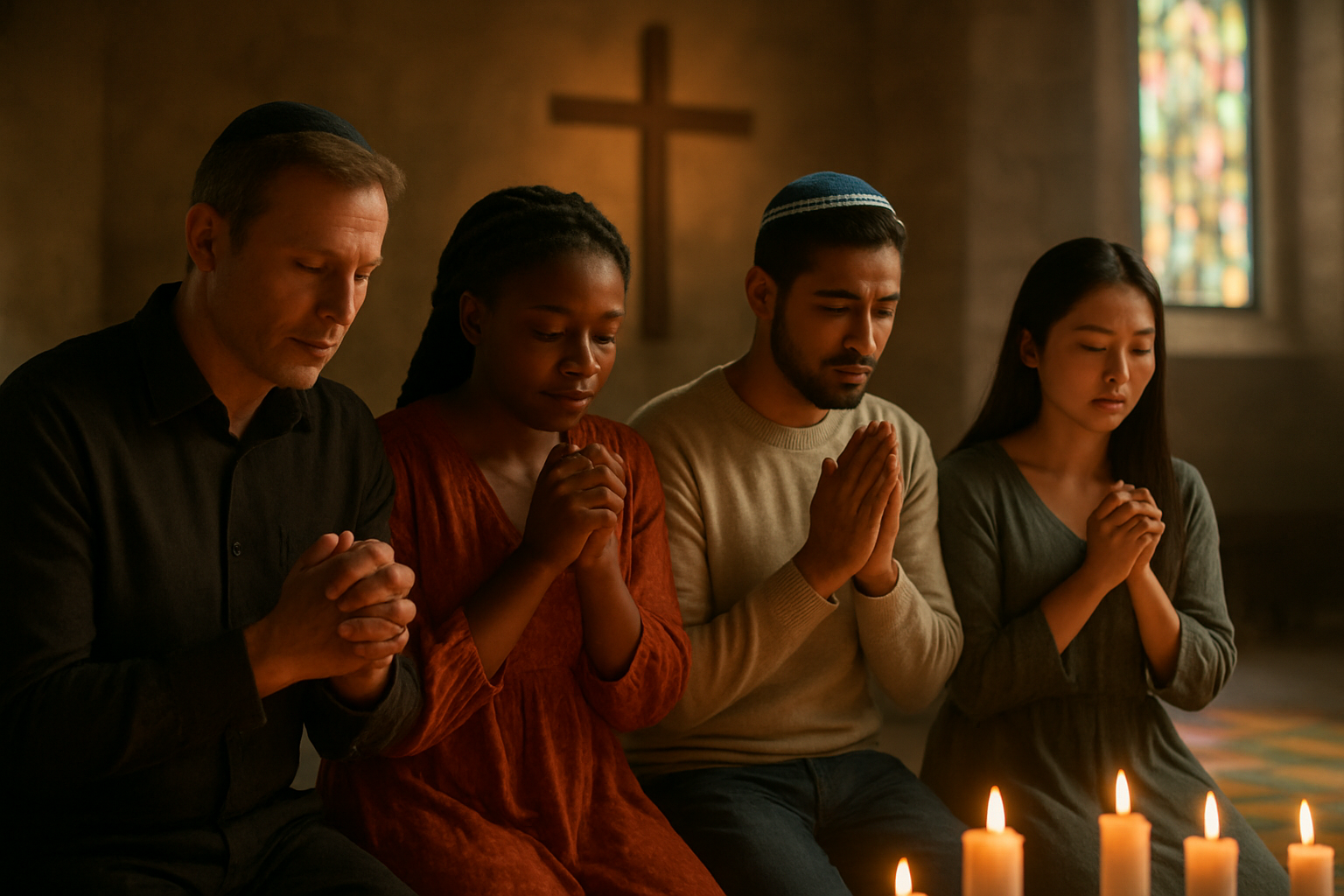
What is the single thread that ties identity and unity together?
At the heart of Paul's message is a simple, radical truth: the cross tears down separating walls so that people who were once "far off" are now brought near. That changes everything about how we think of inheritance, worship, and purpose.
When the Long Hyphen of Paul's Heart Breaks Through
Paul begins a thought, stops with a long hyphen, and then bows his knees in prayer. That pause—the long hyphen—feels like a raw human shift from explanation to petition. It’s the place where doctrine turns into dependence.
"For this reason I bow my knees before the Father..." — Ephesians 3:14
A Prayer Changes Doctrine into Daily Life
Behind the Words: Paul is shifting from teaching (who we are in Messiah) to praying (what we need from God to live it). That long hyphen is a posture change—he moves from telling to kneeling.
Try This: When theological truths feel distant, kneel. Let doctrine settle into your flesh by making prayer the bridge from knowledge to kneeling.
Why are Jewish and Gentile Believers Co-Heirs?
"This mystery is that the Gentiles are fellow heirs, members of the same body and partakers of the promise in Christ Jesus through the gospel." — Ephesians 3:6
Behind the Words: In Paul’s world the nations (Gentiles) and Israel had been separated by covenantal promises, ritual boundaries, and centuries of misunderstanding. Ephesians 3:6 is Paul’s revelation that the age-old divisions are being healed in Messiah.
The Heart of It: God’s promises are now participated in together—no longer a split inheritance.
Behind the Words: That meant Gentiles did not merely get a seat at the table; they share the same promises, the same covenantal life that once marked Israel alone.
Try This: Picture a family meal where two previously feuding branches finally sit side by side. See the bread move from hand to hand. Name one blessing you assume is "reserved" for someone else, and speak it aloud as yours by faith.
Paul calls this truth a mystery—not secret knowledge for the elite but a revealed plan. It overturns every argument that says faith is tribal or that cultural identity limits God’s promise. When we call one another "co-heirs," we are not erasing culture. We are insisting on shared standing before the Father.
We can still bring our heritage—music, language, rhythm—into worship. That diversity becomes part of the testimony: "one new man" made visible in many faces.
Direct images from Scripture and early Christian practice help root this idea in lived faith: "one new man" and the conviction of "the unsearchable riches of Messiah" remind us that inclusion is both a gift and a revelation.
What Scripture Teaches About the Body of Christ
"He himself is our peace, who has made us both one and has broken down in his flesh the dividing wall of hostility... so making peace." — Ephesians 2:14-16
The church is not an assemblage of isolated individuals; it is a living body. Paul uses bodily language—head, members, temple—to insist that our identity is mutual and interdependent.
The Heart of It: The gospel transforms lonely religion into embodied community.
Behind the Words: A fragmented Christianity looks little like the kingdom. Our unity is theology made visible; it’s the evidence God uses to address rulers and authorities in the heavenly places.
Try This: Show your neighbor you belong to them by attending to one practical need this week—cook a meal, make a call, forgive an old slight. Small, concrete acts anchor a theological truth in everyday life.
Behind the Words: In the first-century Mediterranean world, household and corporate imagery carried weight. Saying Gentiles and Jews are "members of the same body" was scandalous—Paul collapses political and religious boundaries into ecclesial belonging.
Try This: Imagine communion in a multicultural congregation. Instead of observing from a distance, lean into the scene: bread and cup as one visible act of shared inheritance. Let that image reshape whom you include in your circle.
That image of taking communion is not abstract theology; it’s bread and cup, hands and tears, strangers becoming kin.
Hard Saying to Unpack: "Our sin separated us from God." That forces us to face personal responsibility before celebrating corporate blessing. We cannot build unity on the assumption that moral distance doesn’t matter. The cross addresses that separation—first by reconciliation to God, then to one another.
How Does Christ Indwell and Change Us?
"...that according to the riches of his glory he may grant you to be strengthened with power through his Spirit in your inner being; that Christ may dwell in your hearts through faith... that you may be filled with all the fullness of God." — Ephesians 3:16-19
Behind the Words: Paul is praying for inner strengthening—not merely external behavior modification. In the ancient world "spirit" language often meant a presence that empowers, heals, and forms character. Paul prays for an inward renovation that only the Spirit accomplishes.
The Heart of It: The indwelling of Christ is the engine for unity and holy living.
Behind the Words: If unity is our corporate identity, indwelling is our personal power to live into that identity. Without the Spirit we cannot embody what we confess.
Try This: Personalize Paul’s prayer—ask, "Strengthen me with power through your Spirit in my inner being." Picture the Spirit tending a tree within you: roots deepening, trunk steadying, leaves opening to light. That image helps make the prayer concrete and tangible.
We are not left to muster love or unity by willpower. The promise is that Christ dwells in us by faith. That changes how we approach conflict, disappointment, and difference. We are called into dependence rather than performance.
Teaching Moment
"For this reason I bow my knees before the Father..." — Ephesians 3:14
Behind the Words: Paul’s prayer flows from his awareness of God’s grand design—from ages past to present. He bows because doctrine without dependence easily hardens into pride.
The Heart of It: Theology matures into worship when it propels us to prayer.
Try This: When doctrine overwhelms you, sit down, bow your knees, and name one thing you do not control. Pray that God would bring that truth from the page into your heart.
Bringing It Together: Our Participation in God's Eternal Purpose
Paul makes a bold claim: the unity of the church shows God’s wisdom to heavenly beings. This is strategic mission, not mere poetry. The church’s oneness demonstrates that the cross can reconcile enemies, that God’s promises are trustworthy, and that the Spirit can fill human beings with a love that surpasses knowledge.
We are not spectators. The text insists on participation. The hard line—"you and I owed a debt that we couldn't pay"—redirects us. We can either clutch distinctions as protective currency or offer them back as part of a shared inheritance.
Practical rhythms follow: kneel in prayer, receive inward strengthening by the Spirit, and practice visible acts of shared inheritance—meals, worship, mutual confession. These small, deliberate acts make the mystery visible and contagious: when neighbors see us living this way, they witness the power of reconciliation.
Grace has a shape: a body, a table, a prayerful knee. We are called to embody the gospel—Jew and Gentile, rich and poor, young and old—co-heirs who show rulers and authorities what God’s plan looked like all along. Join the prayer Paul prayed: that Christ would dwell in your heart through faith and that you would be filled with all the fullness of God.
If you are wrestling with identity or distance, begin with kneeling. Name the debt. Receive the gift. Then reach your hand across the table and say, "You belong to me; I belong to you."
Key Takeaways
- Embrace the unity that comes through faith in Christ.
- Recognize the unsearchable riches of God's grace.
- Live out the love of Christ in community.
- Pray for strength and understanding of God's love.
- Understand the importance of the church's role in God's plan.
Notable Quotes
"He has made us one in the death and resurrection for our sin."
"God's design from the ages was to make a statement to rulers and authorities in heavenly places."
"We're all one through the cross in Messiah and we're one body."